News
Tesla patent aims to improve common on-road complaint

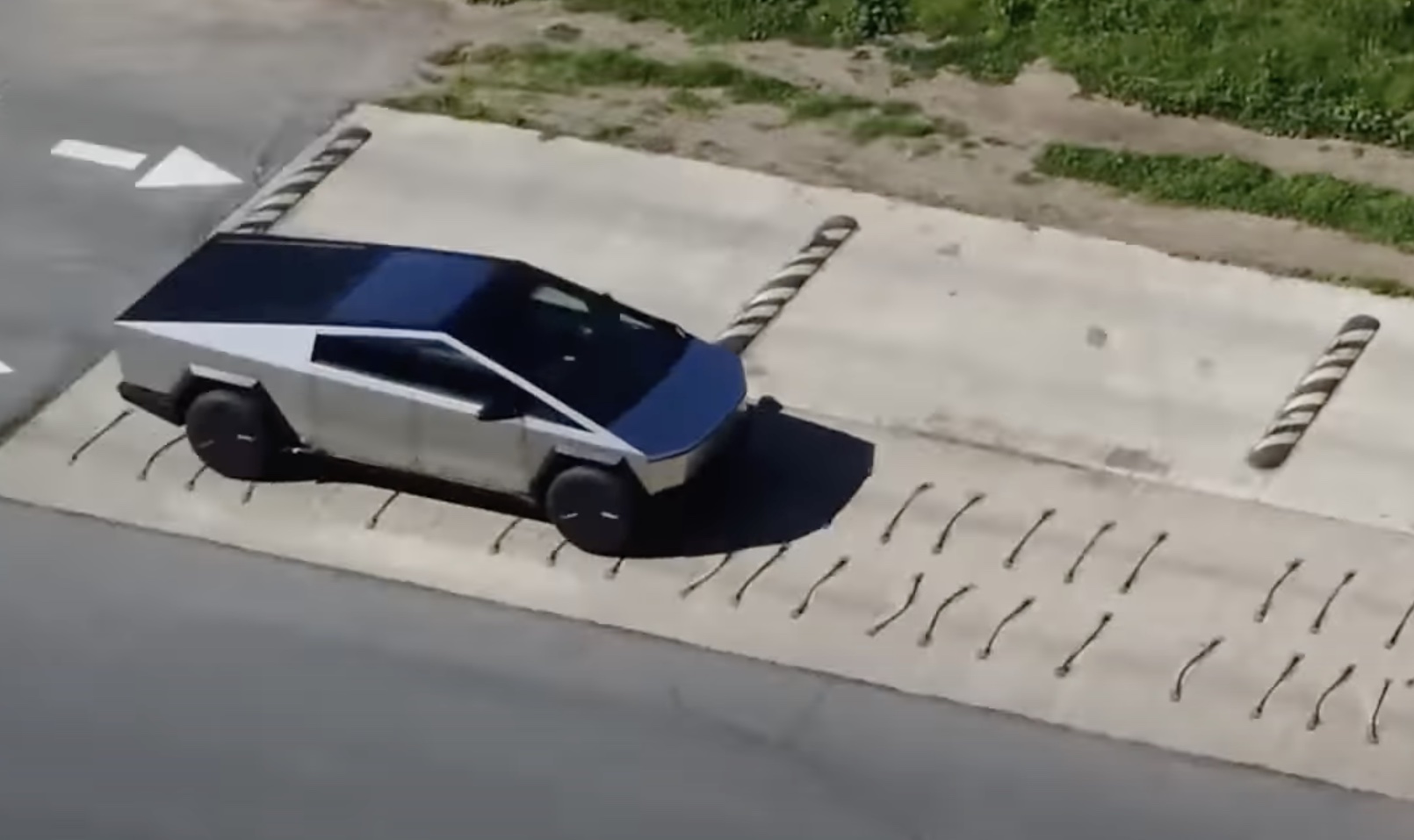
Tesla is continuing to push the boundaries of vehicle dynamics, as its latest published patent, US12654505B2, or “Suspension Actuator System for a Vehicle,’ which has finally been pushed through.
The design, which is credited to inventors Brian Lee Doorlag, Avraham Kagan, and Justin Sill, introduces a sophisticated hybrid suspension design that blends active motor-driven control with strategic passive elements to deliver superior ride quality, energy efficiency, and resilience against road imperfections, especially potholes.
Suspension Actuator System for a Vehicle@Tesla‘s US20240383297A1 patent introduces an innovative suspension actuator system that transforms vehicle suspension control through an intelligent combination of active and passive control elements.
By implementing both series and… https://t.co/vRvlOu3Dql pic.twitter.com/2WriXgpOvr
— SETI Park (@seti_park) November 27, 2024
At the heart of the system is an active control element powered by an electric motor. This motor drives a belt connected to a ball nut assembly and threaded screw, which adjusts the effective length of the suspension strut in real time.
By extending or retracting, the actuator can lift or lower the wheel more accurately, which can end up countering road disturbances. Sensors, including accelerometers and wheel position monitors, feed data to a suspension control system that processes inputs and commands the motor instantly.
This active component doesn’t work alone. A low-rate air spring mounts in parallel with the actuator. Its primary role is to offset much of the vehicle’s static weight, dramatically reducing the power demand on the motor.
Without this, the active system would constantly fight gravity, draining energy and generating heat. The air spring handles steady-state loads efficiently, allowing the motor to focus on dynamic adjustments.
Complementing this is a series of passive control elements—a spring and an adaptive damper—placed between the actuator and the wheel. This setup filters high-frequency vibrations before they reach the active motor, preventing it from overworking on minor inputs. The adaptive damper, potentially magnetorheological or valve-controlled, further tunes damping electronically for optimal comfort and stability.
How It Differs from Traditional Suspensions
Traditional passive suspensions compromise between comfort and handling, while pure active systems can be power-hungry and complex. Tesla’s hybrid approach resolves this by delegating tasks: the parallel air spring manages weight and low-frequency body motions, the series elements absorb rapid vibrations, and the active actuator tackles larger, lower-frequency events.
The result is a smoother, more isolated cabin experience. High-frequency road noise and harshness diminish, while the vehicle maintains precise control during cornering or acceleration. Energy efficiency improves, too—lower motor loads mean reduced battery drain, potentially extending range in electric vehicles.
How It Mitigates Potholes Specifically
Potholes are a major challenge because they provide a sudden drop to the wheel plunge, jarring the body of the vehicle, risking damage. The patent explicitly addresses this. Upon detecting a pothole (via sensors or predictive mapping), the control system activates
the motor to retract the strut, effectively pulling the wheel upward to minimize downward excursion. The series spring/damper cushions the impact, while the parallel air spring maintains overall support.
This proactive “wheel retraction” prevents sharp jolts, preserving passenger comfort and protecting components. Integrated with Tesla’s road roughness mapping patents, the system could anticipate potholes from fleet data, enabling preemptive adjustments for even smoother navigation.
Future Implications for Tesla Vehicles
This technology builds on Tesla’s existing adaptive dampers and air suspension that is seen in Cybertruck, but advances toward fully active control. It could roll out to future models, including refreshed Cybertrucks or next-gen vehicles, enhancing both daily drivability and off-road capability. By minimizing power use and complexity, it aligns with Tesla’s goals of efficiency and scalability.
In summary, US12654505B2 exemplifies Tesla’s engineering philosophy: intelligent integration over brute force. This hybrid suspension promises quieter, more comfortable rides and robust pothole defense, potentially setting a new standard for automotive comfort. As Tesla iterates, drivers can look forward to roads feeling far less rough.


Elon Musk
Elon Musk’s next Uranium in Uranus merch is Boring Company’s weirdest tease yet
Elon Musk teased a glowing new Boring Company merch idea, complete with a Geiger counter.

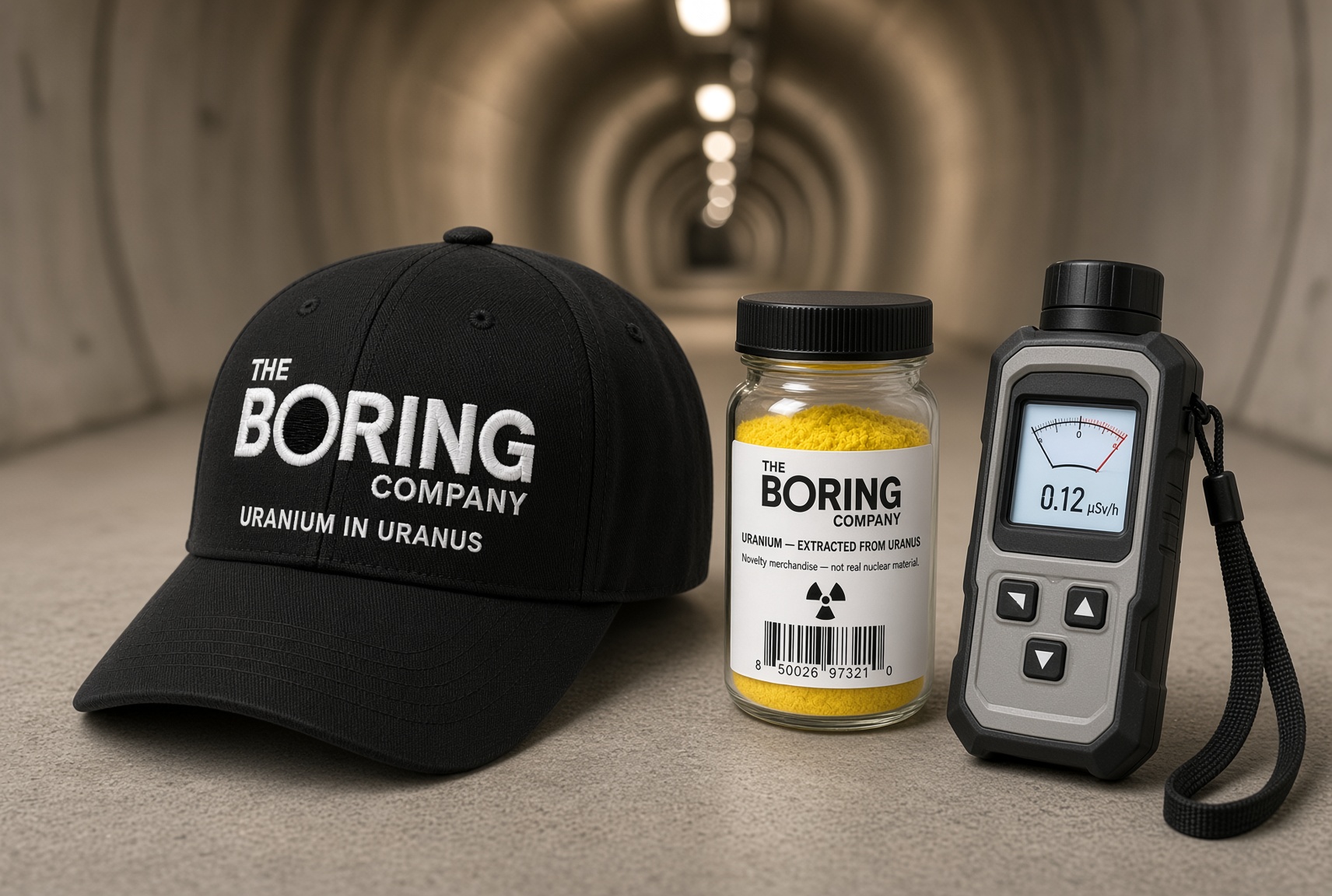
Elon Musk teased the next piece of Boring Company merchandise on X Saturday, and it is exactly as unserious as fans of the company’s product history have come to expect. “The next @boringcompany merch will put Uranium in Uranus,” Musk wrote in a thread posted early Saturday morning. He followed up by explaining that the item would glow in the dark, “because otherwise how could you find it,” and that a Geiger counter would be sold separately as “an optional strap-on.”
Musk closed the thread with a line that doubles as a mission statement for the tunneling company’s merchandise arm: “It’s not easy coming up with something that is both outrageously unsellable and yet extremely popular.”
The Boring Company has built a small but consistent side business out of novelty items that start as jokes and end up selling out. The company’s Not-a-Flamethrower raised roughly $10 million in a few days back in 2018, moving all 20,000 units it produced. Its Burnt Hair perfume, priced around $100 a bottle, sold out fast enough that scalpers were flipping units on eBay for ten times the retail price. Boring Bricks, made from tunneling spoil, followed the same playbook of teasing a product on X months before it became real.
Musk has not said what the actual item will be, only that it involves uranium and glows in the dark. Given the pattern, that vagueness is probably intentional. Past merch announcements have started as one-line jokes and taken weeks or months to turn into an actual product listing on the company’s site, and there is no guarantee this one follows through at all.
The timing lines up with a period of real momentum for the Boring Company outside of the joke merchandise. The company said last week it plans to double the number of operational stations on its Vegas Loop by the end of the year, a target tied to a hiring push for drivers and operations managers. Prufrock-5, one of the company’s tunnel boring machines, also just wrapped a test tunnel in Bastrop, Texas, and is expected to relaunch on its next assignment in November.
Whether the uranium joke turns into an actual product remains to be seen. Musk’s post did not include a price, a shipping date, or even a name for the item, which has historically meant a Boring Company website page goes up quietly, password protected, sometime before an announcement.
News
NASA taps SpaceX for more astronaut missions as Boeing Starliner remains grounded
NASA just gave SpaceX a $946 million contract for three more astronaut missions through 2030.
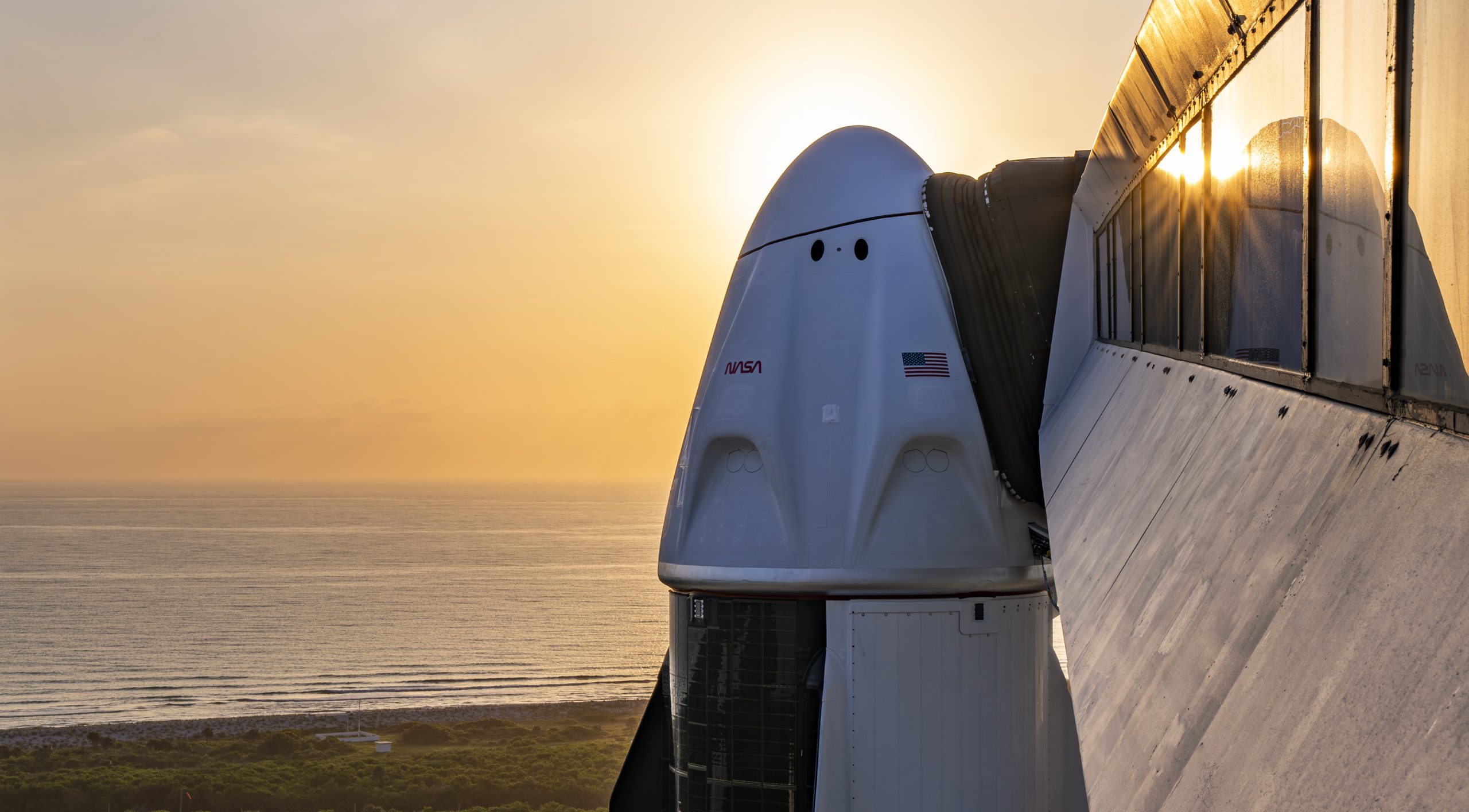
NASA has awarded SpaceX a $946 million contract modification covering three more astronaut missions to the International Space Station, according to an announcement the agency published Friday. The award adds Crew-15, Crew-16, and Crew-17 to SpaceX’s existing Commercial Crew Transportation Capability contract, bringing the agreement’s total value to $5.92 billion across 17 flights.
SpaceX confirmed the award on X, writing that it was excited for Falcon 9 and Dragon to launch NASA’s Crew-15, 16, and 17 missions to the Space Station from Florida. The new missions cover ground, launch, in orbit, and return operations, along with cargo transport and a lifeboat capability while docked at the station, and the period of performance runs through 2030.
We’re excited for Falcon 9 and Dragon to launch @NASA’s Crew-15, 16, and 17 missions to the @Space_Station from Florida https://t.co/Qm16vVK9F3 pic.twitter.com/drg3s7GtuM
— SpaceX (@SpaceX) September 18, 2026
The award follows a notice of intent NASA issued in May, when the agency first signaled it would purchase up to six additional post certification missions from SpaceX. Teslarati covered that filing at the time, noting NASA cited technical issues and schedule delays encountered by Boeing as a driving factor. Friday’s contract modification locks in three of those six missions, with the remaining three left open for NASA to award later, potentially to Boeing if Starliner clears certification.
Boeing’s CST-100 Starliner has still not flown an operational crew rotation mission for NASA. The spacecraft’s most recent crewed test flight in 2024 ended without the astronauts returning aboard Starliner, and the company has spent the time since working through thruster problems. SpaceX President Gwynne Shotwell said this week that SpaceX is not retiring Crew Dragon today, for sure, while stopping short of committing to fly it past 2030.
Crew-12 is currently docked at the space station, and NASA has said Crew-13 is targeting a launch in the coming weeks. The newly awarded Crew-15 through Crew-17 missions extend SpaceX’s role as NASA’s primary way of getting astronauts to and from orbit well into the back half of the decade, regardless of what happens with Starliner or Starship in the meantime.
Investor's Corner
New drone video shows Tesla’s Optimus Factory reaching a turning point
New drone footage shows Tesla’s dedicated Optimus factory steel frame nearing completion at Giga Texas.
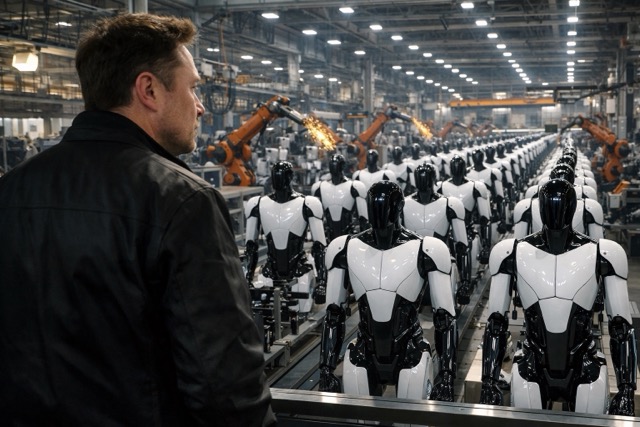
Tesla’s dedicated Optimus factory at Gigafactory Texas is closing in on a finished steel frame, according to drone footage posted Thursday afternoon by longtime site observer Joe Tegtmeyer. In the video, Tegtmeyer said structural steel assembly is now about five column grids away from reaching the building’s north perimeter beam, putting the primary skeleton in its final stretch roughly six months after Tesla broke ground on the North Campus site in late March.
The Giga Texas Optimus Factory latest update … construction keeps moving fast!
Steel assembly is now only about 5 column grids from the north perimeter beam. Concrete is going in on the three upper floors, rebar is still being laid for more pours, and footing / grade-beam work… pic.twitter.com/qvFPvwnYzW
— Joe Tegtmeyer 🚀 🤠🛸😎 (@JoeTegtmeyer) September 17, 2026
Tegtmeyer’s footage shows concrete already going in on three upper floors while crews continue laying rebar and pouring grade beam footings at ground level. That kind of parallel work, steel rising at one end of the site while concrete sets at the other, is a scheduling approach Tesla used at the original Giga Texas building and appears to be repeating here to save time before the plant’s targeted 2027 production start.
Teslarati has tracked the building’s progress since Tesla confirmed construction was officially underway in May, when the first steel structure went up on what was then bare, reclaimed land. The facility is part of a more than 5.2 million square foot expansion of Giga Texas’s North Campus that Tesla has said will eventually run nearly the length of the existing vehicle factory, over 4,000 feet, while sitting somewhat narrower. Musk has pegged the long term output target at 10 million Optimus units a year once the line is running at full capacity, a volume that would dwarf the one million unit pilot line Tesla is standing up separately at its Fremont, California factory.
Tesla Giga Texas to feature massive Optimus V4 production line
The Texas facility sits alongside another major buildout on the same campus. Terafab, the joint Tesla and SpaceX chip fabrication plant that will eventually supply the silicon running Optimus units in the field. Housing robot assembly and chip production on the same grounds is a deliberate supply chain decision, cutting down on the shipping and lead time that would otherwise sit between the two.
Tesla has not given an updated timeline beyond its previously stated goal of bringing high volume Optimus production online at the site in the summer of 2027. Fremont’s smaller pilot line began mass producing the current Gen 3 robot in January, with that plant expected to build tens of thousands of units this year primarily to generate the real world data Tesla needs to refine the robot’s software before Giga Texas ramps up. Six months of visible construction progress, tracked almost entirely through Tegtmeyer’s recurring drone flights, gives the clearest outside look yet at how seriously Tesla is treating that 2027 deadline.

Elon Musk’s next Uranium in Uranus merch is Boring Company’s weirdest tease yet

NASA taps SpaceX for more astronaut missions as Boeing Starliner remains grounded


