News
Tesla is making sweeping improvements to Robotaxi

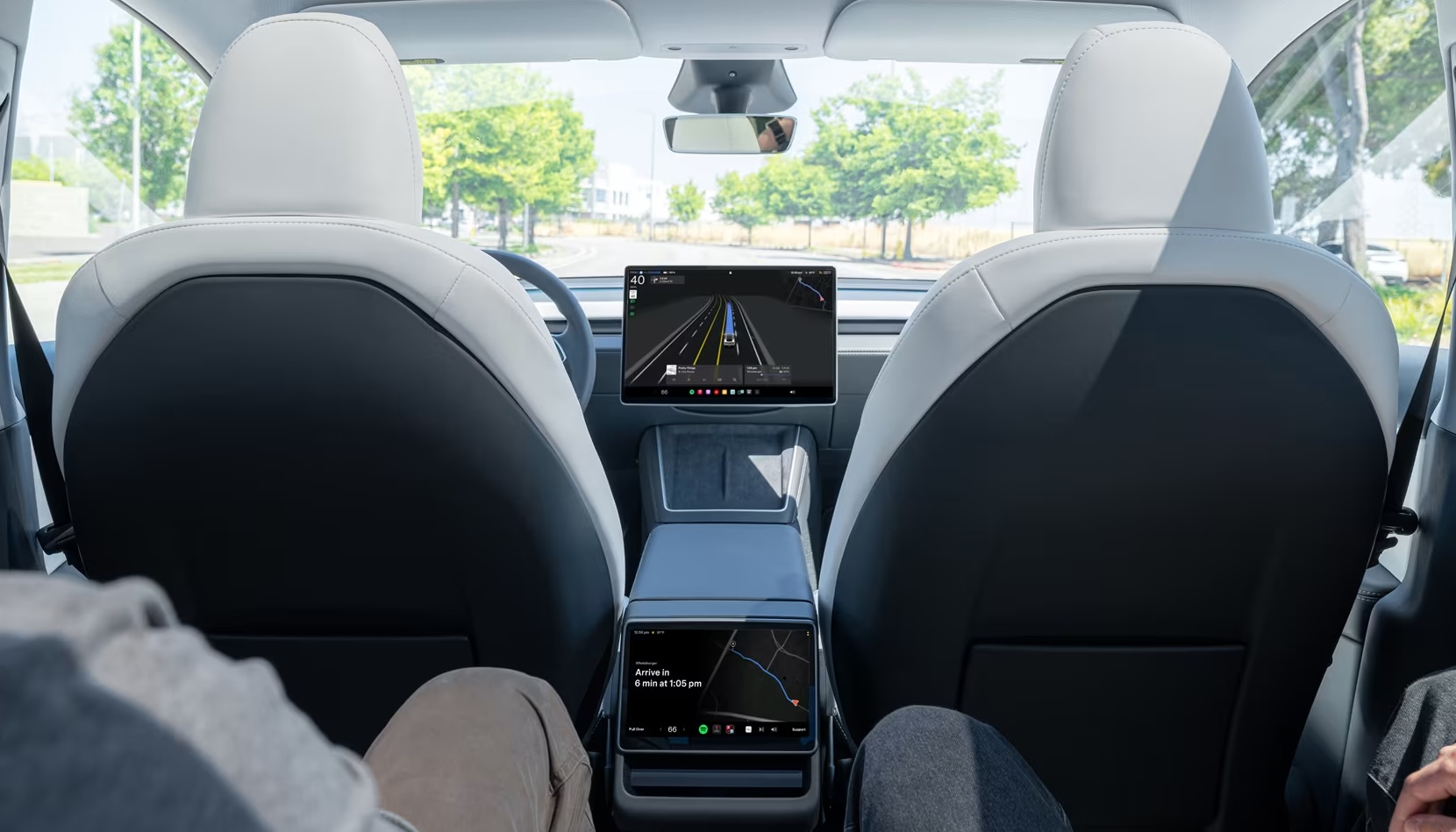
Tesla is continuing to refine and improve its Robotaxi program from A to Z, and it is now going to make some sweeping changes to the smartphone app portion of the suite.
The company is aiming to make some sweeping changes with the release of Robotaxi app version 26.4.5, which was recently decompiled by Tesla App Updates on X. The update reveals significant new code, focused on remote operations, safety protocols, and seamless autonomous ride-hailing.
These improvements evidently signal Tesla’s preparations for scaling unsupervised Cybercab deployments, particularly the steering wheel-less variants spotted in production. The enhancements emphasize providing a reliable experience that gives passengers support when needed, along with operational efficiency.
Version 26.4.5 of the Robotaxi app has been de-compiled and we’ve got some interesting things added this update (https://t.co/jInbED7fOv):
– Remote Operator Voice Calls 📞
– Proactive Remote Assistance 🤖
– Manual Override + Remote Start for wheel-less Cybercabs 🎮
-…
— Tesla App Updates (iOS) (@Tesla_App_iOS) May 16, 2026
Remote Operator Voice Calls
One standout addition is support for remote operator voice calls. The app now includes a dedicated native voice-communication system linking passengers directly to Tesla teleoperators via the vehicle’s cabin microphone and speakers.
This feature allows real-time assistance during rides, addressing issues like navigation questions or comfort adjustments without disrupting the autonomous journey. It builds on existing support protocols, making human intervention more accessible and intuitive.
Proactive Remote Assistance
The update introduces proactive remote assistance capabilities. Rather than waiting for passenger-initiated requests, the system can anticipate and offer help based on monitored conditions.
This might include something like suggesting route changes, climate adjustments, or addressing potential delays. By integrating AI-driven monitoring with human oversight, Tesla aims to deliver a smoother, more attentive experience that exceeds traditional ride-sharing services.
Manual Override and Remote Start for Steering Wheel-less Cybercabs
A key highlight for the wheel-less Cybercab fleet is manual override plus remote start functionality. Fleet operators and technicians can now temporarily take control or remotely start vehicles lacking steering wheels. This is crucial for lower-speed maneuvers, such as getting vehicles from tight parking situations or even performing maintenance.
Controls are strictly limited for safety–typically to speeds under 2 MPH–ensuring these interventions remain emergency measures only.
Tesla is adding a secure “Enable Manual Drive” mode that will allow those fleet operators or others to take control temporarily.
Additionally, a Remote Start feature, which authorizes an empty vehicle to begin a driverless ride alone.
Ride-Hailing and Dispatch Features
Ride dispatch has been enhanced with soft-matching and multi-stop support. The app can intelligently pair riders with available Cybercabs while accommodating multiple destinations in a single trip.
This optimizes fleet utilization, reduces wait times, and improves efficiency for shared rides. Soft-matching likely considers factors like proximity, rider preferences, and vehicle availability for better user satisfaction.
Rider-Cabin Sync, Real-Time Routing
New synchronization tools allow the rider’s app to mirror and control cabin settings like seating, climate, and entertainment directly from their phone. Real-time routing updates adapt dynamically to traffic or road conditions, while dynamic safety monitoring continuously assesses the environment.
The app can now push updates directly to the main screen, enabling Center Display Control. Additionally, there is a dedicated navigation protocol sharing the exact coordinates of road closures and construction, which could prevent the car from getting stuck and needing manual override.
These features create a cohesive, responsive experience where the vehicle and app work in harmony.
Kill Switch
A high-security command lets Tesla completely freeze a vehicle’s ability to drive. This would take the vehicle out of the Robotaxi fleet for any reason Tesla sees fit, and would not allow it to be put into gear even with the correct equipment, like valid keys.


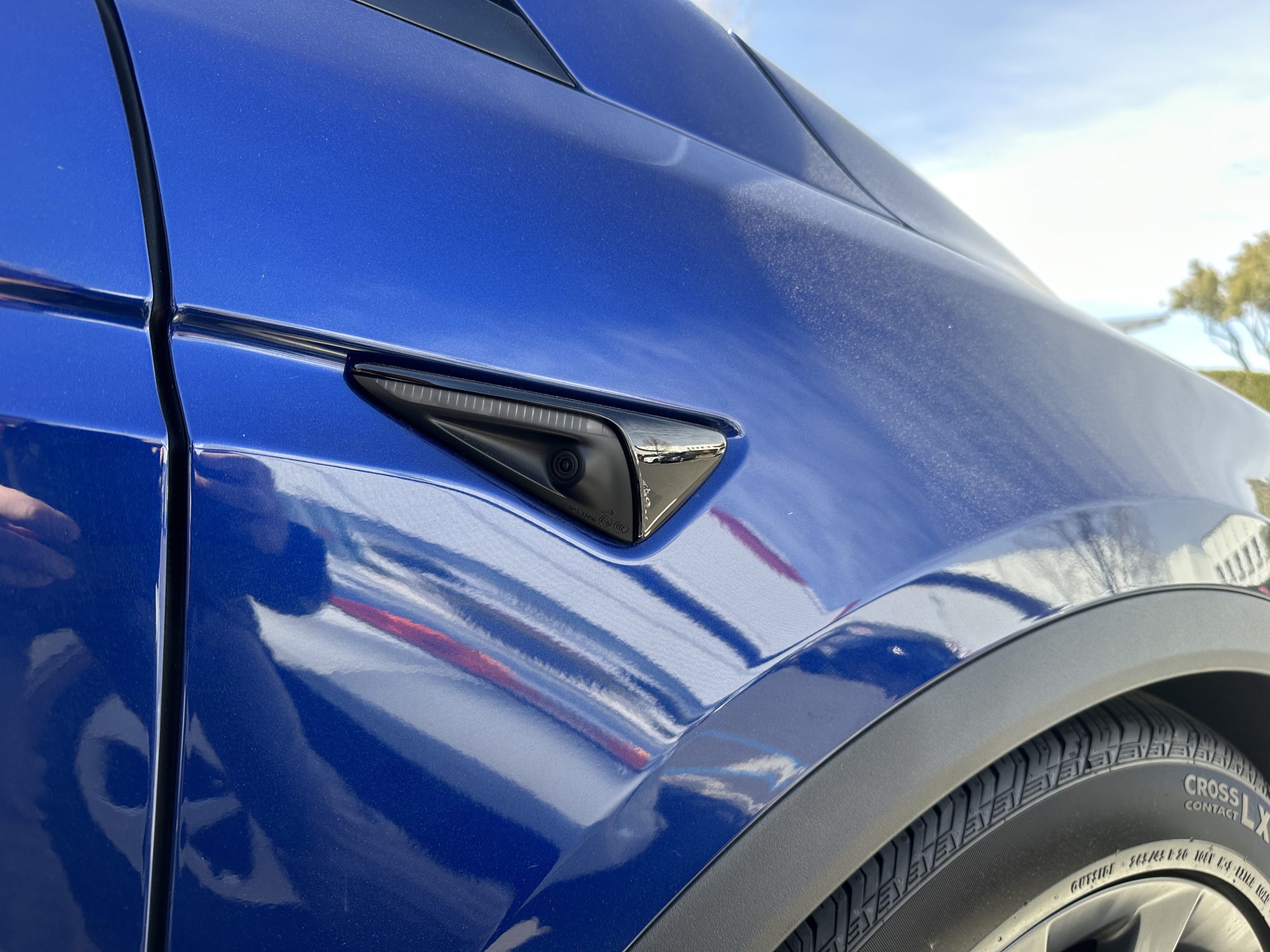
Tesla has improved Dashcam playback with an awesome new addition, as the company has launched a web-based version that is potentially easier to navigate and operate.
The tool is available at dashcam.tesla.com and will be enabled as your vehicle receives the 2026.20 Software Version. Clips that are captured by your Tesla will be available on the Online Dashcam Clip Viewer once the files on your car’s storage drive are encrypted.
Not a Tesla App first noticed the new feature, and states that once your Tesla updates to 2026.20, the car will automatically protect the clips with an encryption key that is uniquely tied to your owner account.
Tesla Launches New Web-Based Dashcam Viewer https://t.co/AlJKXYxujJ pic.twitter.com/4igicYpvkX
— Not a Tesla App (@NotATeslaApp) June 2, 2026
The web-based viewer should be easier to operate for most. All you will do is head over to dashcam.tesla.com and log in using your account credentials.
Ensure your vehicle is updated to 2026.20 in order for the web-based viewer tool to fetch your vehicle’s saved dashcam clips.
Currently, only a small percentage of owners are updated to this, so it may be a couple of weeks until a majority of owners in the fleet are able to access this feature.
Watching Dashcam clips on the Tesla smartphone app is quick and convenient, as they can also be easily downloaded and stored right on your smartphone.
However, the clips are sometimes tougher to navigate, and in order to get details like self-driving activation, speed, and turn signals, owners have to screen record the Tesla app and crop out the rest of the screen.
It could also be a massive storage saver as you’ll be able to download the Dashcam clips from the online viewer and save them to your laptop, desktop, a flash drive, or even an external hard drive. This will keep all your clips in one place.
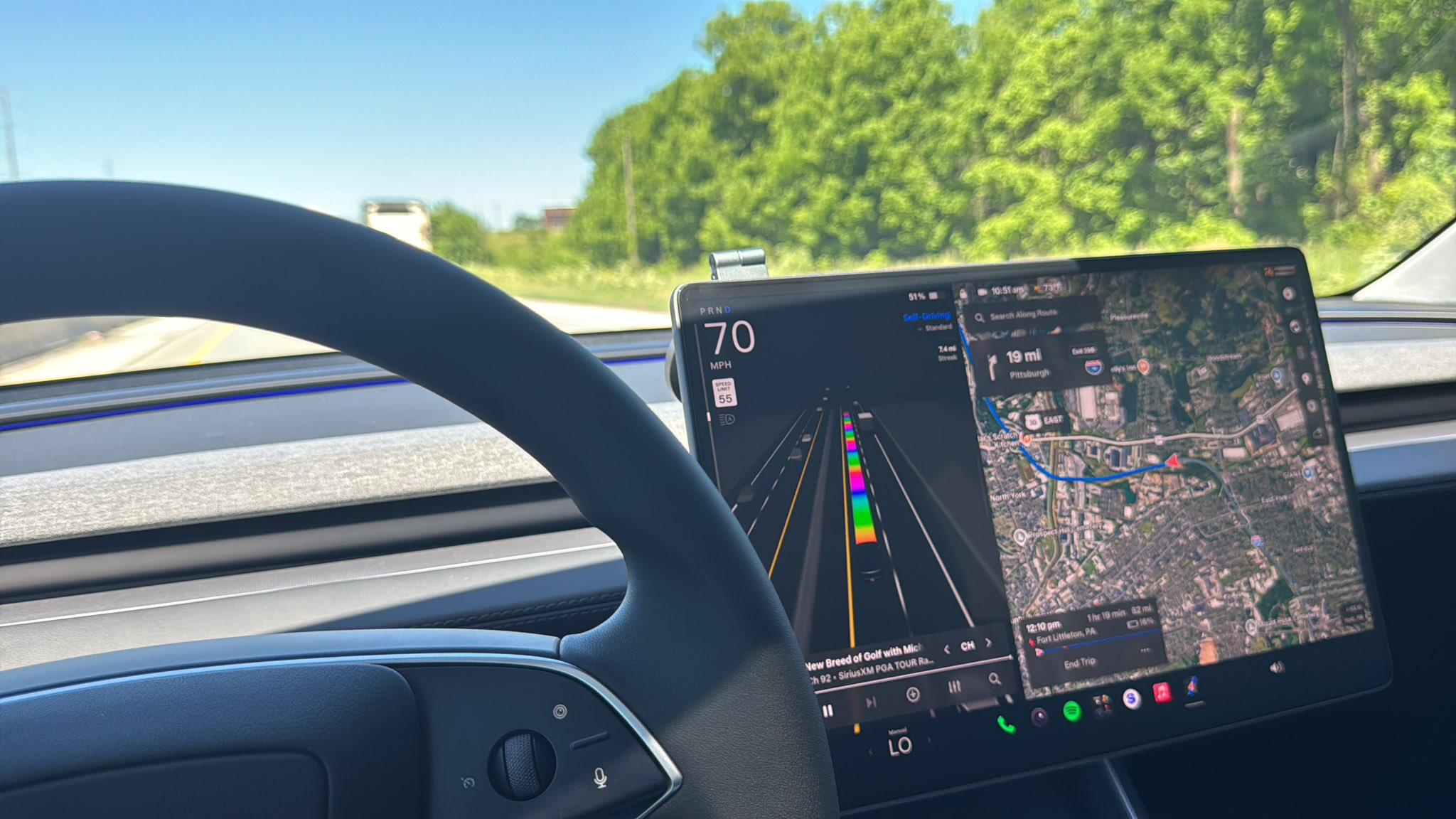
I recently took my Tesla Model Y running Full Self-Driving (Supervised) v14.3.3 over 150 miles on the Pennsylvania Turnpike in an effort to truly put the system under a stress test. There were a lot of good moments, and some bad, but overall, Full Self-Driving impressed me.
Last Thursday, I decided it was time to visit the Flight 93 National Memorial near Shanksville, PA. I go a few times a year, and it was a beautiful day. Others have taken some pretty lengthy drives using FSD, but I haven’t had the opportunity to really do something lengthy in quite a few months on an older version. I decided it was the perfect opportunity to try some things out.
I recorded the entire ride there on a GoPro, edited to highlight the crucial moments, and shared them on our social media accounts. If you want to watch them, I’ll share them throughout the piece, but I did not get to do a real breakdown of what I felt about its performance.
Overall Thoughts
I realize it is probably better to do a summation of its performance toward the end of the piece, but I feel like it is also reasonable to lead with this because I was overly impressed with how well it handled everything. The only moments where I felt a little bit of reason to touch the wheel, at least while traveling on the Turnpike and Rt. 30, were due to other drivers and their behaviors.
I have taken many drives to the Memorial over the past several years, and although it’s not incredibly long, it is a tiring drive. It’s about five hours both ways, close to 300 miles, and I think most of the exhaustion comes from the toll of sitting in the car and then visiting something that is pretty heavy to take in.
This was the first time I’ve ever taken the ride and not felt like I needed to avoid my vehicle after I got home. In the past, I could not even think about driving after I finally arrived at my house, but this was simply different.
It was nice to have something else take the drive for me, while I still had the freedom to take over if I chose to. It made the entire trip more enjoyable.
Full Self-Driving Recognizes Lane-Ending Arrows on Road
After traveling in the fast lane for a little while, FSD noticed the arrows on the road indicating the lane was coming to an end ahead. The car was also in the process of making a pass on a slower vehicle in the middle lane, but aborted this maneuver and backed off to get behind the vehicle.
I was really impressed by this because I thought that the car would absolutely try to make the pass, only to get in front of the other car, and then slow back down to 75 MPH:
WATCH: Tesla Full Self-Driving v14.3.3 recognizes lane-ending arrows, aborts pass of slower traffic, and gets in line https://t.co/1dxvTOw5Cn pic.twitter.com/SOpuj9ZHyP
— TESLARATI (@Teslarati) June 2, 2026
Full Self-Driving Notices Veering Tractor Trailer, Adjusts Lane Positioning
My two rules of the road are never cruise in the fast lane and never drive next to a tractor-trailer. This clip is a perfect example as to why.
FSD v14.3.3 recognized this tractor-trailer attempting to change lanes while we were still next to it. The car shifted its lane positioning to the shoulder slightly to make room for the merging semi, executed the pass safely, and on we went.
I will admit this one made me a little nervous, but more so because of the 18-wheeler, and not because of the Tesla:
WATCH: Tesla Full Self-Driving v14.3.3 notices tractor-trailer veering into lane, shifts lane positioning to create space, completes pass safely https://t.co/1dxvTOw5Cn pic.twitter.com/E35UrP79CH
— TESLARATI (@Teslarati) June 2, 2026
Full Self-Driving Follows the Rules of Tunnel Travel
Many people who are not familiar with Full Self-Driving and its capabilities are pretty limited in what they know about the really simple things it does well. Part of supervising FSD is being aware of things it might make mistakes with, and anticipating maneuvers it might want to make at the wrong time.
Entering the Blue Mountain Tunnel on the Turnpike, I was ready for FSD to attempt to get back into the right lane after making a pass on a tractor-trailer, but I was pleasantly surprised. Several signs outside the tunnel advise drivers to stay in the lane they’ve chosen while driving through the tunnel; this eliminates the possibility of an accident caused by lane changes, which would impede traffic on a crucial logistics route.
I was happy to see that Tesla Full Self-Driving v14.3.3 did not make this mistake:
WATCH: Tesla Full Self-Driving follows rules of tunnel travel, recognizes double lines, and does not change lanes https://t.co/1dxvTOw5Cn pic.twitter.com/L6eEP5bCE9
— TESLARATI (@Teslarati) June 2, 2026
Full Self-Driving Navigates Toll Plazas with Ease
I was interested to see how FSD would handle toll plazas, including the speed at which it would travel through them, and whether it would stop on the Turnpike at these booths, which have since been transitioned to a “Toll by Plate” system, which mails you a bill.
It was flawless:
WATCH: Tesla Full Self-Driving v14.3.3 seamlessly handles toll plaza, smoothly merges back onto Turnpike https://t.co/1dxvTOw5Cn pic.twitter.com/XmwY7rkj9J
— TESLARATI (@Teslarati) June 2, 2026
Full Self-Driving Still Struggles with Parking from Time to Time
Since I took delivery in late August, I’ve never had a single instance of my Tesla struggling to park at a Supercharger. Other spots at the mall, market, or gym are another story.
This was the first time it did such a terrible job of backing into a spot. This required me to take over and manually park at another charger:
Tesla Full Self-Driving v14.3.3 had trouble backing into the Fort Littleton, PA Supercharger, even though it was the only vehicle there.
This required manual parking. https://t.co/1dxvTOw5Cn pic.twitter.com/7xgqH2Z0ye
— TESLARATI (@Teslarati) June 2, 2026
Full Self-Driving Gets Confused After Arriving at Its Destination
This was the first time I have ever experienced FSD getting confused and just circling the lot. The navigation continued to reroute to try to resolve the issue, but after four laps, I decided it was time to overtake the car’s controls and park manually:
Experienced the same thing a few days ago
I think one of the big features a lot of people would appreciate is parking preferences or spot selection https://t.co/RCVwUOMxoY pic.twitter.com/U9f1wW2np9
— TESLARATI (@Teslarati) May 31, 2026
This was a baffling behavior that I truly couldn’t explain. Other owners communicated that they have also experienced this issue.
Final Thoughts
I am so incredibly impressed by FSD that it has really made traveling stress-free. The two issues related to parking were not ideal, but to be fair, I usually take over when arriving at parking lots. However, this shortcoming is something Tesla has to make some serious progress with, because parking has truly stumped FSD at times.
Solving that will be a major breakthrough for autonomy, but Tesla has struggled with it for some time.
All in all, FSD v14.3.3 is unbelievably accurate and handles many of the more stressful maneuvers with ease, one of them being avoiding merging traffic on highways, which was shown above.
Some things that would be great to see improvements on are parking, Speed Profiles, which are relatively tough to adjust (I stayed in Standard for the duration of this drive), and, of course, navigation.
Elon Musk
SpaceX’s amended S-1 is sparking a major Tesla merger conversation
A single line in SpaceX’s amended S-1 just sent Tesla stock down 5% in one day.

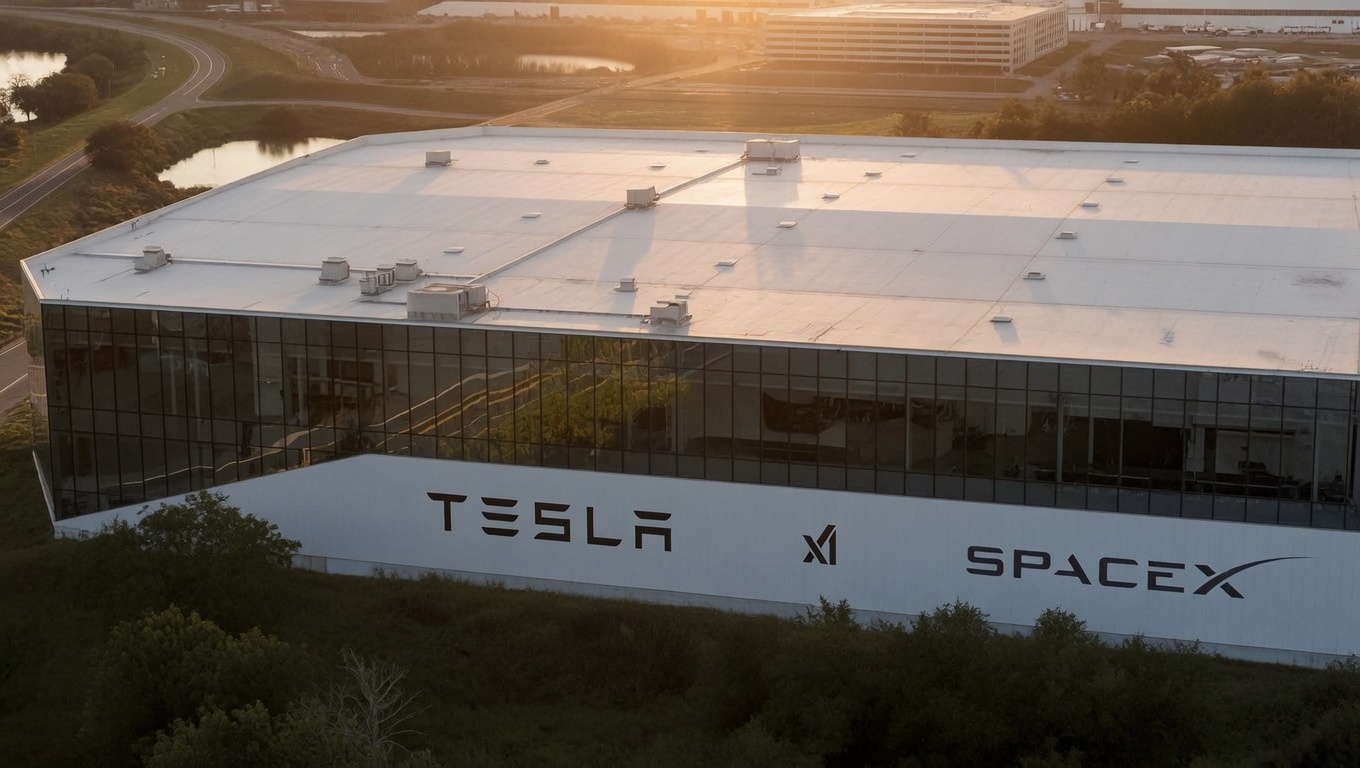
A single line buried in SpaceX’s amended S-1 filing is doing more to move Tesla’s stock price than anything Tesla itself has announced in months. The clause, disclosed as SpaceX prepares for what could be the largest IPO in Wall Street history, states that the company “may issue a significant amount of equity in connection with future transactions.” While this may be seen as boilerplate language in S-1 filings, the historical ties between SpaceX and Tesla, and with Elon Musk reportedly discussing a possible merger with close colleagues, investors are interpreting it as something closer to a signal.
The concern among institutional investors like Gary Black, managing director of The Future Fund, pointed directly to the amended filing on X, saying it “strongly suggests more SPCX equity will be issued,” which could potentially be used to acquire Tesla. He estimated such a deal could be 28% dilutive to Tesla shareholders since SpaceX would likely command a significantly higher valuation multiple. Black added that institutional investors he knows hate the idea of a combination because they prefer pure plays over conglomerates, which he said “nearly always gravitate to the lowest common multiple.”
The Tesla and SpaceX merger everyone is talking about is quietly building
The bull case runs the math differently. Tesla influencer and retail shareholder advocate AleXandra Merz pushed back on what she called a widespread misunderstanding of how merger-of-equals deals actually work. Rather than simply splitting the difference between two market caps, a merger exchange ratio is negotiated based on relative fair market values, meaning the lower valued company typically sees its stock reprice upward toward the deal value.
Under her model, SpaceX enters at a $2.5 trillion valuation and Tesla at $1.6 trillion, producing a combined entity worth $4.1 trillion split evenly between both shareholder groups. That implies Tesla’s side of the deal would be valued at $2.05 trillion, a gain of roughly $450 billion from its current market cap. She cited Dow-DuPont and CBS-Viacom as historical examples of how markets reprice both companies toward the announced exchange ratio after a deal is unveiled.
What does a Merger of Equals mean to Elon’s compensation packages?
Well, it changes everything.
Enjoy https://t.co/uekCldyITw pic.twitter.com/kolq1C9qTu
— AleXandra Merz 🇺🇲 (@TeslaBoomerMama) June 1, 2026
The SpaceX S-1 amendments also revealed just how much financial infrastructure already binds the two companies together. As Teslarati has reported, SpaceX purchased $697 million in Tesla Megapacks, $131 million in Cybertrucks, and the two companies have shared supply chain resources, and semiconductor fabrication plans since well before any merger conversation became public. A retail poll by Tesla influencer Sawyer Merritt is finding that 36% of respondents do not plan to buy SpaceX shares at IPO and 15.3% saying their decision depends on the valuation.
Do you plan on buying @SpaceX stock at its IPO?
— Sawyer Merritt (@SawyerMerritt) June 1, 2026
Whether the merger happens or not, the amended filing is seemingly moving markets and sharpened a debate that is no longer theoretical. SpaceX is weeks away from trading publicly, and Tesla shareholders are now watching every word of every filing for clues about what Musk plans to do next.

Tesla improves Dashcam playback with awesome addition

Tesla Full Self-Driving attempts 150-mile stress test: the good and the bad


