News
Nearly 80% of Tesla Giga Berlin employees speak out against union works council: exec

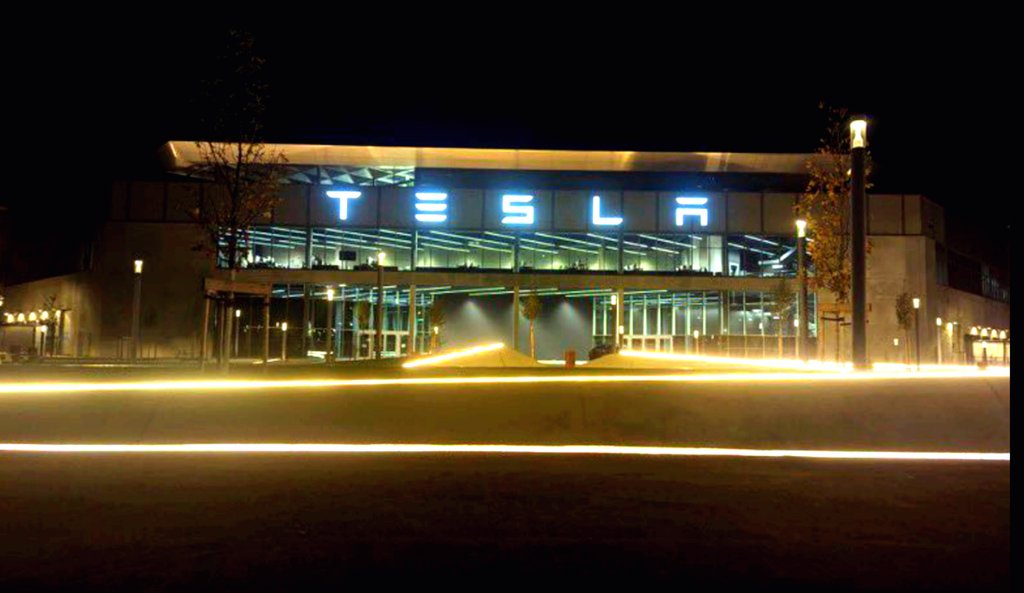
A considerable number of Tesla Giga Berlin employees have spoken out against a trade union works council. The announcement was posted by Tesla Senior Director of Manufacturing for Giga Berlin Andre Thierig in a post on his LinkedIn page.
As per the Giga Berlin executive, nearly 80% of Giga Berlin employees who voted in the works council election opted for non-unionization.
“In the works council election that has just ended, the majority of our workforce spoke out against a trade union works council. I would like to thank all employees for a high voter turnout of almost 80% and their vote for an independent future for the Gigafactory of Berlin-Brandenburg. We will continue to master all challenges together in the future,” Thierig wrote in his LinkedIn post.
As noted in a Reuters report, IG Metall is still poised to take 16 of the 39 seats available in the council. This would make IG Metall the largest group in the Tesla Gruenheide plant works council, but it could mean that the trade union may fall short of gaining the majority. If IG Metall is not able to secure a majority, it would have to partner with another group, Bloomberg News noted.
A Tesla spokesperson reiterated the Giga Berlin executive’s points in a comment, stating that the facility’s workers had “decided in the majority against the union IG Metall.” The spokesperson also noted that Tesla would “continue its successful cooperation with the works council.”
#GigaBerlinBrandenburg
– Works council election –
The majority of GigaBerlin employees have spoken out against a union works council.
Plant manager @AndrThie :
" I thank all employees for the high voter turnout of almost 80% and your vote for an independent future of… pic.twitter.com/CSrM2qvSPw— Gigafactory Berlin News (@Gf4Tesla) March 21, 2024
IG Metall district manager Dirk Schulze, for his part, seemed quite satisfied with the results of the vote. He congratulated the workers who won seats in the works council.” You ran a fantastic election campaign in such a short time with a clear and convincing program for better working conditions at Tesla,” Schulze noted. He also stated that the union won votes due to its “clear and convincing program for better working conditions at Tesla.”
As per Bloomberg, IG Metall’s candidates were able to secure 3,516 votes. Candidates from a rival group called Giga United were able to secure 3,201 votes, and candidates from a third group, One Team, secured 1,106 votes.
Don’t hesitate to contact us with news tips. Just send a message to simon@teslarati.com to give us a heads up.


News
Tesla’s AI Chief just hinted at something big for FSD v14 lite owners
Tesla’s AI chief suggests the newest FSD v14 Lite build may finally go wide release.

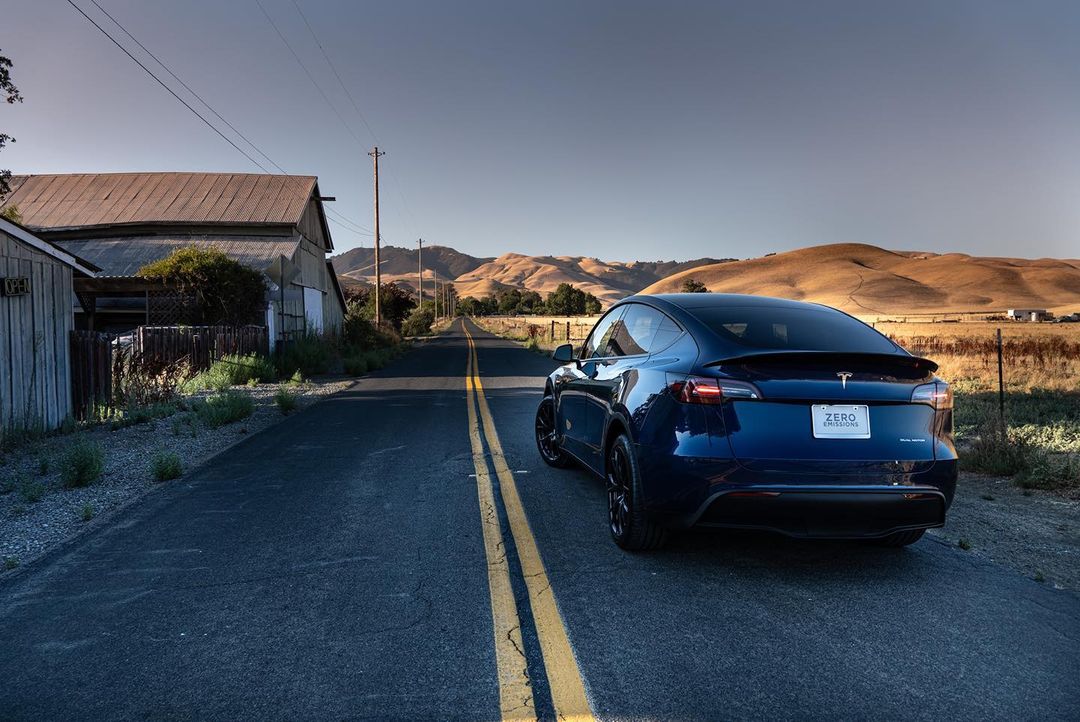
Tesla’s head of AI, Ashok Elluswamy, noted on Sunday that the newest FSD v14 Lite build rolling out to Hardware 3 cars is likely the version that goes to wide release, the strongest signal yet that Tesla is near to closing out an early access phase that Hardware 3 owners have waited more than a year for.
Elluswamy made the comment in response to an extensive review from Tesla owner Zack, known on X as @BLKMDL3, who tested software version 2026.20.6.10 and detailed the changes in a lengthy post. “FSD v14 Lite (for Tesla AI3 hardware vehicles) review.
The update restarts a rollout that had stalled after its initial release. Tesla began pushing FSD v14 Lite to Hardware 3 early access drivers on June 29, bringing driving behavior learned on the newer Hardware 4 computer down to the more limited chip that has powered Tesla vehicles built between 2019 and early 2023. That release, as we covered in detail, gave roughly 4 million HW3 vehicles their first meaningful update since being frozen on version 12.6 in early 2025.
Tesla Full Self-Driving v14 ‘Lite’ Release Notes: new capabilities and features
The latest build adds features that bring Hardware 3 closer in line with what Hardware 4 owners already have. FSD can now start directly from park without a brake pedal confirmation, a change Zack called a small but meaningful quality of life improvement. The interface also picks up the blue “P” park icon, approaching destination alerts, and a dedicated Self-Driving app with streak tracking, all details previously exclusive to the AI4 branch of v14, as outlined in Tesla’s original release notes.
The stakes around Hardware 3 go beyond software polish. Tesla sold the Full Self-Driving package for years on the promise that every vehicle equipped with it had the hardware needed to eventually drive itself without supervision. That promise broke down during Tesla’s Q1 2026 earnings call, when Musk acknowledged HW3 cars could not run unsupervised FSD, prompting Tesla to offer trade-in discounts and hardware retrofits alongside the Lite software track.
Tesla confirmed HW3 can’t do Unsupervised FSD but there’s more to the story
Tesla has continued to frame v14 Lite as the primary path forward for the HW3 fleet, telling owners in April that international markets would follow the U.S. rollout once regulatory approvals came through. For now, HW3 owners in the early access group are the only ones running the new build. A broader rollout would mark the second major software delivery to the legacy fleet since Tesla first released FSD v14 to Hardware 4 vehicles, and the first sign since June that the Lite program is still moving rather than stuck in early access limbo.

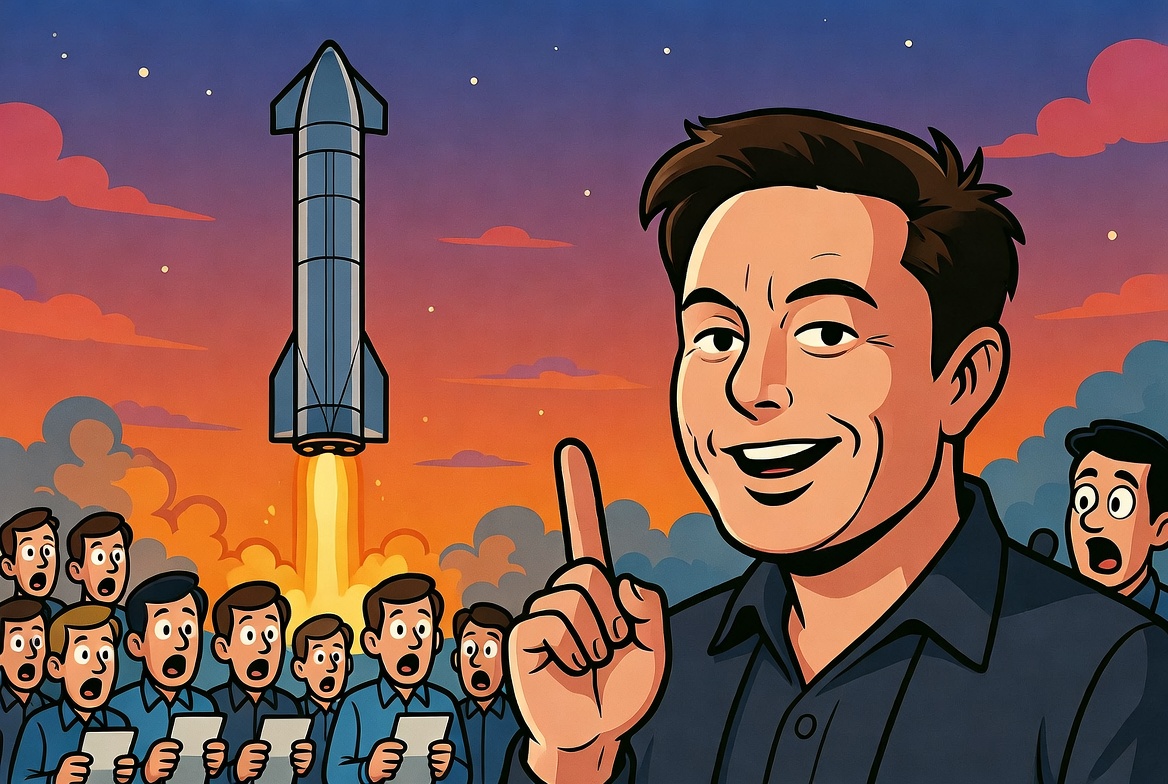
In a pointed message on X, Elon Musk warned that firms maintaining significant short positions in SpaceX over time face “very low” survival probability.
The statement comes amid post-IPO volatility for the rocket company, now trading under the ticker $SPCX.
The survival probability of firms who maintain a significant short position in SpaceX over time is very low
— Elon Musk (@elonmusk) July 17, 2026
Five weeks after what was described as the largest IPO in history, the stock had fallen roughly 30% from its peak above $2.6 trillion, briefly surpassing Microsoft and Amazon in market value. Short sellers celebrated gains of about $8.7 billion, but Musk’s reply underscores his long-term conviction.
The warning directly echoes a detailed bullish analysis arguing that Starship’s cost reductions could unlock a multi-trillion-dollar space economy. Projects ranging from solar power beamed from orbit and asteroid mining to orbital data centers and Mars terraforming were projected to create over $100 trillion in new market capitalization.
In this vision, SpaceX acts as the essential infrastructure provider, akin to AWS for cloud computing, capturing monopoly-like revenues from launches, crew transport, and data traffic across a rapidly expanding frontier.
This is far from the first time Musk has targeted short sellers. With Tesla, he has repeatedly framed persistent bears as destined for major losses. In July 2024, Musk declared that once Tesla achieves full autonomy and volume production of Optimus robots, “anyone still holding a short position will be obliterated. Even Gates,” referencing Microsoft co-founder Bill Gates’ reported short bets.
Elon Musk reveals what Tesla stock surge could do to Bill Gates
Earlier, in 2018, he taunted shorts that they had “about three weeks before their short position explodes,” a remark followed by sharp stock gains. Musk has also called short selling “value destroying” and once suggested it “should be illegal,” viewing it as betting against innovation and progress.
Critics often dismiss Musk’s optimism as hype, especially when near-term metrics like quarterly deliveries or stock fluctuations disappoint.
Yet his pattern remains consistent: framing short positions against his companies as fundamentally misjudging exponential technological leaps. For SpaceX shorts, the message is clear: betting against multi-planetary ambitions and the infrastructure monopoly they enable carries existential risk for the firms involved.
As Musk and supporters see it, the space economy’s upside dwarfs Earth-bound valuation models, making today’s dips temporary in a decades-long ascent.
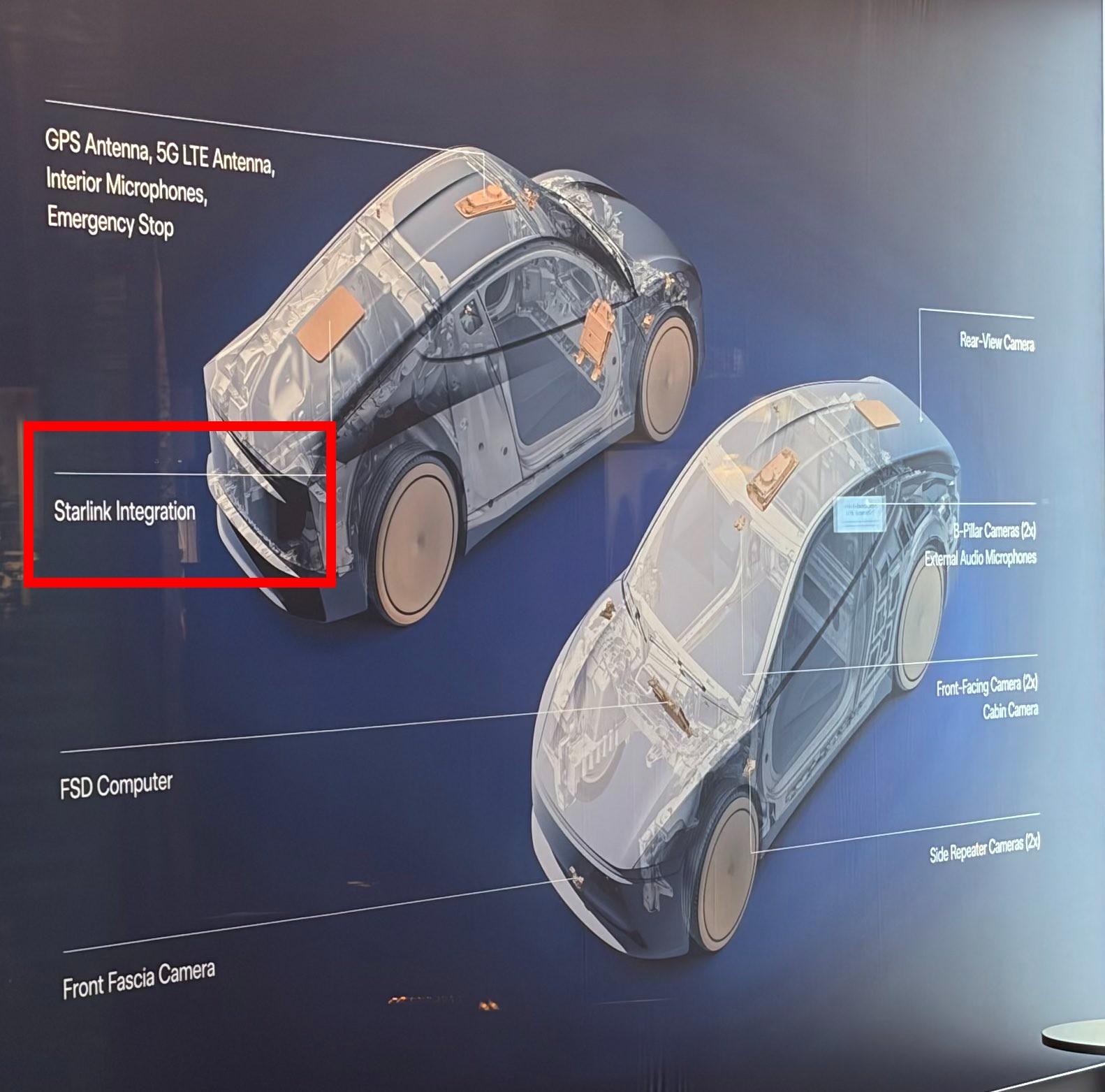
Tesla has evidently revealed which of its vehicle models will be the first to receive Starlink integration: the Cybercab.
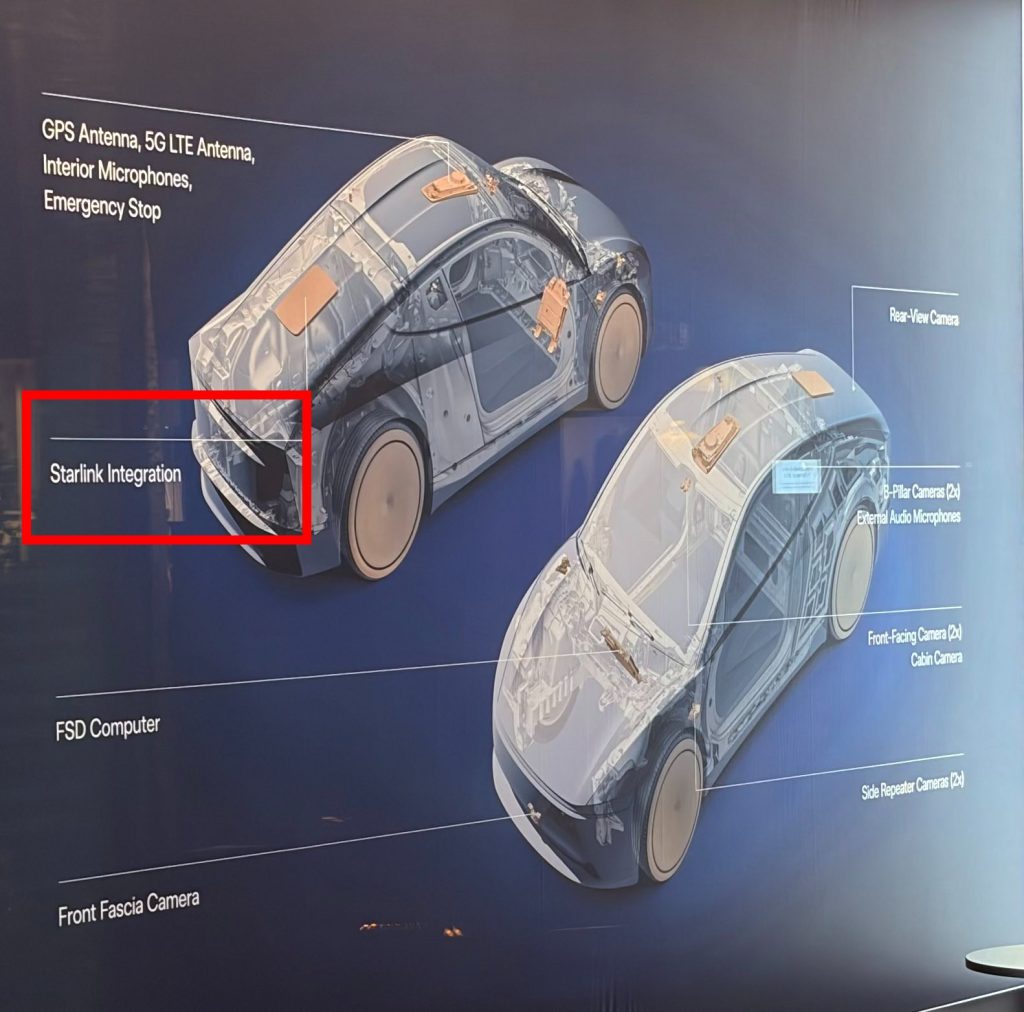
Tesla’s Santana Row showroom now has a full-fledged display of the Cybercab, with an extensive bit of information hung around an exhibit that seems to reveal the vehicle’s newest feature: an integrated Starlink antenna that will enable secure and reliable internet access during trips.
Credit: @Starscream_SJC | X
Cybercab is geared toward autonomous ride-hailing for one or two passengers. The production units rolling off the lines at Gigafactory Texas are built without steering wheels or pedals, meaning when public rides begin, passengers will not need to interact with a human being or control the vehicle in any way outside of what appears on the center screen for their entertainment during the ride.
Tesla Santana Row will be reopening tomorrow with a full focus on self-driving. Everything in the showroom is about Robotaxi and Cybercab with stats and information about the technology. The Cybercab on display is the production model. pic.twitter.com/yIUYdOGFOp
— Shaun Cassidy (@Starscream_SJC) July 20, 2026
Along the display, Tesla wrote this message about Cybercab:
“Cybercab is built for autonomy. It has no steering wheel, no side mirrors, and no pedals. It goes where you tell it to go and how you want it to, so you can relax along the way. It is hyper aware and responsive to your surroundings, monitoring other drivers, responding to emergency vehicles, utilizing its expertise in the rarest scenarios to help keep you safe.”
Tesla has been teasing a potential Starlink integration for quite some time now. In December, the company hinted at potential Starlink internet terminal integration within its vehicles in a patent that described a vehicle roof assembly with integrated radio frequency (RF) transparency.
The company wrote in its patent application that a new roof design built with materials that differ from the standard metallic or glass elements used in today’s cars would allow it to integrate modern vehicular technologies, in particular, ones that require radio frequency transmission and reception.
Tesla suggested high-strength polymer blends, like Polycarbonate, Acrylonitrile Butadiene Styrene, or Acrylonitrile Styrene Acrylate.
This is the first time we’ve seen Tesla officially confirm the Starlink integration into the Cybercab. It’s not much of a surprise considering the company’s intention behind the Cybercab, which is to make travel autonomous.
Productivity will now be at a maximum during a work-related commute, while the center screen could be utilized for Netflix or potentially even live TV for those who are heading to dinner or to a fun activity.

Tesla’s AI Chief just hinted at something big for FSD v14 lite owners

Elon Musk sends first warning to SpaceX short sellers


