News
Tesla FSD (Supervised) could be approved in the Netherlands next month: Musk
Musk shared the update during a recent interview at Giga Berlin.


Tesla CEO Elon Musk shared that Full Self-Driving (FSD) could receive regulatory approval in the Netherlands as soon as March 20, potentially marking a major step forward for Tesla’s advanced driver-assistance rollout in Europe.
Musk shared the update during a recent interview with Giga Berlin plant manager Andre Thierig, noting that the date was provided by local authorities.
“Tesla has the most advanced real-world AI, and hopefully, it will be approved soon in Europe. We’re told by the authorities that March 20th, it’ll be approved in the Netherlands,’ what I was told,” Musk stated.
“Hopefully, that date remains the same. But I think people in Europe are going to be pretty blown away by how good the Tesla car AI is in being able to drive.”
Tesla’s FSD system relies on vision-based neural networks trained on real-world driving data, allowing vehicles to navigate using cameras and AI rather than traditional sensor-heavy solutions.
The performance of FSD Supervised has so far been impressive. As per Tesla’s safety report, Full Self-Driving Supervised has already traveled 8.3 billion miles. So far, vehicles operating with FSD Supervised engaged recorded one major collision every 5,300,676 miles.
In comparison, Teslas driven manually with Active Safety systems recorded one major collision every 2,175,763 miles, while Teslas driven manually without Active Safety recorded one major collision every 855,132 miles. The U.S. average during the same period was one major collision every 660,164 miles.
If approval is granted on March 20, the Netherlands could become the first European market to greenlight Tesla’s latest supervised FSD (Supervised) software under updated regulatory frameworks. Tesla has been working to secure expanded FSD access across Europe, where regulatory standards differ significantly from those in the United States. Approval in the Netherlands would likely serve as a foundation for broader EU adoption, though additional country-level clearances may still be required.


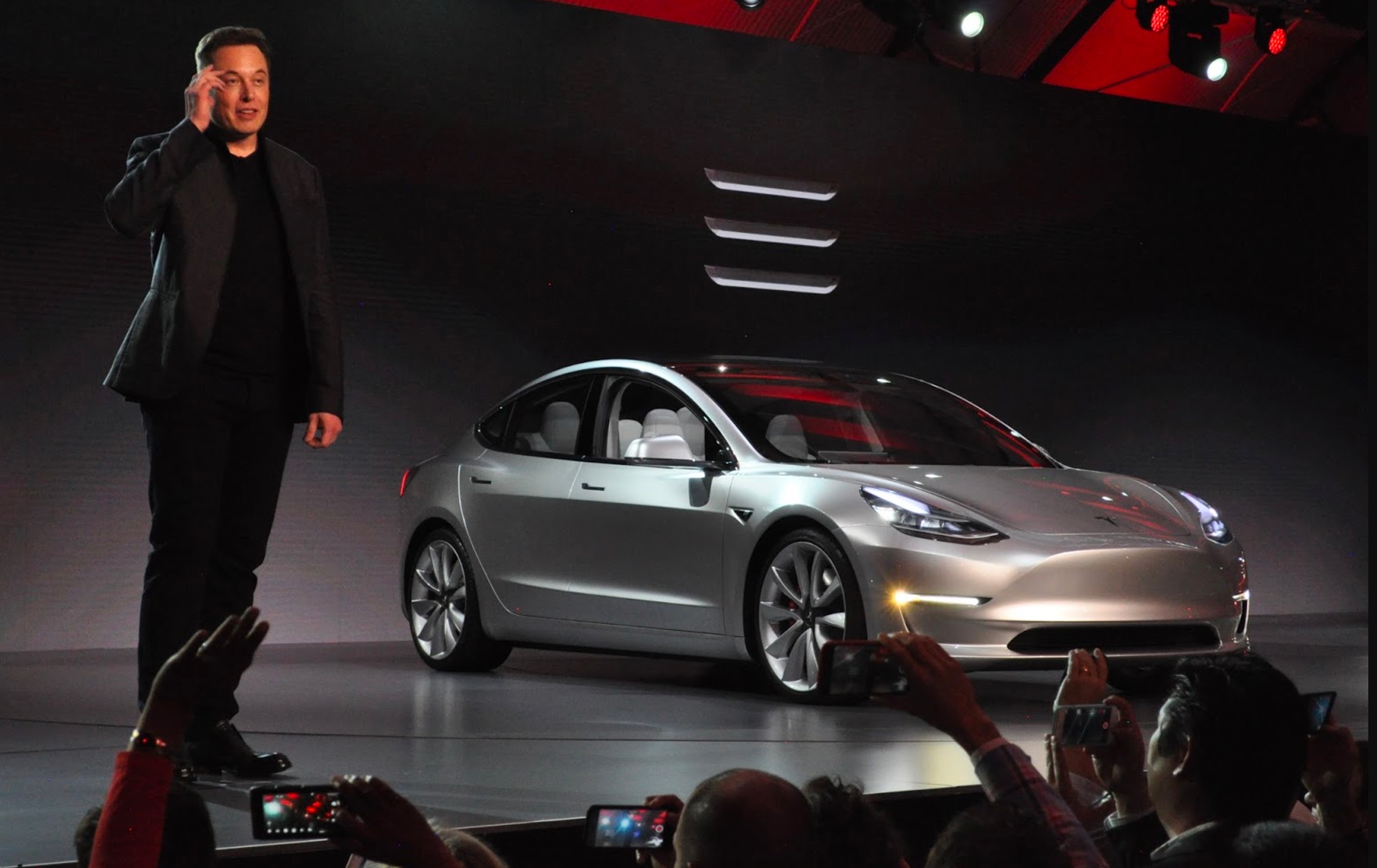
Tesla has taken home the “Overall Loyalty to Make” award from S&P Global Mobility for the fourth consecutive year, reinforcing Tesla owners’ willingness to come back. The 2025 awards are based on S&P Global Mobility’s analysis of 13.6 million new retail vehicle registrations in the U.S. from October 2024 through September 2025. The complete list of 2025 winners includes General Motors for Overall Loyalty to Manufacturer, Tesla for Overall Loyalty to Make, Chevrolet Equinox for Overall Loyalty to Model, Mini for Most Improved Make Loyalty, Subaru for Overall Loyalty to Dealer, and Tesla again for both Ethnic Market Loyalty to Make and Highest Conquest Percentage.
Tesla’s streak in this category started in 2022, and the brand has now won the Highest Conquest Percentage award for six straight years, meaning it keeps pulling buyers away from other brands at a rate no competitor has matched. Tesla’s retention among Asian households reached 63.6% and among Hispanic households 61.9%, rates that significantly outpace national averages for those groups. That breadth of appeal across demographics adds a layer of significance to a win that some might dismiss as routine.
The timing matters too. After several consecutive quarters of decline, Tesla’s share of U.S. EV sales jumped to 59% in Q4 2025. That rebound, arriving just as competitors were flooding the market with new models and incentives, suggests Tesla’s loyalty numbers are not simply the result of limited alternatives. Buyers are still choosing it when they have plenty of other options.
What keeps Tesla owners coming back has a lot to do with the and convenience of charging. The Supercharger network is the most straightforward example. With over 65,000 Superchargers globally, it remains the largest and most reliable fast-charging network in the world, and owners who have built their routines around it face a real practical cost when considering a switch. Competitors have made progress, but the consistency, speed, and availability of Tesla’s network is still the benchmark the rest of the industry is chasing. Then there is the software side. Tesla has built a model where the car you own today is functionally different from the car you bought two years ago, through over-the-air updates that add continuous game-changing improvements such as Full Self-Driving that has moved from a driver-assist feature to an increasingly capable autonomous system. For many Tesla owners, leaving the brand means starting over with a car that will not get meaningfully better over time, and that is a trade-off fewer and fewer are willing to make.

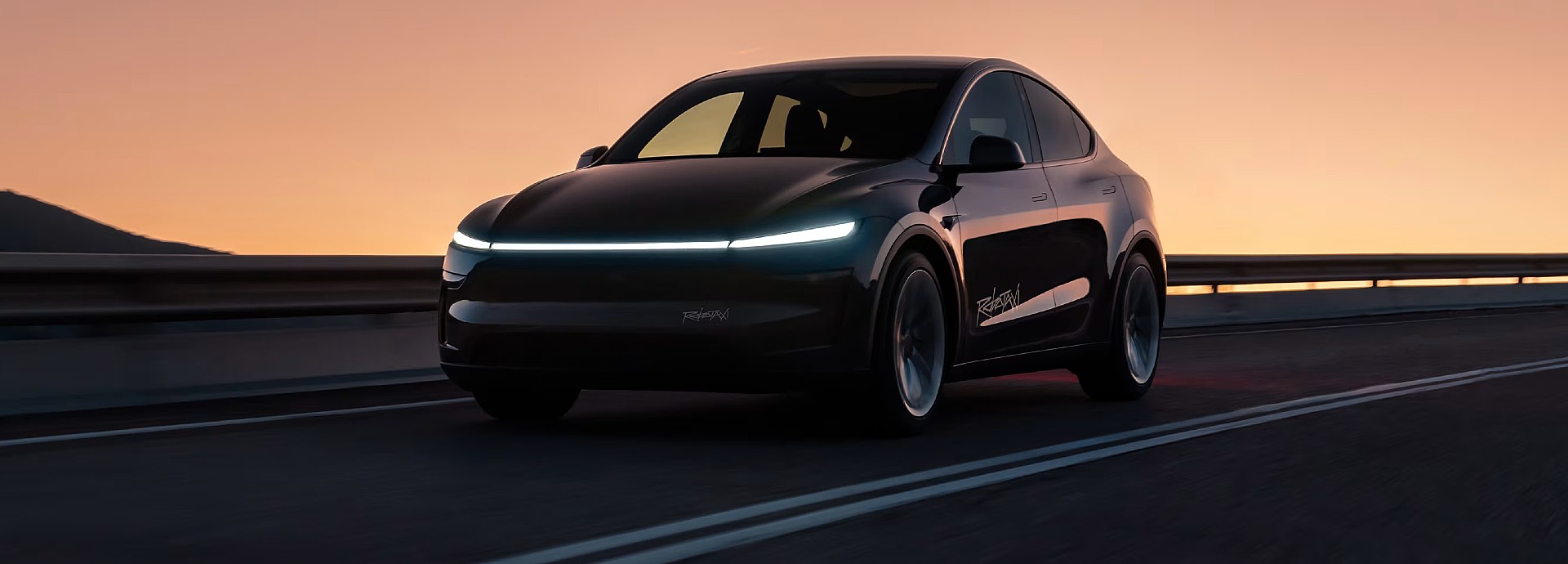
Tesla Robotaxi services in Austin have been operating since last Summer, but Tesla has admittedly been delayed in its expansion of the geofence, fleet size, and other details in a bid to prioritize safety as new technology rolls out.
But those barriers are being broken with new guardrails being removed from the program.
Tesla has achieved a significant advancement in its autonomous ride-hailing program. As of May 4, the Robotaxi fleet in Austin, Texas, has begun operating unsupervised during evening hours for the first time. This expansion moves beyond previous limitations that restricted unsupervised service to daylight hours, typically ending in mid-afternoon.
Tesla Robotaxi in Austin is operating unsupervised in the evenings for the first time today.
Previously in Austin, unsupervised operation ended mid-afternoon
— Robotaxi Tracker (@RtaxiTracker) May 4, 2026
The change brings Austin in line with operations in Dallas and Houston. Those cities have supported evening unsupervised runs since their initial launches in April, and both recently received additions of new unsupervised vehicles to their fleets. This coordinated progress across Texas strengthens Tesla’s regional presence and provides a broader testing ground for the technology.
This milestone carries substantial weight in the development of autonomous vehicles. Extending operations into low-light conditions meaningfully expands the Robotaxi’s operational design domain (ODD)—the specific environments and scenarios in which the system is approved to operate safely without human intervention.
Nighttime driving presents unique technical demands: diminished visibility, headlight glare from oncoming traffic, reduced contrast for identifying pedestrians and lane markings, and greater variability in camera sensor exposure.
Tesla’s pure vision approach, powered by neural networks trained on vast real-world datasets rather than lidar or pre-mapped routes, must handle these variables reliably. Demonstrating consistent unsupervised performance after sunset validates the robustness of the end-to-end AI stack and its ability to generalize across diverse lighting conditions.
Beyond technical validation, the expansion holds important operational and economic implications. Evening hours often coincide with peak urban demand for rides, including commutes, dining, and entertainment outings.
Enabling service during these periods increases daily vehicle utilization, allowing each Robotaxi to generate more revenue while gathering additional high-value training data. Higher utilization accelerates the virtuous cycle of data collection, model improvement, and further ODD growth.
Looking ahead, this step paves the way for more ambitious rollouts. Success in low-light environments positions Tesla to pursue near-24-hour operations, potentially integrating highways and expanding into varied weather patterns. Regulators worldwide frequently demand evidence of safe performance across day-night cycles before granting wider approvals.
Proven capability in Texas could expedite deployments in planned cities such as Phoenix, Miami, Orlando, Tampa, and Las Vegas during the first half of 2026.
Tesla confirms Robotaxi expansion plans with new cities and aggressive timeline
Moreover, scaling evening service supports Tesla’s long-term vision of a high-efficiency robotaxi network. Greater fleet productivity lowers the cost per mile, making autonomous mobility more accessible and competitive against traditional ride-hailing.
As the company iterates on software updates informed by nighttime data, reliability is expected to compound rapidly, unlocking denser urban coverage and longer-distance trips.
In summary, the introduction of an unsupervised evening Robotaxi service in Austin represents more than an incremental schedule adjustment. It signals a critical maturation of the underlying technology and sets the foundation for broader geographic and temporal expansion.
With Texas operations gaining momentum, Tesla is steadily advancing toward transforming urban transportation at scale.
Cybertruck
Tesla Cybercab just rolled through Miami inside a glass box
Tesla paraded a Cybercab in a glass display at Miami’s F1 Grand Prix event this week.

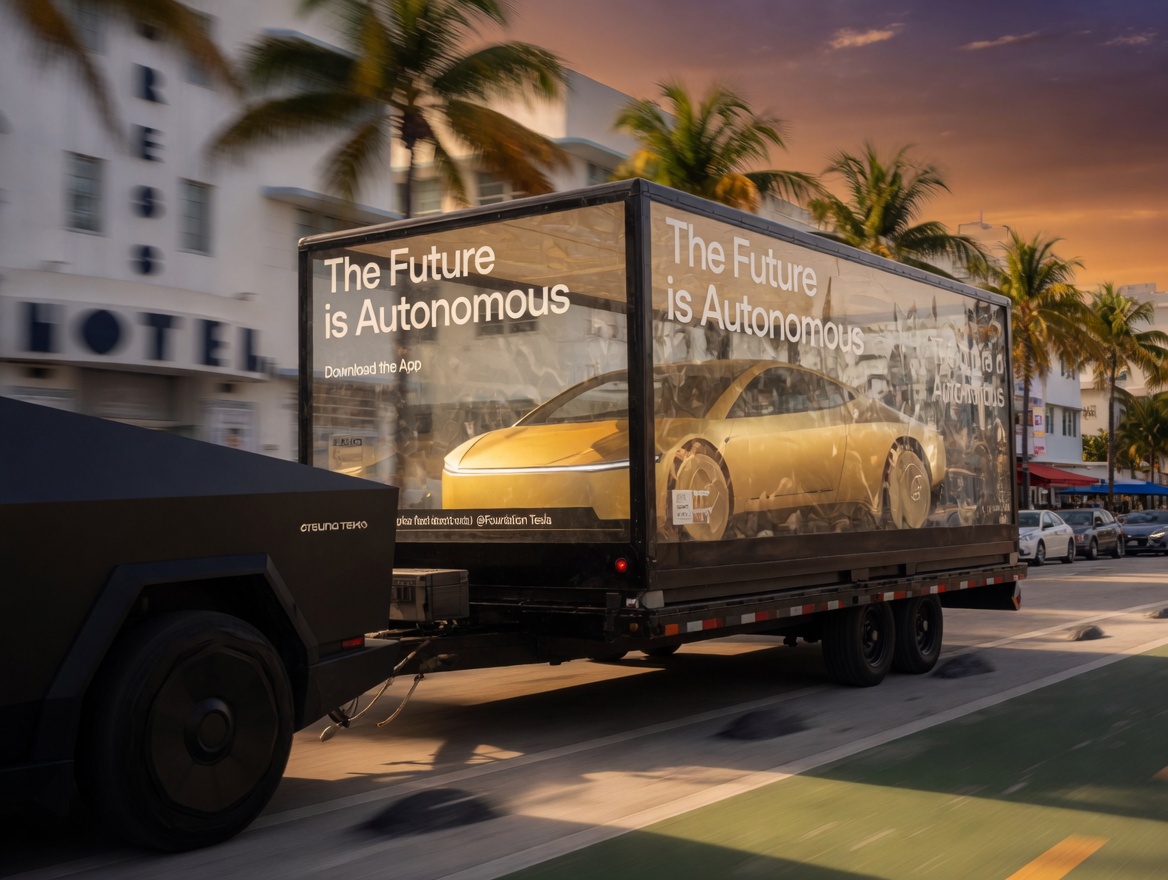
Tesla set up an “Autonomy Pop-Up” at Lummus Park in Miami Beach from April 29 through May 3, 2026, embedded within the official F1 Miami Grand Prix Fan Fest. The centerpiece was a Cybertruck towing the Cybercab inside a glass display case marked “Future is Autonomous,” rolling through the beachfront crowd.
Miami is on Tesla’s confirmed list of cities for robotaxi expansion in the first half of 2026, making the promotion a strategic promotion that lays groundwork in a target market.
This was not Tesla’s first time using Miami as a showcase city. In December 2025, Tesla hosted “The Future of Autonomy Visualized” at its Miami Design District showroom, coinciding with Art Basel Miami Beach. That event featured the Cybercab prototype and Optimus robots interacting with attendees. The F1 pop-up this week marks Tesla’s return to Miami and follows a pattern Tesla has been running since early 2026. Just two weeks before Miami, Tesla stationed Optimus at the Tesla Boston Boylston Street showroom on April 19 and 20, directly on the final stretch of the Boston Marathon, letting tens of thousands of runners and spectators meet the robot for free, generating massive earned media at zero advertising cost.
Tesla is sending its humanoid Optimus robot to the Boston Marathon
Tesla has confirmed plans to expand its robotaxi service to seven cities in the first half of 2026, including Dallas, Houston, Phoenix, Miami, Orlando, Tampa, and Las Vegas, building on the unsupervised service already running in Austin. Musk has said he expects robotaxis to cover between a quarter and half of the United States by end of year. On the production side, Musk told shareholders that the Cybercab manufacturing process could eventually produce up to 5 million vehicles per year, targeting a cycle time of one unit every ten seconds. Scaling robotaxis to 10 million operational units over the next ten years is a key condition of his compensation package, alongside selling 20 million passenger vehicles.
As for the Cybercab’s price, Musk has said buyers will be able to purchase one for under $30,000, with an average operating cost around $0.20 per mile. Whether those numbers hold through full production remains to be seen.
Cybercab at F1 Fan Fest in Miami
by
u/Joshalander in
teslamotors

Tesla owners keep coming back for more

Tesla Robotaxi service in Austin achieves monumental new accomplishment


