Elon Musk
Tesla FSD is about to know your specific house and neighborhood better than any map
Tesla confirmed it is building a feature that lets you teach your car where to go.

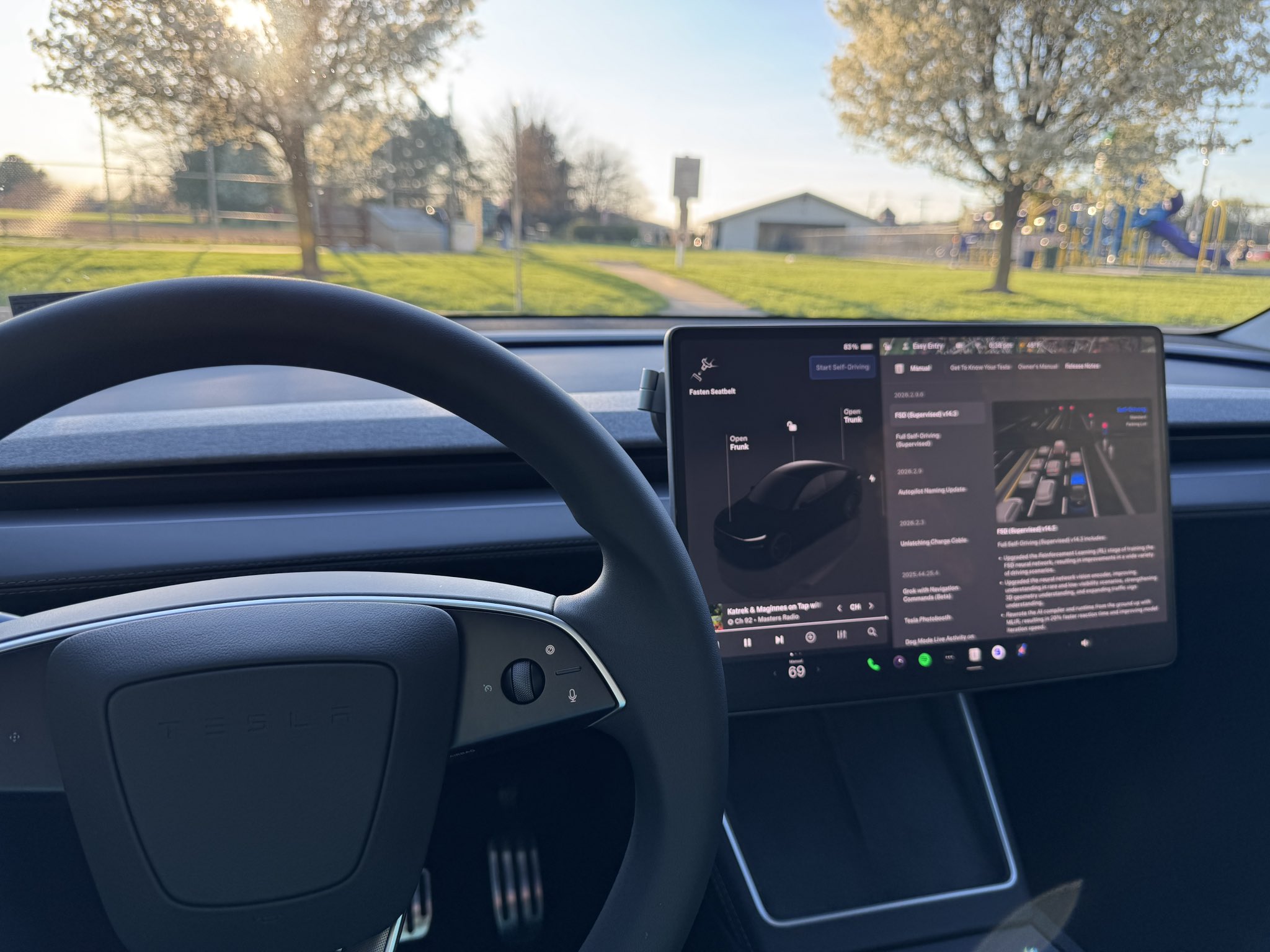
Tesla is building a feature that will let drivers talk to their car in plain language and teach it exactly what to do, with the vehicle remembering those instructions for every future trip. Tesla VP of AI Software Ashok Elluswamy confirmed it this week on X after a user pointed out one of FSD’s most persistent real-world limitations is that the system has no way to receive contextual instructions the way a human driver would.
“FSD would be twice as useful in neighborhoods if I could actually talk to the car and tell it which driveway to pull into, the same way I would with a person driving me home. Right now, there isn’t really an input for telling Tesla what color the house is or giving it specific context like that. Google Maps is also notorious for putting pins on houses that aren’t actually yours.” Tesla owner Chris further noted, “It would be so cool if I could talk to the car while going down my street and say something like, ‘It’s the white house on the left, just past that SUV,’ and then have FSD remember that for next time.”
FSD would be twice as useful in neighborhoods if I could actually talk to the car and tell it which driveway to pull into, the same way I would with a person driving me home.
Right now, there isn’t really an input for telling Tesla what color the house is or giving it specific…
— Chris (@ChrissGPT) July 8, 2026
This feature would carry more weight than it might seem. Grok has been available inside Tesla vehicles since July 2025, expanded to European vehicles in February 2026, and gained a hands-free “Hey Grok” wake word with location-based reminders and natural-language navigation in the Spring 2026 update. But up to this point, Grok has had no authority over how FSD actually drives. Lane changes, braking, speed, and parking maneuvers remain entirely within FSD’s autonomous decision-making loop. What Elluswamy confirmed is that the next step pushes Grok into a supervisor role, one that translates spoken intent directly into driving decisions.
Tesla teases greater Grok FSD integration and ‘Banish’ feature ‘in about 3 months’
Elluswamy acknowledged at a January 2026 conference that while fully integrated voice control is on Tesla’s roadmap, “it opens up an entire area of testing that we have to do. For example, you shouldn’t be able to tell the car to crash, and it shouldn’t crash.” Elon Musk subsequently confirmed on June 23 that Grok voice commands will pass to FSD’s planning layer by September 2026, a three month timeline from confirmation to deployment.
The deeper significance is what this does for Tesla’s AI training flywheel. Every time an owner corrects FSD with a spoken instruction and the car learns and remembers it, that interaction becomes a data point covering an edge case that no simulation or scripted test could have generated. A fleet of millions of Tesla vehicles crowdsourcing hyper-local contextual knowledge, which driveway, which gate entrance, which side of the street, builds a layer of geographic and behavioral intelligence that competitors without a comparable fleet simply cannot replicate at the same speed or scale.
As Teslarati has reported, Tesla’s Cybercab and robotaxi operations have expanded to Miami following the Austin launch, with rider profiles already collecting preference data. Voice-taught contextual instructions linked to individual rider profiles means a Cybercab could eventually know before it arrives exactly which entrance to use, where to wait, and how to navigate the final hundred feet of any trip it has made before.


Elon Musk
Elon Musk’s next Uranium in Uranus merch is Boring Company’s weirdest tease yet
Elon Musk teased a glowing new Boring Company merch idea, complete with a Geiger counter.
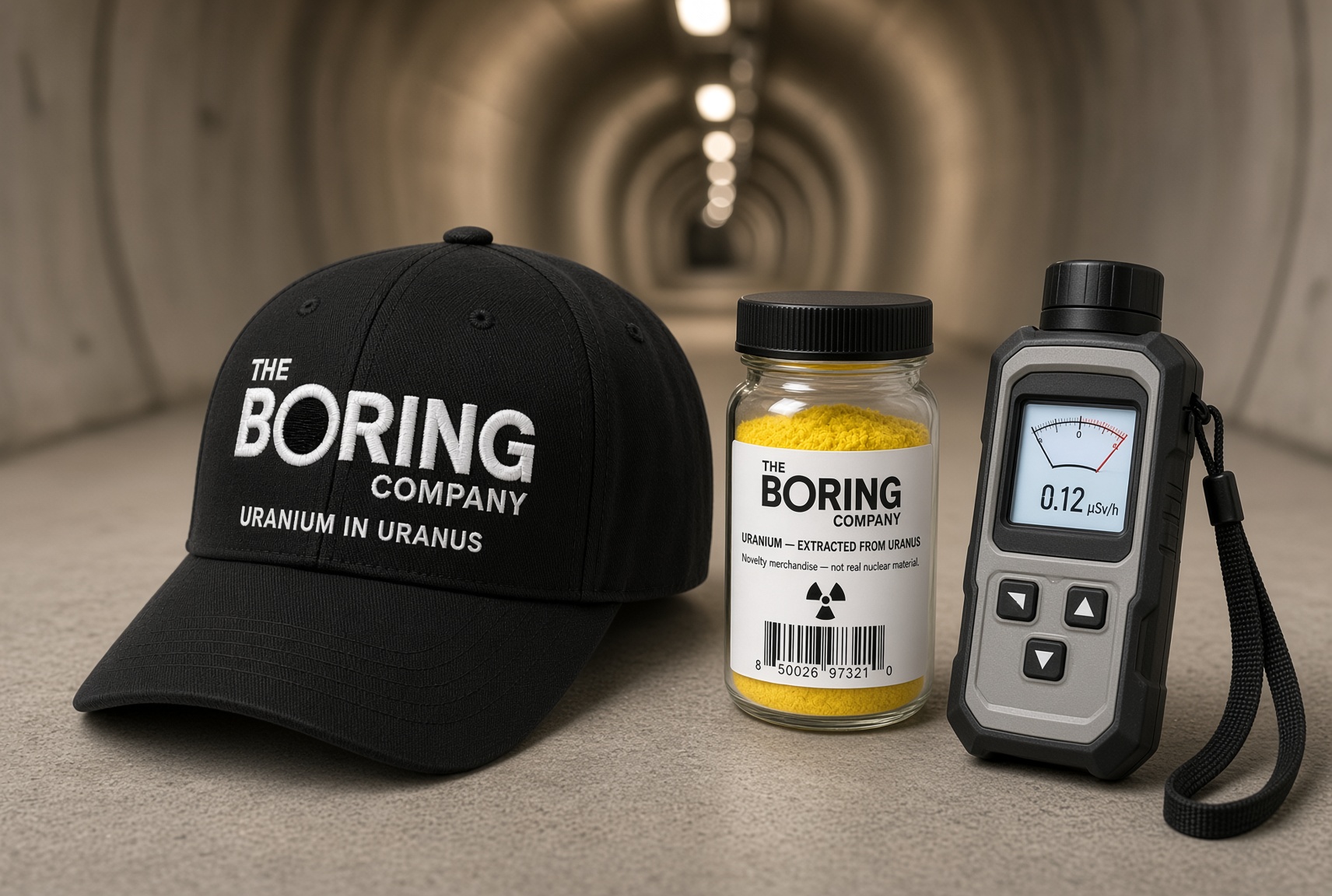
Elon Musk teased the next piece of Boring Company merchandise on X Saturday, and it is exactly as unserious as fans of the company’s product history have come to expect. “The next @boringcompany merch will put Uranium in Uranus,” Musk wrote in a thread posted early Saturday morning. He followed up by explaining that the item would glow in the dark, “because otherwise how could you find it,” and that a Geiger counter would be sold separately as “an optional strap-on.”
Musk closed the thread with a line that doubles as a mission statement for the tunneling company’s merchandise arm: “It’s not easy coming up with something that is both outrageously unsellable and yet extremely popular.”
The Boring Company has built a small but consistent side business out of novelty items that start as jokes and end up selling out. The company’s Not-a-Flamethrower raised roughly $10 million in a few days back in 2018, moving all 20,000 units it produced. Its Burnt Hair perfume, priced around $100 a bottle, sold out fast enough that scalpers were flipping units on eBay for ten times the retail price. Boring Bricks, made from tunneling spoil, followed the same playbook of teasing a product on X months before it became real.
Musk has not said what the actual item will be, only that it involves uranium and glows in the dark. Given the pattern, that vagueness is probably intentional. Past merch announcements have started as one-line jokes and taken weeks or months to turn into an actual product listing on the company’s site, and there is no guarantee this one follows through at all.
The timing lines up with a period of real momentum for the Boring Company outside of the joke merchandise. The company said last week it plans to double the number of operational stations on its Vegas Loop by the end of the year, a target tied to a hiring push for drivers and operations managers. Prufrock-5, one of the company’s tunnel boring machines, also just wrapped a test tunnel in Bastrop, Texas, and is expected to relaunch on its next assignment in November.
Whether the uranium joke turns into an actual product remains to be seen. Musk’s post did not include a price, a shipping date, or even a name for the item, which has historically meant a Boring Company website page goes up quietly, password protected, sometime before an announcement.
Elon Musk
SpaceX’s next Starship launch is about to attempt its biggest leap yet
SpaceX targets September 22 for Starship Flight 14, its first attempt to reach real orbit.
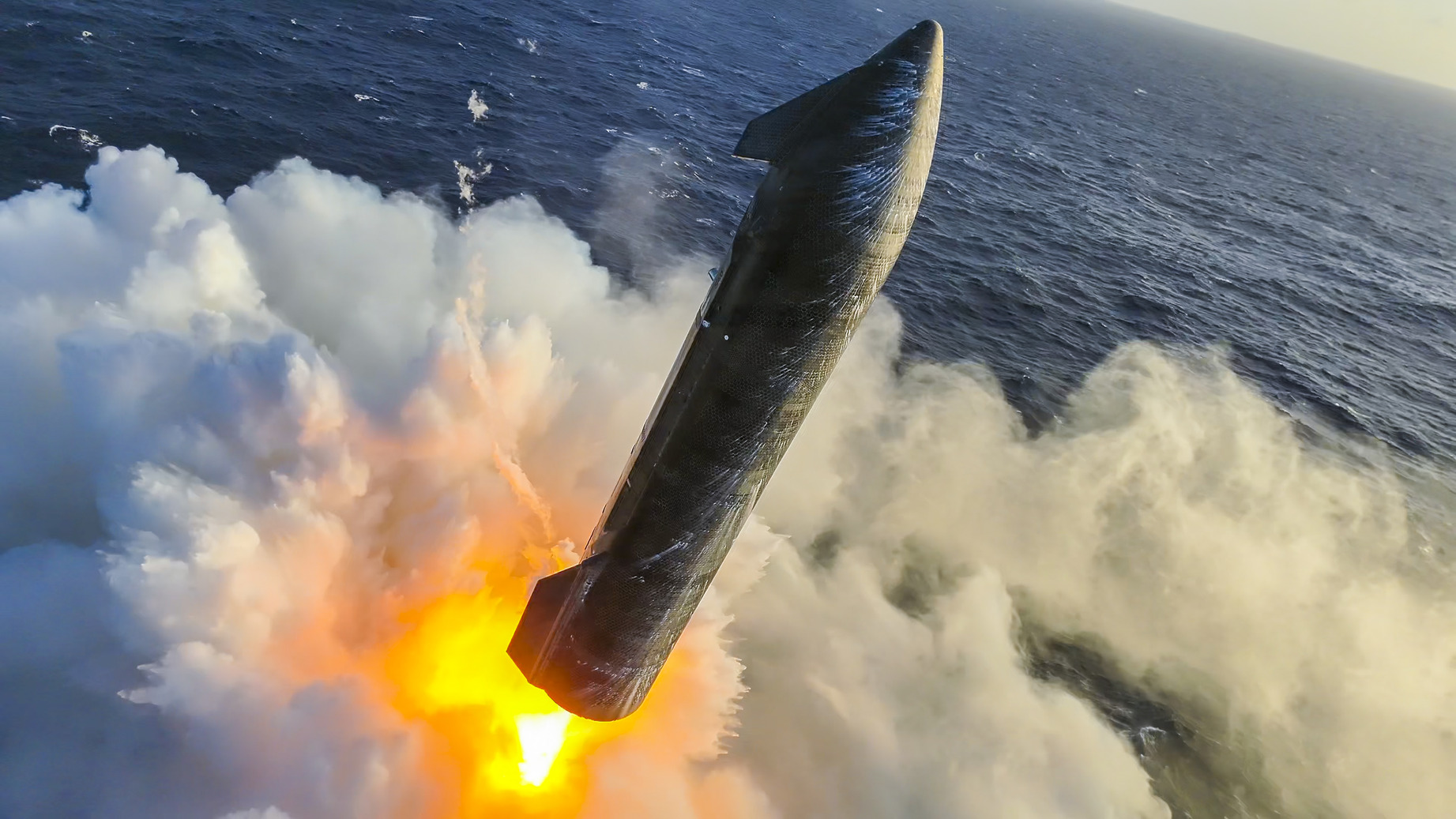
SpaceX has set September 22 as the target date for Starship’s 14th test flight, and this one carries a different goal than any of the 13 that came before it. Every previous Starship mission has intentionally flown a suborbital arc, reentering the atmosphere within the same hour it launched. Flight 14 is designed to send the craft into a genuine orbit around Earth for the first time.
The launch window opens at 7:15 a.m. Central time at Starbase in South Texas and runs for 75 minutes, pending regulatory approval, according to SpaceX’s mission description published Tuesday. If the flight goes as planned, Starship will circle the planet roughly six times at an altitude near 275 kilometers over about ten hours before a deorbit burn sends it toward a splashdown in the Pacific Ocean west of Chile, a departure from the Indian Ocean recoveries used on the last several flights.
The mission also marks the first attempt to put a working batch of Starlink V3 satellites into actual service. Flight 13 carried 20 of the new satellites in July, but because that mission never left a suborbital trajectory, the payload reentered along with the ship instead of separating into orbit.
SpaceX tells the FCC that Starship Flight 14 is going to orbit
Each V3 satellite is rated for roughly one terabit per second of downlink capacity, so a successful deployment on Flight 14 would be SpaceX’s largest single jump in network bandwidth since Starlink began flying on Falcon 9.
Flight 13 still did the heavier lifting on the technical side. That July mission flew a deliberately more stressful reentry profile to test Starship’s heat shield, and the ship survived its softest splashdown yet, intact enough for drone inspections shortly after landing. Elon Musk said the flight delivered “all the heat shield data we needed and then some,” a result Teslarati covered in detail when he later said SpaceX had solved the vehicle’s biggest reusability challenge. Flight 14 is where SpaceX starts spending that confidence on an actual orbital insertion rather than another controlled fall back to Earth.
One thing Flight 14 will not attempt is a tower catch of the ship. Musk floated the idea right after Flight 13, but walked the timeline back in August, saying a catch attempt was more likely “in a few months.” The Super Heavy booster will still aim for its own recovery, targeting an offshore landing point in the Gulf of America, the same approach used on recent flights.
September 22 is SpaceX’s own target, not a locked date. Starship’s schedule has slipped before over hardware readiness and FAA sign off, and the company has said as much in its own mission notes. But the plan itself represents the clearest marker yet that Starship is moving from a suborbital test program into something meant to carry paying payloads and, eventually, people.
Elon Musk
Elon Musk gives his most telling Tesla-SpaceX merger conversation yet
Elon Musk hinted a Tesla-SpaceX merger could be coming, and Wall Street is taking notice.
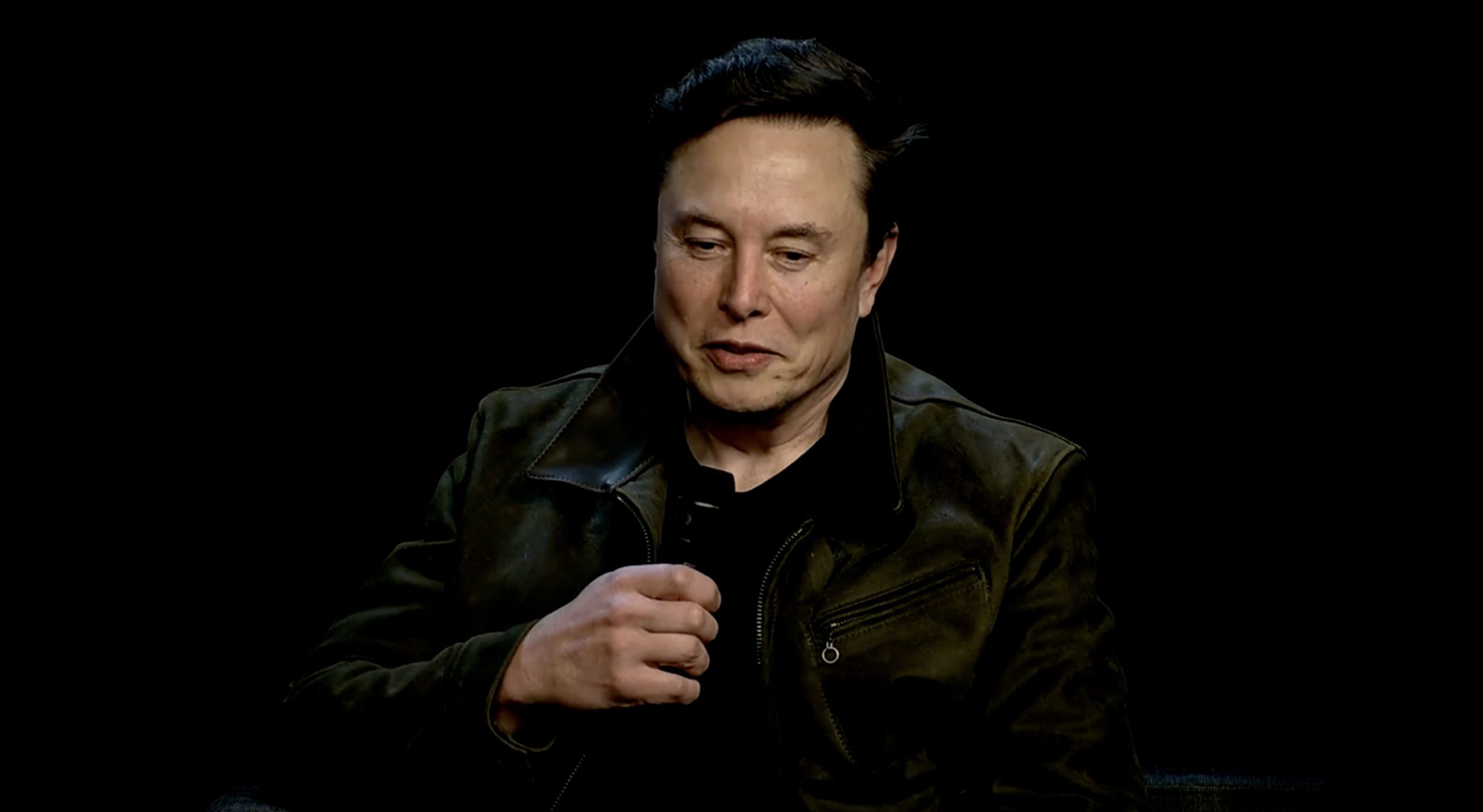
Elon Musk gave his clearest signal yet that Tesla and SpaceX could eventually combine, telling the All-In Summit in Los Angeles that the two companies’ deepening collaboration makes the question worth asking. Sawyer Merritt first surfaced the highlight on X Tuesday.
Asked directly why Tesla and SpaceX remain separate given how closely they already work together, Musk told hosts at the summit: “Great question there. With all this collaboration, on so many levels, who can imagine what action one might take when there’s so much close collaboration in so many areas.” SpaceX President Gwynne Shotwell, who joined Musk on stage, added that SpaceX personnel have already moved into xAI to fill leadership and engineering gaps, saying the businesses are integrating “faster than I thought,” though “not fully integrated yet,”
The comments landed on top of merger speculation that has been building on Wall Street for months. JPMorgan has called a tie-up “strategically coherent on paper,” pointing to overlapping ambitions in AI, robotics, energy, transportation and space. Jefferies went further, estimating Musk could retain roughly 55.3 percent voting control in a deal structured without a premium, a scenario that would still leave room for Tesla shareholders to come out ahead. On Kalshi, traders now put the odds of a merger before 2028 at 66 percent.
Tesla’s stake in SpaceX, still under one percent, traces back to its earlier investment in xAI, which converted to SpaceX equity after SpaceX absorbed the AI company. The two are also jointly building Terafab, a chip facility in Austin meant to serve both Tesla’s AI computing needs and SpaceX’s satellite ambitions. Wedbush analyst Dan Ives has stood by a 2027 merger timeline for months, and Cathie Wood’s ARK Invest recently floated a similar case, an idea Musk pushed back on directly at the time.
Another Tesla SpaceX merger prediction by ARK Invest has Elon Musk talking
The timing adds another layer. Tesla has scheduled an October 1 unveiling for its next generation Roadster at a venue near SpaceX’s McGregor, Texas test site, using the phrase “Go for launch” in its promotional material. Both stocks dipped roughly 2 percent Monday before recovering slightly in premarket trading Tuesday, with SpaceX shares up about 0.4 percent and Tesla essentially flat.
Musk stopped short of confirming anything is in motion. But unlike his past denials of a corporate restructuring, this response didn’t rule one out, and it came with Shotwell sitting next to him describing an integration that’s already underway.

Elon Musk’s next Uranium in Uranus merch is Boring Company’s weirdest tease yet

NASA taps SpaceX for more astronaut missions as Boeing Starliner remains grounded


