Elon Musk
Tesla Cybercab production line is targeting hundreds of vehicles weekly: report
According to the report, Tesla has been adding staff and installing new equipment at its Austin factory as it prepares to begin Cybercab production.

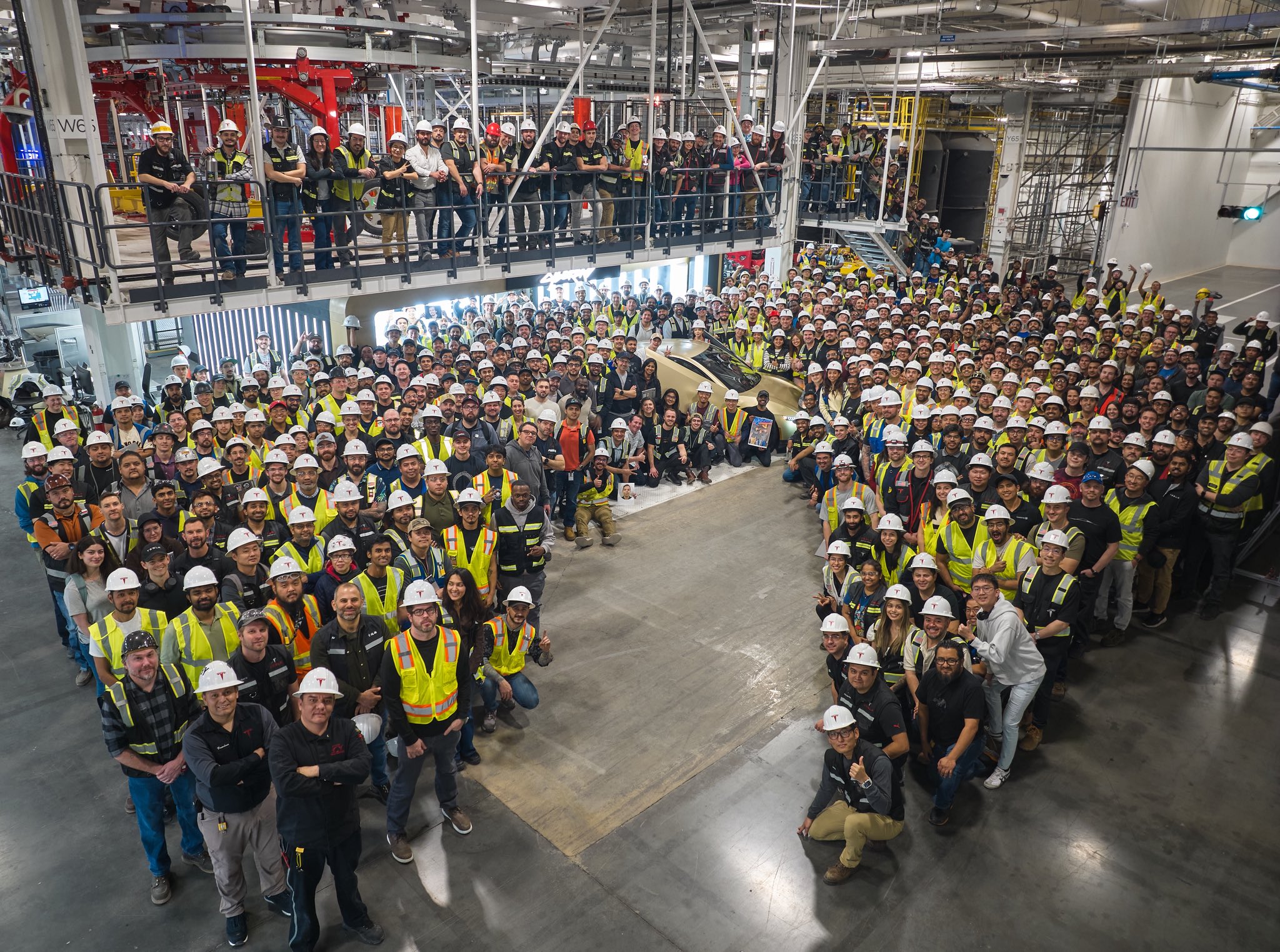
Tesla is reportedly designing its Cybercab production line to manufacture hundreds of the autonomous vehicles each week once mass production begins. The effort is underway at Gigafactory Texas in Austin as the company prepares to start building the Robotaxi at scale.
The details were reported by The Wall Street Journal, citing people reportedly familiar with the matter.
According to the report, Tesla has been adding staff and installing new equipment at its Austin factory as it prepares to begin Cybercab production.
People reportedly familiar with Tesla’s plans stated that the company has been growing its staff and bringing in new equipment to start the mass production of the Cybercab this April.
The Cybercab is Tesla’s upcoming fully autonomous two-seat vehicle designed without a steering wheel or pedals. The vehicle is intended to operate primarily as part of Tesla’s planned Robotaxi ride-hailing network.
“There’s no fallback mechanism here. Like this car either drives itself or it does not drive,” Musk stated during Tesla’s previous earnings call.
Tesla has indicated that Cybercab production could begin as soon as April, though Elon Musk has noted that early production will likely be slow before ramping over time. Musk has stated that the Cybercab’s slow ramp is due in no small part to the fact that it is a completely new vehicle platform.
Tesla’s Cybercab is designed to work with the company’s Full Self-Driving (FSD) system and support its planned autonomous ride-hailing service. The company has suggested that the vehicle could cost under $30,000, making it one of Tesla’s most affordable models if produced at scale. Musk has confirmed in a previous X post that the vehicle will indeed be offered to regular consumers at a price below $30,000.
Musk has previously stated that Tesla could eventually produce millions of Cybercabs annually if demand and production capacity scale as planned.



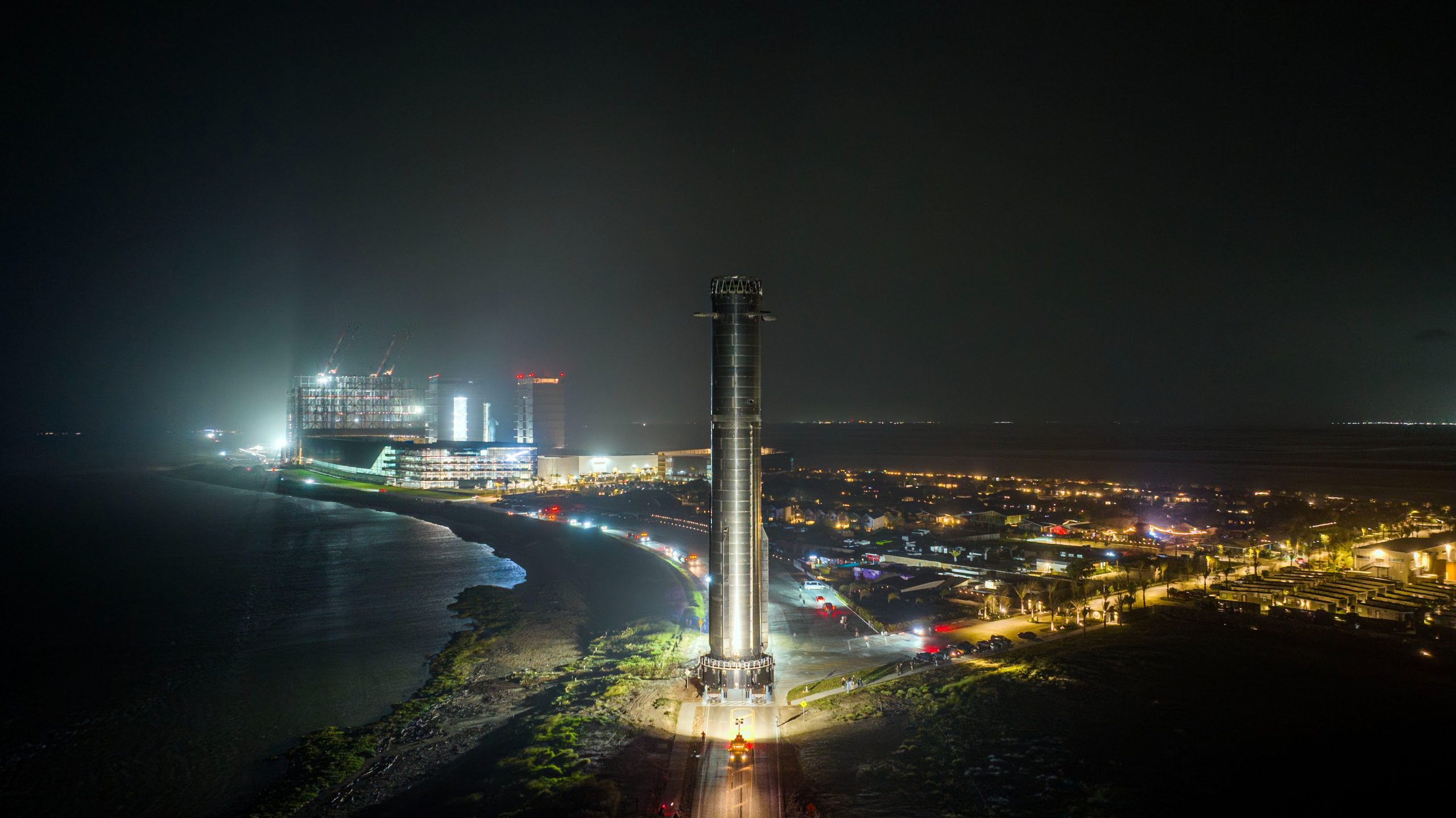
SpaceX has decided to stand down from what was supposed to be the first test launch of Starship’s v3 rocket tonight after a minor issue with a hydraulic pin delayed the flight once more.
The company scrubbed its first test flight of the upgraded Starship v3 on May 21 in the final minutes of the countdown. SpaceX CEO Elon Musk quickly took to social media platform X, explaining that a hydraulic pin on the launch tower’s “chopsticks” arm failed to retract properly.
Musk added that the company would fix the issue this evening. SpaceX will attempt another launch tomorrow night at 5:30 p.m. CT, 6:30 p.m. ET, and 3:30 p.m. PT.
The hydraulic pin holding the tower arm in place did not retract.
If that can be fixed tonight, there will be another launch attempt tomorrow at 5:30 CT. https://t.co/DJAdvDYQpH
— Elon Musk (@elonmusk) May 21, 2026
The countdown for Starship Flight 12 — featuring the taller and more capable V3 stack with Booster 19 and Ship 39 — had been progressing smoothly until the late-stage issue surfaced. The Mechazilla tower arm, designed to secure the vehicle on the pad and eventually catch returning boosters, could not complete its retraction sequence.
SpaceX teams immediately began troubleshooting the hydraulic system for an overnight repair.
Starship V3 introduces several significant upgrades over earlier versions. These include greater propellant capacity, more powerful Raptor 3 engines, larger grid fins, enhanced heat shielding, and an improved fuel transfer system.
We covered the changes that were announced just days ago by SpaceX:
SpaceX unveils sweeping Starship V3 upgrades ahead of May 19 launch
The changes are intended to increase payload performance, support higher flight rates, and advance the vehicle toward operational missions, including Starlink deployments, NASA Artemis lunar landings, and future crewed Mars flights. The debut flight from Starbase’s new Launch Pad 2 marked an important milestone in scaling up the fully reusable Starship system.
This stand-down highlights the intricate challenges of preparing the world’s most powerful rocket for flight. Despite extensive pre-launch checks, a single component in the ground support equipment can force a scrub.
The incident aligns with Starship’s proven iterative development approach. Previous test flights have encountered both successes and setbacks, each providing critical data that refines hardware and procedures. Some outlets may call some of these flights “failures,” when in reality, they are all opportunities for SpaceX to learn for the next attempt.
With V3, SpaceX aims to reduce ground-system dependencies and increase launch cadence to meet ambitious long-term goals.
Elon Musk
SpaceX just filed for the IPO everyone was waiting for
SpaceX filed its public S-1, revealing $18.7 billion in revenue and billions in losses.

SpaceX publicly filed its S-1 registration statement with the Securities and Exchange Commission on May 20, 2026, making its financial details available to the public for the first time ahead of what could be the largest IPO in history.
An S-1 is the formal document a company must submit to the SEC before going public. It includes audited financials, risk factors, business descriptions, and how the company plans to use the money it raises. Companies are required to file one before selling shares to the public, and it must be published at least 15 days before the investor roadshow begins. SpaceX had already submitted a confidential draft to the SEC in April, which allowed regulators to review the filing privately before it went public.
The S-1 reveals that SpaceX generated $18.7 billion in consolidated revenue in 2025, driven largely by its Starlink satellite internet division, which posted $11.4 billion in revenue, growing nearly 50% year over year. Despite that growth, the company lost about $4.9 billion in 2025 and has burned through more than $37 billion since its founding.
SpaceX just forced Verizon, AT&T and T-Mobile to team up for the first time in history
A significant portion of those losses trace back to xAI, Elon Musk’s artificial intelligence company, which was recently merged into SpaceX. SpaceX directed roughly 60% of its capital spending in 2025 to its AI division, totaling around $20 billion, yet that division lost billions and grew revenue by only about 22%.
SpaceX plans to list its Class A common stock on Nasdaq under the ticker SPCX, with Goldman Sachs, Morgan Stanley, and Bank of America leading the offering. The dual-class share structure means going public will not meaningfully reduce Musk’s control, as Class B shares he holds carry 10 votes per share compared to one vote for public Class A shares.
The company is targeting a raise of around $75 billion at a valuation of roughly $1.75 trillion, which would make it the largest IPO ever. The investor roadshow is reportedly planned for June 5.
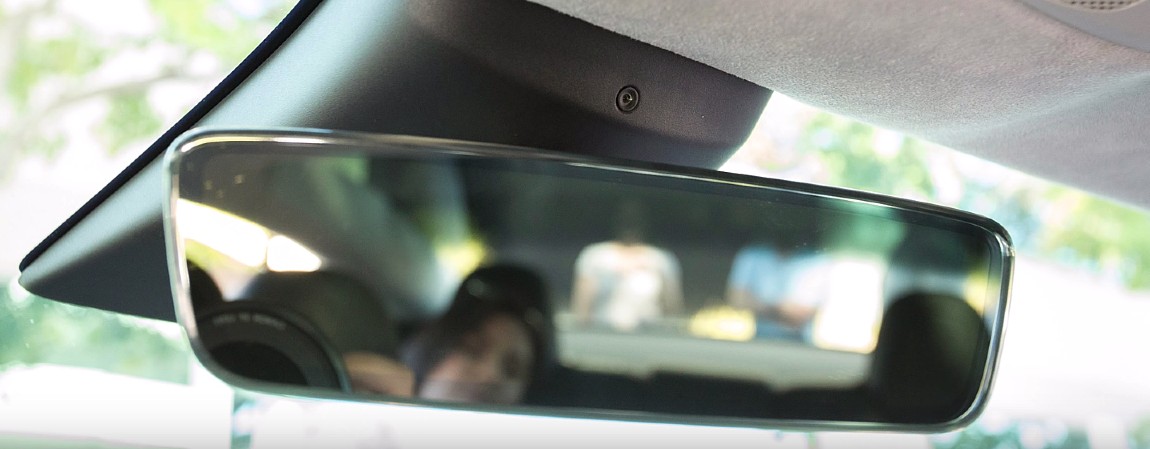
Tesla has scaled back driver monitoring to be less naggy with the latest version of the Full Self-Driving (Supervised) suite, which is version 14.3.3.
The latest version is already earning praise from owners, who are reporting that the suite is far less invasive when it comes to keeping drivers from taking their eyes off the road. The first to mention it was notable Tesla community member on X known as Zack, or BLKMDL3.
14.3.3 nags less too https://t.co/IuiWzuYO6O
— Elon Musk (@elonmusk) May 18, 2026
Musk confirmed that v14.3.3 was made to nag drivers significantly less, something that Tesla has worked toward in the past and has said with previous versions that it is less likely to push drivers to look ahead, at least after looking away for a few seconds.
This refinement aligns with Tesla’s ongoing push toward unsupervised FSD. The update also brings faster Actual Smart Summon (now up to 8 mph), reliable “Hey Grok” voice commands, richer visualizations, smoother Mad Max acceleration, and an intervention streak counter that rewards consistent use. Reviewers describe the drive as more human-like and confident, with fewer twitches or unnecessary maneuvers.
Musk has repeatedly signaled this direction. In late 2025, he stated that FSD would allow phone use “depending on context of surrounding traffic,” noting safety data would justify relaxing rules so drivers could text in low-risk scenarios like stop-and-go traffic.
We tested this, and even still, the cell phone monitoring really seems to be less active in terms of alerting drivers:
Tesla Full Self-Driving v14.2.1 texting and driving: we tested it
Earlier, ahead of v14, Musk promised the system would “nag the driver much less” once safety metrics improved.
In 2023, he confirmed the steering wheel torque nag would be “gradually reduced, proportionate to improved safety,” shifting reliance to the cabin camera. Subsequent updates like v13.2.9 and v12.4 further loosened monitoring, cracking down on workarounds while easing legitimate distractions.
These steps reflect Tesla’s data-driven approach: FSD’s safety record—reportedly averaging millions of miles per crash—now outpaces human drivers in many scenarios, giving the company confidence to dial back interventions. Reduced nags improve usability and trust, encouraging more drivers to rely on the system rather than disengaging out of frustration.
However, there are certainly still some concerns. In many states, it is illegal to handle a cell phone in any way, requiring the use of hands-free devices. In Pennsylvania, it is illegal to use your cell phone at stop lights, which is definitely a step further than using it while the car is actively in motion.
v14.3.3 represents tangible progress. Making FSD less adversarial and more seamless is definitely a step forward, but drivers need to be aware of the dangers of distracted driving. FSD is extremely capable, but it is in no way fully autonomous, nor does its performance warrant owners to take their attention off the road.

SpaceX reveals reason for Starship v3 stand down, announces next launch date

Tesla Model Y becomes first-ever car to reach legendary milestone


