News
SpaceX Texas test HQ fires up a dozen Falcon, Starship rocket engines in six hours

Though it often falls under the radar relative to SpaceX’s high-profile Boca Chica Starship hub, another even more important Texas outpost appears to be busier than ever testing the rocket engines and boosters instrumental to all SpaceX operations.
Famous for occasionally supporting half a dozen or more rocket tests on busy days, SpaceX’s McGregor, Texas facilities showed off exactly that kind of rapid-fire activity on Friday, March 19th, flexing the sheer variety and volume of rocket hardware liable to pass through its gates.
Located on the grounds of a former US military explosives factory, SpaceX’s McGregor, Texas rocket development and test facilities have been testing Falcon, Dragon, and Starship parts and supporting each program’s development for a decade and a half. After being fabricated and assembled in Hawthorne, California, virtually every single active propulsive component SpaceX has ever flown has spent some amount of time in McGregor.
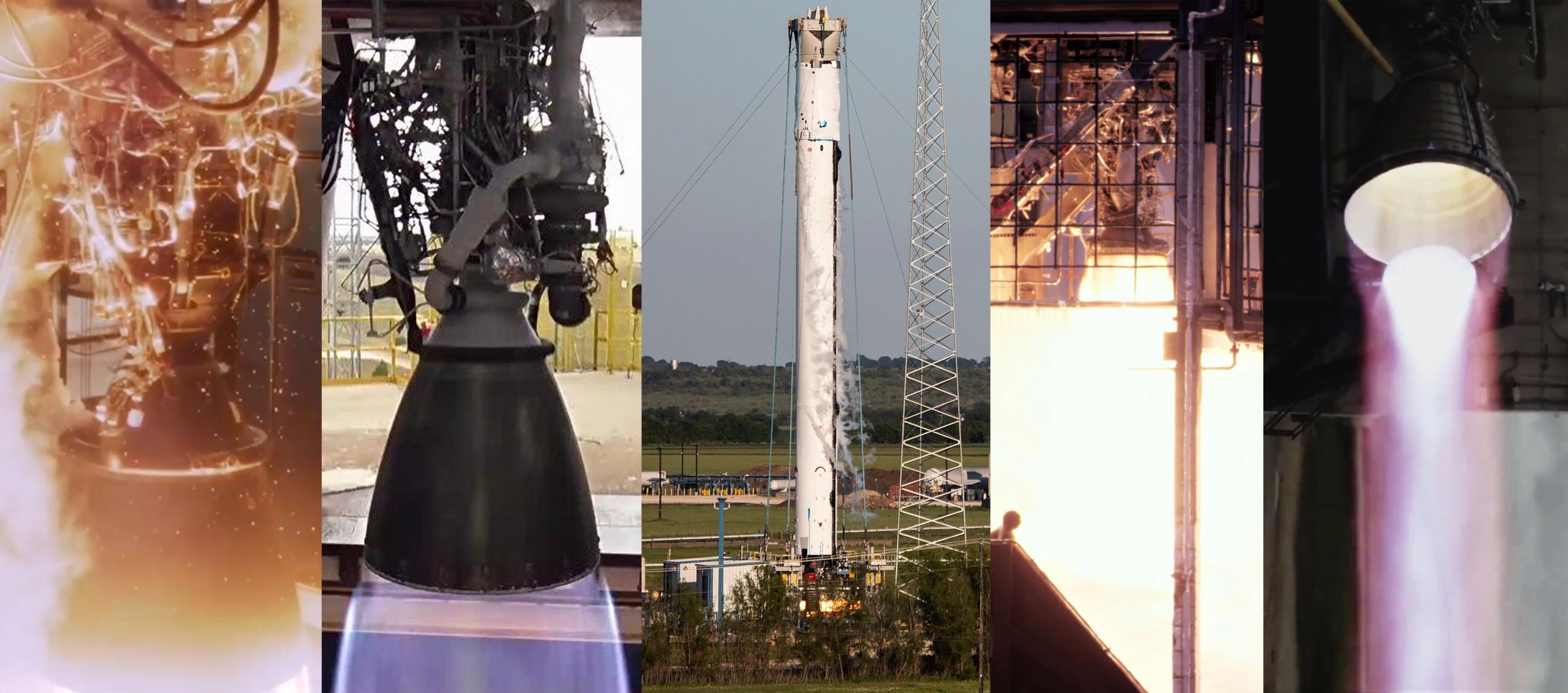
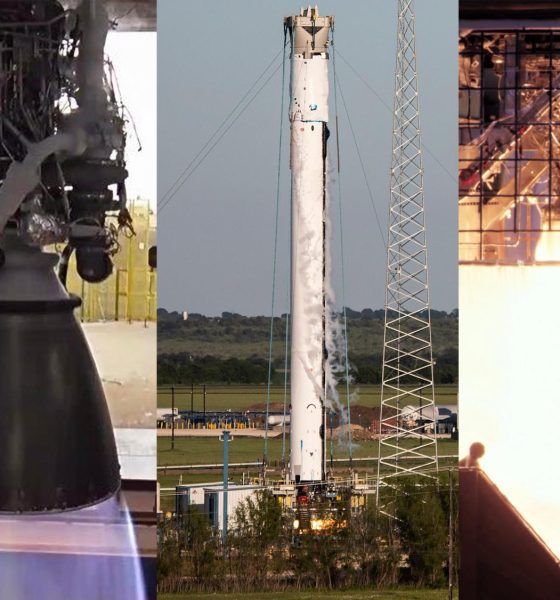
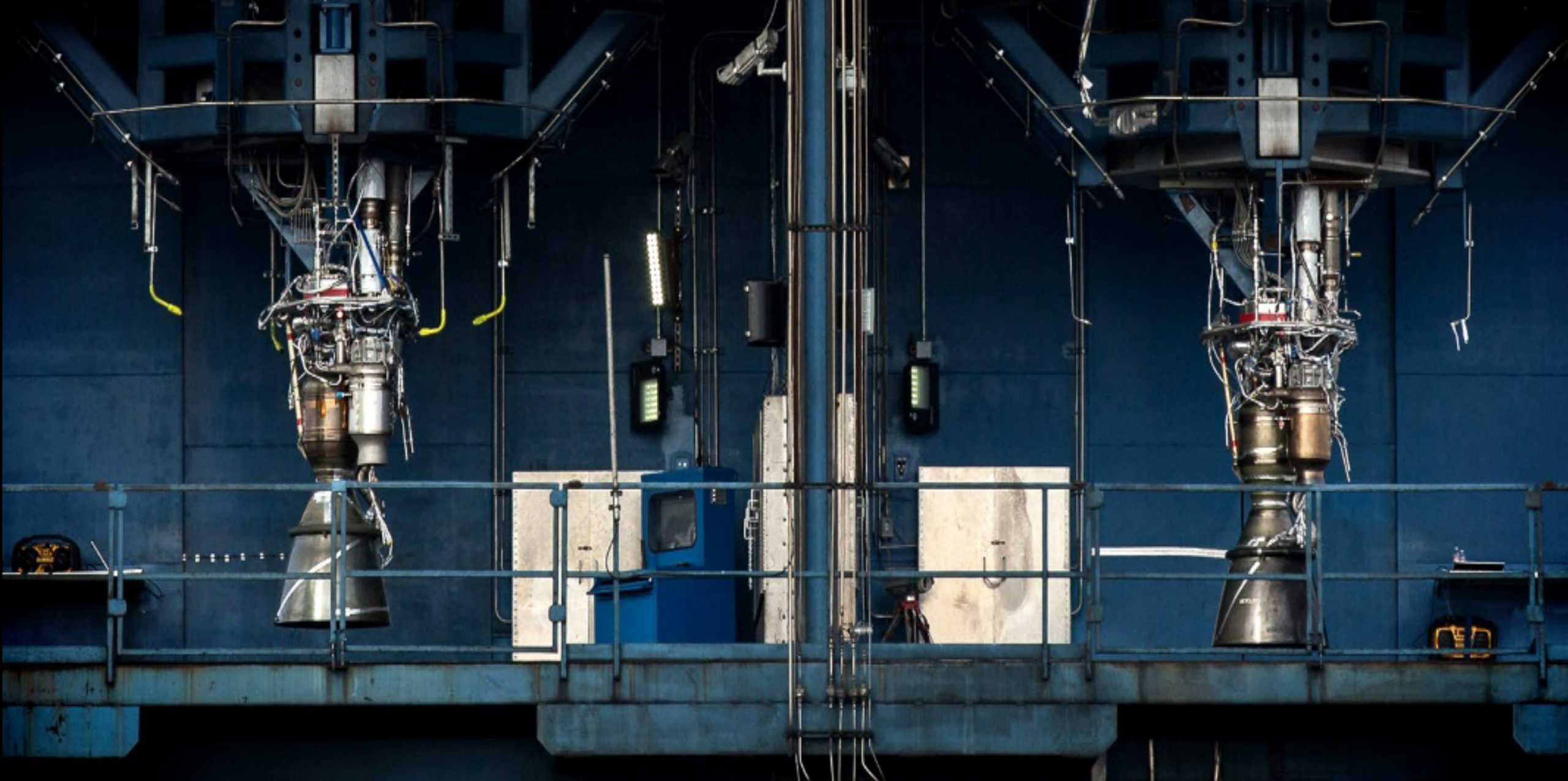
For boosters, every cold gas maneuvering thruster is qualified in Texas before being sent back to Hawthorne for final installation. Each stage’s nine Merlin 1D engines are individually tested in McGregor, shipped back to Hawthorne, installed on a booster, shipped back to McGregor, and static fired as an integrated first stage before SpaceX deems a Falcon 9 or Falcon Heavy core ready for flight. The exact same process (separate engines and thruster qualification followed by integrated vehicle testing) is performed with Falcon upper stages and their Merlin Vacuum engines, as well as all Dragon spacecraft and their Draco (and SuperDraco) thrusters. The same is true for the two Raptor engine variants and cold-gas thrusters that power Starship.
On March 19th, nearly all of those different engines and vehicles – and the separate stands used to test each of them – came together for an exceptionally busy day at McGregor. According to local resident Reagan (@bluemoondance74), who lives within earshot of SpaceX’s extraordinarily busy rocket testing HQ, at least five unique tests were performed in just six hours – all but one of which was squeezed into the last ~125 minutes.
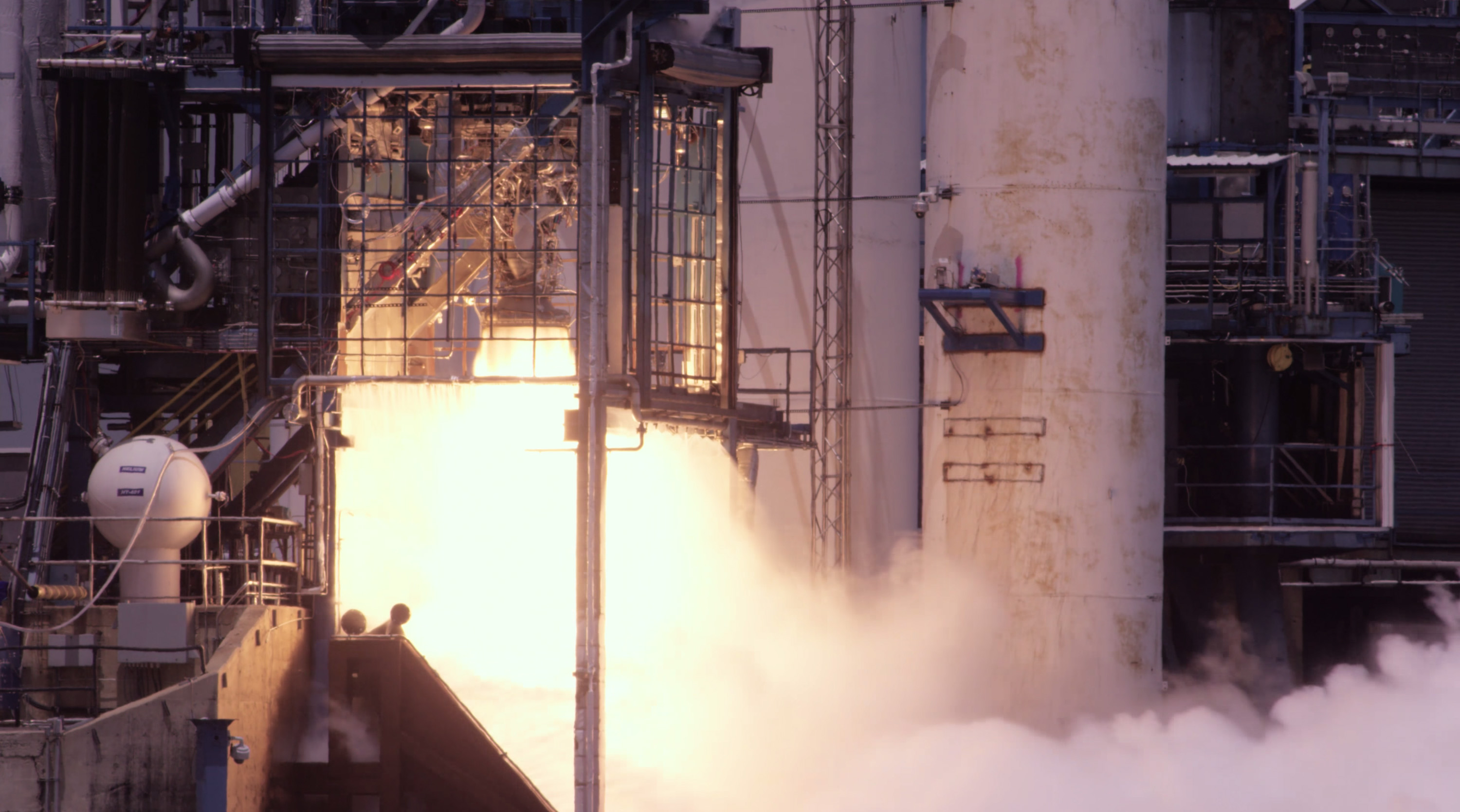
Around 2:40 pm, an unknown test – possibly a Merlin Vacuum (MVac) or Merlin 1D (M1D) engine – kicked off the salvo. Four hours later, SpaceX completed arguably the most significant test of the day, firing up the first Falcon Heavy center core to head to McGregor in almost 24 months. Assuming that static fire was a success, the booster will be inspected, have its tanks cleaned, and be shipped to Florida to complete the first stage of SpaceX’s fourth Falcon Heavy rocket for a launch as early as July.
An hour and a half after the Falcon Heavy center core’s static fire, SpaceX fired up a Raptor engine (either a sea level or vacuum variant), followed by another likely M1D or MVac test just minutes later. Finally, at 8:52 pm, SpaceX ignited a second Raptor engine at an entirely separate vertical test stand (known as the tripod stand) recently modified to support testing Starship engines in a more flight-like configuration. Altogether, assuming no repeated tests, SpaceX effectively tested a booster and 13 (9+4) rocket engines in a little over six hours.
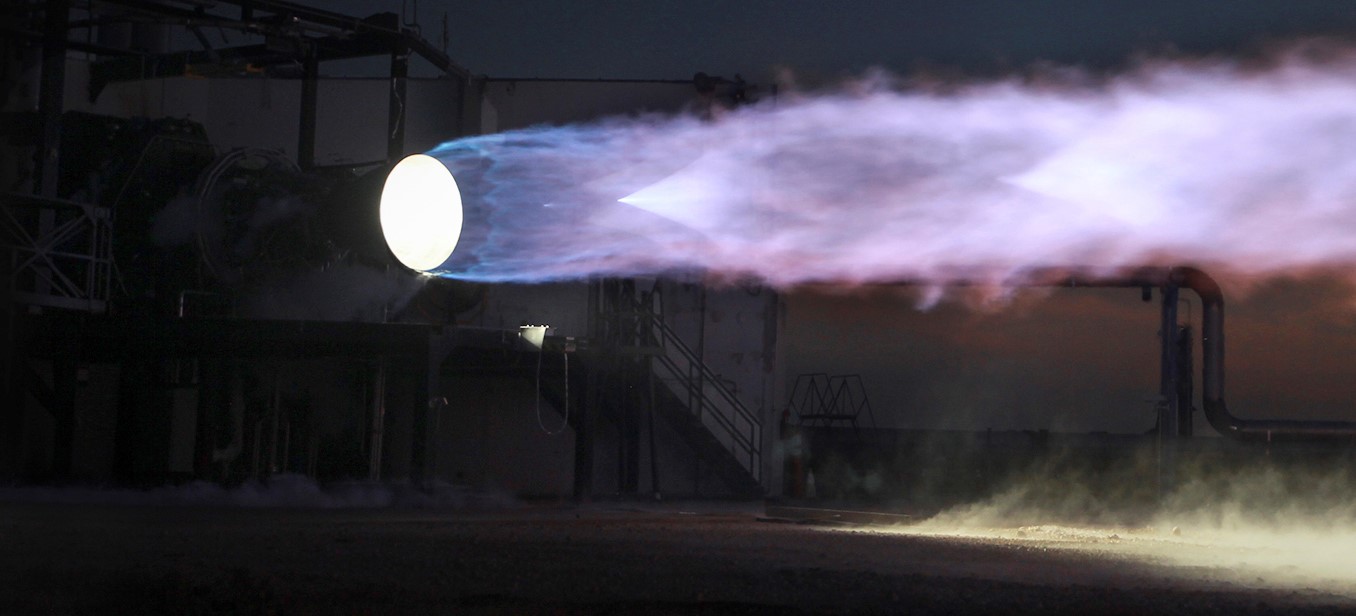
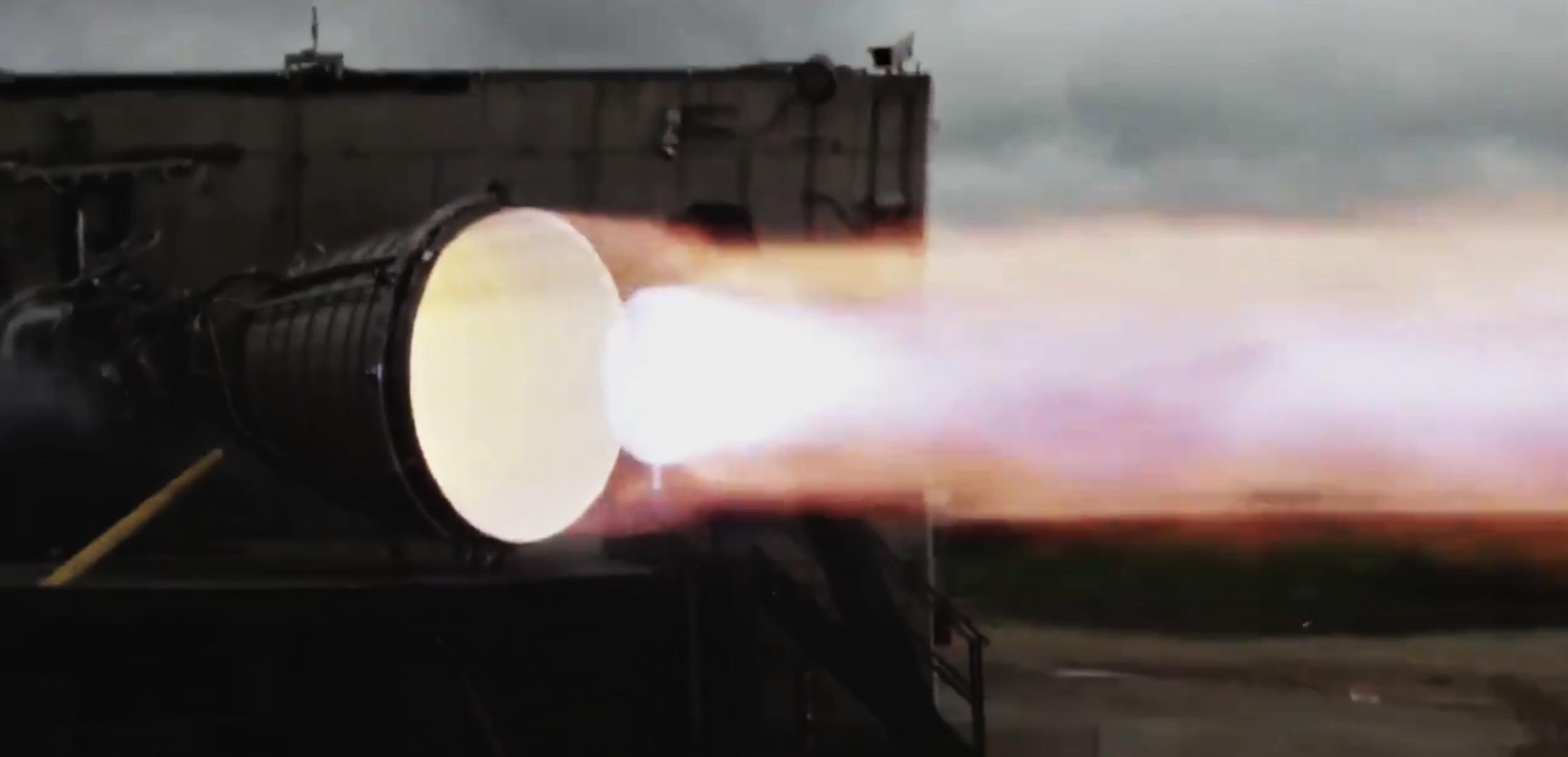
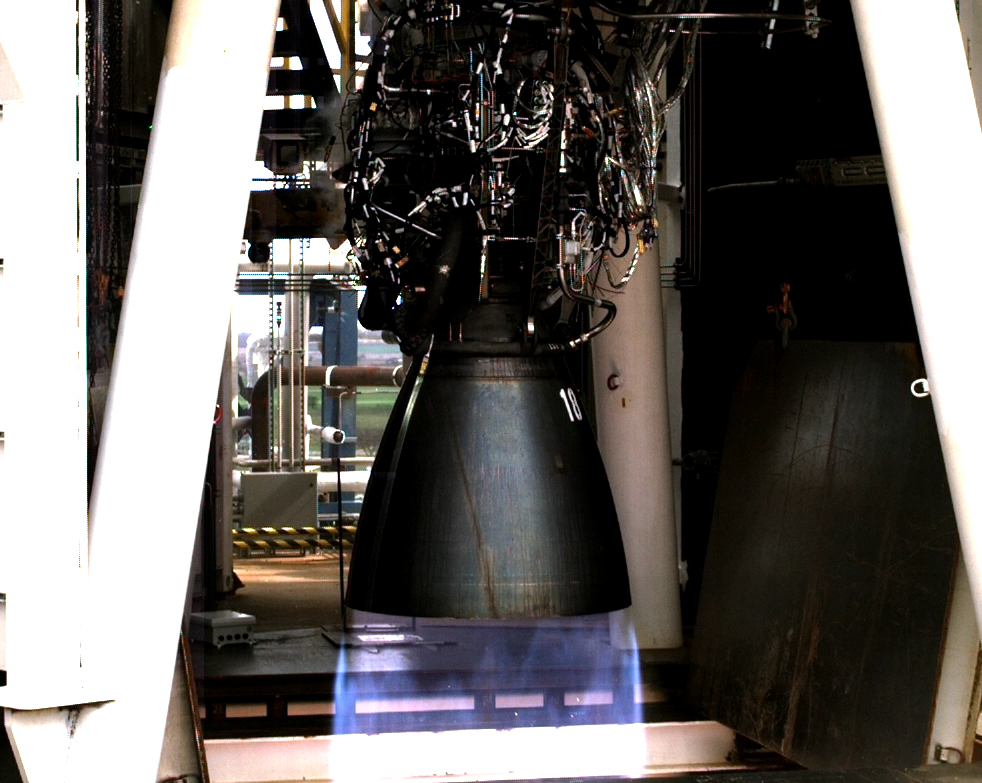
More likely than not, one or both of those Raptors will soon find themselves on a Starship or Super Heavy prototype in Boca Chica. The M1D and/or MVac engines will assuredly find a place on a future Falcon booster or upper stage. The Falcon Heavy center core (B1065 or B1066) is scheduled to launch as early as July 2021 and will be the first of its kind to fly in an intentionally expendable configuration. Another Falcon Heavy center core – possibly B1067 – will likely also find itself in McGregor within the next few months for the rocket’s fifth launch, scheduled no earlier than (NET) October 2021.
All told, SpaceX’s McGregor rocket testing HQ is about as busy as – if not busier than – it’s ever been as the company works towards an unprecedentedly ambitious 48-launch 2021 manifest, builds and flies at least four Dragon spacecraft, and pursues an even more ambitious effort to begin orbital Starship launches this summer. Quieted away in rural Texas, McGregor may largely go unnoticed but its infrastructure remains as integral as ever for virtually every single SpaceX project – past, present, and future.


Elon Musk
SpaceX weighs Nasdaq listing as company explores early index entry: report
The company is reportedly seeking early inclusion in the Nasdaq-100 index.

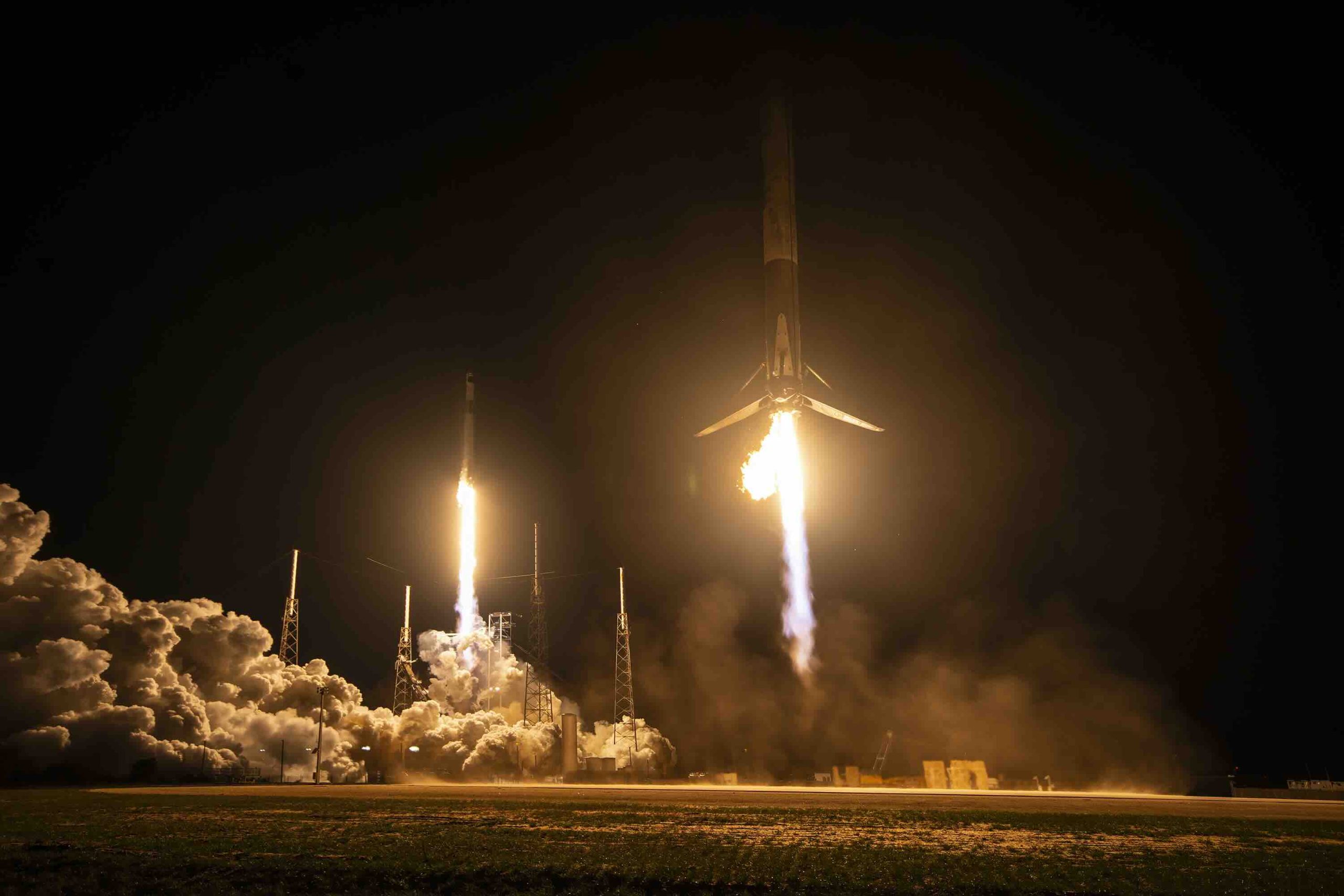
Elon Musk’s SpaceX is reportedly leaning toward listing its shares on the Nasdaq for a potential initial public offering (IPO) that could become the largest in history.
As per a recent report, the company is reportedly seeking early inclusion in the Nasdaq-100 index. The update was reported by Reuters, citing people familiar with the matter.
According to the publication, SpaceX is considering Nasdaq as the venue for its eventual IPO, though the New York Stock Exchange is also competing for the listing. Neither exchange has reportedly been informed of a final decision.
Reuters has previously reported that SpaceX could pursue an IPO as early as June, though the company’s plans could still change.
One of the publication’s sources also suggested that SpaceX is targeting a valuation of about $1.75 trillion for its IPO. At that level, the company would rank among the largest publicly traded firms in the United States by market capitalization.
Nasdaq has proposed a rule change that could accelerate the inclusion of newly listed megacap companies into the Nasdaq-100 index.
Under the proposed “Fast Entry” rule, a newly listed company could qualify for the index in less than a month if its market capitalization ranks among the top 40 companies already included in the Nasdaq-100.
If SpaceX is successful in achieving its target valuation of $1.75 trillion, it would become the sixth-largest company by market value in the United States, at least based on recent share prices.
Newly listed companies typically have to wait up to a year before becoming eligible for major indexes such as the Nasdaq-100 or S&P 500.
Inclusion in a major index can significantly broaden a company’s shareholder base because many institutional investors purchase shares through index-tracking funds.
According to Reuters, Nasdaq’s proposed fast-track rule is partly intended to attract highly valued private companies such as SpaceX, OpenAI, and Anthropic to list on the exchange.
Elon Musk
The Boring Company’s Prufrock-2 emerges after completing new Vegas Loop tunnel
The new tunnel measures 2.28 miles, making it the company’s longest single Vegas Loop tunnel to date.
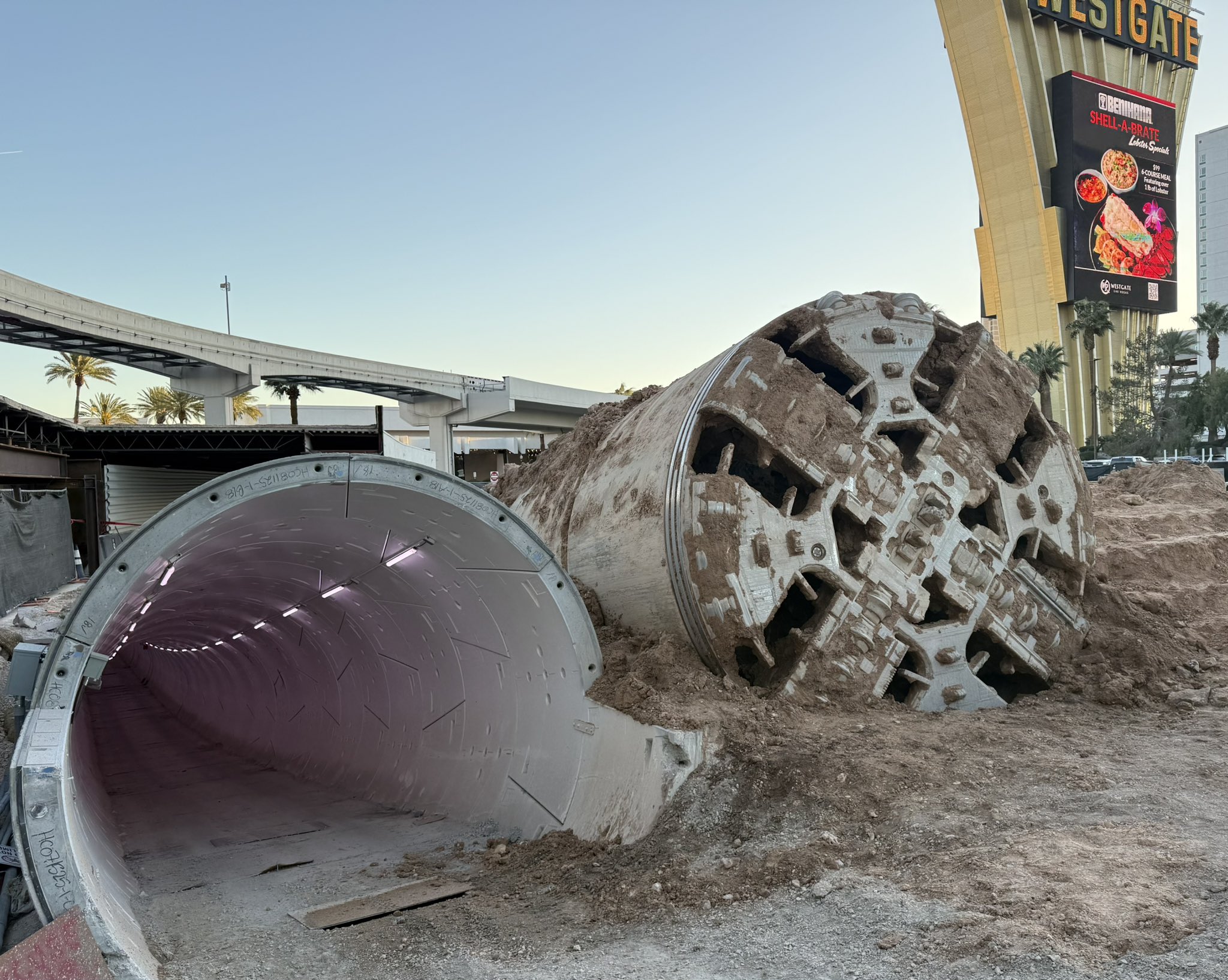
The Boring Company announced that its Prufrock-2 tunnel boring machine (TBM) has completed another Vegas Loop tunnel in Las Vegas. The company shared the update in a post on social media platform X.
According to The Boring Company’s post, the new tunnel measures 2.28 miles, making it the company’s longest single Vegas Loop tunnel to date.
The new tunnel marks the fourth tunnel constructed near Westgate Las Vegas as the Vegas Loop network continues expanding across the city.
The Boring Company also noted that the new tunnel surpassed its previous internal record of 2.26 miles for a single Vegas Loop segment.
Construction of the tunnel involved moving roughly 68,000 cubic yards of dirt. The excavation process also used about 4.8 miles of continuous conveyor belt, powered by six motors totaling 825 horsepower.
The Boring Company’s Prufrock-series all-electric tunnel boring machines are designed to support the rapid expansion of company’s underground transportation projects, including the growing Vegas Loop network. Prufrock machines are designed for reusability, thanks in no small part to their capability to be deployed and retrieved easily through their “porposing” feature.
The Vegas Loop, specifically the Las Vegas Convention Center (LVCC) Loop segment, has already been used during major events. Most recently, the LVCC Loop supported the 2026 CONEXPO-CON/AGG construction trade show, which was held from March 3-7, 2026.
As per The Boring Company, the LVCC Loop transported roughly 82,000 passengers across the convention center campus during the event’s duration.
CONEXPO-CON/AGG is one of the largest construction trade shows in North America, drawing more than 140,000 construction professionals from 128 countries this year.
The LVCC Loop forms the initial segment of the broader Vegas Loop network, which remains under active development as The Boring Company continues building new tunnels throughout the city.
News
Tesla gathers Cybercab fleet in Gigafactory Texas
Images and video of the Cybercab fleet were shared by longtime Giga Texas observer Joe Tegtmeyer in posts on social media platform X.
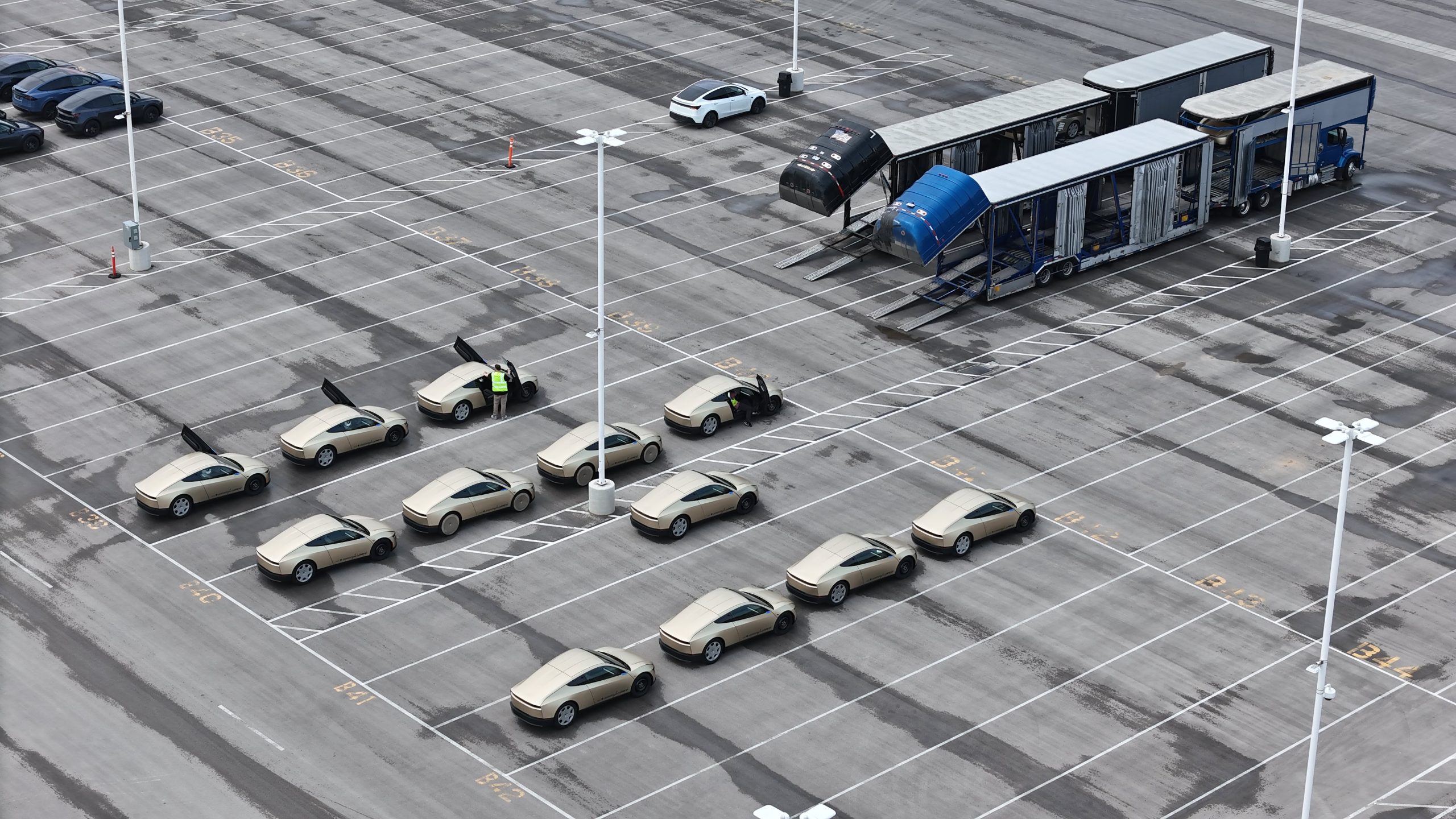
Tesla appears to be assembling a growing number of Cybercabs at Gigafactory Texas as preparations continue for the vehicle’s mass production. Recent footage shared online has shown over 30 Cybercabs being transported by trucks or staged near testing areas at the facility.
The images and video were shared by longtime Giga Texas observer and drone operator Joe Tegtmeyer in posts on social media platform X.
Interestingly enough, Tegtmeyer noted that many of the Cybercabs being loaded onto transport trucks were still equipped with steering wheels. This suggests that the vehicles are likely testing units rather than the final driverless configuration expected for the company’s Robotaxi service.
The vehicles could potentially be headed to testing sites across the United States as Tesla prepares to expand its Robotaxi fleet.
Additional footage captured at Gigafactory Texas also showed the Cybercab’s side and rear camera washer system operating as vehicles were being loaded onto transport trucks.
The growing number of Cybercabs at Giga Texas comes amidst the company’s announcement that the first production Cybercab has been produced at the facility. Full Cybercab production is expected to begin in April.
The vehicle is expected to play a central role in Tesla’s Robotaxi ambitions as the company looks to expand autonomous ride-hailing operations beyond its early deployments using Model Y vehicles.
Tesla has also linked Cybercab production to its proposed Unboxed manufacturing process, which assembles large vehicle modules separately before integrating them. The approach is intended to reduce production costs and accelerate output.
Musk has also noted that the Cybercab’s ramp will likely begin slowly due to the number of new components and manufacturing steps involved. However, he stated that once the process matures, Cybercab production could scale quickly.

SpaceX weighs Nasdaq listing as company explores early index entry: report

The Boring Company’s Prufrock-2 emerges after completing new Vegas Loop tunnel


