News
SpaceX VP says Starship is already winning commercial launch contracts

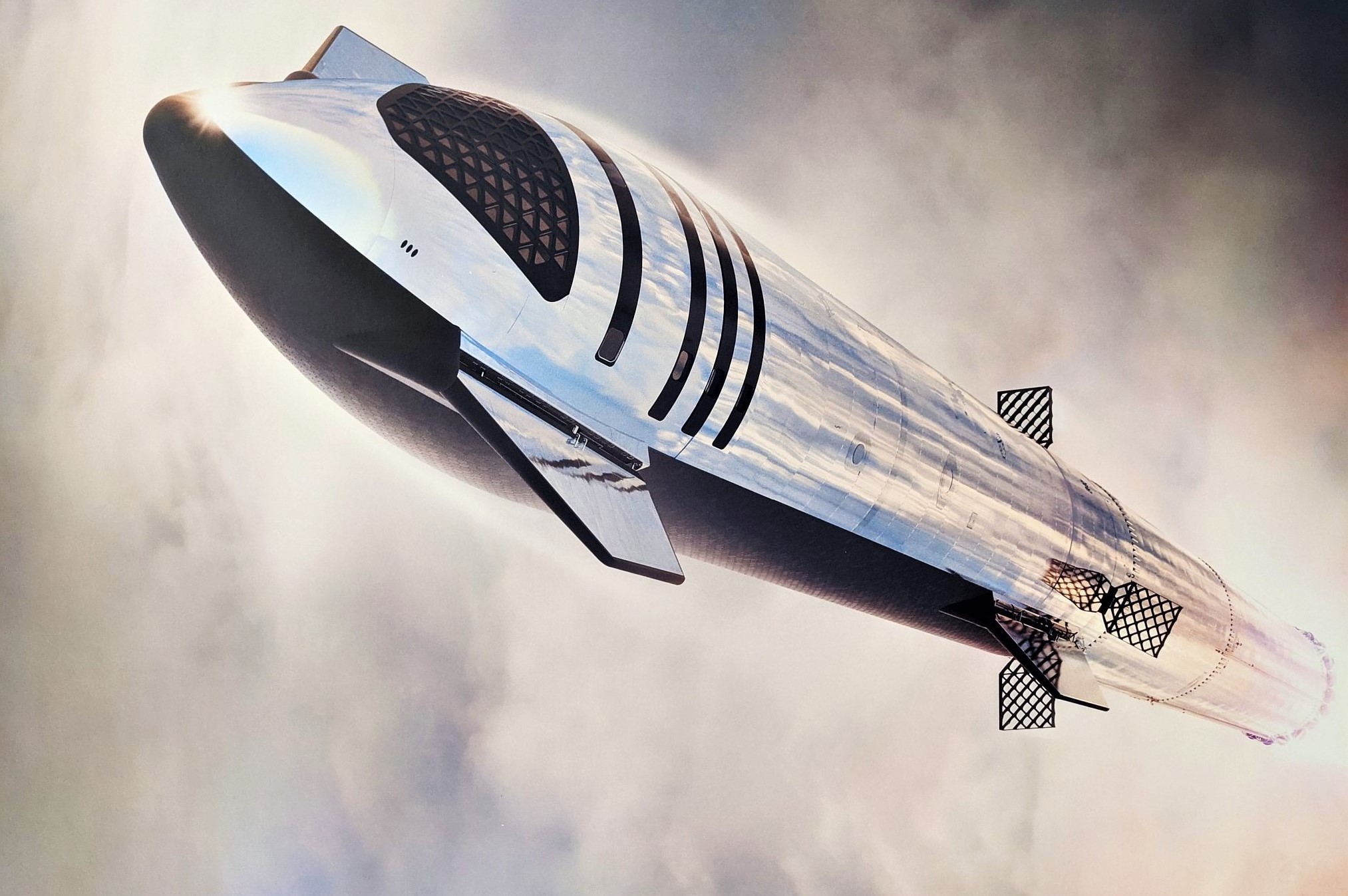
A SpaceX executive says that the company’s next-generation, fully-reusable Starship rocket has already secured multiple commercial launch contracts.
Set to debut no earlier than (NET) the first quarter of 2022 with a semi-orbital launch that aims to send Starship about 85% of the way around the Earth, Starship has a ways to go before it’s ready to routinely launch payloads. Nonetheless, SpaceX is confident enough in Starship’s eventual success to have effectively made it the foundation of every one of the company’s future goals – both in the short and long term.
Today, SpaceX’s Falcon rockets have become a spectacularly successful revolution in cost-effective launch through reusability and vertical integration, among other things. Thanks to that unprecedented affordability, SpaceX has been able to kick off the deployment of its Starlink internet constellation, launching more than 1800 satellites and becoming the largest satellite operator in history in less than two and a half years. Where competition is possible, Falcon 9 dominates the global commercial launch market for both small and large satellites. And yet despite its staggering success, Falcon 9 remains at least one or two magnitudes too expensive and too performance-constrained to realize SpaceX’s grander ambitions.
Those overarching goals are simple enough and directly related. First, SpaceX – through Starlink – aims to blanket the Earth’s surface with high-quality, affordable satellite internet that is either indistinguishable from or better than ground-based alternatives, ultimately connecting tens or even hundreds of millions of people to the internet. Second, SpaceX’s founding goal has always been to make humanity a multiplanetary species by enabling the creation of one or several permanent, self-sustaining cities on Mars. For the latter goal, Starship or a fully reusable rocket like it has always been essential – without which it would be prohibitively expensive to launch the sheer mass and volume of supplies needed to build a city on another world.
Recently, if SpaceX’s often hyperbolic CEO is to be believed, Starlink’s success has also become dependent on Starship, with Musk stating in a company-wide memo that SpaceX as a whole could face bankruptcy if Starship isn’t ready to launch 200+ Starlink satellites per month by the end of 2022. While it’s simply untrue that SpaceX is at risk of bankruptcy, there might be some truth behind Musk’s statement. Fearmongering aside, the gist of Musk’s argument is that Starlink is “financially weak” under the current paradigm, where Falcon 9 delivers approximately 50 300-kilogram (~650 lb) satellites to orbit with each launch.
In the same vein as Starship, Musk believes that next-generation “Starlink V2” satellites – several times larger than V1 satellites – will drastically improve the cost-effectiveness of the constellation by allowing SpaceX to squeeze much more network capacity out of every unit of satellite mass. However, making Starlink V2 satellites several times larger would reduce the efficiency of launching them on Falcon 9 by an equal degree – hence the apparently dire need for Starship.
Contrary to Musk’s apocalyptic vision, even if it might be significantly slower and more expensive to deploy, it’s quite likely that a full Starlink V1 constellation launched by Falcon 9 could still be economically viable. What it probably wouldn’t be, though, is exceptionally profitable, which has long been SpaceX’s main plan for funding its multiplanetary dreams. With a Starship capable of achieving its design goals, that could change.
According to Musk and other SpaceX executives, the true cost – before payloads – of a flight-proven Falcon 9 launch is somewhere between $15M and $28M. At an estimated cost of $250-500k apiece, 50-60 Starlink V1 satellites raise the total cost of a Starlink launch to approximately $30-60M – the range between marginal and total cost. In a partially reusable configuration, Falcon 9 is capable of launching about ~16 tons (~35,000 lb) to low Earth orbit (LEO).
Starship, however, is designed to launch at least 100 tons (~220,000 lb) and possibly up to 150 tons (~330,000 lb) to LEO for a marginal cost of as little as $2M. Even if SpaceX is a magnitude off of that target and never gets beyond 100t to LEO, a $20M Starship launch fully loaded with Starlink satellites would still cost five times less than Falcon 9 per unit of satellite mass launched. At 150 tons to LEO for $10M, Starship would cost 15 times less. If SpaceX one day perfects full reusability and marginal costs do fall to $2M, a 150-ton Starship launch could be up to 70 times cheaper than Falcon 9.
For the exact same reasons it could radically improve the cost-efficiency of Starlink deployment and finally make humanity’s expansion beyond Earth affordable enough to be viable, Starship would also inherently revolutionize access to space for all other launch customers – not just SpaceX.
According to SpaceX Vice President of Commercial Sales Tom Ochinero, Starship has already begun to make inroads with SpaceX’s healthy list of existing Falcon customers. While relatively minor and inevitable, it’s still an important symbolic step for SpaceX and Starship as it attempts to deliver a launch vehicle so cheap and capable that it ushers the company’s own Falcon rockets into retirement.


News
Tesla loses Director who designed one of the company’s best features
Thomas Dmytryk, who has spent over 11 years with Tesla and helped to develop Over-the-Air updates and the company’s vehicles’ ability to utilize them to improve, has decided to leave.

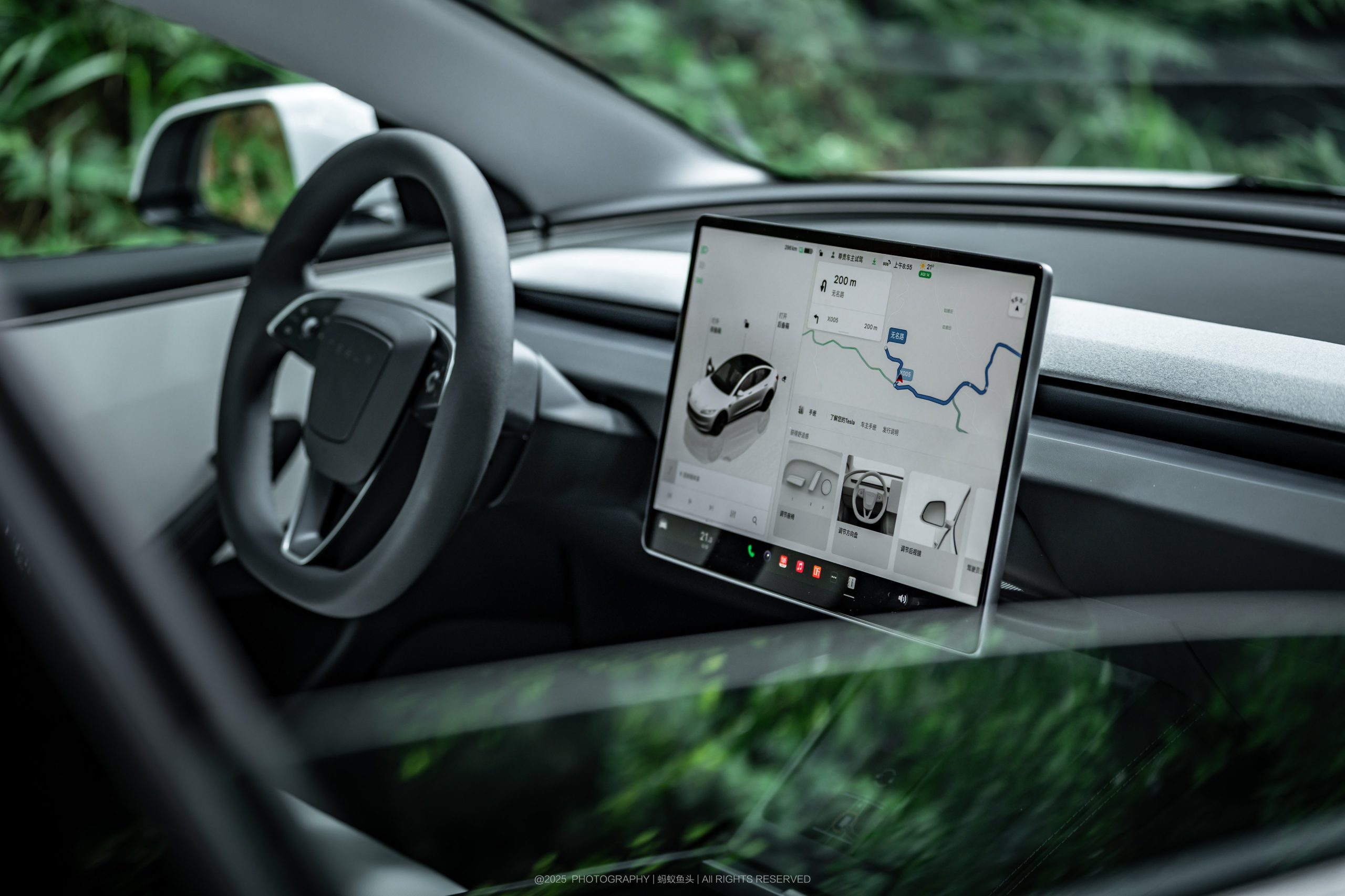
Tesla has lost the director who designed one of the company’s best features: Over-the-Air updates.
Thomas Dmytryk, who has spent over 11 years with Tesla and helped to develop Over-the-Air updates and the company’s vehicles’ ability to utilize them to improve, has decided to leave. In a lengthy statement on LinkedIn, Dmytryk said that he’s “closing the book.” He had nothing but good things to say:
“After 11 incredible years at Tesla, I’m closing the book. It’s been the ride of a lifetime: always on the news, innovating relentlessly, constantly pushing the limits. Tesla is THE place for talented, passionate people. I feel insanely lucky to have been part in that culture for so long.”
It appears the intense lifestyle of developing and creating intensively for so long might have caught up to Dmytryk, who did not give his definitive plans for the future, and it appears he may be taking some time off before jumping into a new venture:
“The future? Extremely bright. Ambitions intact, just getting started as a transformative company that could elevate billions of lives. So why leave now?! Human life’s always been my North Star, right now I need to be with mines. I’ve always admired Tesla’s top leadership and vision. But what I’ve always found incredible is the tenacity, brilliance and devotion of people on the front line. YOU make Tesla unstoppable. I wish you all the best and of course EPIC wins.”
The move was first reported by NotaTeslaApp.
Over-the-Air updates are among Tesla’s best features. They are used to improve the Full Self-Driving suite, add features, remedy recalls, and more. Many vehicles have the ability to receive OTA updates, as I did in a Ford Bronco previous to my Model Y. However, Tesla does them better than anyone else: they’re seamless, effective, and frequent. Your car always improves.
The move is a blow to Tesla, of course, considering Dmytryk’s massive contribution to the company and extremely long tenure spent, but not something that is overwhelmingly detrimental. Tesla deals with a lot of extremely intelligent people, some of whom are the best in their field, so they are sure to find a suitable replacement.
However, it’s no secret that the company has been losing some of its top talent, some of whom were in executive roles. Some have left to take on new projects, and others have not revealed their career plans.
It seems at least some of those employees are simply deciding to walk away and try new things after working so hard for so long. According to Dmytryk’s LinkedIn, he also played a large part in Musk’s acquisition of X, as he stated he “worked at Twitter/X ~45/week while working at the same pace for Tesla.”
That averages a 13-hour day, seven days a week, or 18 hours for the normal five-day work week.
News
Tesla’s most wanted Model Y heads to new region with no sign of U.S. entry
Unlike the standard Model Y, the “L” stretches the wheelbase by roughly 150 mm and the overall length by about 177 mm to 4,976 mm. The result is a genuine 2-2-2 seating layout that gives six adults proper legroom and cargo space — a true family hauler without the cramped third-row compromises of many three-row SUVs.
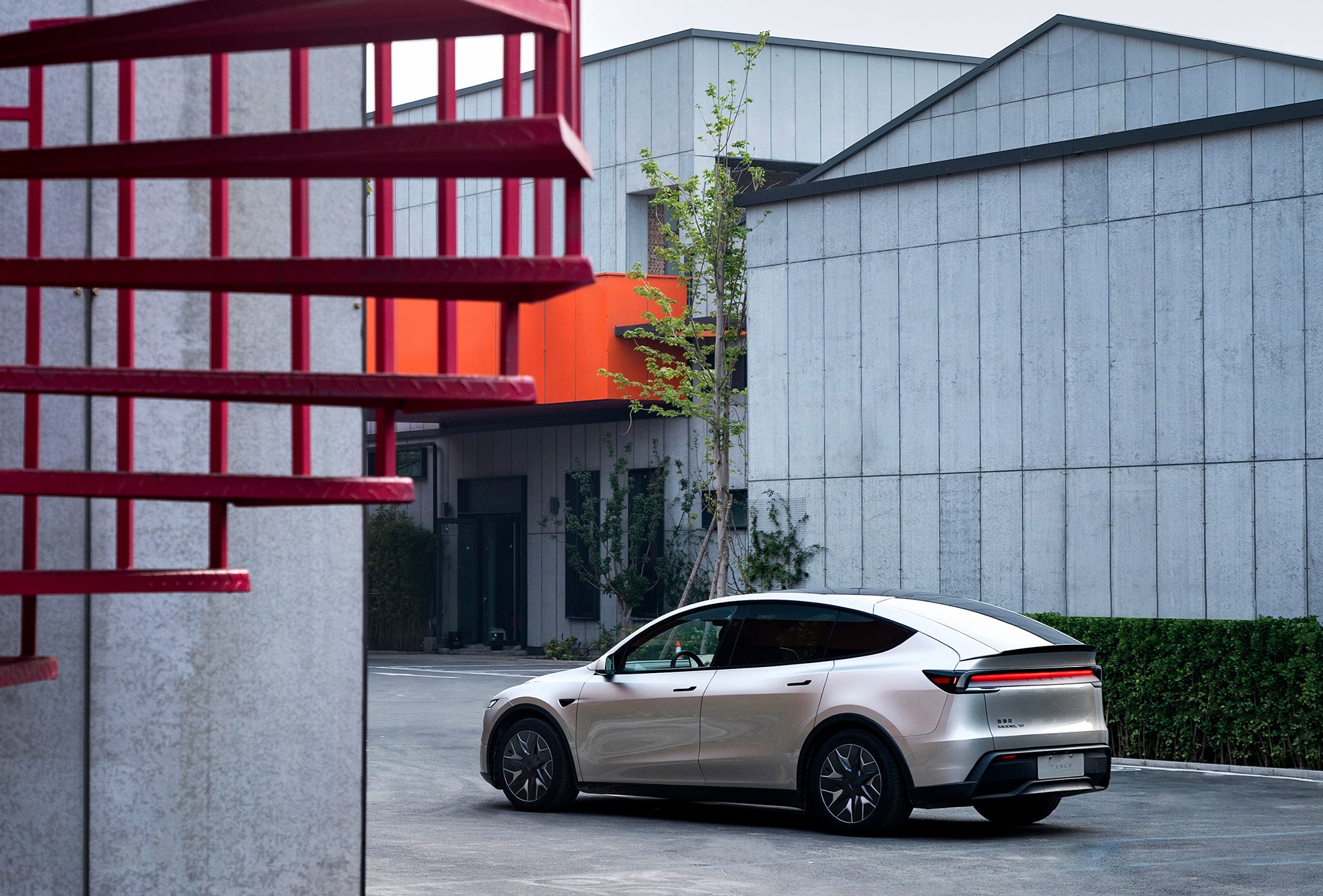
Tesla’s most wanted Model Y configuration is heading to a new region, and although U.S. fans and owners have requested the vehicle since its release last year, it appears the company has no plans to bring it to the market.
According to fresh regulatory filings, the six-seat Model Y L is coming to South Korea with signs indicating an imminent launch. The extended-wheelbase configuration, already a hit in China, just cleared energy-efficiency certification from the Korea Energy Agency, paving the way for deliveries as early as the first half of 2026.
The vehicle is already built at Tesla’s Giga Shanghai facility in China, making it an ideal candidate for the Asian market, as well as the European one, as the factory has been known as a bit of an export hub in the past.
$TSLA
BREAKING: The official launch of Tesla Model Y L in S.Korea seems to be quite imminent.Additional credentials related to Model YL were released today.
✅ Battery Manufacturer: LG Energy Solutions
✅ Number of passengers: 6 people
✅ Total battery capacity: 97.25 kWh… pic.twitter.com/hmy64XYi80— Tsla Chan (@Tslachan) March 6, 2026
It seems like Tesla was prepping for this release anyway, as the timing was no accident. A camouflaged Model Y L prototype was spotted testing on Korean highways the same day the certification dropped. Tesla has already secured similar approvals for Australia and New Zealand, with both markets expecting the larger Model Y in 2026.
Unlike the standard Model Y, the “L” stretches the wheelbase by roughly 150 mm and the overall length by about 177 mm to 4,976 mm. The result is a genuine 2-2-2 seating layout that gives six adults proper legroom and cargo space — a true family hauler without the cramped third-row compromises of many three-row SUVs.
South Korean filings list it as an all-wheel-drive imported electric passenger vehicle with a 97.25 kWh total battery capacity supplied by LG Energy Solution. Local tests show an impressive 543 km (337 miles) combined range at room temperature and 454 km (282 miles) in colder conditions, easing one of the biggest concerns for Korean EV buyers.
Tesla Model Y lineup expansion signals an uncomfortable reality for consumers
But for U.S. fans, things are not looking good for a launch in the market.
CEO Elon Musk has been blunt. The six-seater “wouldn’t arrive in the U.S. until late 2026, if ever,” he said, pointing to the company’s heavy bet on unsupervised Full Self-Driving and robotaxi platforms like the Cybercab. With the Model X slated for discontinuation, many families hoped the stretched Model Y would slide into the lineup as an affordable three-row bridge. So far, that hope remains unfulfilled.
For now, South Korean drivers will be among the first buyers outside China to enjoy the spacious, efficient Model Y L. Tesla continues its global rollout strategy, tailoring vehicles to regional tastes while North American customers keep refreshing their apps and crossing their fingers.
The Model Y L proves the appetite for practical, family-sized electric SUVs is stronger than ever. Hopefully, Tesla will listen to its fans and bring the vehicle to the U.S. where it would likely sell well.
Elon Musk
Tesla is ramping up its advertising strategy on social media
Tesla has long stood out in the automotive world for its unconventional approach to advertising—or, more accurately, its near-total avoidance of it. For over a decade, the company spent virtually nothing on traditional marketing.
Tesla seems to be ramping up its advertising strategy on social media once again. Marketing and advertising have not been a major focus of Tesla’s, something that has brought some criticism to the company from its fans.
However, the company looks to be making adjustments to that narrative, as it has at times in the past, as ads were spotted on several different platforms over the past few days.
On Facebook and YouTube, ads were spotted that were evidently placed by Tesla. On Facebook, Tesla was advertising Full Self-Driving, and on YouTube, an ad for its Energy Division was spotted:
Tesla also threw up some ads on YouTube for Energy https://t.co/19DGQMjBsA pic.twitter.com/XQRfgaDKxY
— TESLARATI (@Teslarati) March 9, 2026
Tesla has long stood out in the automotive world for its unconventional approach to advertising—or, more accurately, its near-total avoidance of it. For over a decade, the company spent virtually nothing on traditional marketing.
In 2022, Tesla’s U.S. ad spend was roughly $152,000, a rounding error compared to General Motors’ $3.6 billion the following year.
Traditional automakers averaged about $495 per vehicle on ads; Tesla spent $0. CEOElon Musk’s stance was explicit: “Tesla does not advertise or pay for endorsements,” he posted on X in 2019. “Instead, we use that money to make the product great.”
The strategy relied on word-of-mouth from delighted owners, Elon’s massive X following, viral product launches, media frenzy, and customer referrals. A great product, Musk argued, sells itself. It does not need Super Bowl spots or billboards. Resources poured into R&D instead, with Tesla investing nearly $3,000 per car, far more than rivals.
Tesla counters jab at lack of advertising with perfect response
This reluctance wasn’t arrogance; it was philosophy, and Musk made it clear that the money was better spent on the product. Heavy spending on ads was seen as wasteful when innovation and authenticity drove organic demand. Shareholder calls for marketing budgets were ignored.
The current shift, paid Facebook ads promoting Full Self-Driving (Supervised) and YouTube Shorts offering up to $1,000 back on Powerwall batteries, marks a pragmatic evolution.
These targeted campaigns coincide with the end of one-time FSD purchases and a March 31 deadline for FSD transfer eligibility on new vehicles.
This move likely signals Tesla adapting to scale, as well as a more concerted effort to stop misinformation regarding its platform. As EV competition intensifies and the company bets big on robotaxis and energy storage, pure organic buzz may not suffice to hit adoption targets. Selective digital ads allow precise, cost-effective reach without abandoning core principles.
If successful, it could foreshadow measured expansion into marketing, boosting high-margin software and home energy revenue while preserving Tesla’s innovative edge. But, it’s nice to see the strategy return, especially as Tesla has been reluctant to change its mind in the past.

Tesla loses Director who designed one of the company’s best features

Tesla’s most wanted Model Y heads to new region with no sign of U.S. entry


