News
SpaceX rolls Raptor Vacuum engines to launch pad for Starship’s next tests

For the second time, SpaceX is gearing up to install a full six Raptor engines on the first orbital-class Starship prototype.
This time around, though, there’s reason to believe that the preparations SpaceX is making aren’t a false start and could culminate in one or several record-breaking Starship static fires as early as next week.
SpaceX installed Raptors on Starship S20 for the first time in early August, outfitting the 50m (165 ft) tall prototype with a full six engines as part of a fit test that ultimately saw it installed on top of a Super Heavy booster. Ship 20 only spent an hour on top of Booster 4, though, and was quickly returned to Starbase build site for Raptor removal and final outfitting. Ship 20 was then rolled back to the launch site and installed on one of two suborbital launch mounts and test stands in mid-August, where it has sat ever since.
Between September 4th and 10th, SpaceX then appeared to install three sea-level-optimized Raptor Center (RC) engines and one Raptor Vacuum (RVac) engine on Starship S20 before the prototype had completed any proof testing. Whether that set of installs was a fit test or an aborted attempt at full installation, SpaceX seemingly paused at three or four Raptors and ultimately removed the lone RVac and one or more of S20’s sea-level engines. Another sea-level Raptor was (re)installed on September 15th.
After a frenetic month of back and forth with no obvious rhyme or reason, all of Ship 20’s Raptors were removed and a series of hydraulic rams used to simulate engine thrust – removed, unused, back in August – were reinstalled. Starship then completed pneumatic and cryogenic proof tests in the last few days of September.
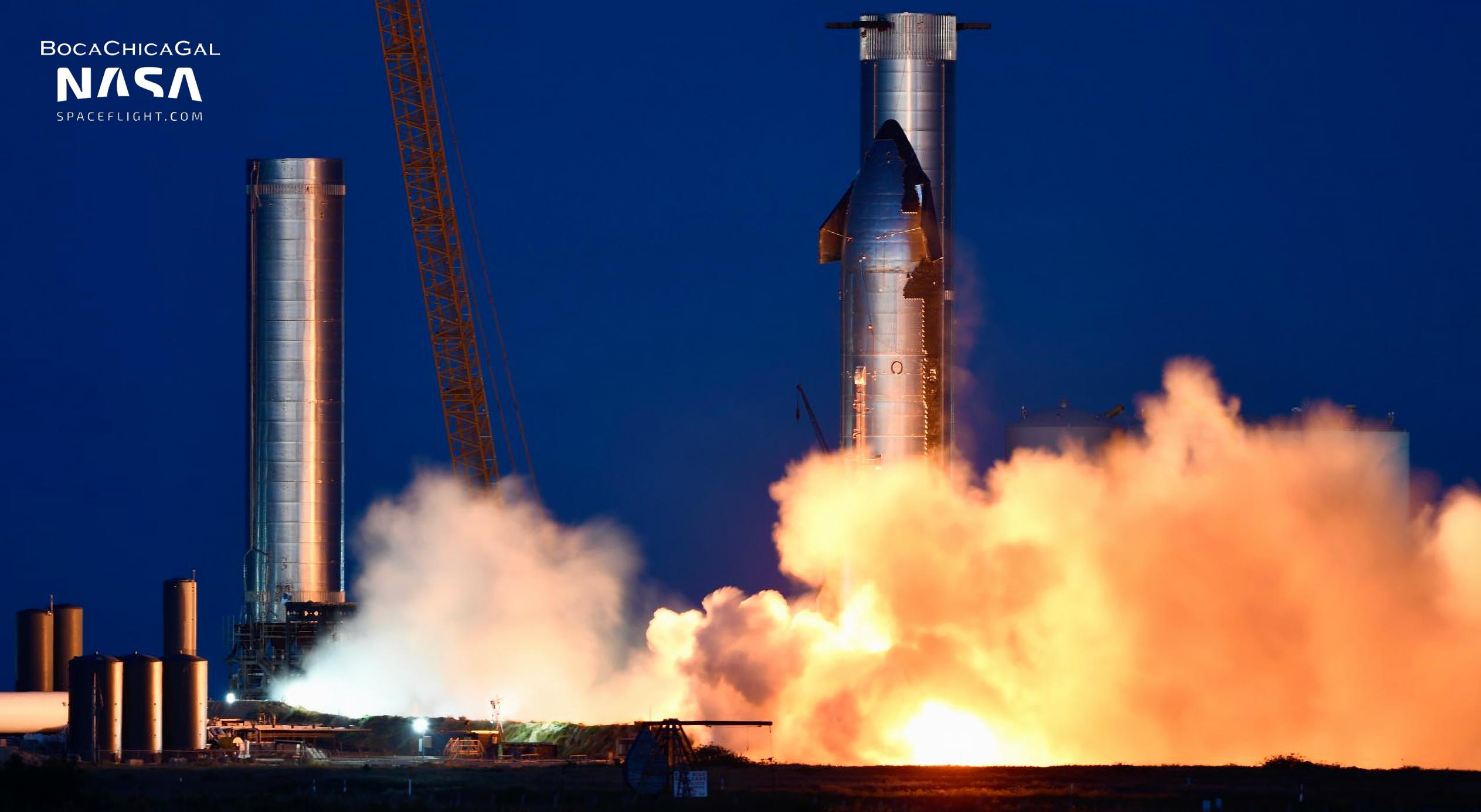
After another ten or so days of unusual downtime, SpaceX began reinstalling Raptors on Ship 20 – one sea-level and one vacuum – around October 10th for a static fire test campaign that began about a week later. Finally, on October 21st, SpaceX fired up the orbital-class prototype for the first time, also completing the first test of a Raptor Vacuum engine installed on a Starship. Barely an hour later, Starship S20 performed a second test, simultaneously firing up both RVac and RC engine in another first.
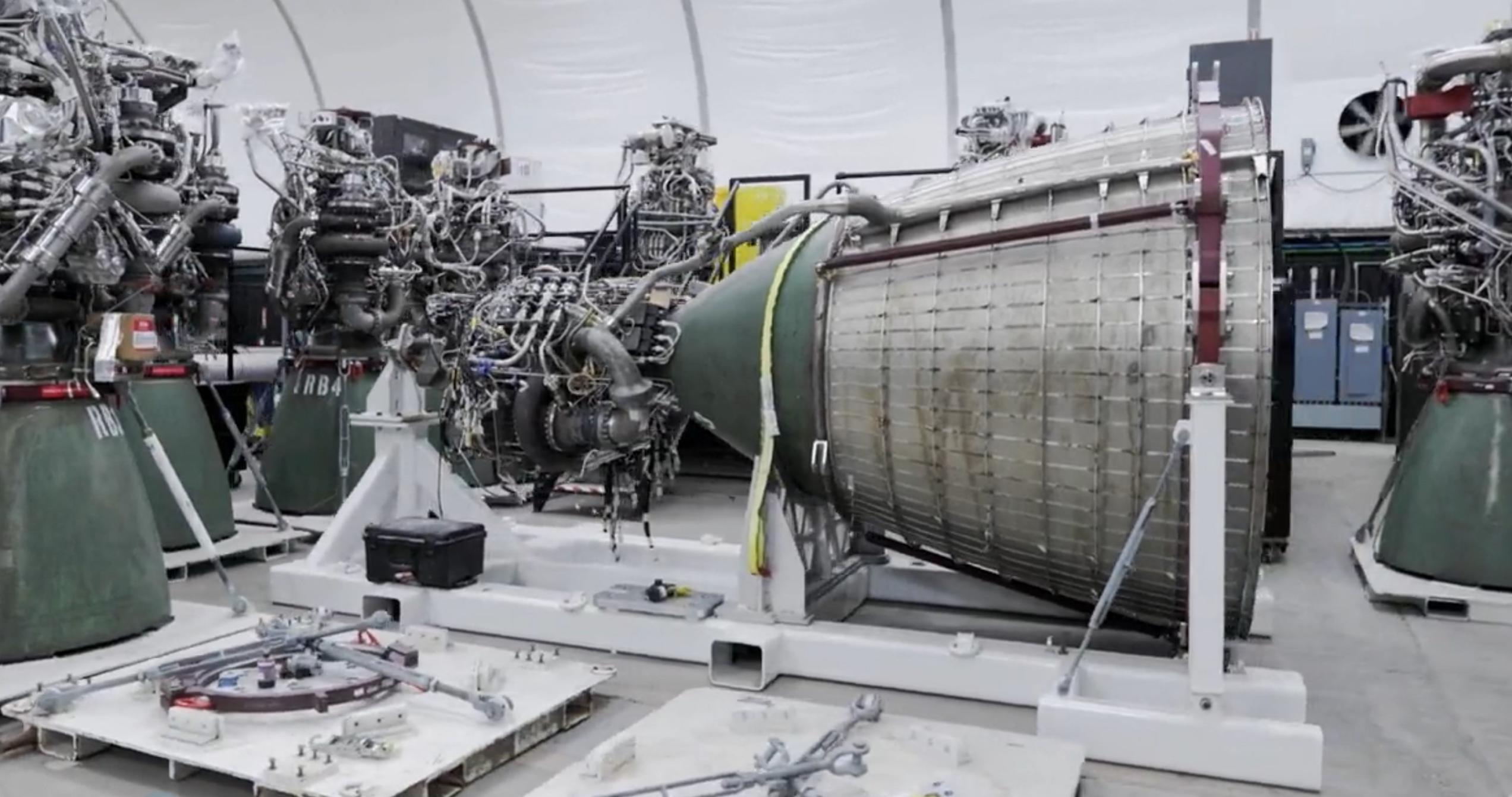
Barely a full day after that successful back-to-back static fire test, SpaceX rolled two more sea-level Raptors to the suborbital pad and installed them on Ship 20. Another unusual week of downtime later and, on October 28th, SpaceX has rolled two more Raptor Vacuum engines from the build site to the launch pad and staged them beside Starship. Once installed, Starship S20 will, for the second time, be fully outfitted with six Raptors. Having already fired up two of those engines without needing either replaced, though, there’s a decent chance that all six will actually be used before Ship 20’s next bout of engine removal/installation deja vu.
SpaceX has never fired more than three engines at a time on a Starship prototype or at its suborbital test site, so a number of firsts potentially lay before Ship 20 as it nears a second round of static fire testing. There is some uncertainty as to whether the suborbital test stands can actually handle the stress from static fires with more than three Raptors, but if they can, then S20 will likely be the first prototype to ignite more 4+ engines and could become the first Starship to fire all six engines at once.
SpaceX currently has one possible test window scheduled from 10am to 6pm CDT on Monday, November 1st, though it could be another week or more before Starship S20’s next static fire attempt if past trends continue.


News
Tesla Semi expands pilot program to Texas logistics firm: here’s what they said
Mone said the Tesla Semi it put into its fleet for this test recorded 1.64 kWh per mile efficiency, beating Tesla’s official 1.7 kWh per mile target and delivering a massive leap over conventional diesel trucks.

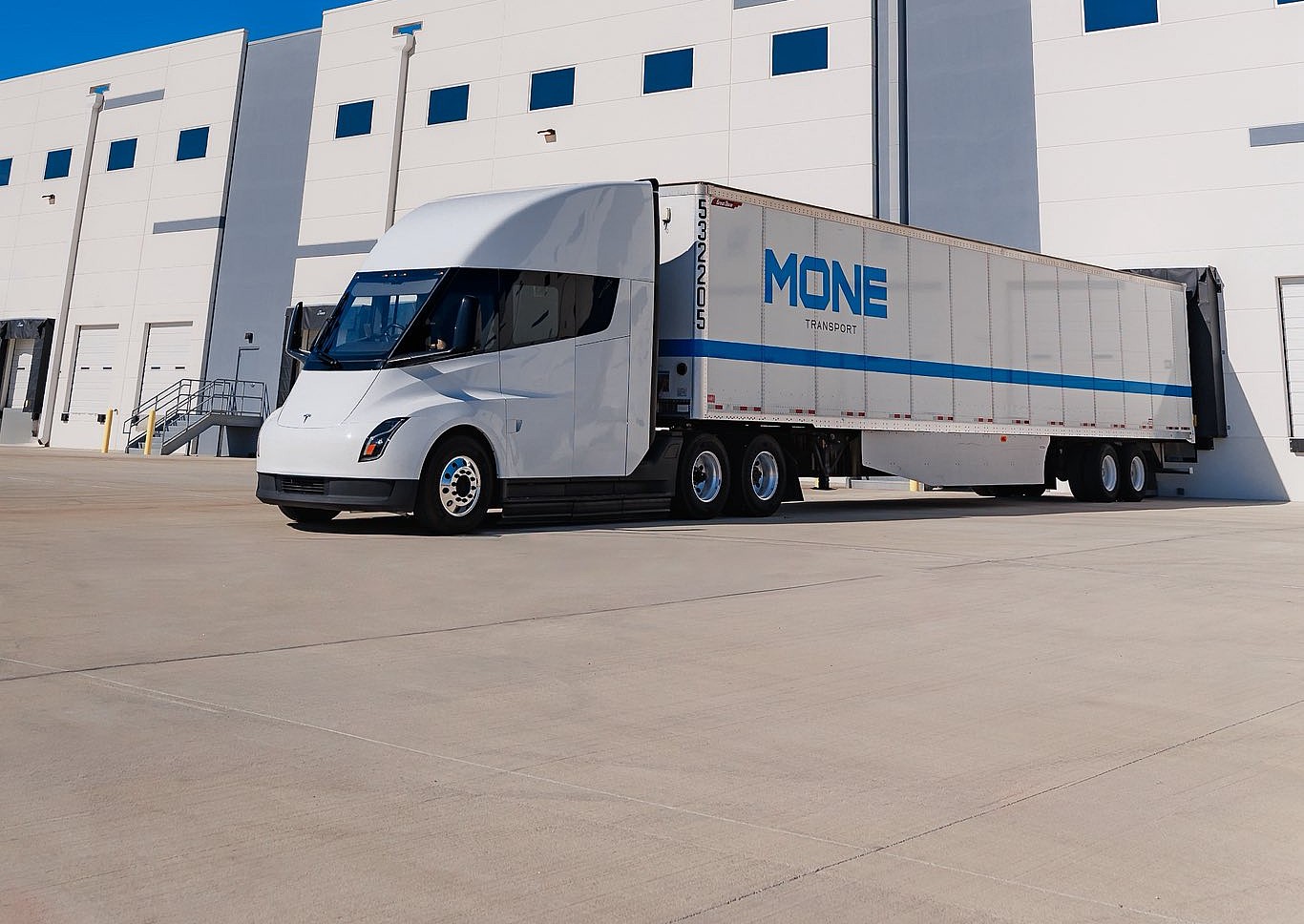
Tesla has expanded its Semi pilot program to a new region, as it has made it to Texas to be tested by logistics from Mone Transport. With the Semi entering production this year, Tesla is getting even more valuable data regarding the vehicle and its efficiency, which will help companies cut expenditures.
Mone Transport operates in Texas and on the Southern border, and it specializes in cross-border U.S.-Mexico freight operations. After completing some rigorous testing, Mone shared public results, which stand out when compared to efficiency metrics offered by diesel vehicles.
“Mone Transport recently had the opportunity to put the Tesla Semi to the test, and we’re thrilled with the results! Over 4,700 miles of operations at 1.64 kWh/mile in our Texas operation. We’re committed to providing zero-emission transportation to our customers!” the company said in a post on X.
🚨 Mone Transport just recorded an extremely impressive Tesla Semi test:
1.64 kWh per mile over 4,700 miles! https://t.co/xwS2dDeomP pic.twitter.com/oLZHoQgXsu
— TESLARATI (@Teslarati) March 10, 2026
Mone said the Tesla Semi it put into its fleet for this test recorded 1.64 kWh per mile efficiency, beating Tesla’s official 1.7 kWh per mile target and delivering a massive leap over conventional diesel trucks.
Comparable Class 8 diesel semis, typically achieving 6-7 miles per gallon, consume roughly 5.5 kWh per mile in energy-equivalent terms, meaning the Semi uses three to four times less energy while also producing zero tailpipe emissions.
Tesla Semi undergoes major redesign as dedicated factory preps for deliveries
The performance of the Tesla Semi in Mone Transport’s testing aligns with data from other participants in the pilot program. ArcBest’s ABF Freight Division logged 4,494 miles over three weeks in 2025, averaging 1.55 kWh per mile across varied routes, including a grueling 7,200-foot Donner Pass climb. The truck “generally matched the performance of its diesel counterparts,” the carrier said.
PepsiCo, which operates the largest known Semi fleet, recorded 1.7 kWh per mile in North American Council for Freight Efficiency testing. Additional pilots showed similar gains: DHL hit 1.72 kWh per mile, and Saia achieved 1.73 kWh per mile.
These metrics underscore the Semi’s ability to slash operating costs through superior efficiency, lower maintenance, and zero-emission operation. As charging infrastructure scales and production ramps toward 2026 targets, participants like Mone Transport are proving electric semis can seamlessly integrate into freight networks, accelerating the industry’s shift to sustainable, high-performance trucking.
Tesla continues to prep for a more widespread presence of the Semi in the coming months as it recently launched the first public Semi Megacharger site in Los Angeles. It is working on building out infrastructure for regional runs on the West Coast initially, with plans to expand this to the other end of the country in the coming years.
Elon Musk
SpaceX weighs Nasdaq listing as company explores early index entry: report
The company is reportedly seeking early inclusion in the Nasdaq-100 index.

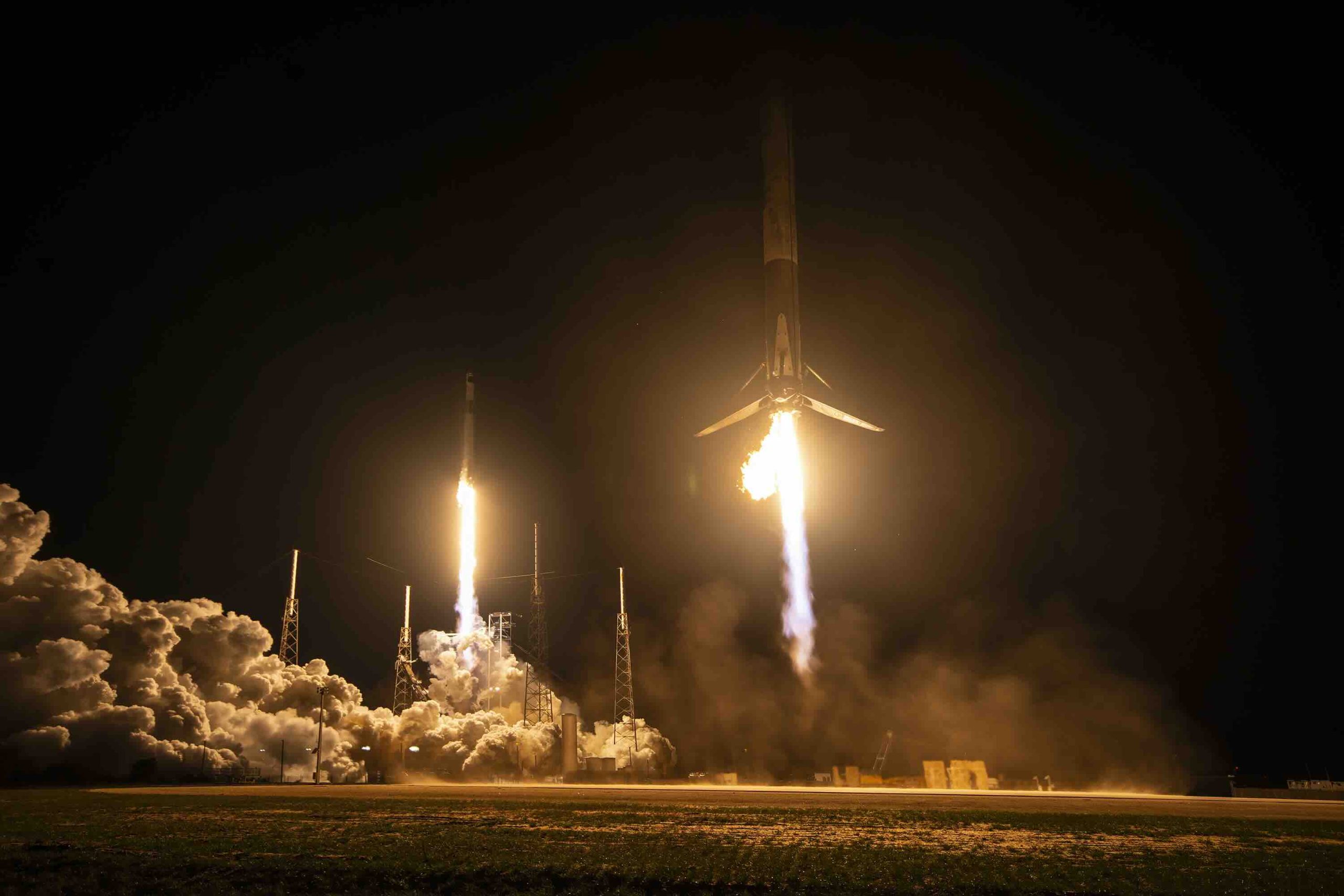
Elon Musk’s SpaceX is reportedly leaning toward listing its shares on the Nasdaq for a potential initial public offering (IPO) that could become the largest in history.
As per a recent report, the company is reportedly seeking early inclusion in the Nasdaq-100 index. The update was reported by Reuters, citing people familiar with the matter.
According to the publication, SpaceX is considering Nasdaq as the venue for its eventual IPO, though the New York Stock Exchange is also competing for the listing. Neither exchange has reportedly been informed of a final decision.
Reuters has previously reported that SpaceX could pursue an IPO as early as June, though the company’s plans could still change.
One of the publication’s sources also suggested that SpaceX is targeting a valuation of about $1.75 trillion for its IPO. At that level, the company would rank among the largest publicly traded firms in the United States by market capitalization.
Nasdaq has proposed a rule change that could accelerate the inclusion of newly listed megacap companies into the Nasdaq-100 index.
Under the proposed “Fast Entry” rule, a newly listed company could qualify for the index in less than a month if its market capitalization ranks among the top 40 companies already included in the Nasdaq-100.
If SpaceX is successful in achieving its target valuation of $1.75 trillion, it would become the sixth-largest company by market value in the United States, at least based on recent share prices.
Newly listed companies typically have to wait up to a year before becoming eligible for major indexes such as the Nasdaq-100 or S&P 500.
Inclusion in a major index can significantly broaden a company’s shareholder base because many institutional investors purchase shares through index-tracking funds.
According to Reuters, Nasdaq’s proposed fast-track rule is partly intended to attract highly valued private companies such as SpaceX, OpenAI, and Anthropic to list on the exchange.
Elon Musk
The Boring Company’s Prufrock-2 emerges after completing new Vegas Loop tunnel
The new tunnel measures 2.28 miles, making it the company’s longest single Vegas Loop tunnel to date.
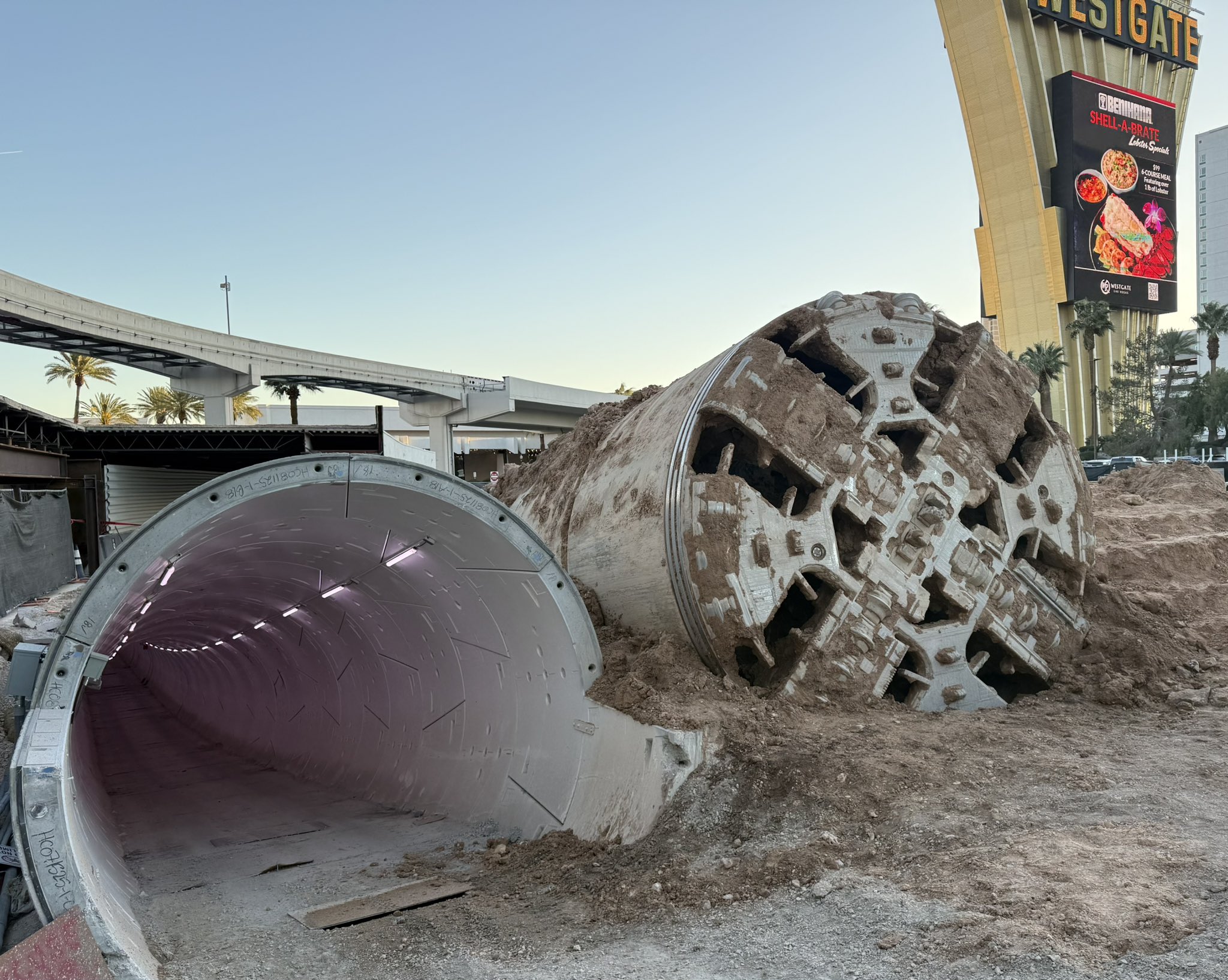
The Boring Company announced that its Prufrock-2 tunnel boring machine (TBM) has completed another Vegas Loop tunnel in Las Vegas. The company shared the update in a post on social media platform X.
According to The Boring Company’s post, the new tunnel measures 2.28 miles, making it the company’s longest single Vegas Loop tunnel to date.
The new tunnel marks the fourth tunnel constructed near Westgate Las Vegas as the Vegas Loop network continues expanding across the city.
The Boring Company also noted that the new tunnel surpassed its previous internal record of 2.26 miles for a single Vegas Loop segment.
Construction of the tunnel involved moving roughly 68,000 cubic yards of dirt. The excavation process also used about 4.8 miles of continuous conveyor belt, powered by six motors totaling 825 horsepower.
The Boring Company’s Prufrock-series all-electric tunnel boring machines are designed to support the rapid expansion of company’s underground transportation projects, including the growing Vegas Loop network. Prufrock machines are designed for reusability, thanks in no small part to their capability to be deployed and retrieved easily through their “porposing” feature.
The Vegas Loop, specifically the Las Vegas Convention Center (LVCC) Loop segment, has already been used during major events. Most recently, the LVCC Loop supported the 2026 CONEXPO-CON/AGG construction trade show, which was held from March 3-7, 2026.
As per The Boring Company, the LVCC Loop transported roughly 82,000 passengers across the convention center campus during the event’s duration.
CONEXPO-CON/AGG is one of the largest construction trade shows in North America, drawing more than 140,000 construction professionals from 128 countries this year.
The LVCC Loop forms the initial segment of the broader Vegas Loop network, which remains under active development as The Boring Company continues building new tunnels throughout the city.

Tesla Semi expands pilot program to Texas logistics firm: here’s what they said

SpaceX weighs Nasdaq listing as company explores early index entry: report


