News
SpaceX orbital Starship launch debut officially slips to 2022 – but it’s not all bad news

US government documentation suggests that the Federal Aviation Administration (FAA) aims to complete an environmental review of SpaceX’s orbital Starship launch site no earlier than December 31st, 2021, precluding an orbital launch attempt this year.
In light of the FAA taking until September 2021 to publish the draft of that environmental assessment (EA), a major delay has been the expected outcome for months. The latest development finally makes that delay official, confirming that even in the new best-case scenario, SpaceX will be unable to conduct Starship’s first orbital launch before January 1st, 2022. But while that unfortunate confirmation comes as little surprise, it’s not all bad news.
It’s unclear how accurate the Federal Infrastructure Projects’ “Permitting Dashboard” actually is but the information displayed on the website is specific and detailed enough for it to be deemed trustworthy. If correct, it states that the FAA aims to complete SpaceX’s orbital Starship EA by December 31st. To an extent, that internal estimate relies on the optimistic assumption that the FAA will rule in SpaceX’s favor on the matter and issue either a finding of no significant impact (FONSI).
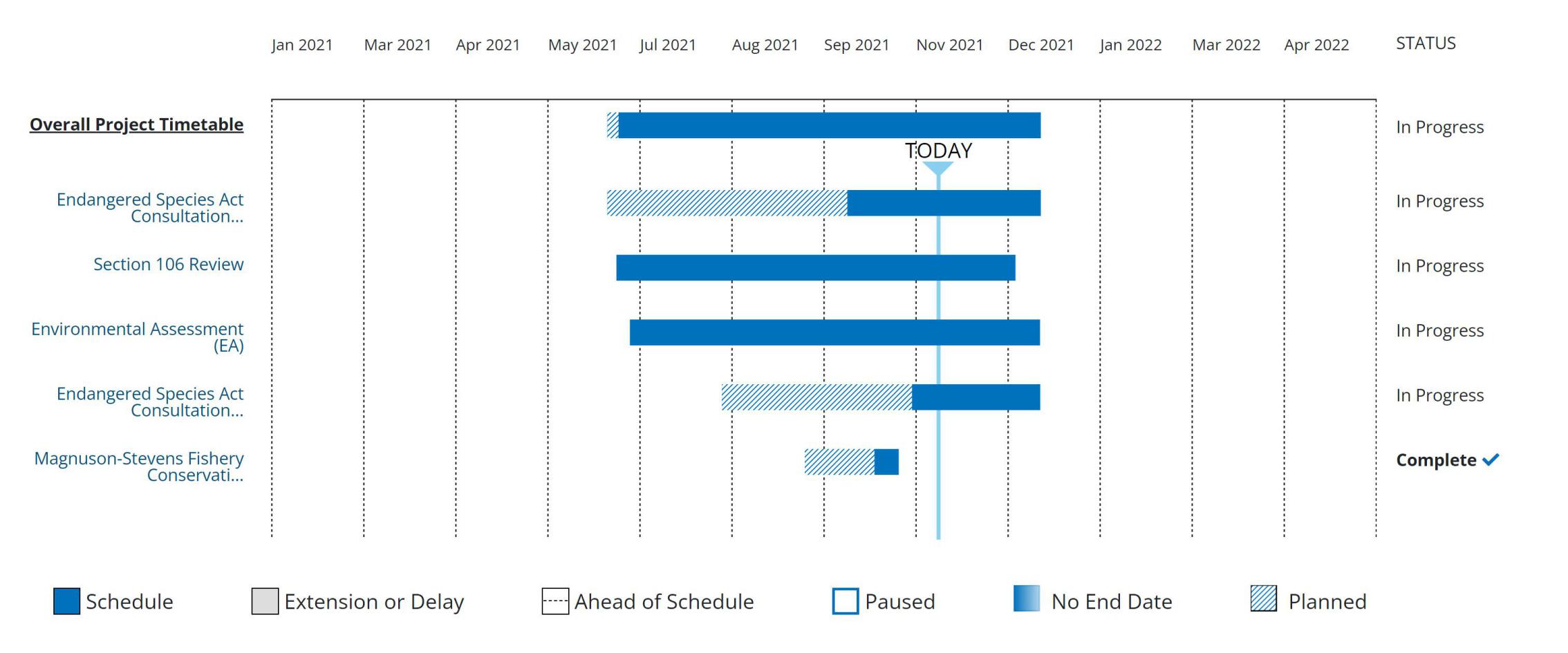
Of course, there’s a chance that the portal’s claim that the FAA will file Starship’s final orbital EA and conclude the EA process on the same day actually implies that the FAA has already ruled out the worst-case scenario (a no action alternative finding), which would be excellent news for SpaceX. In an optimal scenario, the 12/31/21 target means that the FAA could issue a FONSI or mitigated FONSI before the end of 2021. However, even if that’s the case, a highly favorable environmental review is just one part of the process of securing an orbital Starship launch license, which will be the next gating factor for the SpaceX rocket’s full-up launch debut.
Update: In an official email, the FAA says that the final EA it intends to release by December 31st “will include a Finding of No Significant Impact or decision to initiate an Environmental Impact Statement.” It’s unclear if that FONSI includes the possibility of a mitigated FONSI, which would be the optimal compromise scenario. If the FAA pursues an EIS, it would effectively restart the environmental review process from scratch, potentially delaying orbital Starship launches by a year or more.
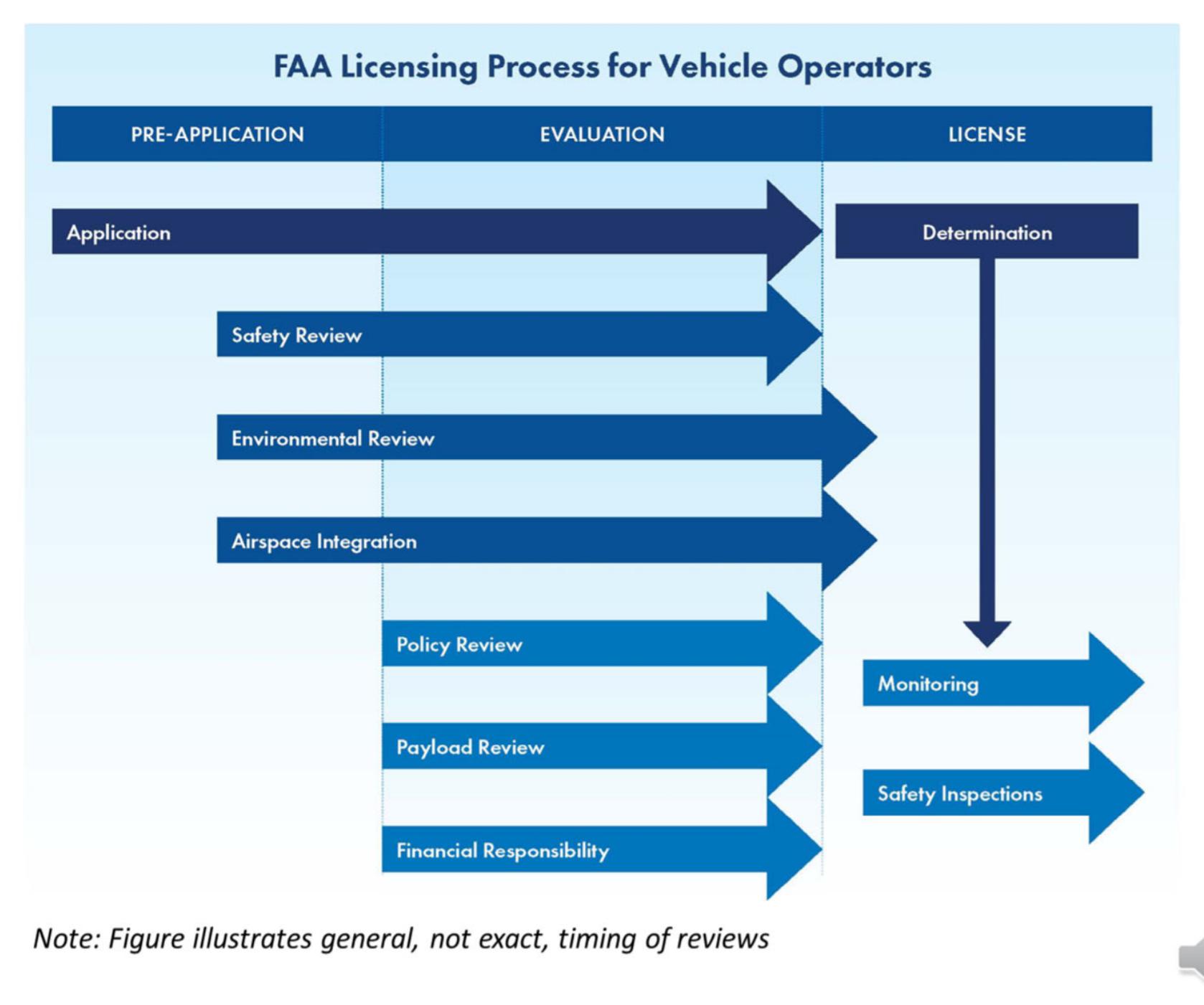
There is very little public insight into what that launch licensing process involves or how long it usually takes but it’s safe to say that it could take months for the FAA to move from issuing a favorable EA to approving even the most limited possible orbital Starship launch license (a permit for a single flight). Still, there is some reason for optimism. If the FAA actually publishes a final – and favorable – environmental assessment by the end of 2021, less than four months after issuing the first draft EA for orbital Starship launches, it would be an exceptionally quick turnaround for such a large project and review.
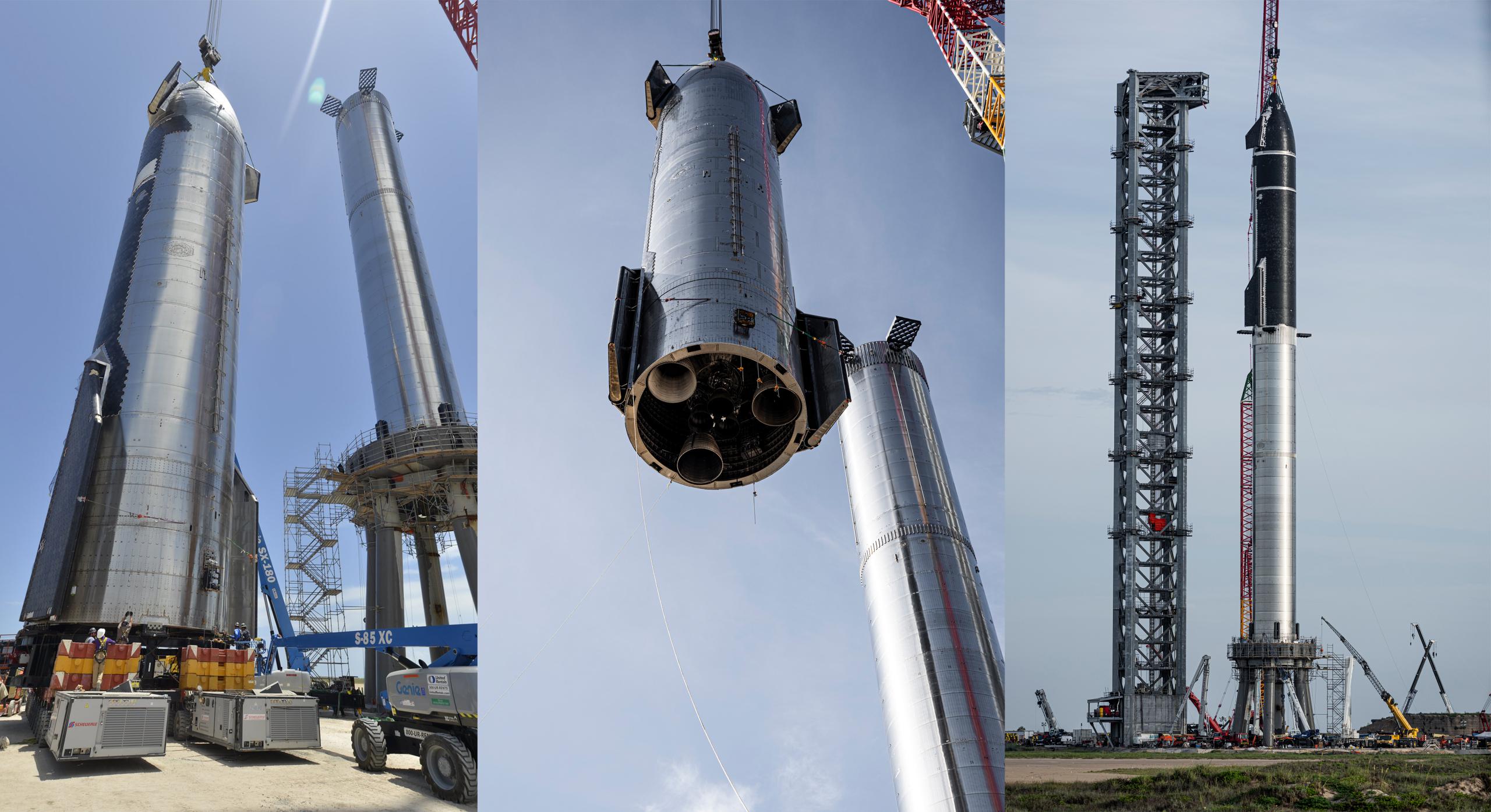
Now that SpaceX has completed the first successful six-engine Starship static fire, the company could potentially be technically ready for the first orbital Starship launch as soon as the ship’s Super Heavy booster completes similar testing. That test campaign is even more ambitious than Starship’s and will eventually culminate in the first one or several 29-engine booster static fires, making Super Heavy the most powerful rocket stage ever tested. Plenty of uncertainty remains about the timeline for Super Heavy Booster 4 (B4) testing, though.
With a quick burst of progress, both Super Heavy B4 and Starbase’s orbital launch site could feasibly be ready to support testing before the end of November. Before true Super Heavy testing can began, SpaceX will need to close out one or both of the orbital pad’s liquid methane (LCH4) tanks, fill them with several hundred to several thousand tons of LCH4, button up Booster 4’s aft section with six steel ‘aerocovers’, finish reinstalling 29 Raptors, and complete the heat shield that will protect most of those engines during ground testing and in flight. Normally, that would likely be a few-day or few-week process for SpaceX but the company’s unusually slow pace of work as of late could turn it into a several-month ordeal.
With any luck, SpaceX has simply prioritized work on Starbase’s orbital launch site over the last few months and will refocus on preparing Super Heavy B4 and Starship S20 for flight as the FAA’s environmental review and launch licensing processes finally near their end.


News
Tesla opens Supercharging Network to other EVs in new country
Tesla’s Supercharging infrastructure is the most robust in the world, and it has done a wonderful job of keeping things up and running for the millions of owners out there. As it expanded access to non-Tesla EVs a couple years back, it has still managed to keep things pretty steady, although the need for more charging is apparent.

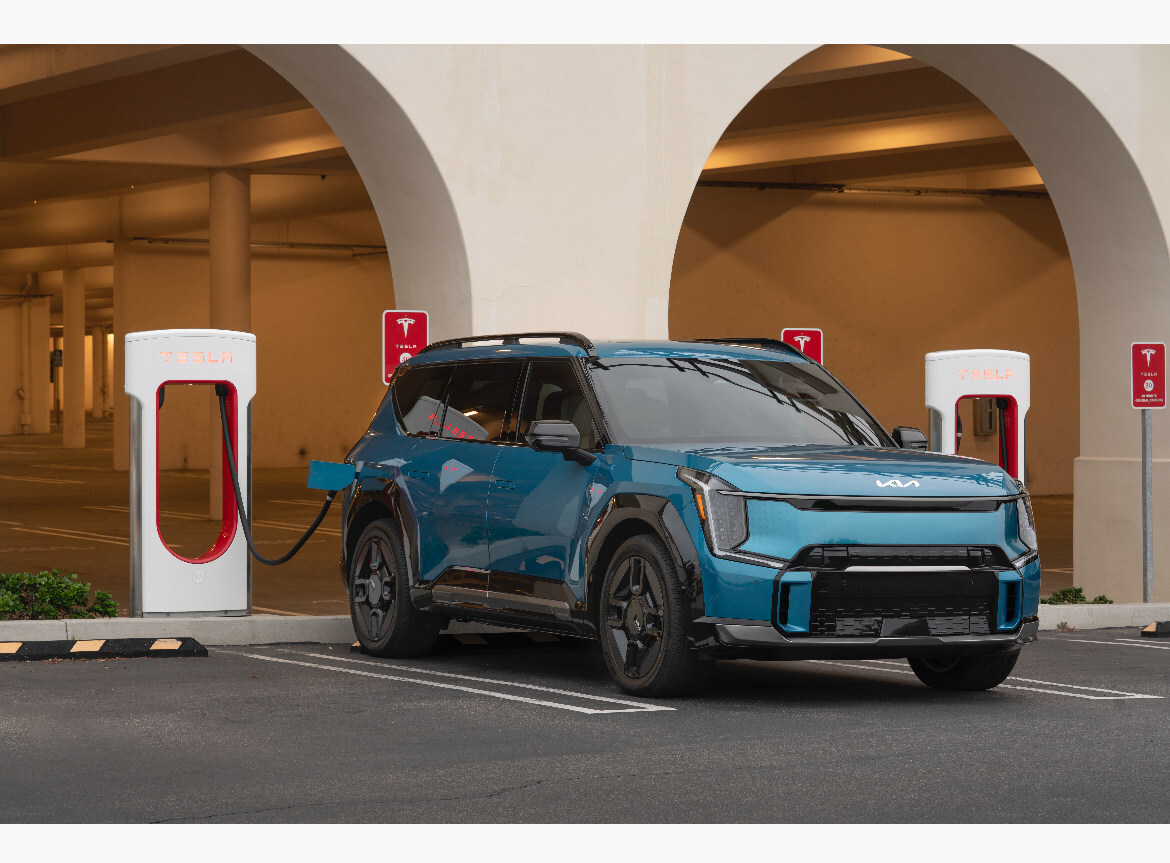
Tesla has started opening its Supercharging Network, which is the most expansive in the world, to other EVs in a new country for the first time.
After expanding its Supercharging offerings to other car companies in the United States a few years ago, Tesla is still making the move in other markets, as it aims to make EV ownership easier for everyone, regardless of what manufacturer a consumer chose to purchase from.
Tesla’s Supercharging infrastructure is the most robust in the world, and it has done a wonderful job of keeping things up and running for the millions of owners out there. As it expanded access to non-Tesla EVs a couple years back, it has still managed to keep things pretty steady, although the need for more charging is apparent.
Tesla just added a cool new feature for leaving your charger at home or even leaving the Supercharger pic.twitter.com/iw0SDrWuX6
— TESLARATI (@Teslarati) March 10, 2026
Now, Tesla is expanding access to the Supercharger Network to non-Tesla EVs in Malaysia. The automaker just opened up a charging stie at the Pavilion KL Mall in Kuala Lumpur to non-Tesla owners, giving them eight additional Superchargers to utilize with a charging speed of up to 250 kW.
Tesla is also opening up the four-Supercharger site in Shah Alam, a four-Supercharger site at the IOI City Mall, and a six-Supercharger site in Gamuda Cove Township.
Electrive first reported the opening of these Superchargers in Malaysia.
The initiative from Tesla helps make EV ownership much simpler for those who only have access to third-party charging solutions or at-home charging. While at-home charging is the most advantageous, it is not an end-all solution as every driver will eventually need to grab some range on the road.
Tesla has been offering its Superchargers to non-Tesla EVs in the United States since 2024, as Ford became the first company to gain access to the massive network early that year when CEO Elon Musk and Ford frontman Jim Farley announced it together. Since then, Tesla has offered its chargers to nearly every EV maker, as companies like Rivian and Lucid, and even legacy car companies like General Motors have gained access.
It’s best for everyone to have the ability to use Tesla Superchargers, but there are of course some growing pains.
Charging cables are built to cater to Tesla owners, so pull-in Superchargers are most advantageous for non-Tesla EVs currently, but the company’s V4 Superchargers, which are not as plentiful in the U.S. quite yet, do enable easier reach for those vehicles.
News
Tesla Semi expands pilot program to Texas logistics firm: here’s what they said
Mone said the Tesla Semi it put into its fleet for this test recorded 1.64 kWh per mile efficiency, beating Tesla’s official 1.7 kWh per mile target and delivering a massive leap over conventional diesel trucks.
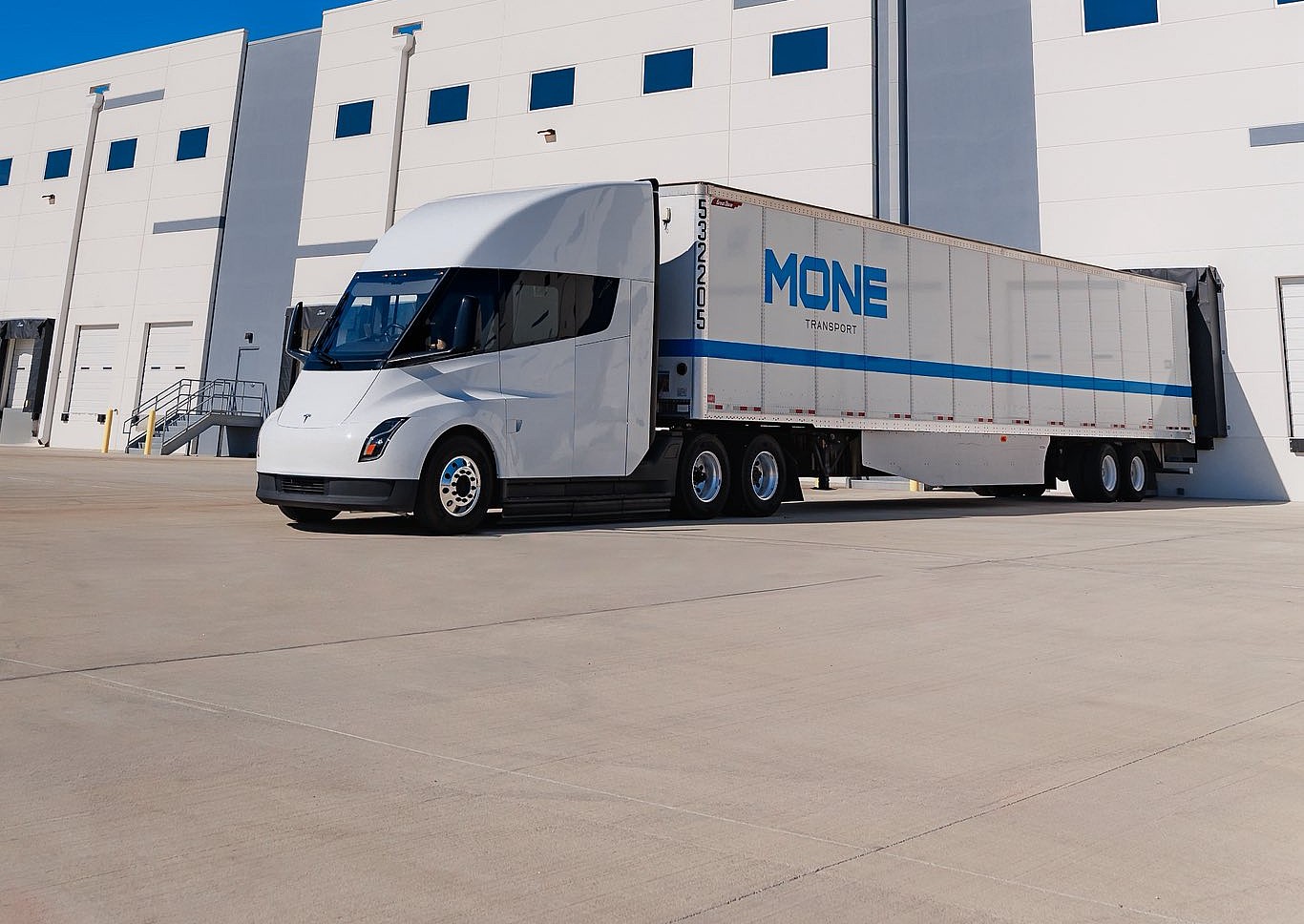
Tesla has expanded its Semi pilot program to a new region, as it has made it to Texas to be tested by logistics from Mone Transport. With the Semi entering production this year, Tesla is getting even more valuable data regarding the vehicle and its efficiency, which will help companies cut expenditures.
Mone Transport operates in Texas and on the Southern border, and it specializes in cross-border U.S.-Mexico freight operations. After completing some rigorous testing, Mone shared public results, which stand out when compared to efficiency metrics offered by diesel vehicles.
“Mone Transport recently had the opportunity to put the Tesla Semi to the test, and we’re thrilled with the results! Over 4,700 miles of operations at 1.64 kWh/mile in our Texas operation. We’re committed to providing zero-emission transportation to our customers!” the company said in a post on X.
🚨 Mone Transport just recorded an extremely impressive Tesla Semi test:
1.64 kWh per mile over 4,700 miles! https://t.co/xwS2dDeomP pic.twitter.com/oLZHoQgXsu
— TESLARATI (@Teslarati) March 10, 2026
Mone said the Tesla Semi it put into its fleet for this test recorded 1.64 kWh per mile efficiency, beating Tesla’s official 1.7 kWh per mile target and delivering a massive leap over conventional diesel trucks.
Comparable Class 8 diesel semis, typically achieving 6-7 miles per gallon, consume roughly 5.5 kWh per mile in energy-equivalent terms, meaning the Semi uses three to four times less energy while also producing zero tailpipe emissions.
Tesla Semi undergoes major redesign as dedicated factory preps for deliveries
The performance of the Tesla Semi in Mone Transport’s testing aligns with data from other participants in the pilot program. ArcBest’s ABF Freight Division logged 4,494 miles over three weeks in 2025, averaging 1.55 kWh per mile across varied routes, including a grueling 7,200-foot Donner Pass climb. The truck “generally matched the performance of its diesel counterparts,” the carrier said.
PepsiCo, which operates the largest known Semi fleet, recorded 1.7 kWh per mile in North American Council for Freight Efficiency testing. Additional pilots showed similar gains: DHL hit 1.72 kWh per mile, and Saia achieved 1.73 kWh per mile.
These metrics underscore the Semi’s ability to slash operating costs through superior efficiency, lower maintenance, and zero-emission operation. As charging infrastructure scales and production ramps toward 2026 targets, participants like Mone Transport are proving electric semis can seamlessly integrate into freight networks, accelerating the industry’s shift to sustainable, high-performance trucking.
Tesla continues to prep for a more widespread presence of the Semi in the coming months as it recently launched the first public Semi Megacharger site in Los Angeles. It is working on building out infrastructure for regional runs on the West Coast initially, with plans to expand this to the other end of the country in the coming years.
Elon Musk
SpaceX weighs Nasdaq listing as company explores early index entry: report
The company is reportedly seeking early inclusion in the Nasdaq-100 index.

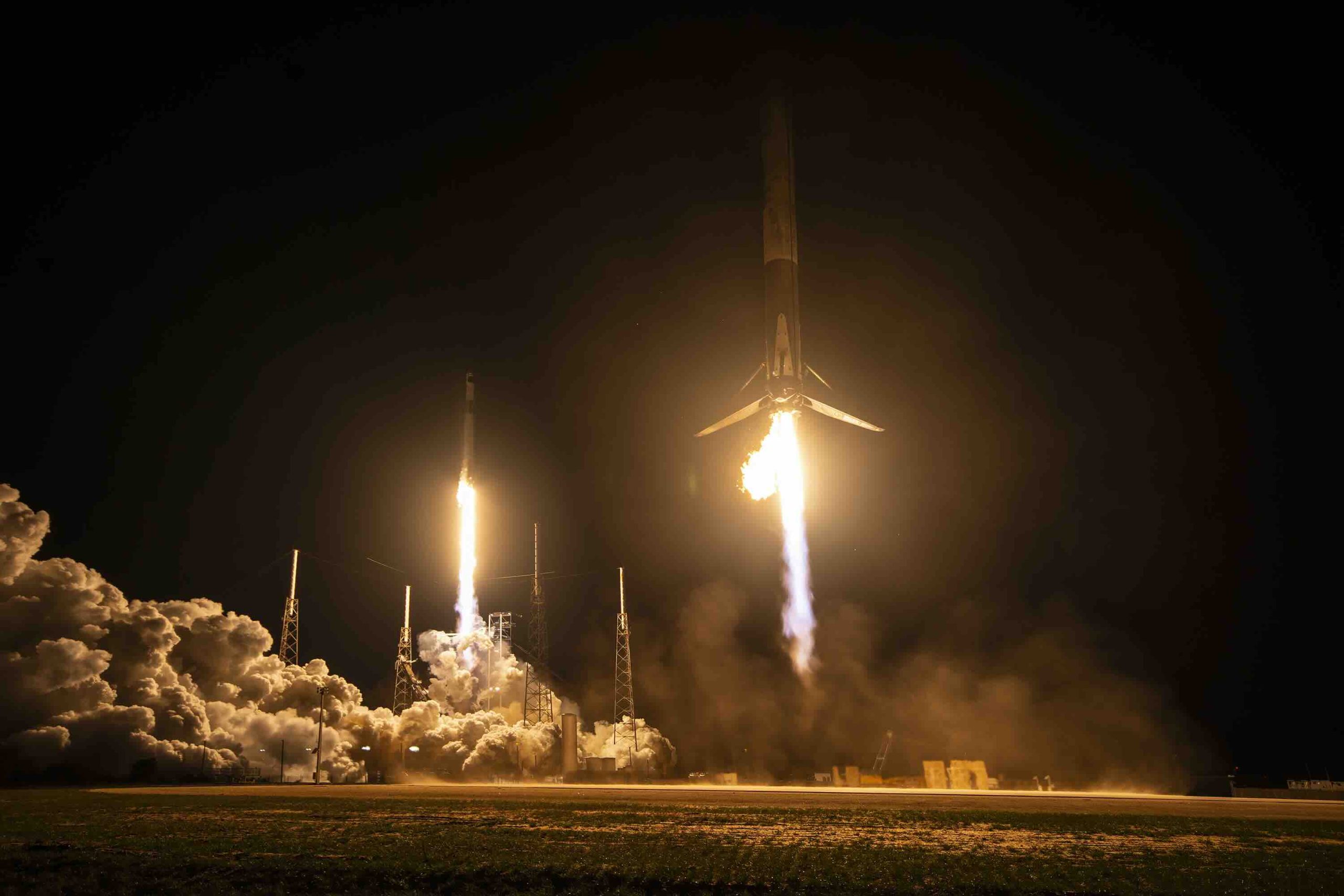
Elon Musk’s SpaceX is reportedly leaning toward listing its shares on the Nasdaq for a potential initial public offering (IPO) that could become the largest in history.
As per a recent report, the company is reportedly seeking early inclusion in the Nasdaq-100 index. The update was reported by Reuters, citing people familiar with the matter.
According to the publication, SpaceX is considering Nasdaq as the venue for its eventual IPO, though the New York Stock Exchange is also competing for the listing. Neither exchange has reportedly been informed of a final decision.
Reuters has previously reported that SpaceX could pursue an IPO as early as June, though the company’s plans could still change.
One of the publication’s sources also suggested that SpaceX is targeting a valuation of about $1.75 trillion for its IPO. At that level, the company would rank among the largest publicly traded firms in the United States by market capitalization.
Nasdaq has proposed a rule change that could accelerate the inclusion of newly listed megacap companies into the Nasdaq-100 index.
Under the proposed “Fast Entry” rule, a newly listed company could qualify for the index in less than a month if its market capitalization ranks among the top 40 companies already included in the Nasdaq-100.
If SpaceX is successful in achieving its target valuation of $1.75 trillion, it would become the sixth-largest company by market value in the United States, at least based on recent share prices.
Newly listed companies typically have to wait up to a year before becoming eligible for major indexes such as the Nasdaq-100 or S&P 500.
Inclusion in a major index can significantly broaden a company’s shareholder base because many institutional investors purchase shares through index-tracking funds.
According to Reuters, Nasdaq’s proposed fast-track rule is partly intended to attract highly valued private companies such as SpaceX, OpenAI, and Anthropic to list on the exchange.

Tesla opens Supercharging Network to other EVs in new country

Tesla Semi expands pilot program to Texas logistics firm: here’s what they said


