News
Elon Musk says SpaceX could fire up first orbital-class Super Heavy booster next week

Update: In response to this article, SpaceX CEO Elon Musk says that the plan is to not only ‘cryoproof’ the first flightworthy Super Heavy – but to static fire the booster and shake down Starship’s brand new orbital launch complex as early as “next week.”
A lot of work would need to be finished – and all of it smoothly – for an orbital launch pad cryoproof and static fire to be possible just a week or less from now but Musk’s response nevertheless provides invaluable context for SpaceX’s near-term plans and confirms that Super Heavy Booster 4 is ready for integrated testing as-is. Further, Musk’s tweet implies – as speculated – that Starbase’s orbital launch complex tank farm is much closer to test-readiness than it might otherwise appear.
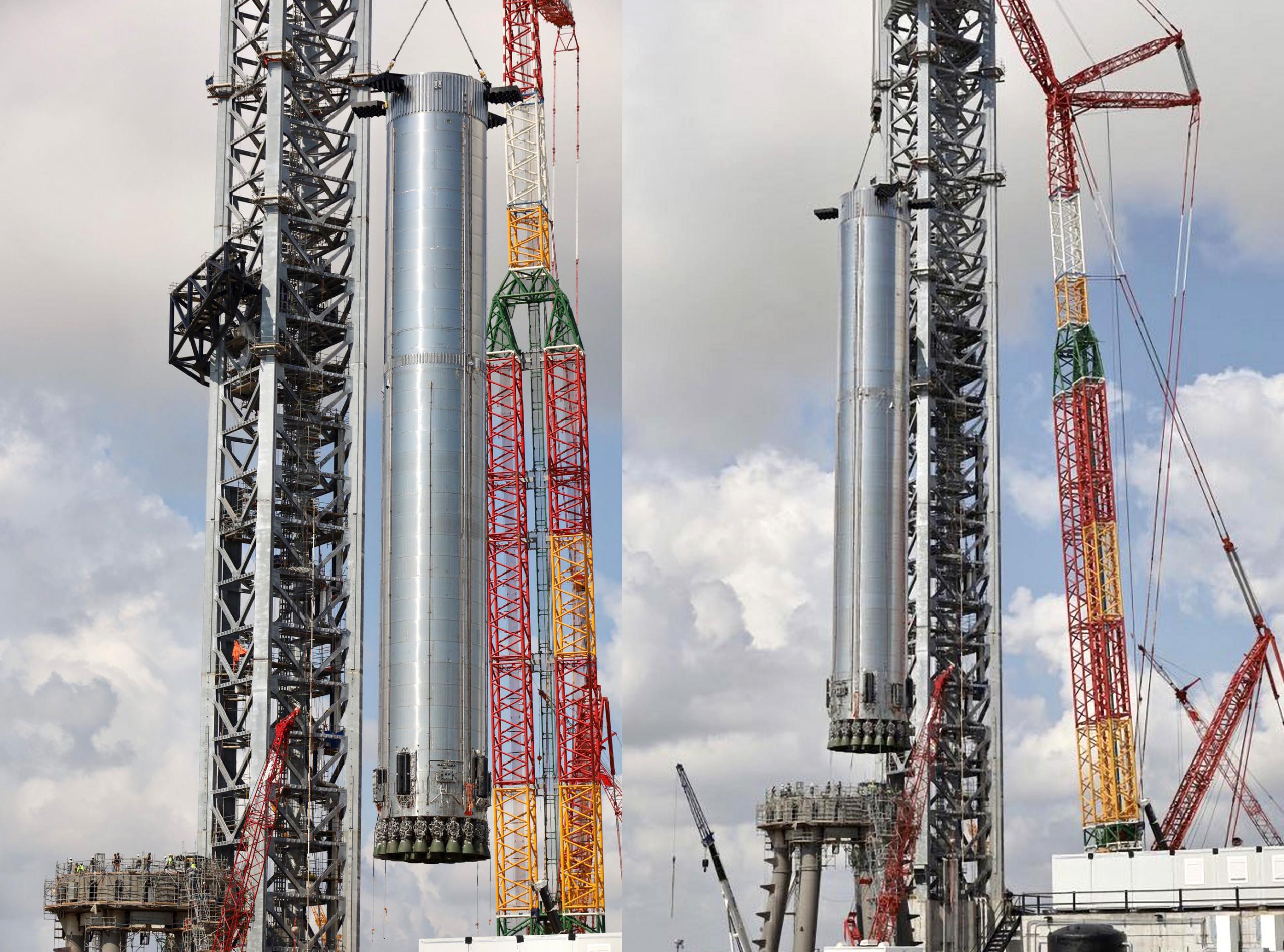
For the second time in five weeks, SpaceX has installed a Super Heavy booster – fitted with 29 Raptor engines – on Starship’s nascent ‘orbital launch mount.’
Both Super Heavy Booster 4 (B4) and the launch mount have undergone substantial changes since they last parted ways four weeks ago. SpaceX teams have been laser-focused on installing the vast array of plumbing, wiring, and components required to turn the hulking steel structures into functional launch facilities and the largest flightworthy rocket and both certainly look the part.
Superheavy Booster 4 pic.twitter.com/jQ7RAN1nCK— SPadre (@SpacePadreIsle) September 8, 2021
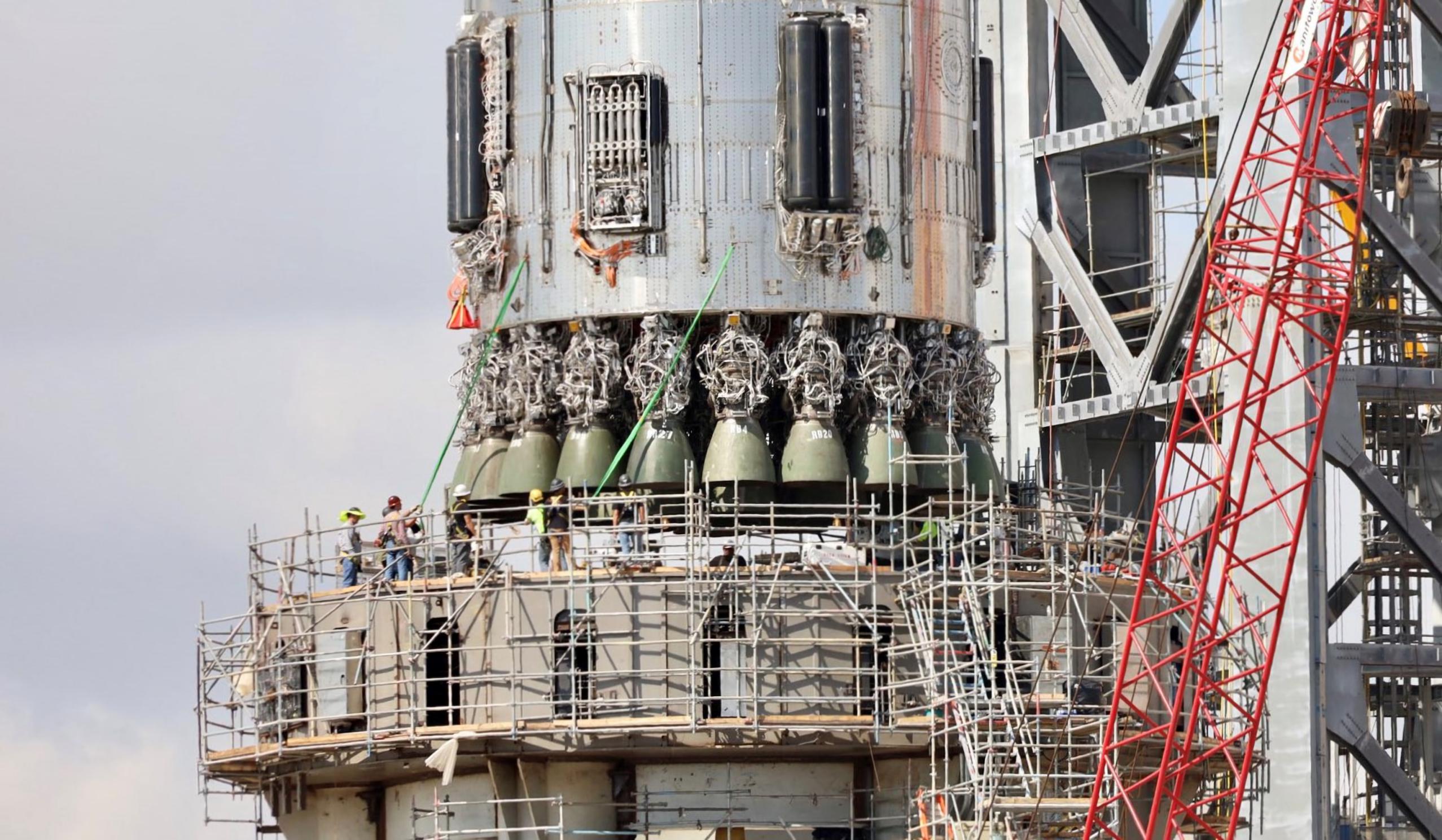
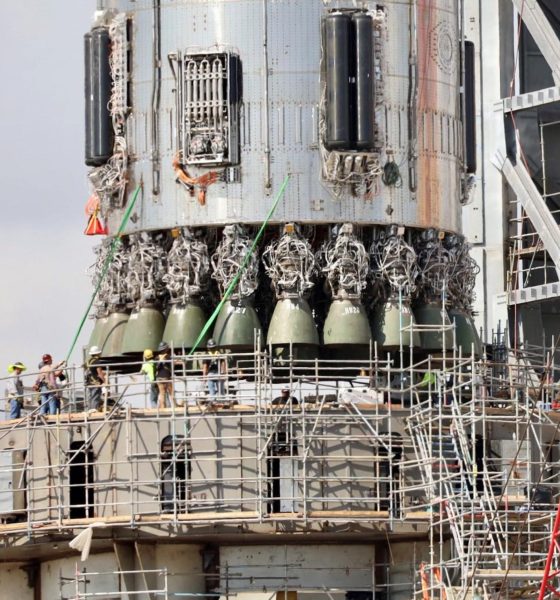
Unlike Starship, which has an expansive skirt section perfect for stowing away sensitive plumbing and avionics, Super Heavy has an unusually short interstage and no real skirt, meaning that all the extra hardware SpaceX has installed over the last month or so is impossible to hide. Indeed, when Booster 4 rolled out of Starbase’s high bay for the second time on September 8th, the rocket was blanketed by dozens of new valves, thousands of feet of wiring and plumbing, pressure vessels, multiple hydraulic racks, a ‘quick disconnect’ (QD) umbilical panel for interfacing with the launch pad, places for “flight termination system” (FTS) explosive charges to be installed, and much, much more.
Additionally, Super Heavy B4’s second batch of 29 Raptors – installed in late August – also appear to all have outward-facing umbilical panels that will all the booster to receive some level of assistance from ground systems while igniting those engines. It’s unclear what exactly they’ll do but it’s likely that those engine umbilical will connect to high-pressure gas systems on the ground, presumably minimizing the already absurd amount of COPVs and secondary plumbing present on Super Heavy.
However, Super Heavy will still need to be able to reignite anywhere from 1 to 13 of its 29-32 Raptor engines in flight for boostback and landing burns, potentially explaining the eight large pressure vessels and 100+ small, high-pressure gas lines installed on B4’s aft end. Super Heavy also needs to be able to chill, feed, and purge all 29-32 of its Raptor engines, guaranteeing that Starship’s booster plumbing situation was going to be immensely complex no matter the approach SpaceX took.
In addition to Super Heavy B4’s newfound complexity, SpaceX also spent the last four or so weeks outfitting Starbase’s orbital launch mount’ with all the plumbing, power, avionics, and mechanical systems it will need to function as “Stage Zero” of orbital-class, two-stage Starship rockets. SpaceX has installed most of the secondary quick disconnect structures that will connect to and feed each of Super Heavy’s 20 outer Raptor engines. The main Super Heavy quick disconnect device was also installed and a team has been gradually outfitting and connecting the structure to the plumbing, avionics, and power it will provide boosters.
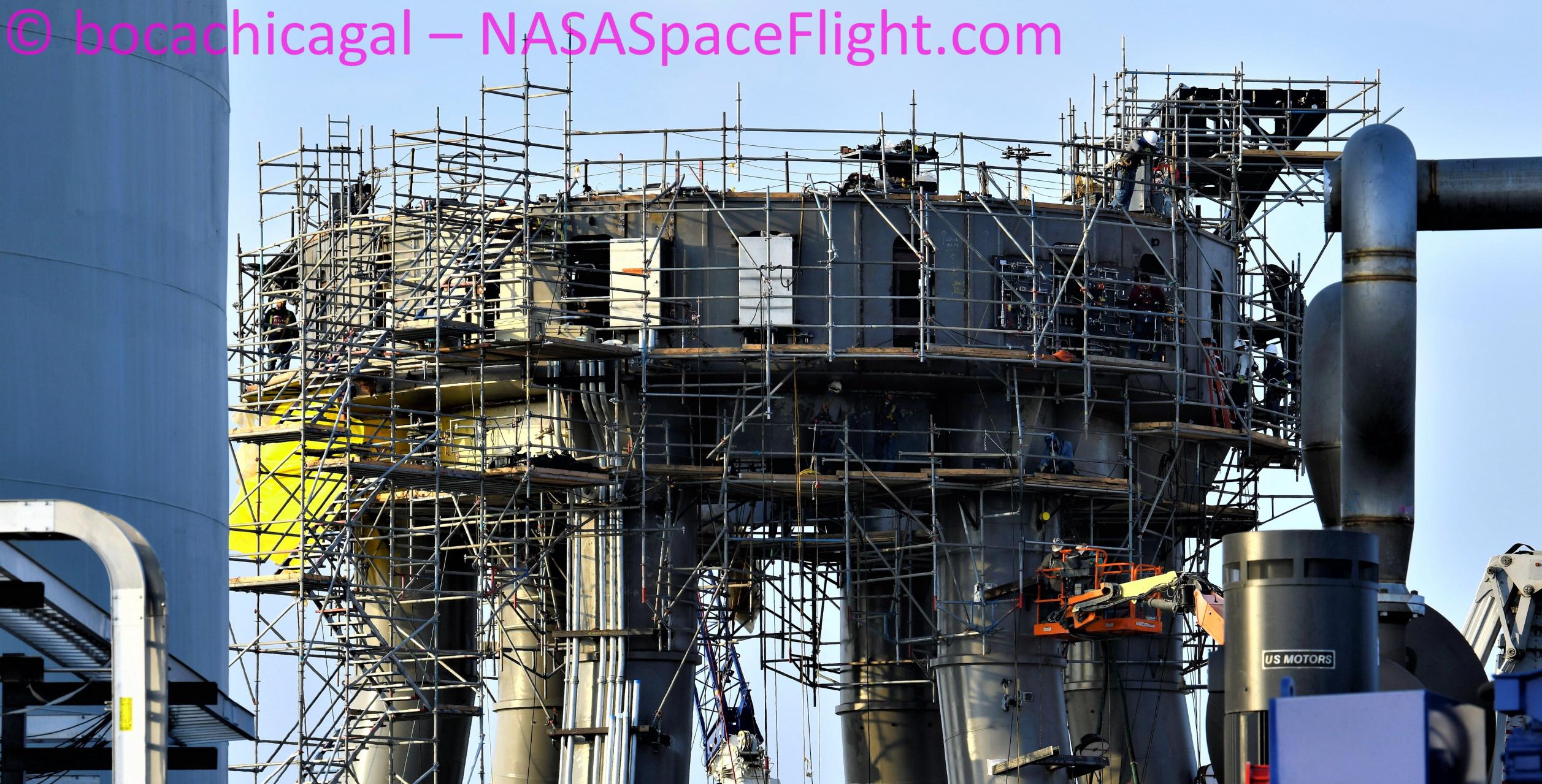
A significant amount of work still remains to connect the orbital launch mount to SpaceX’s incomplete and custom-built orbital tank farm, which will store, supercool, and feed the pad, Super Heavy, and Starship with several thousand metric tons of liquid and gaseous oxygen and methane. It’s difficult to say how close Starbase’s tank farm is to being able to support Starship or Super Heavy testing, which makes it equally unclear what SpaceX’s near-term plans are for Booster 4. It’s possible that the rocket has been reinstalled on the orbital launch mount as a second fit check, perhaps focused on those 20 outer Raptor quick-disconnect mechanisms.
It’s also possible that the tank farm and launch mount plumbing are much closer to completion than expected, meaning that Super Heavy B4 could remain at the orbital pad until it’s completed several crucial cryogenic proof and static fire tests. Of course, short of confirmation from Musk himself, we’ll just have to wait and see.


News
Tesla confirms that it finally solved its 4680 battery’s dry cathode process
The suggests the company has finally resolved one of the most challenging aspects of its next-generation battery cells.

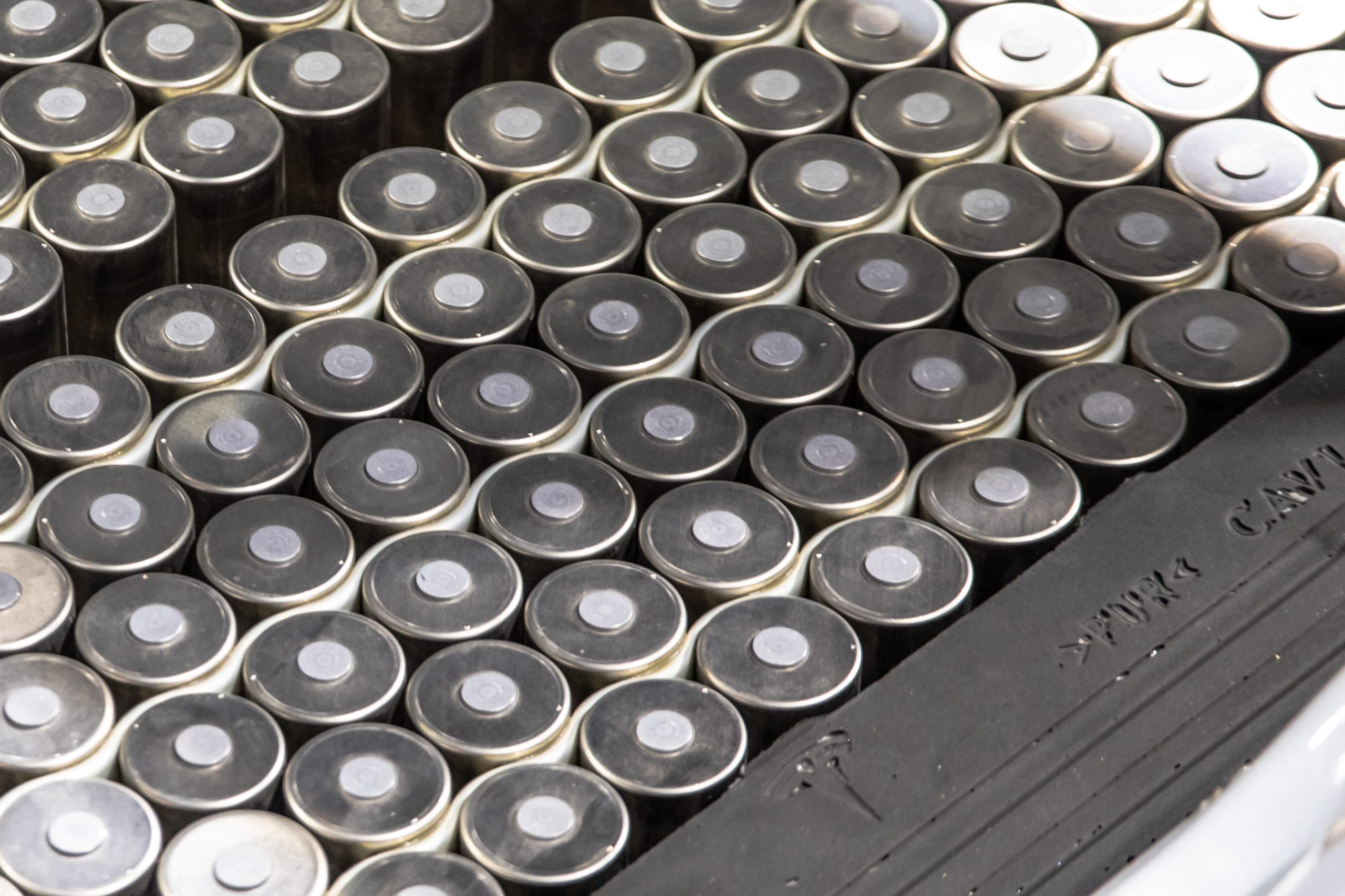
Tesla has confirmed that it is now producing both the anode and cathode of its 4680 battery cells using a dry-electrode process, marking a key breakthrough in a technology the company has been working to industrialize for years.
The update, disclosed in Tesla’s Q4 and FY 2025 update letter, suggests the company has finally resolved one of the most challenging aspects of its next-generation battery cells.
Dry cathode 4680 cells
In its Q4 and FY 2025 update letter, Tesla stated that it is now producing 4680 cells whose anode and cathode were produced during the dry electrode process. The confirmation addresses long-standing questions around whether Tesla could bring its dry cathode process into sustained production.
The disclosure was highlighted on X by Bonne Eggleston, Tesla’s Vice President of 4680 batteries, who wrote that “both electrodes use our dry process.”
Tesla first introduced the dry-electrode concept during its Battery Day presentation in 2020, pitching it as a way to simplify production, reduce factory footprint, lower costs, and improve energy density. While Tesla has been producing 4680 cells for some time, the company had previously relied on more conventional approaches for parts of the process, leading to questions about whether a full dry-electrode process could even be achieved.
4680 packs for Model Y
Tesla also revealed in its Q4 and FY 2025 Update Letter that it has begun producing battery packs for certain Model Y vehicles using its in-house 4680 cells. As per Tesla:
“We have begun to produce battery packs for certain Model Ys with our 4680 cells, unlocking an additional vector of supply to help navigate increasingly complex supply chain challenges caused by trade barriers and tariff risks.”
The timing is notable. With Tesla preparing to wind down Model S and Model X production, the Model Y and Model 3 are expected to account for an even larger share of the company’s vehicle output. Ensuring that the Model Y can be equipped with domestically produced 4680 battery packs gives Tesla greater flexibility to maintain production volumes in the United States, even as global battery supply chains face increasing complexity.
Elon Musk
Tesla Giga Texas to feature massive Optimus V4 production line
This suggests that while the first Optimus line will be set up in the Fremont Factory, the real ramp of Optimus’ production will happen in Giga Texas.
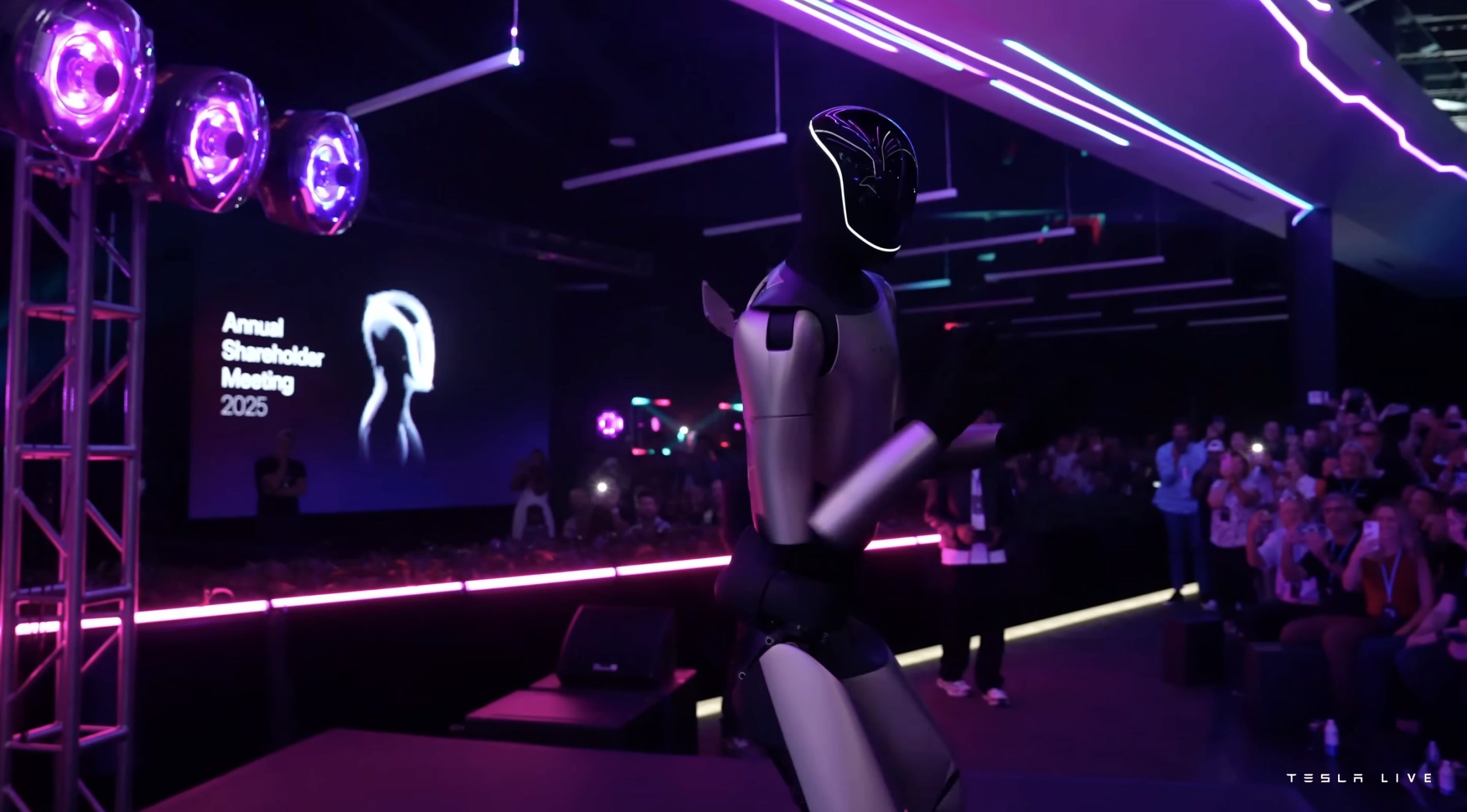
Tesla will build Optimus 4 in Giga Texas, and its production line will be massive. This was, at least, as per recent comments by CEO Elon Musk on social media platform X.
Optimus 4 production
In response to a post on X which expressed surprise that Optimus will be produced in California, Musk stated that “Optimus 4 will be built in Texas at much higher volume.” This suggests that while the first Optimus line will be set up in the Fremont Factory, and while the line itself will be capable of producing 1 million humanoid robots per year, the real ramp of Optimus’ production will happen in Giga Texas.
This was not the first time that Elon Musk shared his plans for Optimus’ production at Gigafactory Texas. During the 2025 Annual Shareholder Meeting, he stated that Giga Texas’ Optimus line will produce 10 million units of the humanoid robot per year. He did not, however, state at the time that Giga Texas would produce Optimus V4.
“So we’re going to launch on the fastest production ramp of any product of any large complex manufactured product ever, starting with building a one-million-unit production line in Fremont. And that’s Line one. And then a ten million unit per year production line here,” Musk stated.
How big Optimus could become
During Tesla’s Q4 and FY 2025 earnings call, Musk offered additional context on the potential of Optimus. While he stated that the ramp of Optimus’ production will be deliberate at first, the humanoid robot itself will have the potential to change the world.
“Optimus really will be a general-purpose robot that can learn by observing human behavior. You can demonstrate a task or verbally describe a task or show it a task. Even show it a video, it will be able to do that task. It’s going to be a very capable robot. I think long-term Optimus will have a very significant impact on the US GDP.
“It will actually move the needle on US GDP significantly. In conclusion, there are still many who doubt our ambitions for creating amazing abundance. We are confident it can be done, and we are making the right moves technologically to ensure that it does. Tesla, Inc. has never been a company to shy away from solving the hardest problems,” Musk stated.
Elon Musk
Rumored SpaceX-xAI merger gets apparent confirmation from Elon Musk
The comment follows reports that the rocket maker is weighing a transaction that could further consolidate Musk’s space and AI ventures.
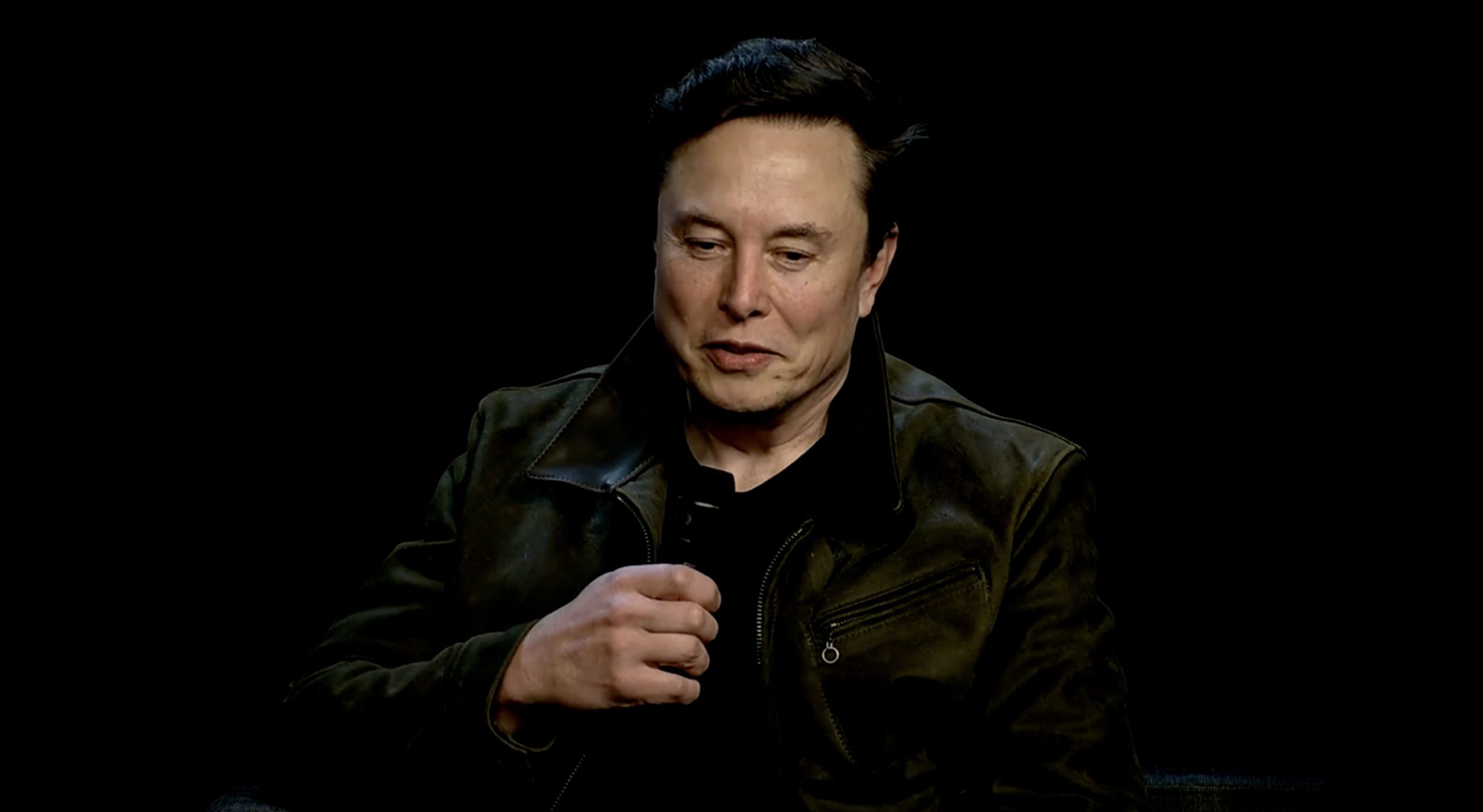
Elon Musk appeared to confirm reports that SpaceX is exploring a potential merger with artificial intelligence startup xAI by responding positively to a post about the reported transaction on X.
Musk’s comment follows reports that the rocket maker is weighing a transaction that could further consolidate his space and AI ventures.
SpaceX xAI merger
As per a recent Reuters report, SpaceX has held discussions about merging with xAI, with the proposed structure potentially involving an exchange of xAI shares for SpaceX stock. The value, structure, and timing of any deal have not been finalized, and no agreement has been signed.
Musk appeared to acknowledge the report in a brief reply on X, responding “Yeah” to a post that described SpaceX as a future “Dyson Swarm company.” The comment references a Dyson Swarm, a sci-fi megastructure concept that consists of a massive network of satellites or structures that orbit a celestial body to harness its energy.
Reuters noted that two entities were formed in Nevada on January 21 to facilitate a potential transaction for the possible SpaceX-xAI merger. The discussions remain ongoing, and a transaction is not yet guaranteed, however.
AI and space infrastructure
A potential merger with xAI would align with Musk’s stated strategy of integrating artificial intelligence development with space-based systems. Musk has previously said that space-based infrastructure could support large-scale computing by leveraging continuous solar energy, an approach he has framed as economically scalable over time.
xAI already has operational ties to Musk’s other companies. The startup develops Grok, a large language model that holds a U.S. Department of Defense contract valued at up to $200 million. AI also plays a central role in SpaceX’s Starlink and Starshield satellite programs, which rely on automation and machine learning for network management and national security applications.
Musk has previously consolidated his businesses through share-based transactions, including Tesla’s acquisition of SolarCity in 2016 and xAI’s acquisition of X last year. Bloomberg has also claimed that Musk is considering a merger between SpaceX and Tesla in the future.

Tesla confirms that it finally solved its 4680 battery’s dry cathode process

Tesla Giga Texas to feature massive Optimus V4 production line


