News
SpaceX’s next Falcon Heavy launch slips into 2021

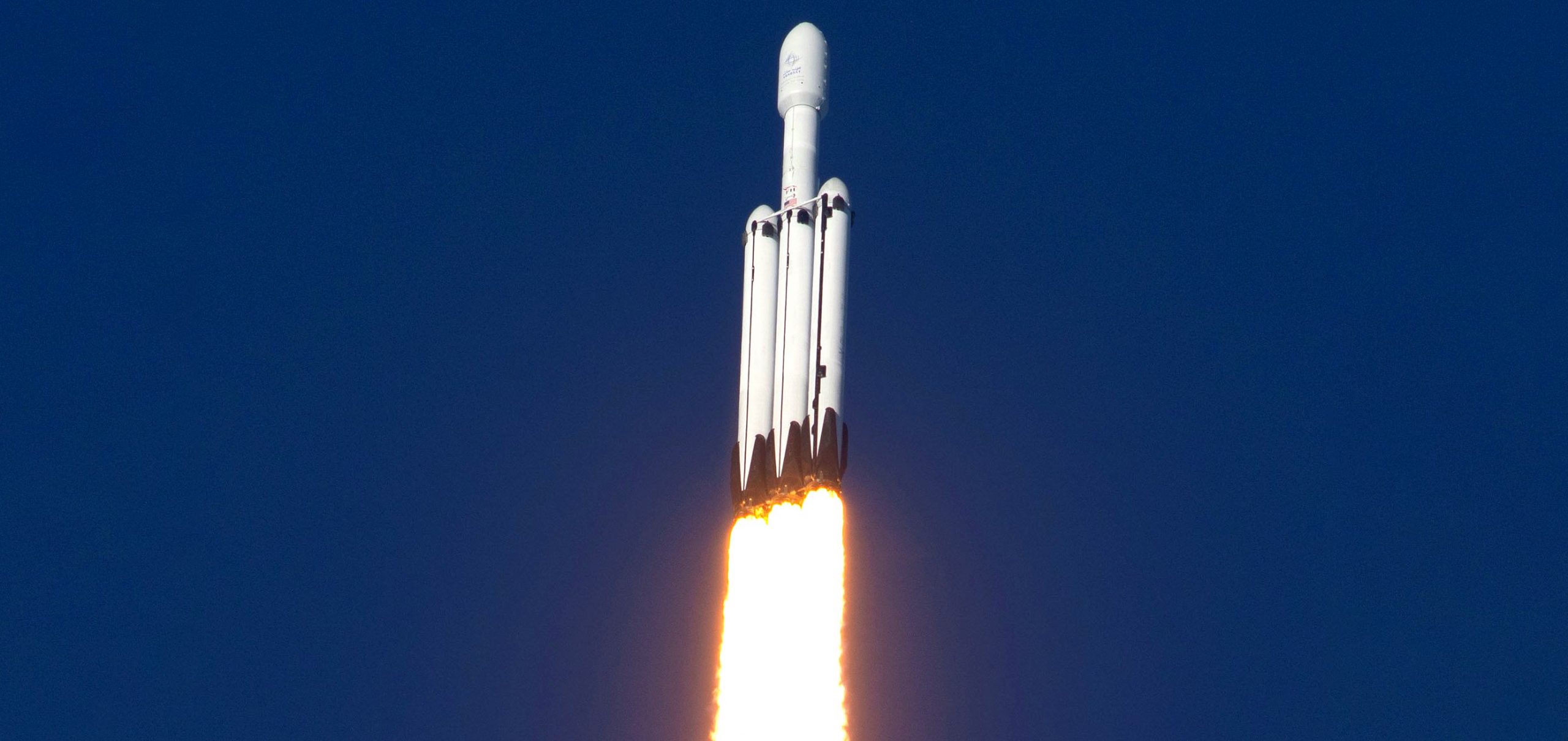
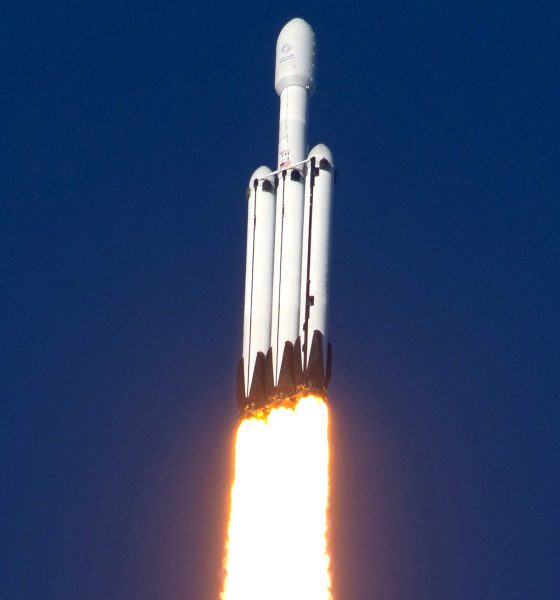
SpaceX’s next Falcon Heavy launch – set to be the rocket’s fourth overall – has slipped several months into 2021 according to the vice commander of the US Air Force Space and Missile Systems Center (USAF SMC).
Known as AFSPC-44 (now USSF-44), the nature of Falcon Heavy’s next payload remains a mystery. Headed to geostationary orbit, the satellite will likely be involved in military satellite communications, possibly including espionage (also known as signals intelligence or SIGINT). Technically, the USSF-44 mission includes two separate satellites and at least two additional rideshare payloads and will weigh roughly 3.7 metric tons (~8200 lb) at launch.
When the contract was announced, Falcon Heavy was expected to launch USSF-44 no earlier than (NET) Q4 2020. By April 2020, that target was closer to late November or December. Now, four months after that report, Brigadier General Jason Cothern says that SpaceX’s next Falcon Heavy launch is scheduled NET February 28th, 2021.
The delay doesn’t come as much of a surprise. Based on public observation of SpaceX’s Falcon booster production and testing, requiring thousands of miles of extremely conspicuous highway transport, it was already clear that the mission was unlikely to launch this year. Of the six first stages spotted in transport over the last nine months, all were clearly Falcon 9 boosters and lacked any of the telltale parts that distinguish Falcon Heavy side and center boosters.
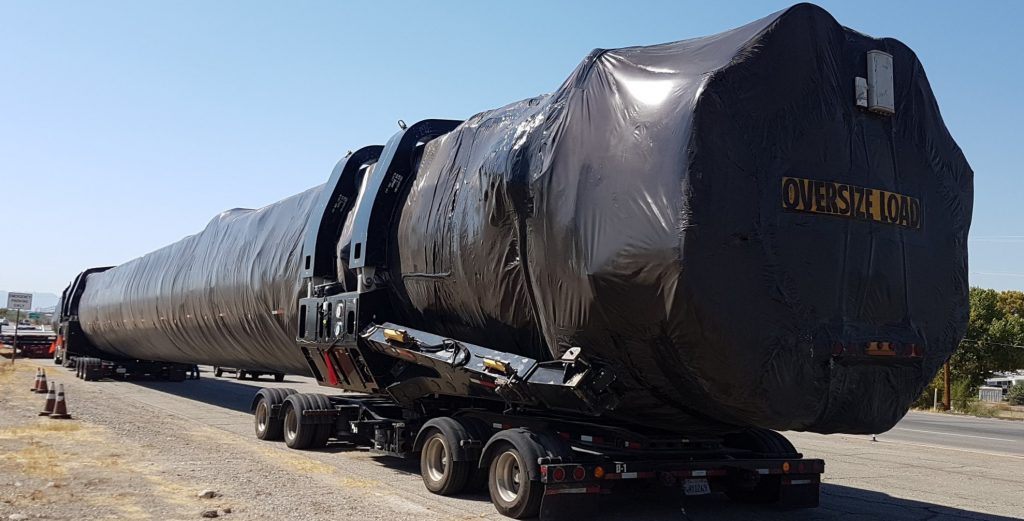
The most recent ‘core spottings’ – a new Falcon 9 booster headed West after acceptance testing and another preparing for acceptance testing in Texas late last month – all but confirmed that USSF-44 was significantly delayed. Since mid-2019, SpaceX has intentionally slowed down Falcon booster production to focus on the higher-volume production of expendable hardware (fairings and second stages). While the company could technically complete boosters every two weeks if its feet were put to the coals and has generally averaged 10 per year, that figure has dropped closer to 6-8 boosters per year over the last ~18 months.
Coupled with a report that all three of the USSF-44 Falcon Heavy rocket’s boosters would be brand new, the lack of sightings in the wild implied that has yet to ship even one of those complex rockets to McGregor, Texas for acceptance testing. Based on preparations for Falcon Heavy’s April 2019 Block 5 launch debut, the process of testing three new Falcon boosters singlehandedly takes at least three months. Additionally, all three of the Arabsat 6A mission’s new Falcon Heavy boosters arrived in Florida a full two months before launch.
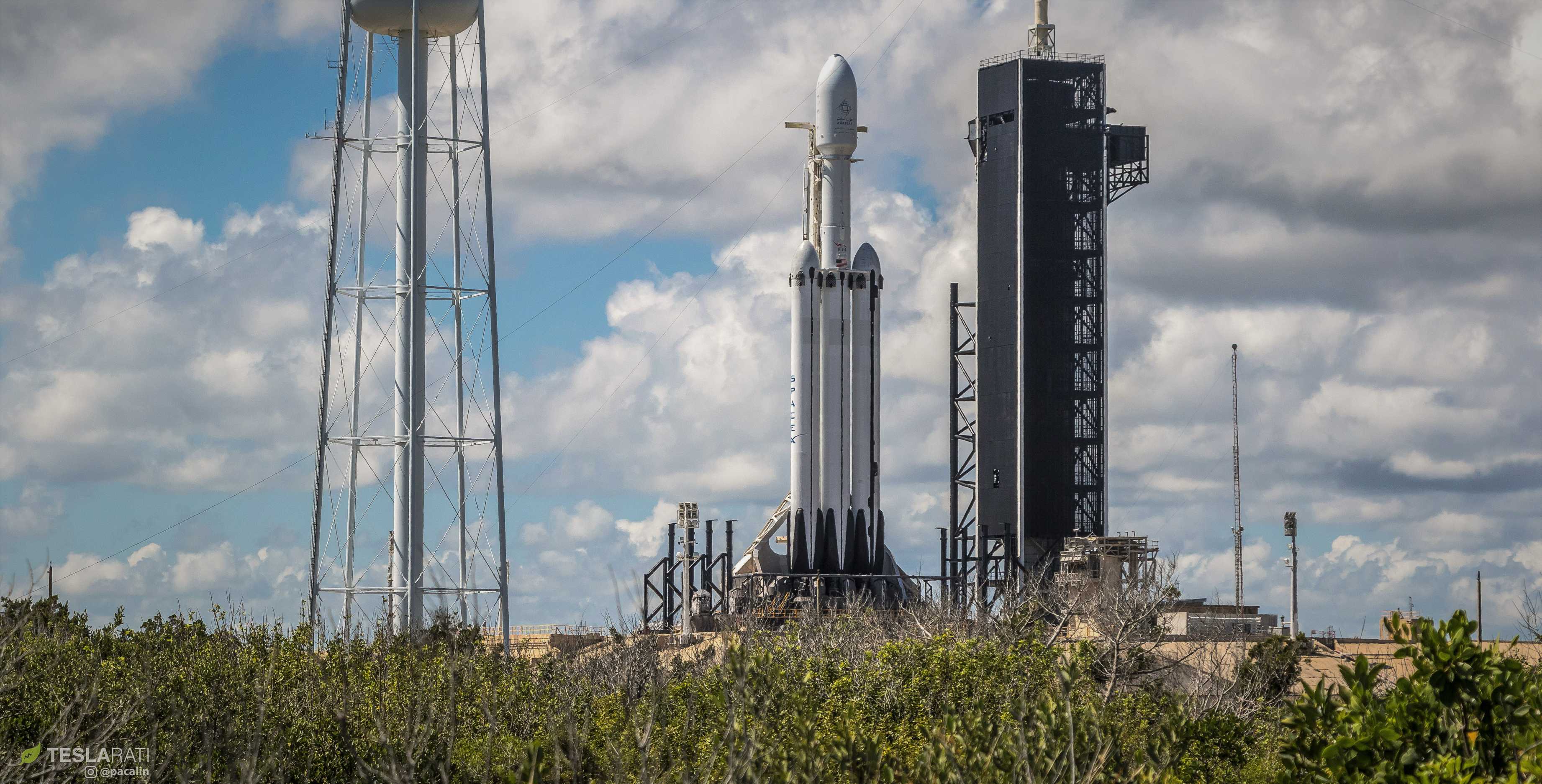
In other words, given that a brand new Falcon 9 booster rolled out of SpaceX’s Hawthorne, CA factory on August 24th and that said factory isn’t really set up for concurrent booster completion, it would take unprecedented feats of manufacturing and testing for Falcon Heavy Flight 4 to be ready to launch less than four months from now (around the turn of the New Year).
In fact, even under the assumption that the next three boosters on SpaceX’s factory assembly line are all for Falcon Heavy Flight 4, the new February 2021 launch date is going to be a tight deadline. There is no evidence that SpaceX production delays are to blame for the USSF-44 launch delay and the coronavirus-related disruption of satellite production is equally – if not more – likely. Either way, SpaceX’s fourth Falcon Heavy launch will have to wait a few extra months. Barring a surprise mission over the next six months, Falcon Heavy Flight 4 will also be SpaceX’s first operational launch directly to geostationary orbit (GEO).
Check out Teslarati’s Marketplace! We offer Tesla accessories, including for the Tesla Cybertruck and Tesla Model 3.


News
Tesla plans for largest Australian Supercharger yet
The company has a 20-stall site in the city of Goulburn in New South Wales, which is an ideal location for trips between Sydney and Canberra, two major cities.

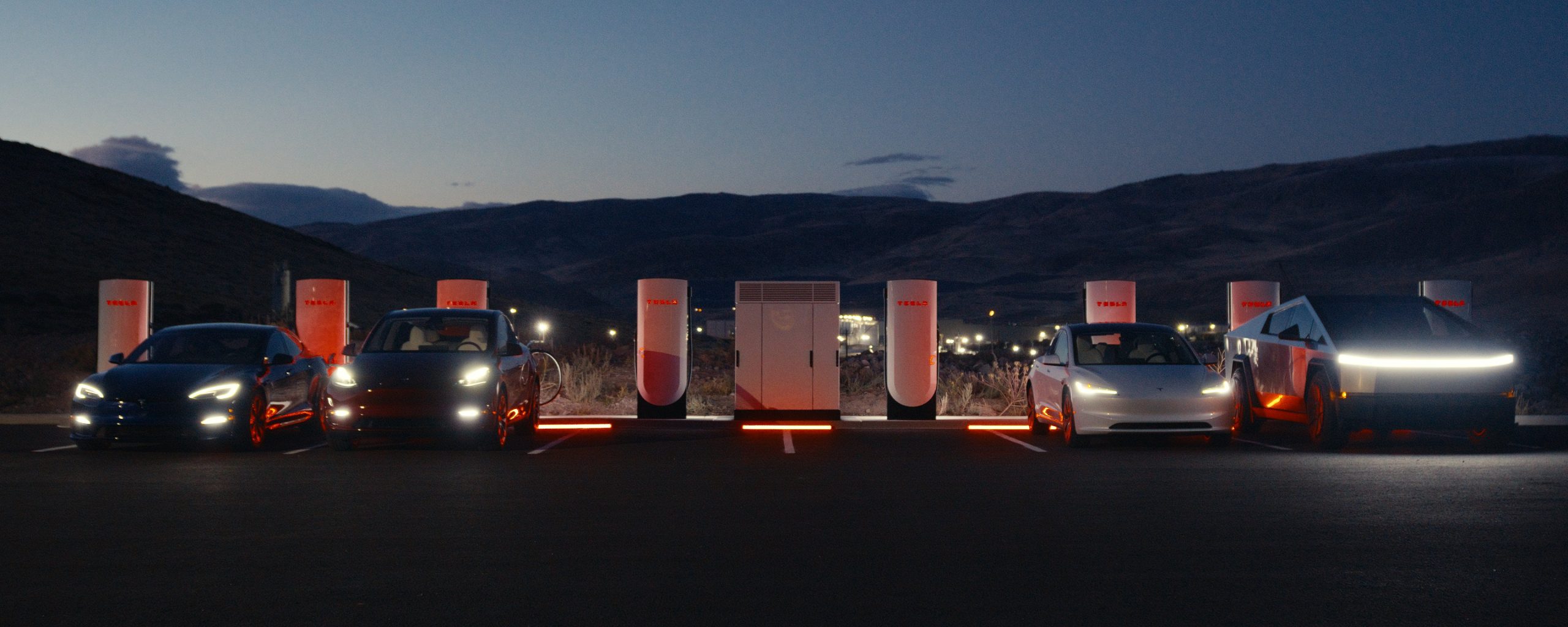
Tesla is planning to build its largest Supercharger in Australia yet, expanding on the infrastructure the company has built for electric vehicles.
The company has a 20-stall site in the city of Goulburn in New South Wales, which is an ideal location for trips between Sydney and Canberra, two major cities.
However, according to The Driven, a new Australian Supercharger is on the way, and it is going to be the biggest in the country, accounting for more than 25 stalls total. They will likely be V4 Superchargers, Tesla’s fastest piles that enable some serious range for cars that will plug in.
@LudicrousFeed Before I forget, one for tonight. Highway service centre near Mackay with 25+ charging stalls!
Website has a couple of video renders too.https://t.co/WkuklxE7tk pic.twitter.com/BxKQ8bDUZ7— ⚡chuqtas (@chuqtas) March 11, 2026
Tesla is operating 148 active Supercharger sites in Australia, with 80 of those being available to non-Tesla EVs as a part of the company’s initiative to make things accessible for all electric vehicle owners.
The expansion of Tesla Superchargers is welcome for all EV owners, especially as there are so many automakers that have access to the network. It is widely reliable and extremely dependable; it is tough to find a Supercharger location that is completely out of service.
The opening of the stalls will be welcome for the Tesla owners of Australia, especially as the Model Y continues to be a major contributor to the company’s prowess in the market.
Tesla’s sales performance in Australia showed a mixed but challenging picture in 2025, with the company delivering 28,856 new vehicles, marking a significant 24.8% decline from 38,347 units in 2024.
This represented the brand’s largest annual drop on record and the second consecutive year of decline, amid intensifying competition from Chinese EV makers like BYD and shifting buyer preferences toward SUVs. The Tesla Model Y remained a standout performer and Australia’s best-selling electric vehicle, with 22,239 deliveries, up 4.6percent year-over-year, accounting for about 77 percent of Tesla’s total sales.
The mid-year launch of the updated “Juniper” Model Y helped sustain momentum in the popular mid-size SUV segment.
In contrast, the Model 3 sedan struggled sharply, plummeting 61.3 percent to just 6,617 units, as consumers favored SUVs and faced growing options in the sedan category.
Despite the overall dip, Tesla held onto leadership in the EV segment, capturing roughly 28 percent of the BEV market. Australia’s EV market grew robustly, surpassing 156,000 sales and reaching 13 percent market share, up 38.7 percent from 2024, highlighting strong broader adoption even as Tesla faced headwinds.
Early 2026 data suggests a rebound, with EV sales nearly doubling year-over-year in February and the Model Y showing strong gains, positioning Tesla for potential recovery amid ongoing competition.
News
Tesla Model Y L gets new entertainment feature
Beyond audio quality, Immersive Sound X aligns with Tesla’s ecosystem of over-the-air updates, potentially allowing future refinements.
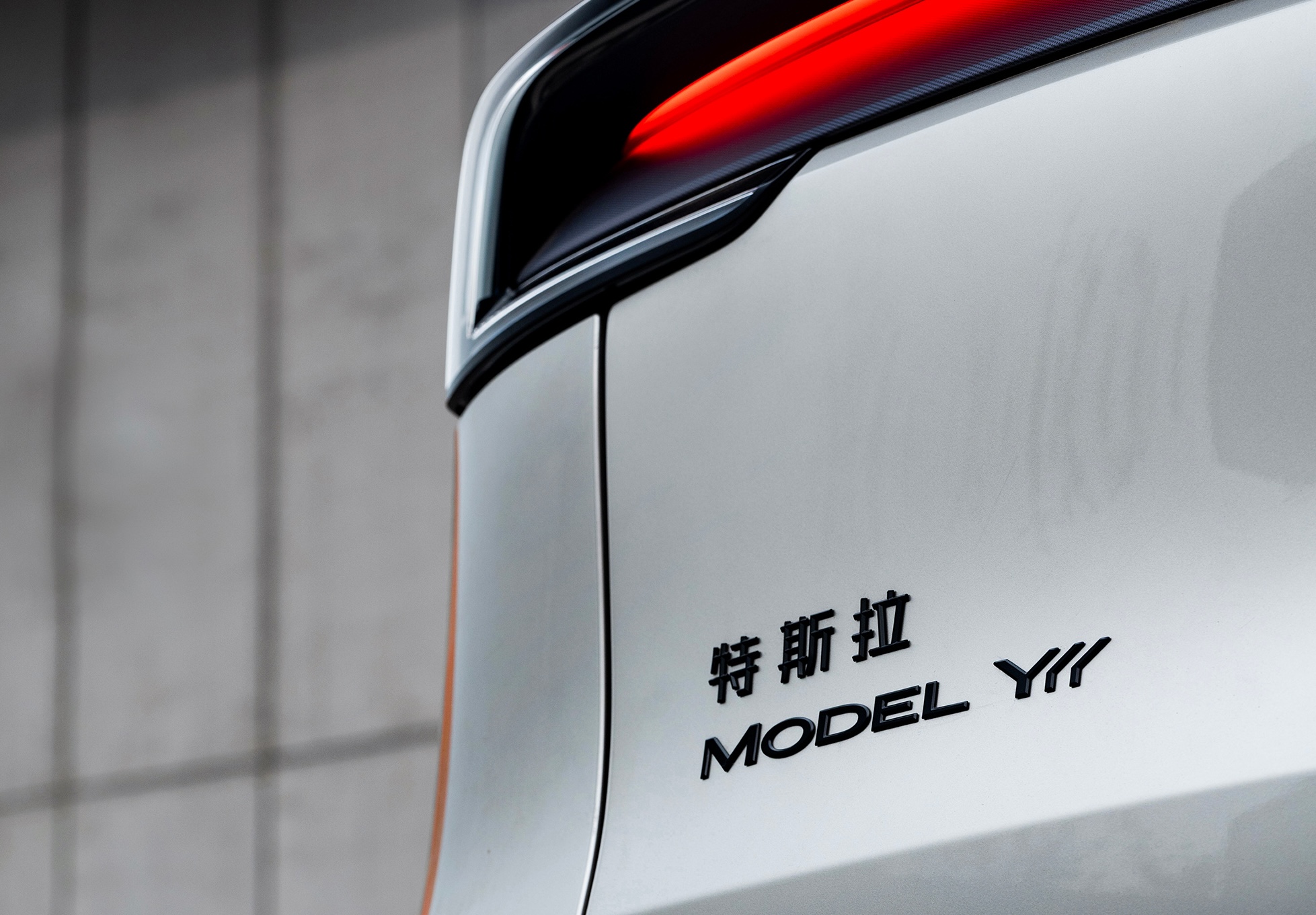
Tesla is including a new entertainment feature in the Model Y L, improving the vehicle even further and making it what appears to be the best configuration of the all-electric crossover globally.
Unfortunately, we in the U.S. do not yet have access to the vehicle, and the plans for it to enter the market remain up in the air, as CEO Elon Musk has said it could appear late this year. However, there is nothing concrete at this time.
Tesla’s latest enhancement to the Model Y L is a new Immersive Sound X feature, exclusive to the Model Y L.
Model YL has new sound system setting. Immersive Sound X. This is NOT on the new Y and 3 pic.twitter.com/7OpJuzyoGf
— Electric Future (@electricfuture5) March 16, 2026
It aims to transform the in-car listening experience into something truly cinematic. First introduced by Tesla China in October 2025, this advanced audio mode is now rolling out to deliveries in Australia and New Zealand, highlighting Tesla’s approach to region-specific premium upgrades.
At its core, Immersive Sound X leverages real-time sound extraction technology to create a customizable 3D soundstage. Using advanced algorithms, it analyzes audio tracks to separate direct sounds, such as vocals or lead instruments, from ambient elements like echoes and reverb.
The system then positions direct sounds front and center while diffusing ambient sounds to the side and rear speakers, simulating an expansive virtual environment. This results in a heightened sense of depth and spatial awareness, making listeners feel as if they’re in a concert hall or studio.
What sets Immersive Sound X apart from the standard Immersive Sound found in other Tesla models is its hardware dependency and enhanced processing. The Model Y L boasts an 18-speaker system with a subwoofer, compared to the 15-speaker setup, plus a subwoofer, in the Model Y Long Range’s previous premium audio configuration.
This upgrade provides more “kick” and precision, enabling finer control over the soundstage. Unlike traditional surround sound, which requires multi-channel mixes like Dolby Atmos, Immersive Sound X works with any stereo source from platforms like Spotify or Apple Music, so every owner will be able to use it.
Tesla Model Y lineup expansion signals an uncomfortable reality for consumers
You can fine-tune the experience via an adjustable immersion slider, scaling the “size” of the virtual space to personal preferences. This caters to a more custom sound.
An Auto mode intelligently adapts based on media type, whether it’s music, podcasts, or videos, ensuring optimal immersion without manual tweaks. This feature is unavailable on standard Model Y variants (with 7 or 15 speakers) or Model 3 trims, underscoring Tesla’s strategy to differentiate higher trims through superior hardware and software integration.
Beyond audio quality, Immersive Sound X aligns with Tesla’s ecosystem of over-the-air updates, potentially allowing future refinements.
For audiophiles and casual listeners alike, it elevates mundane commutes into immersive journeys, proving Tesla’s commitment to blending cutting-edge tech with user-centric design.
Elon Musk
Elon Musk teases crazy outlook for xAI against its competitors
Musk’s response was vintage hyperbole, designed to rally supporters and dismiss doubters, something his responses on social media often do.
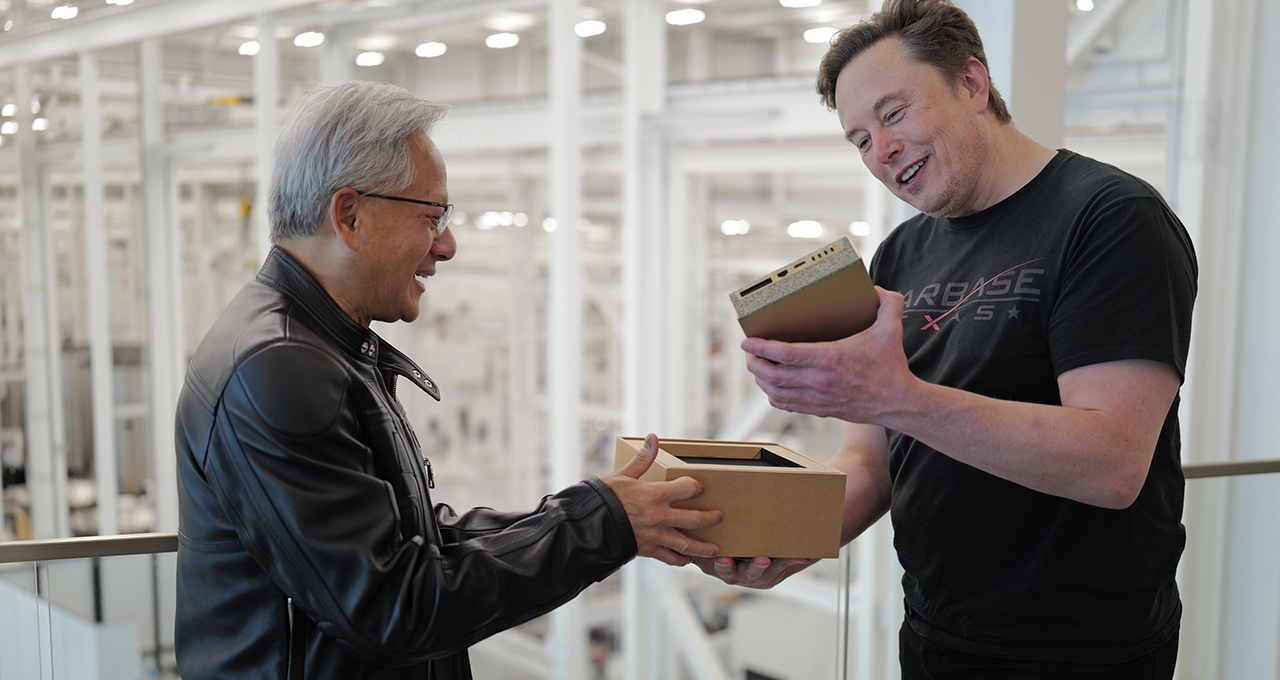
Elon Musk has never been one to shy away from crazy timelines, massive expectations, and outrageous outlooks. However, his recent plans for xAI and where he believes it will end up compared to its competitors are sure to stimulate conversation.
In a bold and characteristic response on X, Elon Musk fired back at a recent analysis that positioned his AI venture, xAI, as lagging behind industry frontrunners.
The post, from March 14, came as a direct reply to forecaster Peter Wildeford’s assessment, which drew from benchmarks and reporting to rank AI developers.
xAI will catch up this year and then exceed them all by such a long distance in 3 years that you will need the James Webb telescope to see who is in second place
— Elon Musk (@elonmusk) March 14, 2026
Wildeford placed Anthropic, Google, and OpenAI in a virtual tie at the top, with xAI and Meta trailing by about seven months. Chinese players like Moonshot, Deepseek, zAI, and Alibaba were estimated to be nine months behind, while France’s Mistral lagged by about a year and a half.
Musk’s response was vintage hyperbole, designed to rally supporters and dismiss doubters, something his responses on social media often do.
He claimed xAI would “catch up this year,” meaning by the end of 2026, erasing that seven-month deficit against the leaders. But he didn’t stop there.
Musk escalated his vision to 2029, predicting xAI would “exceed them all by such a long distance” that observers would need the James Webb Space Telescope, NASA’s orbiting observatory stationed about 930,000 miles from Earth, to spot whoever lands in second place. This analogy underscores Musk’s confidence in xAI’s trajectory, implying an astronomical lead that could redefine the AI landscape.
Breaking down these claims reveals Musk’s strategic optimism. First, the short-term catch-up: xAI, launched in 2023, has already released models like Grok, but recent benchmarks, including those for Grok 4.2, have shown it falling short in capabilities compared to rivals.
Anthropic’s Claude series, Google’s Gemini, and OpenAI’s GPT models dominate in areas like reasoning, coding, and multimodal tasks. Musk’s assertion suggests aggressive scaling in compute, talent, or architecture, perhaps leveraging xAI’s ties to Tesla’s Dojo supercomputers or Musk’s vast resources, to close the gap swiftly.
The longer-term dominance by 2029 paints an even more audacious picture. Musk envisions xAI not just parity but supremacy, outpacing competitors in innovation speed and model sophistication.
This could involve breakthroughs in energy-efficient training, real-world integration, like Tesla’s robotics, or ethical AI alignment, aligning with Musk’s stated goal of “understanding the universe.”
Critics, however, point to parallels with Tesla’s Full Self-Driving delays; one reply highlighted Musk’s 2023 promise of FSD readiness. Musk has made this promise for many years, and although the system has been strong and improving, it is still a ways off from the completely autonomous operation that was expected by now.
Tesla Full Self-Driving v14.2.2.5 might be the most confusing release ever
Musk’s comment highlights the intensifying U.S.-centric AI race, with xAI challenging the “three-way” dominance noted by Wharton professor Ethan Mollick, whom Wildeford quoted. As geopolitical tensions rise—evident in the Chinese firms’ lag—Musk’s tease could spur investment and talent wars.
Yet, it also invites scrutiny: Will xAI deliver, or is this another telescope-needed mirage? In an industry where timelines slip but stakes soar, Musk’s words keep the spotlight on xAI’s ambitious path forward.

Tesla plans for largest Australian Supercharger yet

Tesla Model Y L gets new entertainment feature


