News
SpaceX makes first acquisition post-IPO

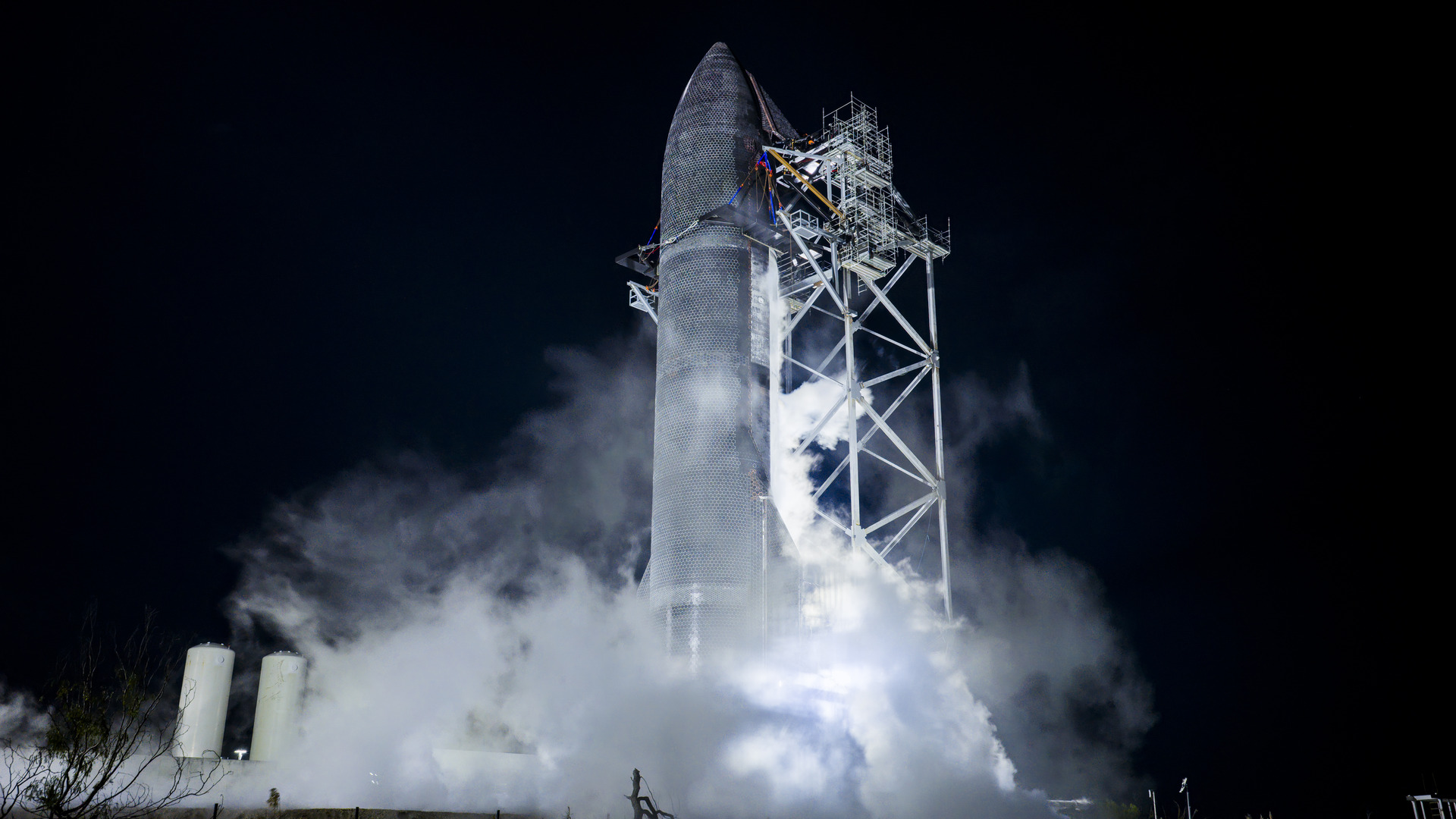
SpaceX has exercised its option to acquire Cursor, the innovative AI coding company, in an all-stock transaction valued at $60 billion. The deal, announced on June 16, marks a significant step in SpaceX’s expansion into advanced artificial intelligence, building on months of close collaboration between the companies.
Cursor, officially operated by Anysphere, Inc., is an AI-native code editor and coding agent designed to transform software development. Founded in 2022 by a group of MIT graduates in San Francisco, Cursor builds on the familiar foundation of Visual Studio Code but integrates powerful AI capabilities directly into the core experience.
Unlike traditional code editors or simple extensions, Cursor functions as a full “coding agent” that turns natural-language instructions into actionable code.
SpaceX has exercised the option to acquire @cursor_ai in an all-stock transaction with the goal of building the world’s most useful AI models.
For the past few months, SpaceXAI has been jointly training a model with Cursor, which will be released in Cursor and Grok Build soon.… https://t.co/X5mepgXgjJ
— SpaceX (@SpaceX) June 16, 2026
Developers interact with Cursor through features like its Composer agent, which can search entire codebases, edit multiple files, run terminal commands, debug issues, and complete complex multi-step programming tasks autonomously.
Users describe high-level goals, such as “build a scalable API endpoint with authentication,” and the AI plans, implements, tests, and refines the solution while the human oversees decisions. Additional tools include advanced autocomplete (Tab), context-aware chat, and infrastructure for handling billions of daily requests.
The platform has gained considerable traction, surpassing $3 billion in annual recurring revenue by early 2026 and earning adoption by over half of the Fortune 500 companies. Its agentic approach accelerates development dramatically, allowing engineers to focus on architecture and creativity rather than repetitive coding.
The acquisition integrates Cursor’s leading product, expert team of roughly 300 engineers, and distribution network among top software developers with SpaceX’s unparalleled computational resources. SpaceX’s Colossus supercomputer, equivalent to a million H100 GPUs, has already powered joint training of next-generation models. These models are expected to launch soon within Cursor and SpaceX’s Grok Build environment.
This combination positions SpaceX to develop the world’s most capable AI systems for coding and knowledge work. Access to Cursor’s real-world usage data from millions of professional developers provides unparalleled feedback loops for model improvement. Training on Colossus enables rapid iteration on massive datasets, potentially creating AI that outperforms current leaders in reliability, context handling, and complex reasoning.
For SpaceX, the benefits extend far beyond software tools. Rocket engineering, satellite constellation management, autonomous flight systems, and Starship development involve millions of lines of highly specialized, safety-critical code.
Cursor’s AI agents, supercharged by proprietary models trained on SpaceX’s domain expertise, could slash development timelines, reduce errors, and enable faster innovation cycles. This vertical integration of AI tooling strengthens SpaceX’s competitive edge in both aerospace and the broader AI race, complementing its xAI initiatives.
The deal reflects the exploding value of AI-native developer platforms. By owning Cursor outright, SpaceX secures a strategic talent pool and product pipeline that will accelerate internal projects while potentially offering enhanced tools to the wider engineering community. As AI continues reshaping software creation, this acquisition underscores SpaceX’s commitment to leveraging cutting-edge technology for ambitious goals, from Mars colonization to global connectivity.


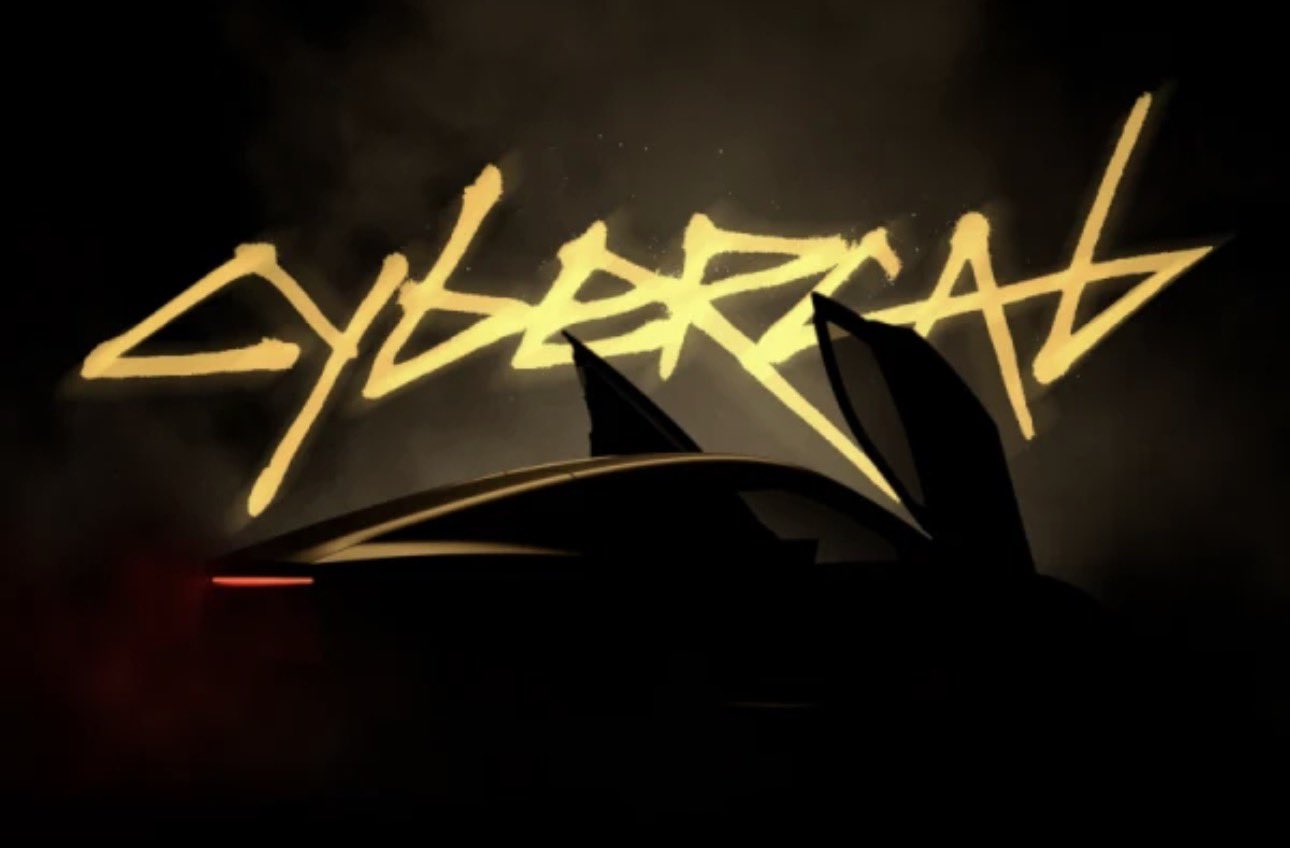
Tesla is set to launch Cybercab on Thursday at an event in Austin, Texas, which will officially bring the company’s first steering wheel-less and pedal-less vehicle to a limited number of consumers for the first time.
The event, which is invite-only, is still thin on details: we’ll be there, and it seems the event will be held at Gigafactory Texas, but the launch of this vehicle truly relies on it being operational outside of the factory and on public roads.
🚨 Close-Up look at Tesla Cybercab without steering wheel: pic.twitter.com/9TXCDeDCz7
— TESLARATI (@Teslarati) July 3, 2026
Nevertheless, there are some big things to expect, and other things to temper expectations on. For what it’s worth, we believe this event could be perhaps the biggest indication that Tesla is ready to truly enter a new phase and chapter in its historic story.
Tesla Cybercab’s First Foray into the Public with Real-World Riders
Cybercab will likely hit the streets of Austin and the surrounding areas, likely in the established geofence that Tesla has expanded on for the past 14 months. Just yesterday, Tesla expanded it once again by 9 percent.
Tesla will put, for the first time, a vehicle without any manual controls on public roads, likely without any help from teleoperators. This is a truly groundbreaking development if it comes through in this fashion: it would be groundbreaking for Tesla to roll out a truly driverless ride-hailing vehicle.
Cybercab Has Already Been Unveiled
This is not an unveiling event. Cybercab has been released for nearly two years, as Tesla first showed it to the public on October 10, 2024.
FIRST LOOK: Tesla ‘Cybercab’ Robotaxi makes its global debut
While there is some small speculation that Tesla could release the Roadster at the event as a surprise, it seems more likely the focus will be on the Cybercab and the huge accomplishment that will come with releasing a vehicle with no manual controls.
There Will Be a Lot of Hype
What’s important to remember about the Cybercab event is that Tesla will continue to prioritize safety and the rollout will likely be slow, just as it has been with Robotaxi.
One of the biggest complaints about Robotaxi is vehicle population, and the fact that the wait for a ride, at least in some instances, has been longer than most want to admit.
It will take time for this project to truly scale. It will take time for Tesla to roll this out in a large fashion. The important thing to note is that they are doing it, and they’re doing it with a vehicle that is completely engineered and built internally. That’s something no other ride-hailing service can say.
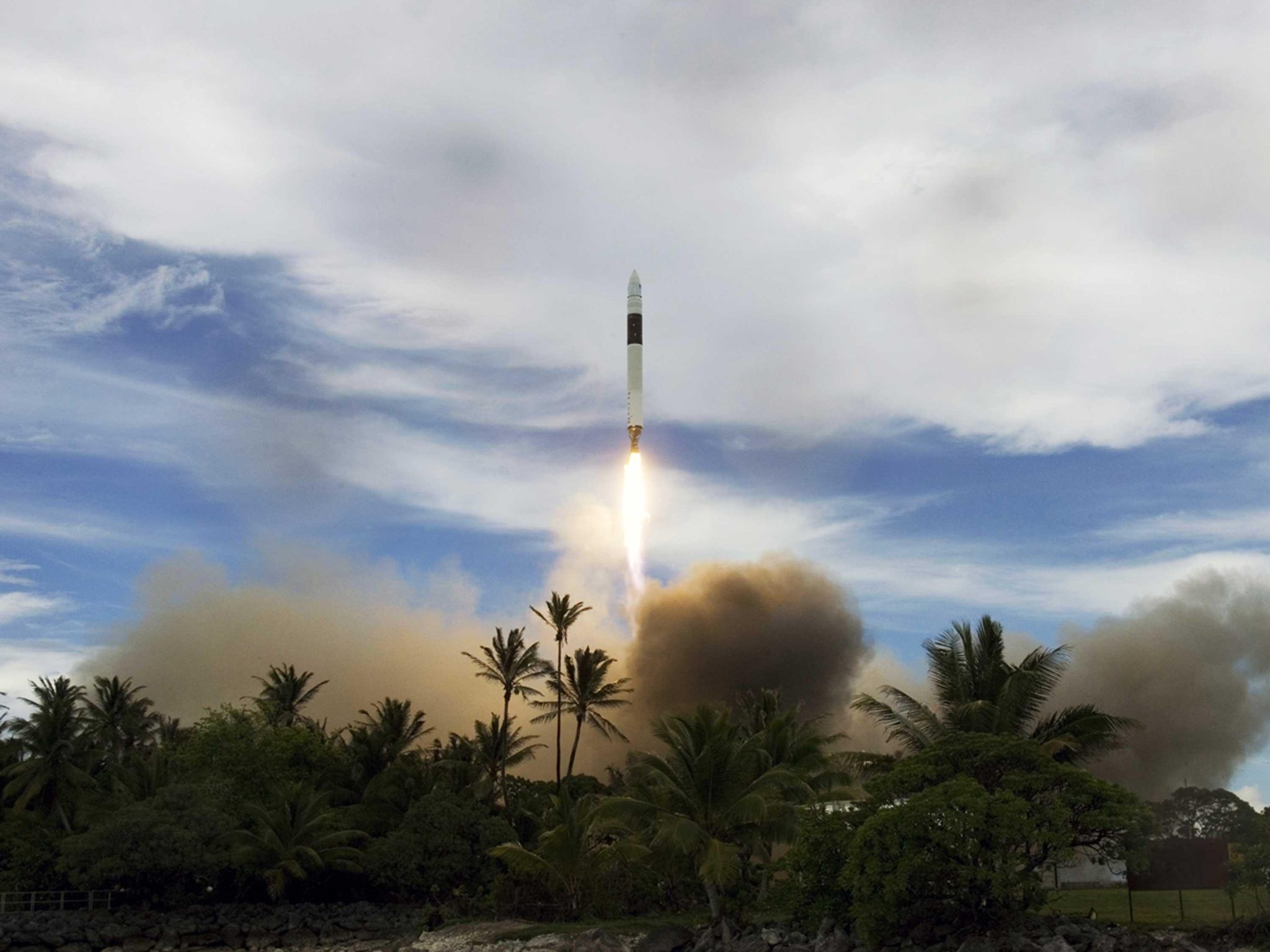
Elon Musk recently restated a fact that still defines SpaceX’s origin story: if Falcon 1’s fourth launch had failed, the company would not exist. The comment answered a reminder that after three consecutive losses, SpaceX had money for only one more attempt.
On X, Peter Diamandis said that the present-day acknowledgement of SpaceX’s success does not discount the rough start the company had. “Almost nobody remembers that Elon’s first rocket failed three times, and there was money for exactly only one more attempt.”
Musk said, “If the 4th launch had failed, SpaceX would not exist.”
If the 4th launch had failed, SpaceX would not exist
— Elon Musk (@elonmusk) August 30, 2026
In late 2008, the firm was nearly out of cash. Another failure would have ended payroll, closed the Hawthorne factory, and left the Falcon 9 and Dragon programs as unfinished drawings.
The first flight lifted off from Omelek Island on 24 March 2006. Thirty-three seconds later, a corroded aluminum fitting on a fuel line leaked. Kerosene ignited around the Merlin engine, control was lost, and the vehicle came apart. The small DARPA payload, FalconSAT-2, survived the short flight only to land on a storage shed near the pad. Investigators later traced the fitting to a materials mix-up that should never have reached the rocket.
Flight 2, on 21 March 2007, looked far better at first. The first stage burned cleanly and handed off to the Kestrel-powered upper stage. The vehicle crossed 100 kilometers and reached a peak of about 289 kilometers. Then propellant slosh in the second-stage tank started a circular coning motion that grew until the engine shut down. Telemetry faded as the stage tumbled, and SpaceX had reached space but not orbit. Over the next year, the team redesigned everything from the ground up, including tanks, baffles, and the new regeneratively cooled Merlin 1C.
That engine flew on Flight 3 on 2 August 2008. The first stage performed almost perfectly and reached 217 kilometers. After main-engine cutoff, leftover fuel in the cooling channels produced a faint residual thrust, roughly 10 pounds per square inch of chamber pressure. On a Texas test stand, the effect was invisible beneath ambient air pressure. In vacuum it was enough to push the spent first stage back into the second stage after separation. The stages collided, the upper stage spun, and the mission was lost. Musk later said a slightly longer delay before staging would have saved the flight.
Six weeks later, the team assembled Flight 4 from remaining parts and flew it on 28 September 2008 at 23:15 UTC. The payload was Ratsat, a 165-kilogram aluminum mass simulator built in-house. Staging was delayed so residual thrust could decay. The Kestrel ignited, the fairing split away, and nine and a half minutes after liftoff the vehicle was in orbit. After a coast, the second stage restarted, settling into a 621-by-643-kilometer path at 9.35 degrees inclination. Falcon 1 became the first privately developed liquid-fueled rocket to reach Earth orbit. Musk called the insertion “middle of the bull’s-eye.”
SpaceX restores a Falcon 1 rocket for 10th anniversary of first launch success
That success unlocked NASA’s Commercial Resupply Services award later that year. Without it, there would have been no Falcon 9, no reusable first stages, and no Dragon cargo or crew flights to the International Space Station. Launch prices would have remained far higher. Starlink’s constellation would not exist; broadband from low Earth orbit would still be a paper concept.
Ride-share markets, high launch cadence, and the current pace of lunar and Mars hardware would be years behind. Communications, Earth observation, and the cost of putting anything into space would look more like the 2000s than the 2020s.
One extra second of residual thrust in August 2008 would have written a different decade.
News
Tesla surges Robotaxi fleet ahead of Cybercab launch event
Tesla’s unsupervised robotaxi fleet quietly grew sevenfold in three weeks just before Cybercab Day arrives.

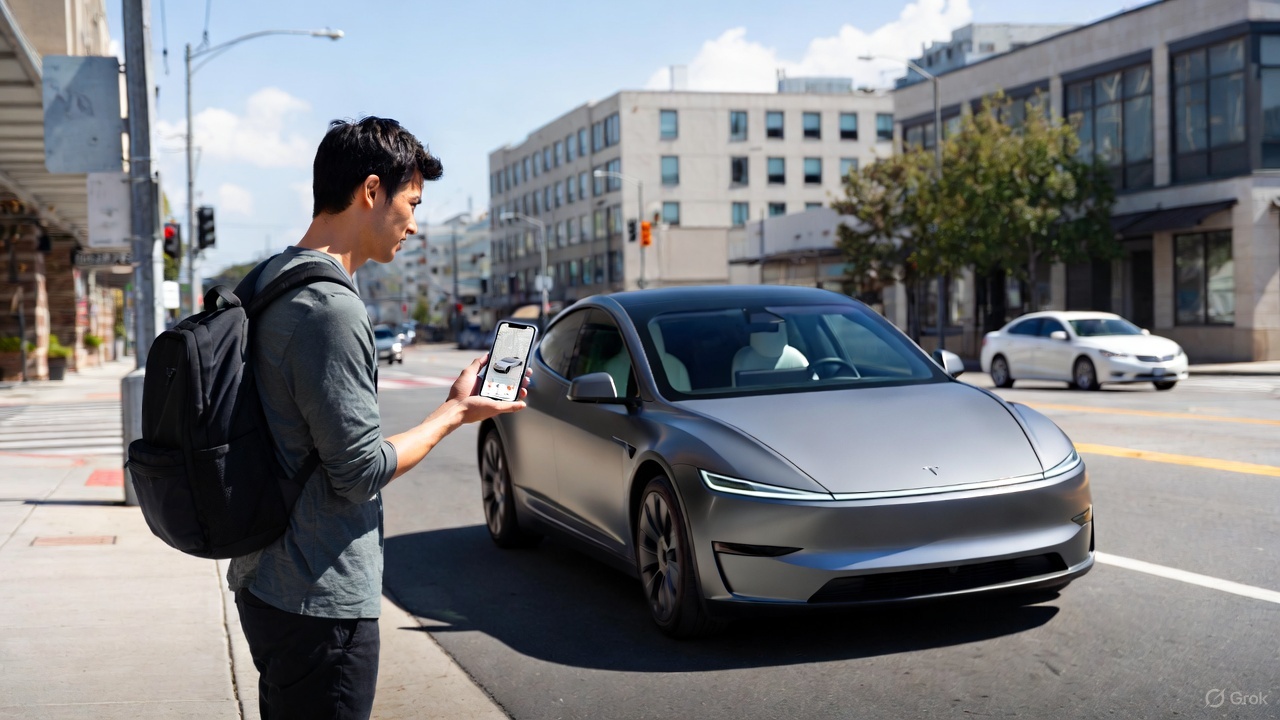
Tesla’s unsupervised Robotaxi fleet has grown far faster than the public numbers suggested, and the timing lines up with the company’s biggest autonomy showcase yet. According to data compiled by the crowdsourced Robotaxi Tracker, Tesla now has nearly 200 vehicles operating without a safety monitor across Austin, Dallas and Houston, yielding a roughly 7X increase in about three weeks.
The jump lands four days before this week’s Tesla Cybercab launch event in Austin, where the company plans to show off its purpose-built, two-seat robotaxi with no steering wheel or pedals in a live commercial setting for the first time. Stick with us on X and Facebook for live reporting from the event.
The strategic logic is straightforward. Tesla has spent the past year scaling Robotaxi in small, deliberate steps, first widening geofences, then extending operating hours, then quietly growing fleet size, usually with little advance notice. Ashok Elluswamy told investors on the Q2 earnings call that the program had logged more than 380,000 unsupervised miles with zero notable incidents, a safety record the company has leaned on to justify moving slowly. Critics have used the flip side of that caution, a fleet that appeared stuck around two dozen vehicles for months, as evidence that Tesla’s driverless ambitions were outrunning its actual deployment.
A fleet quietly scaling to nearly 200 vehicles right before Cybercab Day undercuts that argument without Tesla having to say anything about it directly. It also sets up the event to do double duty. Rather than simply introducing new hardware, Tesla can point to an operating base of unsupervised Model Ys already running at meaningful scale, then argue the Cybercab, which uses the same underlying Full Self-Driving stack according to earlier coverage of the fleet’s software upgrades, is a natural next steps. Tesla has separately been registering the two-seat Cybercabs with Texas regulators this week, with the count climbing from seven to 45 in a matter of days.
The two ramps, one in software-driven Model Y deployment and one in physical Cybercab registrations, are happening in parallel rather than in sequence. That suggests Tesla wants Thursday’s event to land as proof that the robotaxi business is already running at scale, not just a reveal of a new vehicle shape. Whether the unsupervised numbers hold up once Cybercabs start mixing into the same fleet is the detail worth watching once the event wraps.

Tesla Cybercab Event: what to expect from Austin

SpaceX would not exist if this crucial early launch failed, Musk says


