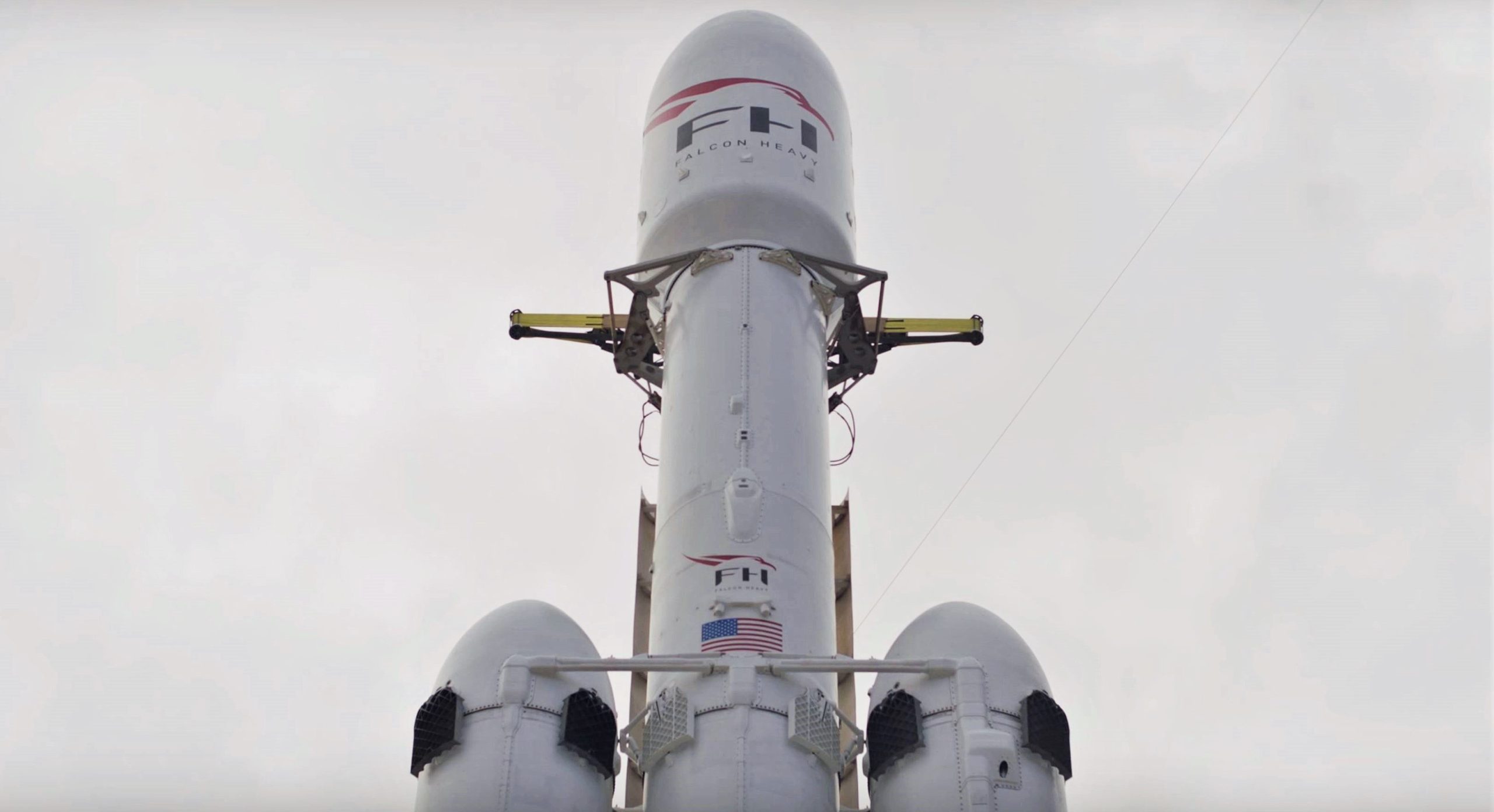

Update: No official comment has been offered but sourced reports indicate that SpaceX’s second Falcon Heavy launch will slip from a target of April 7th into “next week”, April 8-14. The massive rocket’s critical static fire test has also been pushed from April 4th to 5th, allowing additional time for SpaceX engineers and technicians to verify Falcon Heavy’s health. Stay tuned as we get closer to that test ignition and SpaceX releasing an official launch date.
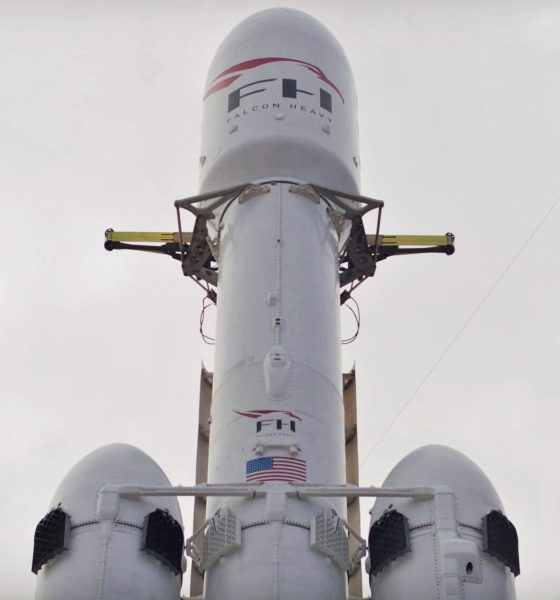
The first Block 5 variant of SpaceX’s Falcon Heavy rocket has rolled out to Launch Pad 39A for an inaugural launch that could occur as early as April 7th. Minor delays, however, are extremely likely for the second Falcon Heavy launch attempt ever, with the most likely dates resting closer to April 8-11.
With an appearance noticeably deviating from Falcon 9
Above all else, it should be noted that the likelihood of Falcon Heavy Flight 2’s actual launch date slipping is not to say that anything at all is technically or operationally wrong with the rocket or ground support equipment (GSE). Rather, it’s simply a dose of pragmatism for a launch date that was originally approved on the range alongside a static fire on March 31st. In other words, SpaceX was anticipating the need for approximately seven days between static fire and launch, a fairly believable target relative to Falcon Heavy’s first launch flow.
Even if SpaceX completes a flawless Falcon Heavy static fire immediately after the 6 pm EDT window opens, this would give company engineers and technicians less than 72 hours to turn the rocket around for launch as soon as 6:36 pm EDT on April 7th. That process involves a huge amount of work, including the actual static fire, safely
Safely completing that work in ~72 hours is extremely difficult for Falcon 9, let alone a significantly modified Falcon Heavy preparing for the vehicle’s second launch attempt ever. For reference, excluding a few outlier launches, Falcon 9 Block 5’s mean time between static fire and launch is ~4.7 days, while the mode is 5 days (6/10 launches). Outliers include missions like SSO-A, DM-1, and GPS III SV01, all of which required unique care and caution for various reasons. Chances are good that Falcon Heavy Flight 2 will probably improve upon Flight 1, which took several days to complete a static fire and 13 more days before a launch attempt. Still, the rocket is very unlikely to beat Falcon 9 Block 5’s average time-to-launch.
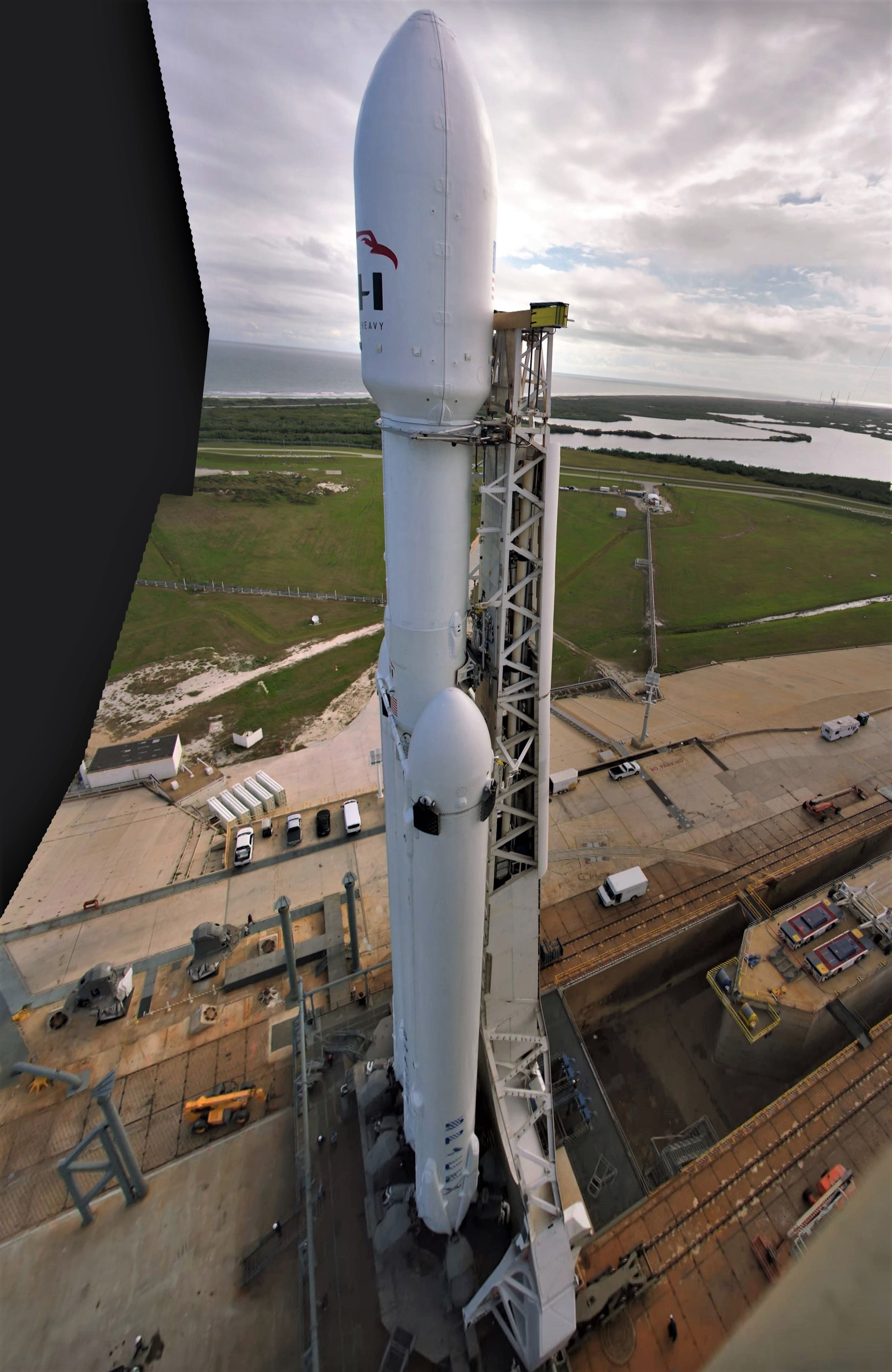
All in good time
There is probably a 5% chance of Falcon Heavy launching on April 7th even if the static fire happens right on time and shows all systems running in the green. If SpaceX is unable to fit a static fire into the April 4th window, that will likely slip to 0%. Either way, we can expect SpaceX to provide an updated launch window or rough estimate as early as today, especially if the static fire test is successfully completed.
In the meantime, drone ship
Check out Teslarati’s Marketplace! We offer Tesla accessories, including for the Tesla Cybertruck and Tesla Model 3.


Investor's Corner
SpaceX IPO is coming, CEO Elon Musk confirms
However, it appears Musk is ready for SpaceX to go public, as Ars Technica Senior Space Editor Eric Berger wrote an op-ed that indicated he thought SpaceX would go public soon. Musk replied, basically confirming it.

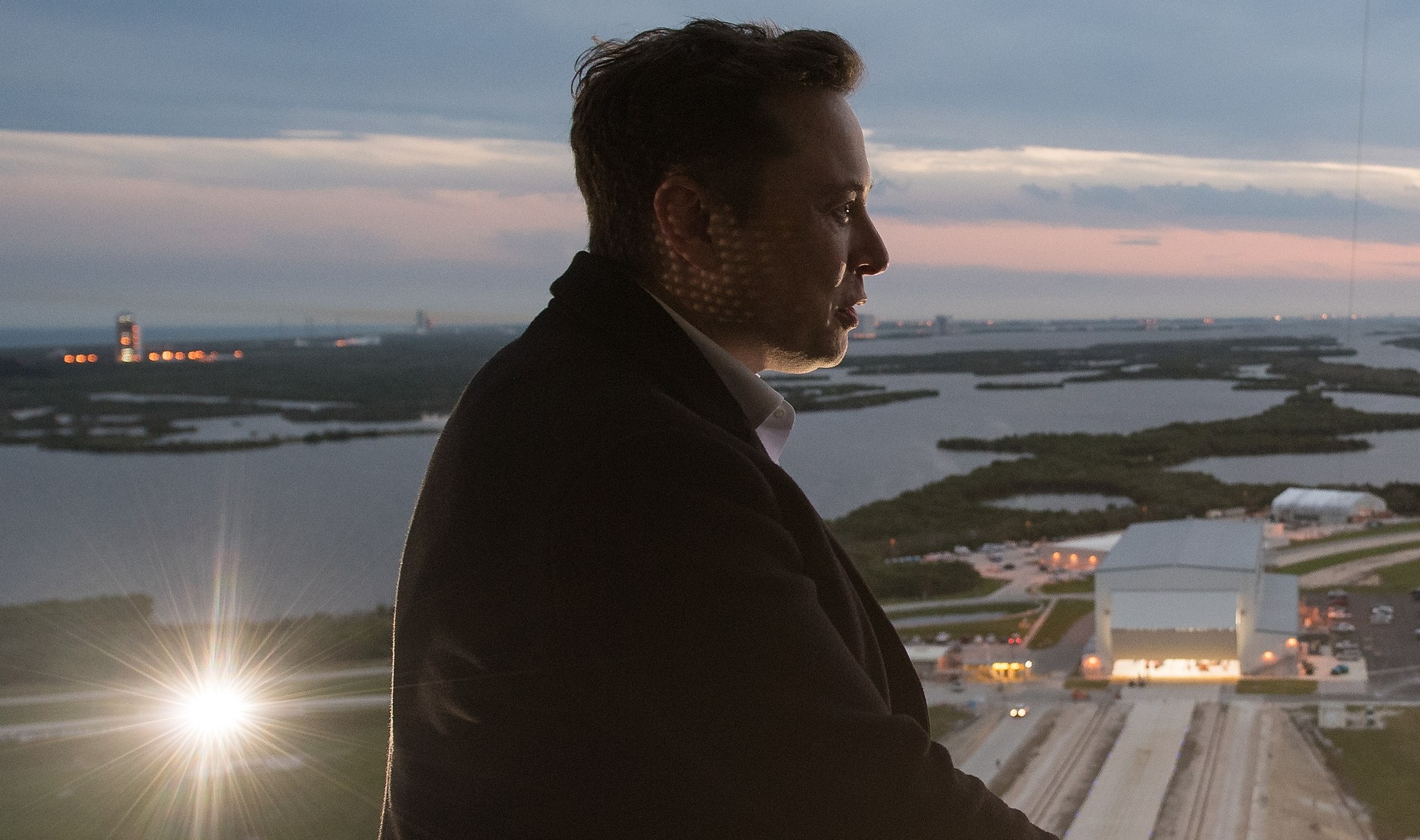
Elon Musk confirmed through a post on X that a SpaceX initial public offering (IPO) is on the way after hinting at it several times earlier this year.
It also comes one day after Bloomberg reported that SpaceX was aiming for a valuation of $1.5 trillion, adding that it wanted to raise $30 billion.
Musk has been transparent for most of the year that he wanted to try to figure out a way to get Tesla shareholders to invest in SpaceX, giving them access to the stock.
He has also recognized the issues of having a public stock, like litigation exposure, quarterly reporting pressures, and other inconveniences.
However, it appears Musk is ready for SpaceX to go public, as Ars Technica Senior Space Editor Eric Berger wrote an op-ed that indicated he thought SpaceX would go public soon.
Musk replied, basically confirming it:
As usual, Eric is accurate
— Elon Musk (@elonmusk) December 10, 2025
Berger believes the IPO would help support the need for $30 billion or more in capital needed to fund AI integration projects, such as space-based data centers and lunar satellite factories. Musk confirmed recently that SpaceX “will be doing” data centers in orbit.
AI appears to be a “key part” of SpaceX getting to Musk, Berger also wrote. When writing about whether or not Optimus is a viable project and product for the company, he says that none of that matters. Musk thinks it is, and that’s all that matters.
It seems like Musk has certainly mulled something this big for a very long time, and the idea of taking SpaceX public is not just likely; it is necessary for the company to get to Mars.
The details of when SpaceX will finally hit that public status are not known. Many of the reports that came out over the past few days indicate it would happen in 2026, so sooner rather than later.
But there are a lot of things on Musk’s plate early next year, especially with Cybercab production, the potential launch of Unsupervised Full Self-Driving, and the Roadster unveiling, all planned for Q1.
News
SpaceX reportedly mulling IPO, eyeing largest of all time: report
“I do want to try to figure out some way for Tesla shareholders to participate in SpaceX. I’ve been giving a lot of thought to how to give people access to SpaceX stock,” Musk said.
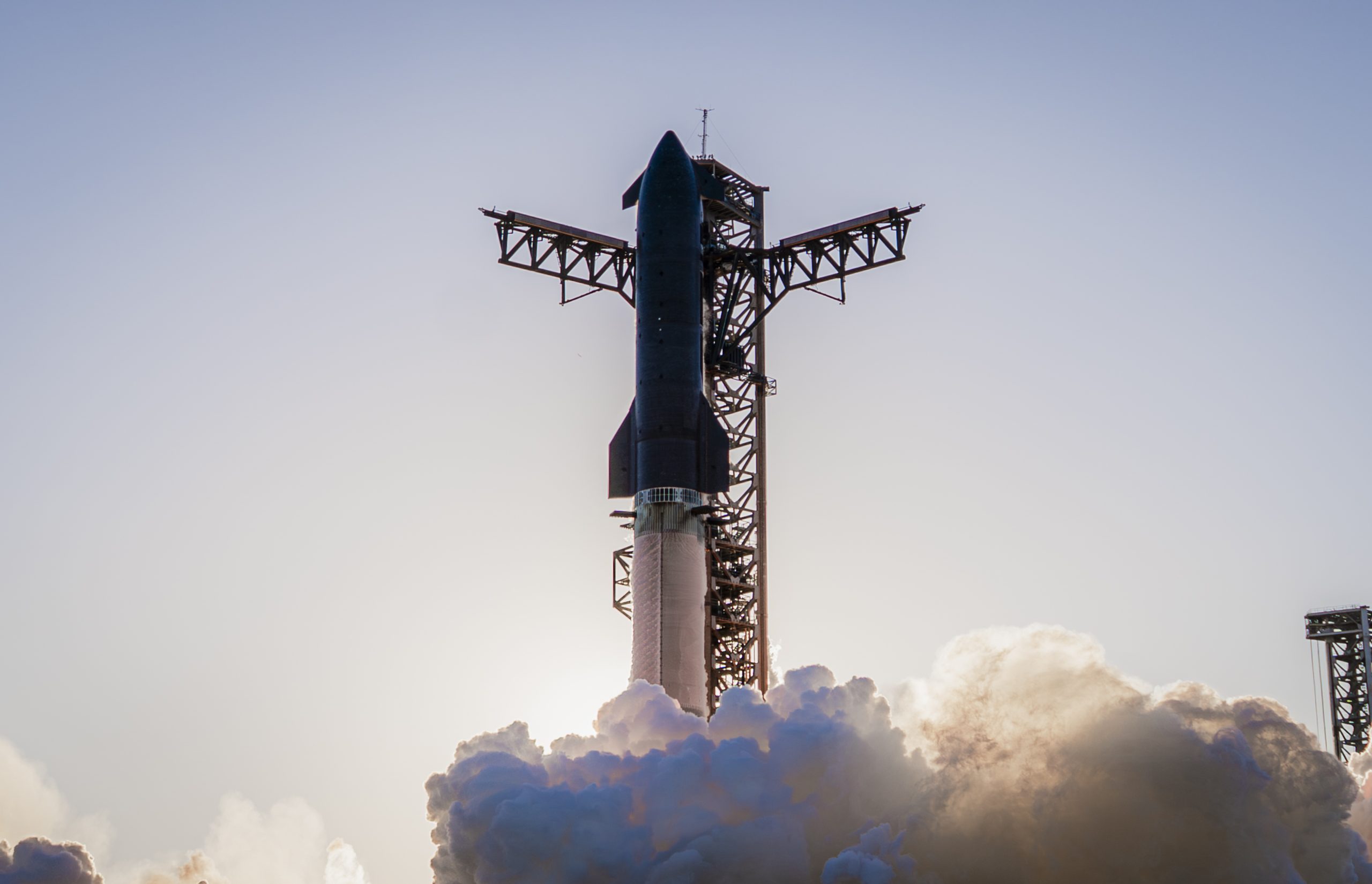
SpaceX is reportedly mulling an initial public offering, eyeing what would be the largest valuation at the time of availability of all time, a new report from Bloomberg said on Tuesday.
It is one of many reports involving one of Elon Musk’s companies and a massive market move, as this is not the first time we have seen reports of an IPO by SpaceX. Musk himself has also dispelled other reports in the past of a similar nature, including an xAI funding round.
SpaceX and Musk have yet to comment on the report. In the past, untrue reports were promptly replied to by the CEO; this has not yet gained any response, which is a good sign in terms of credibility.
However, he said just a few days ago that stories of this nature are inaccurate:
“There has been a lot of press claiming SpaceX is raising money at $800B, which is not accurate. SpaceX has been cash flow positive for many years and does periodic stock buybacks twice a year to provide liquidity for employees and investors. Valuation increments are a function of progress with Starship and Starlink and securing global direct-to-cell spectrum that greatly increases our addressable market. And one other thing that is arguably most significant by far.”
There has been a lot of press claiming @SpaceX is raising money at $800B, which is not accurate.
SpaceX has been cash flow positive for many years and does periodic stock buybacks twice a year to provide liquidity for employees and investors.
Valuation increments are a…
— Elon Musk (@elonmusk) December 6, 2025
Musk has discussed a potential IPO for SpaceX in recent months, as the November 6 shareholder meeting, as he commented on the “downsides” of having a public company, like litigation exposure, quarterly reporting pressures, and other inconveniences.
Nevertheless, Musk has also said he wants there to be a way for Tesla shareholders to get in on the action. At the meeting in early November, he said:
“I do want to try to figure out some way for Tesla shareholders to participate in SpaceX. I’ve been giving a lot of thought to how to give people access to SpaceX stock.”
Additionally, he added:
“Maybe at some point., SpaceX should become a public company despite all the downsides of being public.”
Musk has been historically reluctant to take SpaceX public, at times stating it could become a barrier to colonizing Mars. That does not mean it will not happen.
Bloomberg’s report cites multiple unidentified sources who are familiar with the matter. They indicate to the publication that SpaceX wants to go public in mid-to-late 2026, and it wants to raise $30 billion at a valuation of around $1.5 trillion.
This is not the first time SpaceX has discussed an IPO; we reported on it nine years ago. We hope it is true, as the community has spoken for a long time about having access to SpaceX stock. Legendary investor Ron Baron is one of the lucky few to be a SpaceX investor, and said it, along with Tesla, is a “lifetime investment.”
Tesla bull Ron Baron reveals $100M SpaceX investment, sees 3-5x return on TSLA
The primary driver of SpaceX’s value is Starlink, the company’s satellite internet service. Starlink contributes 60-70 percent of SpaceX’s revenue, meaning it is the primary value engine. Launch services, like Falcon 9 contracts, and the development of Starship, also play supporting roles.
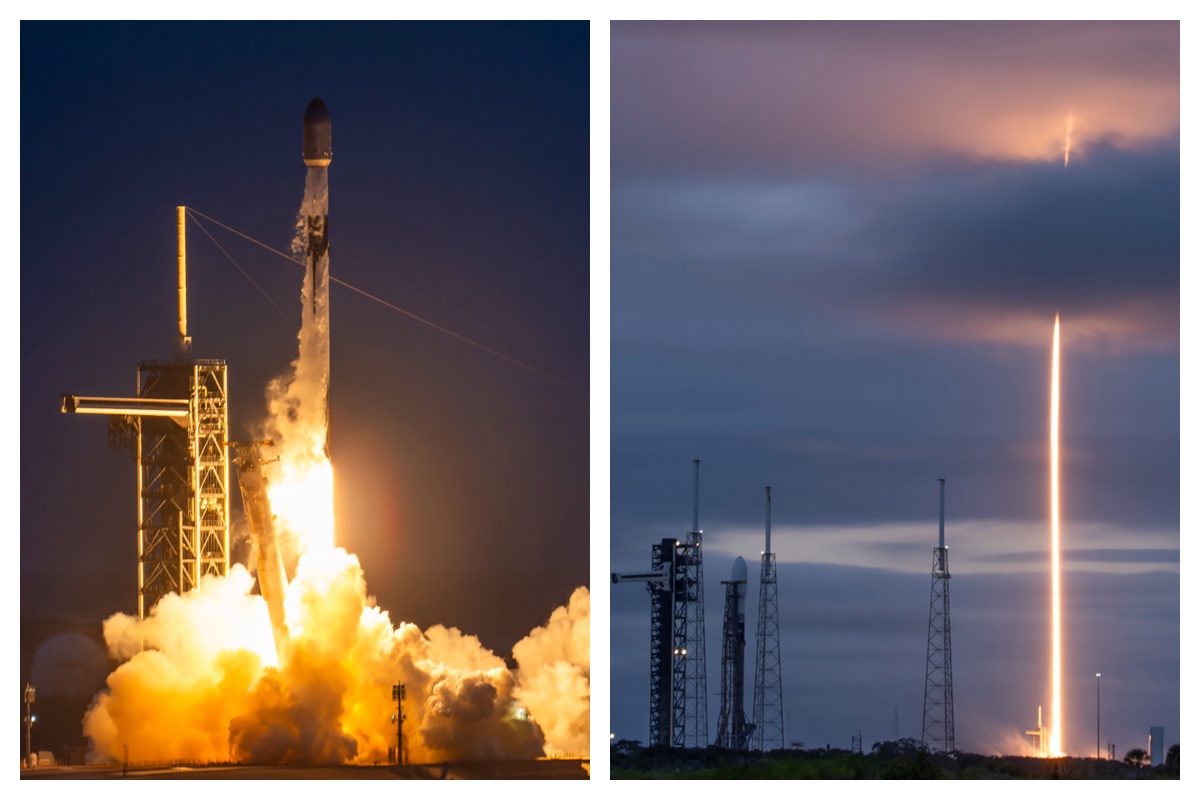
SpaceX reached an incredible milestone with its Starlink program with a launch last night, as the 3,000th satellite of the year was launched into low Earth orbit.
On Monday, SpaceX also achieved its 32nd flight with a single Falcon 9 rocket from NASA’s Kennedy Space Center.
The mission was Starlink 6-92, and it utilized the Falcon 9 B1067 for the 32nd time this year, the most-used Falcon booster. The flight delivered SpaceX’s 3000th Starlink satellite of the year, a massive achievement.
There were 29 Starlink satellites launched and deployed into LEO during this particular mission:
Falcon 9 launches 29 @Starlink satellites from Florida pic.twitter.com/utKrXjHzPN
— SpaceX (@SpaceX) December 9, 2025
SpaceX has a current goal of certifying its Falcon boosters for 40 missions apiece, according to Spaceflight Now.
The flight was the 350th orbital launch from the nearby SLC-40, and the 3,000 satellites that have been successfully launched this year continue to contribute to the company’s goal of having 12,000 satellites contributing to global internet coverage.
There are over five million users of Starlink, the latest data shows.
Following the launch and stage separation, the Falcon 9 booster completed its mission with a perfect landing on the ‘Just Read the Instructions’ droneship.
The mission was the 575th overall Falcon 9 launch, highlighting SpaceX’s operational tempo, which continues to be accelerated. The company averages two missions per week, and underscores CEO Elon Musk’s vision of a multi-planetary future, where reliable connectivity is crucial for remote work, education, and emergency response.
As Starlink expands and works toward that elusive and crucial 12,000 satellite goal, missions like 6-92 pave the way for innovations in telecommunications and enable more internet access to people across the globe.
With regulatory approvals in over 100 countries and millions of current subscribers, SpaceX continues to democratize space, proving that reusability is not just feasible, but it’s also revolutionary.

Tesla updates Cybertruck owners about key Powershare feature

Tesla’s northernmost Supercharger in North America opens


