News
SpaceX Falcon Heavy beats out ULA Vulcan rocket for NASA Moon rover launch

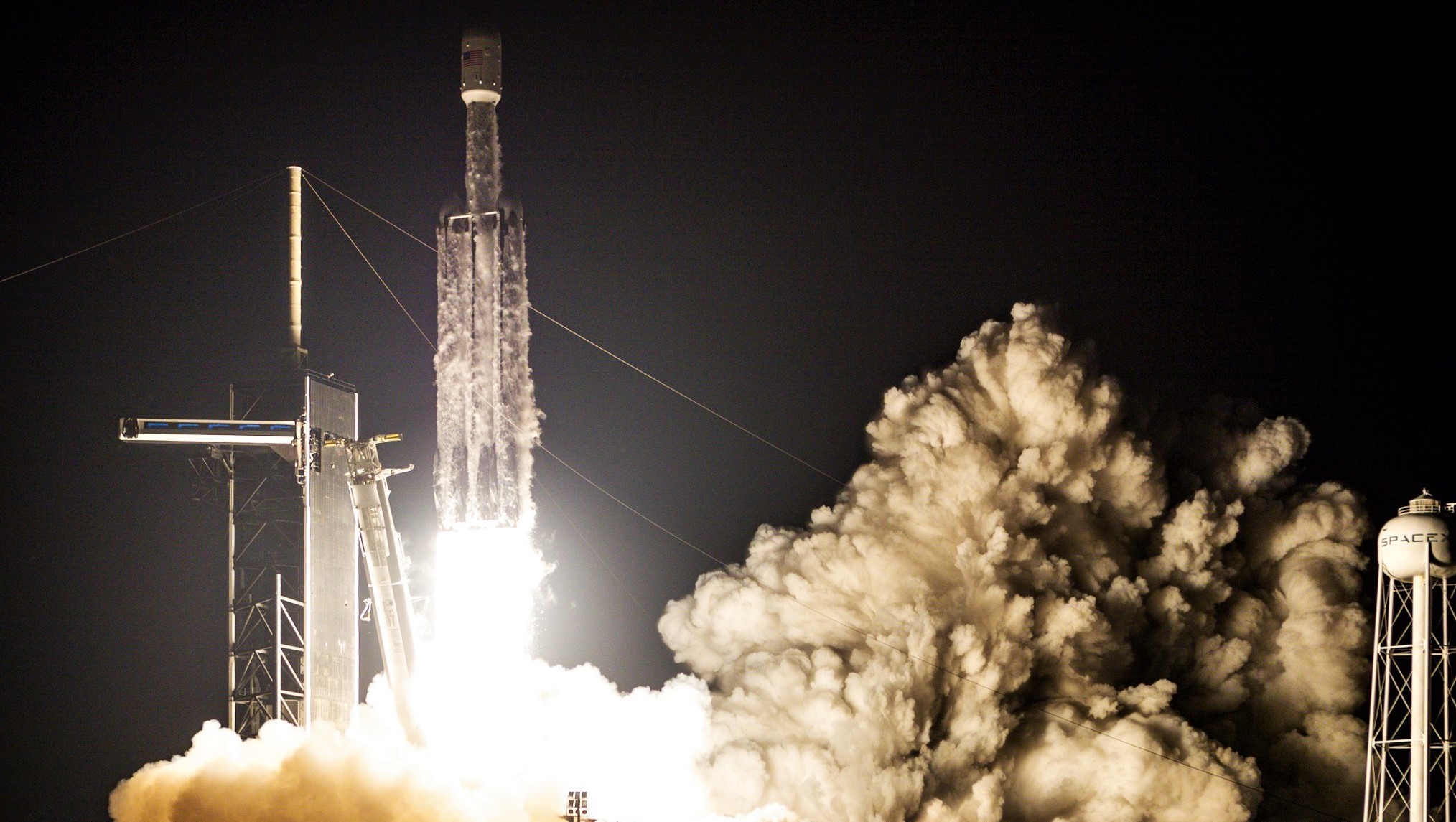
SpaceX’s Falcon Heavy rocket appears to have edged out competitor United Launch Alliance’s (ULA) next-generation Vulcan Centaur launch vehicle to send a NASA rover and commercial lander to the Moon in 2023.
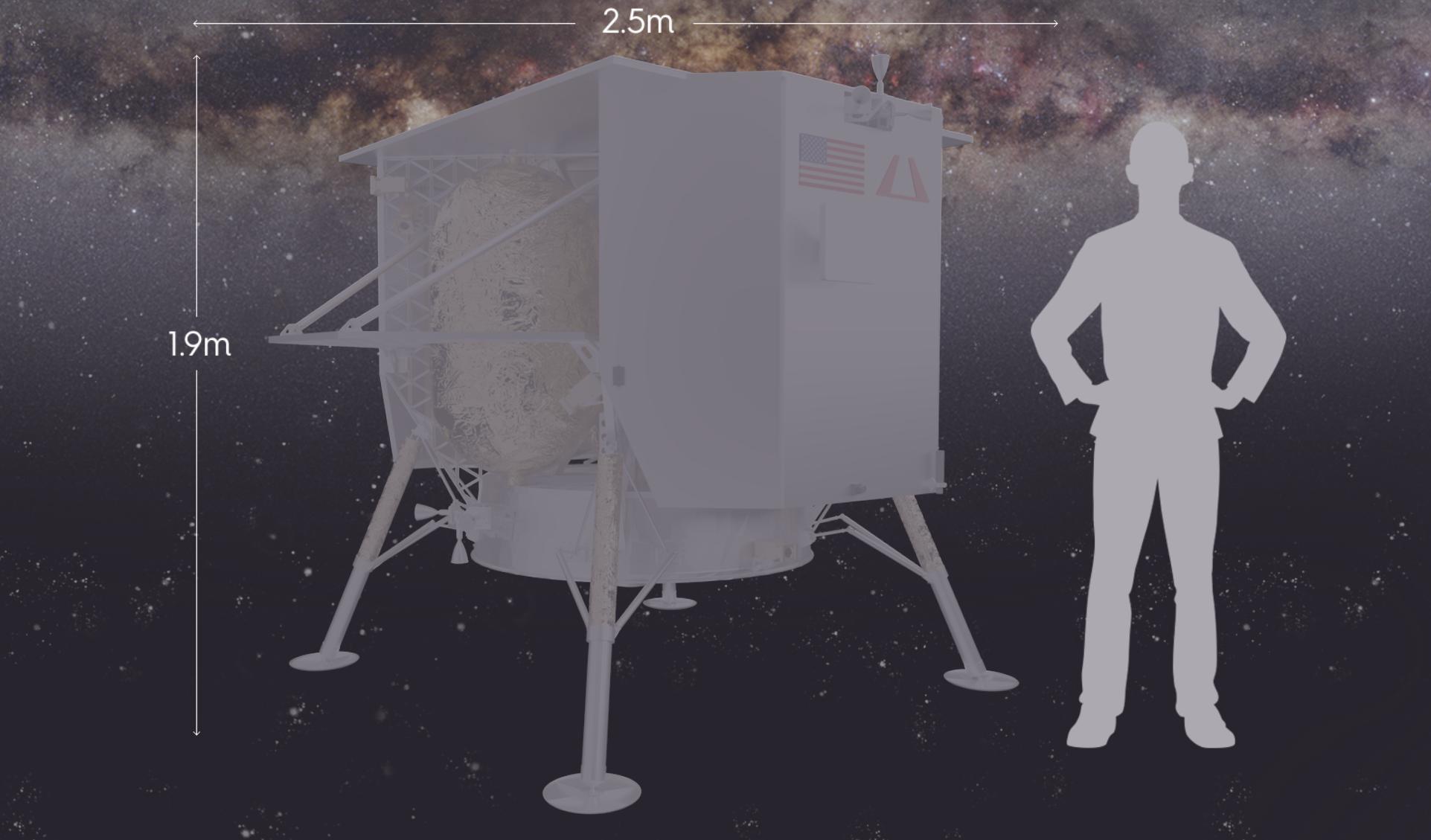
Back in August 2019, not long after NASA first began announcing significant contracts under its Commercial Lunar Payload Services (CLPS) program, startup Astrobotic announced that it contracted with ULA to launch its first small “Peregrine” lander and a dozen or so attached NASA payloads to the Moon in 2021. Rather than the extremely expensive but operational Atlas V rocket, the startup instead chose to manifest Peregrine on the first launch of Vulcan Centaur, a new ULA rocket meant to replace both Atlas V and Delta IV Heavy.
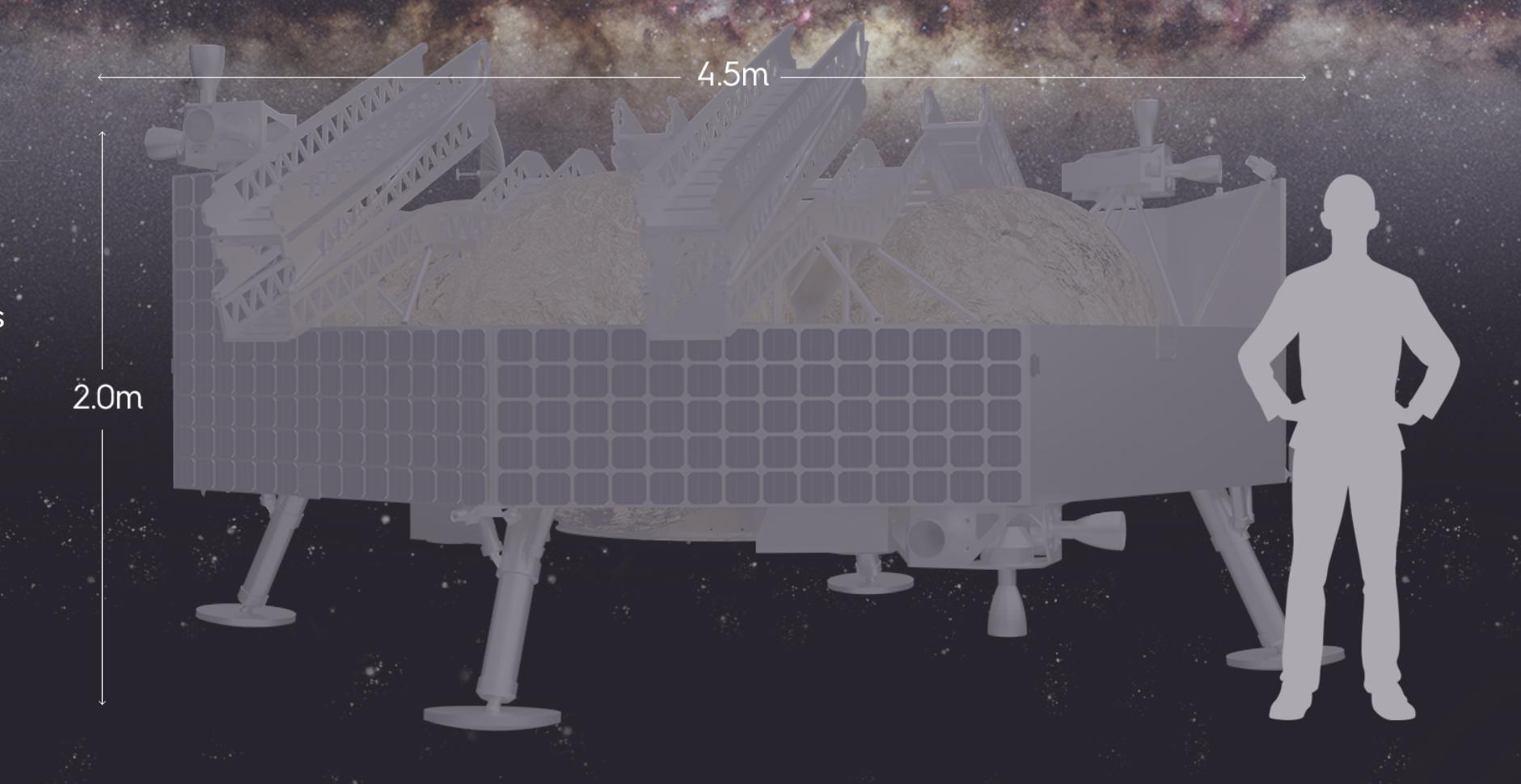
Less than two years later, Astrobotic has decided to purchase a dedicated launch from SpaceX – not ULA – for even larger “Griffin” lander that aims to deliver NASA’s ice-prospecting VIPER rover to the Moon and kick off the exploration of permanently-shadowed craters at its south pole.
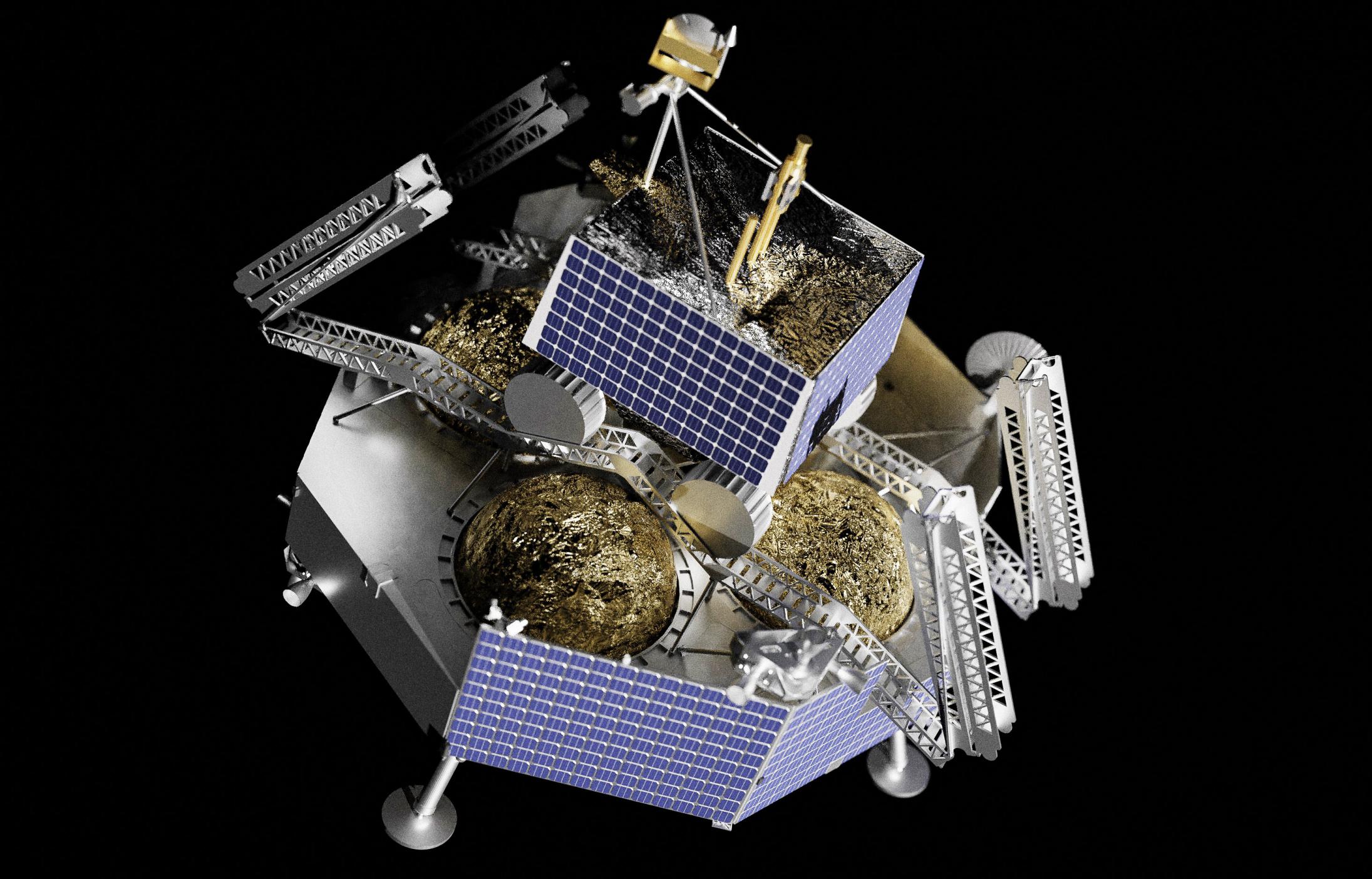
Back in August 2019, Astrobotic’s announcement stated that “it selected United Launch Alliance’s (ULA) Vulcan Centaur rocket in a [highly competitive commercial process].” It later became clear that the Peregrine lander – while still scheduled to be sent directly to the Moon on a trans-lunar injection (TLI) trajectory – would not be the only payload on the mission. None of Vulcan Flight 1’s other payloads are known, but the presence of other paying customers helps explain how Vulcan beat SpaceX for the contract.
More importantly, companies willing to risk their payload(s) on new rockets have historically been enticed to overlook some of that first-flight risk with major discounts. In other words, in the often unlikely event that a company manages to sell a commercial rocket’s first launch, it’s incredibly unlikely that the same rocket will ever sell that cheaply again.
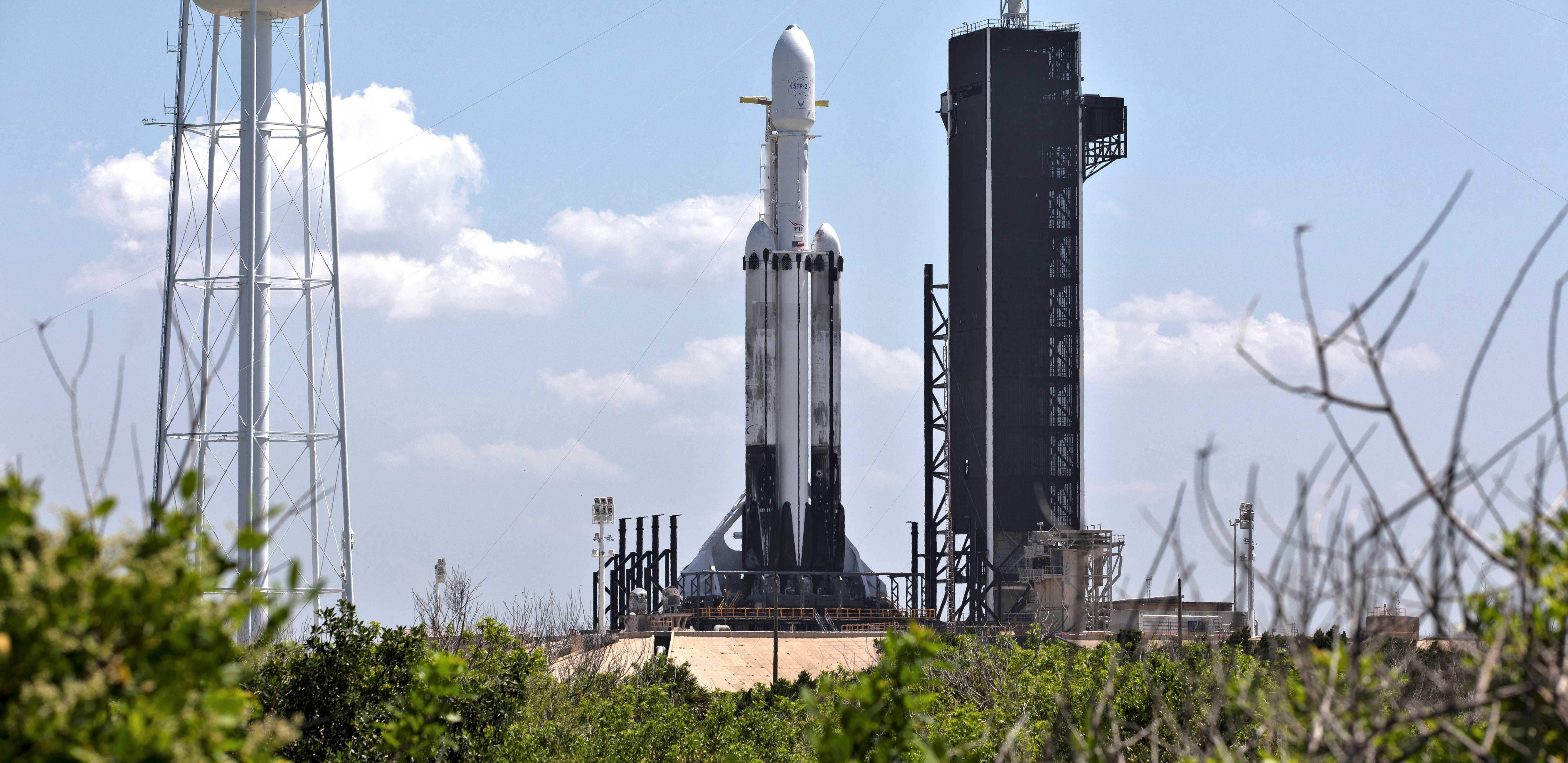
That appears to be exactly the case for ULA’s Vulcan Centaur rocket, which secured a lunar lander contract for its launch debut only to lose a similar lunar lander launch contract from the same company – well within the range of Vulcan’s claimed capabilities – less than two years later. If SpaceX’s relatively expensive Falcon Heavy managed to beat early Vulcan launch pricing, there is virtually no chance whatsoever that Vulcan Centaur will ever be able to commercially compete with Falcon 9.
In fact, back in 2015 when Astrobotic began making noise about its plans to build commercial Moon landers, the larger Griffin was expected to weigh some 2220 kg (~4900 lb) fully-fueled and – when combined with SpaceX’s Falcon 9 workhorse – be able to land payloads as large as 270 kg (~600 lb) on the Moon. It’s unclear if that figure assumed an expendable Falcon 9 launch or if it was using numbers from the rocket’s most powerful variant, which was still a few years away at the time.
Either way, NASA’s VIPER lander – expected to have a launch mass of ~430 kg (~950 lb) – is a bit too heavy for a single-stick Falcon 9 flight to TLI. It’s also reasonable to assume that Griffin’s dry and fueled mass has grown substantially after more than half a decade of design maturation and the first Peregrine lander reaching the hardware production and assembly phase. While Falcon 9 narrowly falls short of the performance needed for Griffin/VIPER, a fully recoverable Falcon Heavy is capable of launching more than 6.5 metric tons to TLI, offering a safety margin of almost 100%.
Astrobotic says it has purchased a dedicated Falcon Heavy launch for Griffin-1 and VIPER, but it would be far from surprising to see one or multiple secondary payloads find their way onto a mission with multiple tons of extra capacity. Presumably assuming that its Q4 2021 or early 2022 Peregrine Moon landing debut is successful, Astrobotic and SpaceX aim to land Griffin-1 and NASA’s VIPER rover on the Moon as early as “late 2023.”



Elon Musk posted a candid admission on his social media platform X on June 9, declaring that he had been “clearly wrong” about Anthropic. The statement marked a notable reversal from his earlier skepticism toward the AI company.
In September, Musk had written, “Winning was never in the set of possible outcomes for Anthropic,” reflecting his view at the time that the startup had lacked the foundation or even the trajectory to succeed in what is an incredibly intense race for advanced artificial intelligence.
Musk’s latest post came amid discussion of Anthropic’s reliance on external compute resources. He praised the company’s progress, stating that Anthropic is “obviously currently the leader in AI” and that “no company has released a model as good as Mythos/Fable,” with expectations of a strong follow-up in Mythos 2.
The tone shifted dramatically from dismissal to acknowledgement of superior performance.
I was clearly wrong about Anthropic. They are obviously currently the leader in AI. No company has released a model as good as Mythos/Fable and they will undoubtedly have Mythos 2 ready soon.
And I would never cut them off in a way that hurt them badly, even as a competitor.…
— Elon Musk (@elonmusk) July 9, 2026
The context of Musk’s comments added significance. Anthropic has been operating under a recent compute deal with SpaceXAI, Musk’s AI infrastructure-focused venture. The pair entered a short-term GPU lease agreement initiated in May, providing Anthropic access to critical computing power for training and deploying its frontier models.
SpaceXAI signs agreement with Anthropic for massive AI supercomputer access
Some observers had speculated that Musk could leverage this dependency to disadvantage a rival. Musk directly addressed the possibility, writing, “I would never cut them off in a way that hurt them badly, even as a competitor. That’s not my style.”
To support his commitment to ethical competition, Musk referenced concrete examples from his other companies. Tesla famously open-sourced its entire portfolio of electric vehicle patents in 2014. The move was designed to accelerate the global adoption of sustainable transportation technology rather than protect proprietary advantages.
Tesla also made its Supercharger network available to competing electric vehicle manufacturers, transforming what could have remained an exclusive charging ecosystem into a shared infrastructure that benefits the broader industry and reduces barriers for EV adoption.
Musk further pointed to SpaceX’s practices, noting that the company launches satellites for competing commercial systems “with no increase in price or use of unfair terms.” He extended the principle to his social platform, observing that “even my worst enemies attack me on this platform,” underscoring preference for open discourse over retaliation.
These examples have illustrated Musk’s long-standing philosophy that long-term technological progress is best served by open competition and infrastructure sharing rather than leveraging market power to stifle rivals. In the fast-evolving AI sector, where compute resources and model capabilities determine leadership, Musk’s stance suggests a willingness to compete on innovation and performance alone.
Musk’s admission arrives as SpaceXAI itself advances its own frontier models while maintaining business relationships across the ecosystem. By publicly correcting his earlier assessment and reaffirming principles of fair play, Musk highlights a model of competition that prioritizes advancement of the field over short-term tactical advantages.
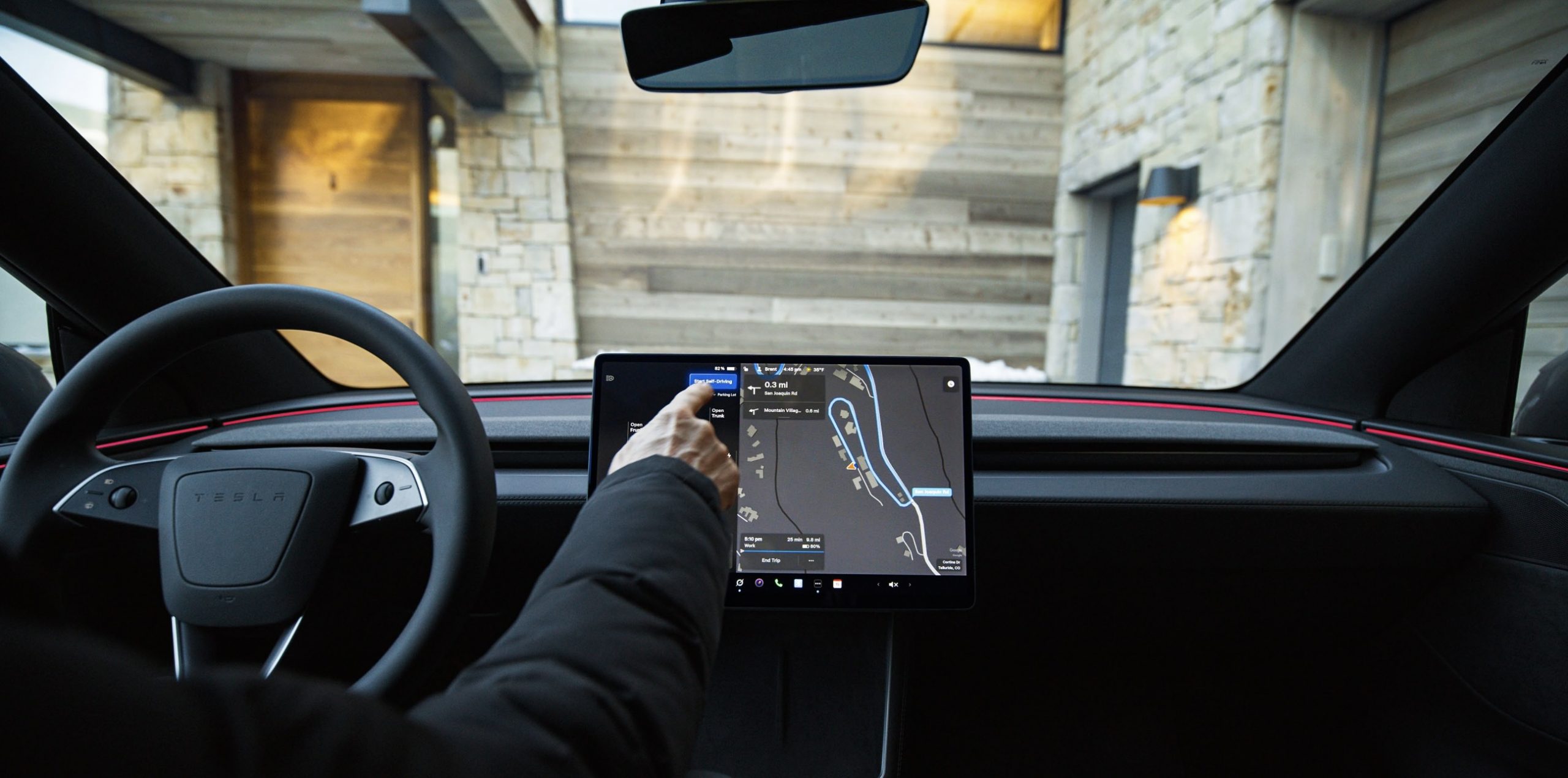
A Tesla analyst believes the company’s Full Self-Driving suite is close to an “inflection point,” where people will finally realize that it is more than what it appears, similar to how many view the iPhone.
Pierre Ferragu, an analyst who has covered Tesla for many years at New Street Research, says the Full Self-Driving suite is one piece of evidence supporting the view that a Tesla is more than a car. He compared it to the iPhone and noted that the high price tag seemed like a lot for a phone early on. Then people realized the iPhone was more than just something you make calls with. It made their lives simpler.
🚨 Analyst @p_ferragu says Tesla Full Self-Driving is at an “inflection point” in a recent commentary:
“A Tesla is not a car, the same way an iPhone was not a phone. As a tool that gets you to work peacefully every morning, it is not expensive. Give us 2 more quarters to see… pic.twitter.com/tm6xFrjVPV
— TESLARATI (@Teslarati) July 10, 2026
Suddenly, that price tag was justified.
Tesla offers several models under the average transaction price for a new vehicle, which was above $49,000, according to Kelley Blue Book. However, that does not take into account that many people can still not afford a $35,000 vehicle. Ferragu offers his thoughts:
“Remember when the addressable market of the iPhone was 10 million units? Then people realized how good it was, and now, nearly 250m are sold every year.
A similar evolution for Tesla is still on the table. A Tesla is not a car, the same way an iPhone was not a phone.
A model 3 at $35k + $100 per month is too expensive for most, but only as a car, the same way a $600 iPhone was too expensive for most, until most realized it was much more than a phone.
As a tool that gets you to work peacefully every morning, it is not expensive.”
This point is valid, especially considering the iPhone’s impact on the cell phone market. There are still a handful of players, but most people you know have an iPhone. The iPhone ties into Apple’s other ecosystem of products.
This is how Tesla plans to infiltrate the automotive market, and once the company offers a fully autonomous suite, or something that can allow for unsupervised self-driving, more and more people will flock to Tesla.
Ferragu believes Tesla needs two additional quarters of development before things will truly change. He didn’t elaborate on what will happen in two quarters, but he said it will give us all time to “see where this is heading.”
It is really quite interesting to see people’s reactions when they find out what a Tesla is capable of. Full Self-Driving is a great tool for taking stress out of travel; I use it daily, and it has made it really difficult to consider taking any other car on a drive of practically any length.
To me, it is really hard to believe that people will not at least seriously consider a Tesla as their next car if they experience Full Self-Driving. This is a major point for those who argue that Tesla should advertise in some way.
Investor's Corner
NASA taps SpaceX to launch the telescope that could unlock new worlds
NASA’s Roman Space Telescope heads to orbit this August aboard SpaceX’s Falcon Heavy with massive scientific ambitions.

SpaceX is set to play a central role in one of NASA’s most anticipated science missions in years. The company’s Falcon Heavy rocket, currently the most powerful operational launch vehicle in the world, will carry the Nancy Grace Roman Space Telescope into orbit on August 30 from Kennedy Space Center in Florida. Roman is now in final preparations inside the Payload Hazardous Servicing Facility, where on June 26 technicians used a crane to lift the observatory into a specialized stand for fueling and pre-launch testing.
Roman is named after Nancy Grace Roman, NASA’s first chief of astronomy, whose career helped shape how the agency approaches space science.
NASA chose SpaceX Falcon Heavy because of Roman’s needs to reach a specific orbit far from Earth, well beyond where a standard Falcon 9 can deliver it. The Falcon Heavy, which first flew in 2018, has since become NASA’s go-to option for missions that need serious muscle without the cost and complexity of older launch systems.
Celebrating SpaceX’s Falcon Heavy Tesla Roadster launch, seven years later (Op-Ed)
Roman will carry a field of view at least 100 times wider than the Hubble Space Telescope, meaning it can photograph enormous swaths of the universe in a single shot rather than the narrow slices Hubble captures. That difference in scale is significant. While Hubble reshaped our understanding of the cosmos over 30 years, Roman is built to work faster and wider, surveying hundreds of millions of galaxies at once.
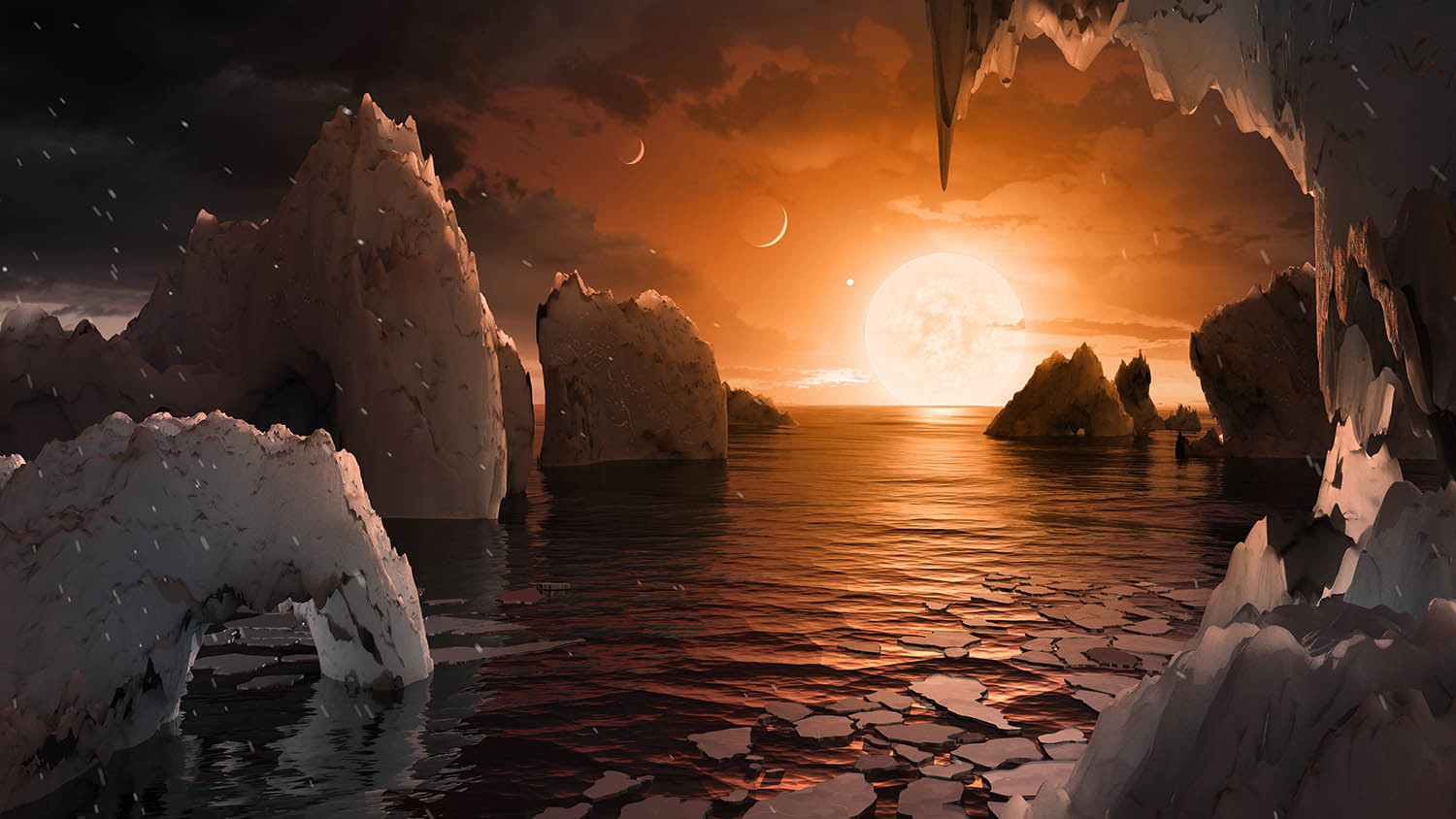
One of Roman’s most compelling capabilities is its potential to discover and photograph planets orbiting stars outside our solar system, and with enough precision to directly image planets that would otherwise be lost. That means scientists could study the atmosphere and surface characteristics of distant worlds rather than simply confirming they exist. Combined with Roman’s sweeping field of view, the telescope could detect thousands of exoplanets, and some of those planets may be in habitable zones where liquid water could exist. No telescope currently in operation has this level of power and capability. That capability alone could change what we know about other worlds, and perhaps finally answer the question: are we the only intelligent lifeforms in existence?
What Roman actually finds once it reaches orbit is an open question, and that is exactly what makes this launch worth watching.

Elon Musk admits he was ‘clearly wrong’ about Anthropic

Tesla analyst says Full Self-Driving is about to have its iPhone moment


