SpaceX
SpaceX’s Crew Dragon heat shield shown off after first orbital-velocity reentry

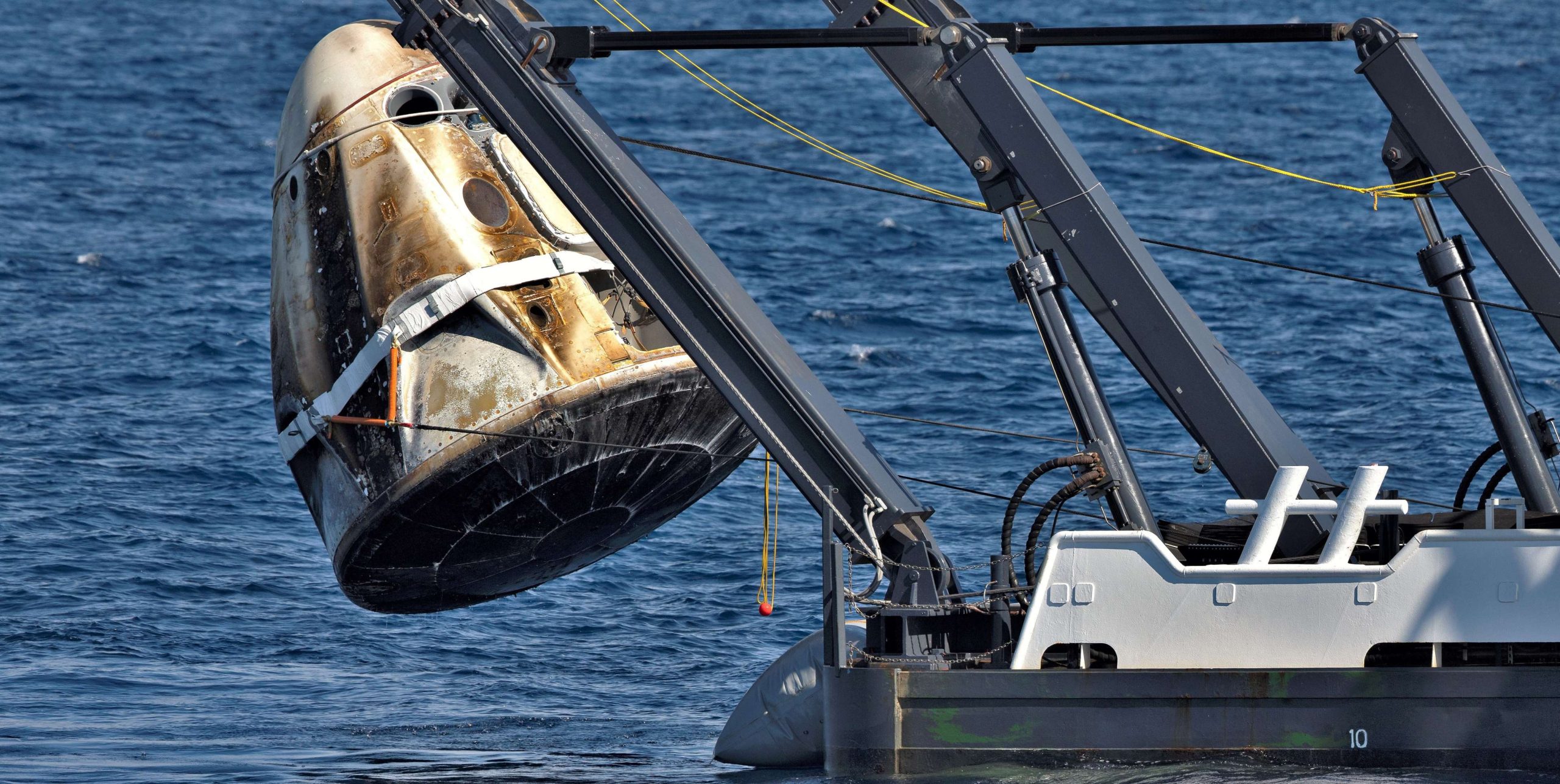
Following SpaceX’s successful debut launch, rendezvous, and recovery of Crew Dragon, NASA has published official photos documenting the scorched spacecraft’s Atlantic Ocean splashdown, GO Searcher’s recovery, and the duo’s return to Port Canaveral shortly thereafter.
Aside from offering a number of spectacularly detailed views of Crew Dragon after its inaugural orbital reentry, NASA’s photos also provide an exceptionally rare glimpse of the spacecraft’s PICA-X v3 heat shield, revealing a tiled layout that is quite a bit different from Cargo Dragon’s own shield. A step further, CEO Elon Musk offered updates on March 17th about progress being made towards a new, metallic heat shield technology meant to make ablative shields like those on Dragon outdated, serving as a striking bit of contrast to SpaceX’s newest spacecraft, potentially just a dozen or two months away from already becoming anachronistic.
Generally speaking, the basic appearance of Crew Dragon – compared alongside Cargo Dragon, ‘Dragon 1’ – after its first orbital reentry immediately suggests that one or several things about the new capsule and its reentry experience are quite a bit different from the Dragon reentries now familiar. Relative to Cargo Dragon, Crew Dragon appears to either have significantly different thermal protection along its leeward (downwind) section or experienced significantly a different thermal profile over the course of the handful of minutes spent in the period of peak heating.

For the most part, both Dragon variants actually appear to be in similar condition, with most of the variance between capsules likely explained by their distinct aeroshells, particularly the four sloped protuberances enclosing Crew Dragon’s SuperDraco thruster pods. As a result of those pods, the hypersonic airstream and plasma tail of Crew Dragon likely ends up being quite a bit less stable, causing the somewhat haphazard patterns and streaks relative to Cargo Dragon’s more delineated leeward and windward characteristics. In fact, SpaceX CEO Elon Musk noted prior to launch that his only real concern or uncertainty centered around those new aerodynamic characteristics and the subsequent slight risk of instability during reentry.
Aside from Crew Dragon’s thruster pods and moderately different toast pattern, the next-generation spacecraft also features an intact and still-installed nosecone, a significant departure from Cargo Dragon’s own shroud, detached and permanently expended prior to reaching orbit. In the likely event that Crew Dragon’s reusable nosecone and associated waterproofing worked as intended, the myriad hardware situated beneath it – ranging from LIDAR and Draco thrusters to its relatively intricate international docking adapter (IDA) – should have been protected from both the violence of reentry and exposure to saltwater upon splashdown.


Meanwhile, the patterns on the more windward half of Crew Dragon indicate that Musk’s mild but open concerns with potential instability during reentry were predominately unwarranted, displaying scorch marks that suggest the spacecraft maintained its orientation quite successfully over six or so minutes of peak heating and buffeting. Much like almost every other aspect of Crew Dragon’s inaugural trip to orbit and back, the spacecraft performed its duties to a level of perfection so surreal that the SpaceX employees operating the craft – i.e. “on-console” – at points felt like it was too good to be true, searching for and anxiously awaiting anomalies that would have been par for the course of any spacecraft’s launch debut, let alone a system as complex as this one.
Despite their reasonable expectations of at least some sort of moderate to 


Check out Teslarati’s Marketplace! We offer Tesla accessories, including for the Tesla Cybertruck and Tesla Model 3.


Investor's Corner
SpaceX IPO is coming, CEO Elon Musk confirms
However, it appears Musk is ready for SpaceX to go public, as Ars Technica Senior Space Editor Eric Berger wrote an op-ed that indicated he thought SpaceX would go public soon. Musk replied, basically confirming it.

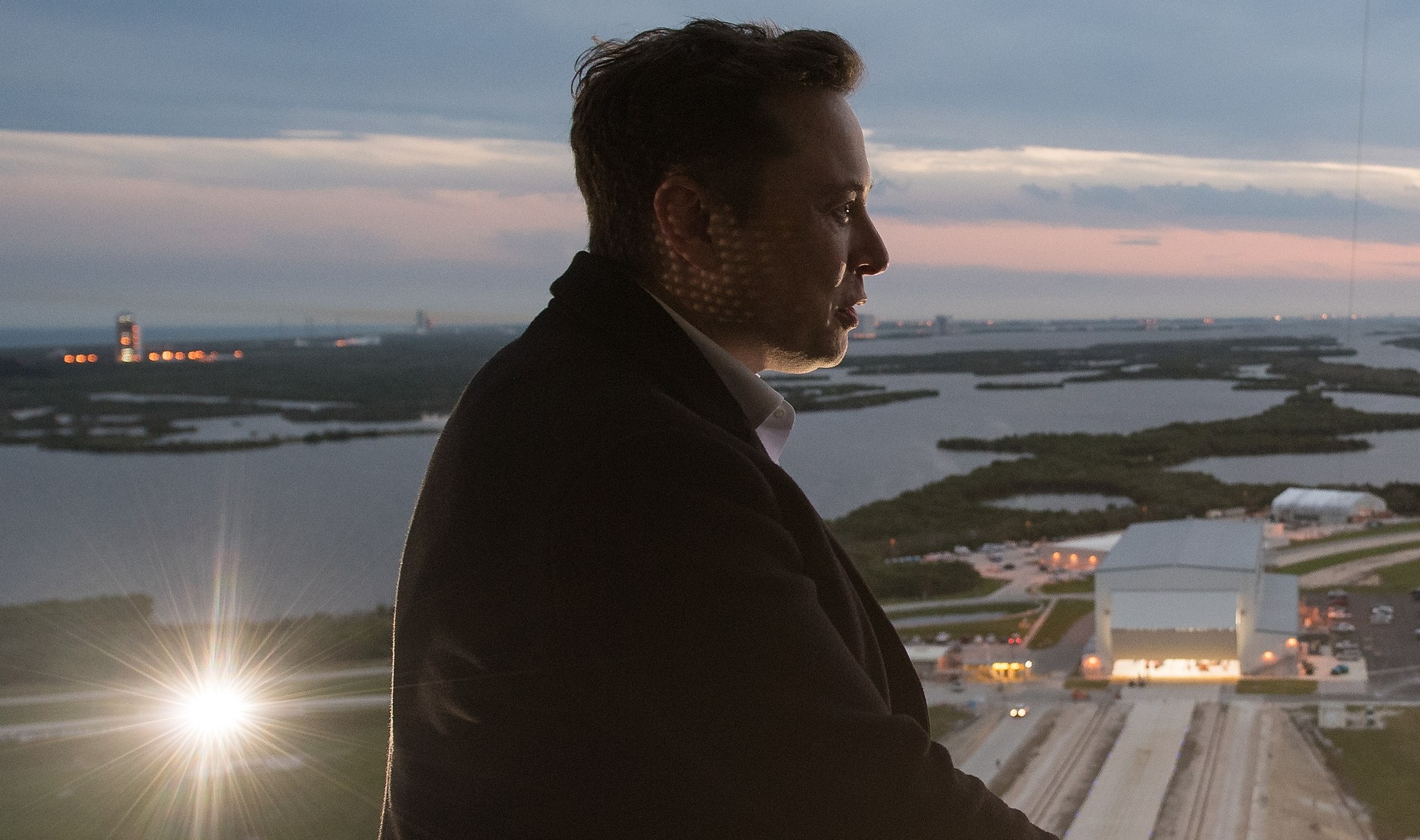
Elon Musk confirmed through a post on X that a SpaceX initial public offering (IPO) is on the way after hinting at it several times earlier this year.
It also comes one day after Bloomberg reported that SpaceX was aiming for a valuation of $1.5 trillion, adding that it wanted to raise $30 billion.
Musk has been transparent for most of the year that he wanted to try to figure out a way to get Tesla shareholders to invest in SpaceX, giving them access to the stock.
He has also recognized the issues of having a public stock, like litigation exposure, quarterly reporting pressures, and other inconveniences.
However, it appears Musk is ready for SpaceX to go public, as Ars Technica Senior Space Editor Eric Berger wrote an op-ed that indicated he thought SpaceX would go public soon.
Musk replied, basically confirming it:
As usual, Eric is accurate
— Elon Musk (@elonmusk) December 10, 2025
Berger believes the IPO would help support the need for $30 billion or more in capital needed to fund AI integration projects, such as space-based data centers and lunar satellite factories. Musk confirmed recently that SpaceX “will be doing” data centers in orbit.
AI appears to be a “key part” of SpaceX getting to Musk, Berger also wrote. When writing about whether or not Optimus is a viable project and product for the company, he says that none of that matters. Musk thinks it is, and that’s all that matters.
It seems like Musk has certainly mulled something this big for a very long time, and the idea of taking SpaceX public is not just likely; it is necessary for the company to get to Mars.
The details of when SpaceX will finally hit that public status are not known. Many of the reports that came out over the past few days indicate it would happen in 2026, so sooner rather than later.
But there are a lot of things on Musk’s plate early next year, especially with Cybercab production, the potential launch of Unsupervised Full Self-Driving, and the Roadster unveiling, all planned for Q1.
News
SpaceX reportedly mulling IPO, eyeing largest of all time: report
“I do want to try to figure out some way for Tesla shareholders to participate in SpaceX. I’ve been giving a lot of thought to how to give people access to SpaceX stock,” Musk said.
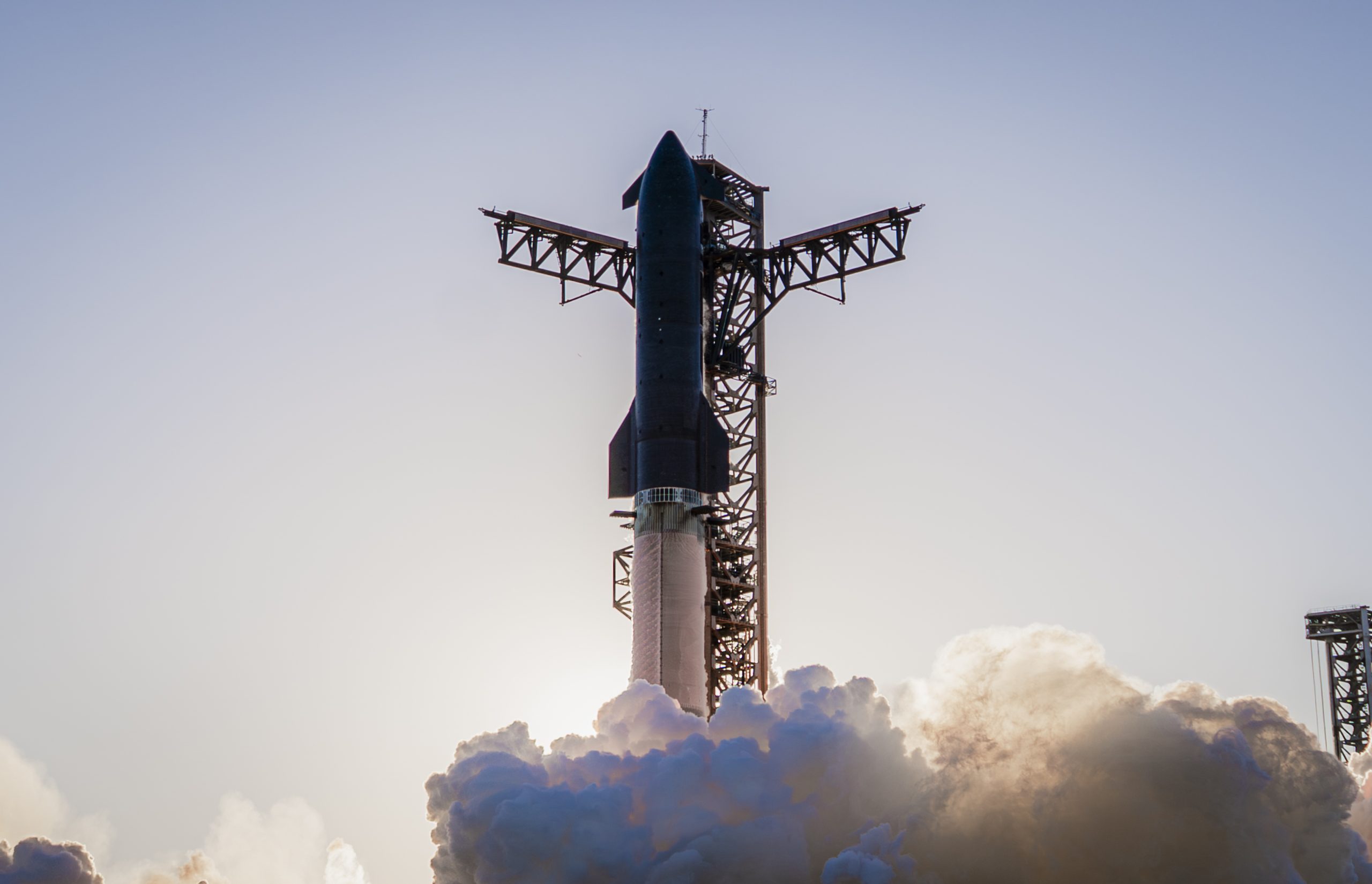
SpaceX is reportedly mulling an initial public offering, eyeing what would be the largest valuation at the time of availability of all time, a new report from Bloomberg said on Tuesday.
It is one of many reports involving one of Elon Musk’s companies and a massive market move, as this is not the first time we have seen reports of an IPO by SpaceX. Musk himself has also dispelled other reports in the past of a similar nature, including an xAI funding round.
SpaceX and Musk have yet to comment on the report. In the past, untrue reports were promptly replied to by the CEO; this has not yet gained any response, which is a good sign in terms of credibility.
However, he said just a few days ago that stories of this nature are inaccurate:
“There has been a lot of press claiming SpaceX is raising money at $800B, which is not accurate. SpaceX has been cash flow positive for many years and does periodic stock buybacks twice a year to provide liquidity for employees and investors. Valuation increments are a function of progress with Starship and Starlink and securing global direct-to-cell spectrum that greatly increases our addressable market. And one other thing that is arguably most significant by far.”
There has been a lot of press claiming @SpaceX is raising money at $800B, which is not accurate.
SpaceX has been cash flow positive for many years and does periodic stock buybacks twice a year to provide liquidity for employees and investors.
Valuation increments are a…
— Elon Musk (@elonmusk) December 6, 2025
Musk has discussed a potential IPO for SpaceX in recent months, as the November 6 shareholder meeting, as he commented on the “downsides” of having a public company, like litigation exposure, quarterly reporting pressures, and other inconveniences.
Nevertheless, Musk has also said he wants there to be a way for Tesla shareholders to get in on the action. At the meeting in early November, he said:
“I do want to try to figure out some way for Tesla shareholders to participate in SpaceX. I’ve been giving a lot of thought to how to give people access to SpaceX stock.”
Additionally, he added:
“Maybe at some point., SpaceX should become a public company despite all the downsides of being public.”
Musk has been historically reluctant to take SpaceX public, at times stating it could become a barrier to colonizing Mars. That does not mean it will not happen.
Bloomberg’s report cites multiple unidentified sources who are familiar with the matter. They indicate to the publication that SpaceX wants to go public in mid-to-late 2026, and it wants to raise $30 billion at a valuation of around $1.5 trillion.
This is not the first time SpaceX has discussed an IPO; we reported on it nine years ago. We hope it is true, as the community has spoken for a long time about having access to SpaceX stock. Legendary investor Ron Baron is one of the lucky few to be a SpaceX investor, and said it, along with Tesla, is a “lifetime investment.”
Tesla bull Ron Baron reveals $100M SpaceX investment, sees 3-5x return on TSLA
The primary driver of SpaceX’s value is Starlink, the company’s satellite internet service. Starlink contributes 60-70 percent of SpaceX’s revenue, meaning it is the primary value engine. Launch services, like Falcon 9 contracts, and the development of Starship, also play supporting roles.
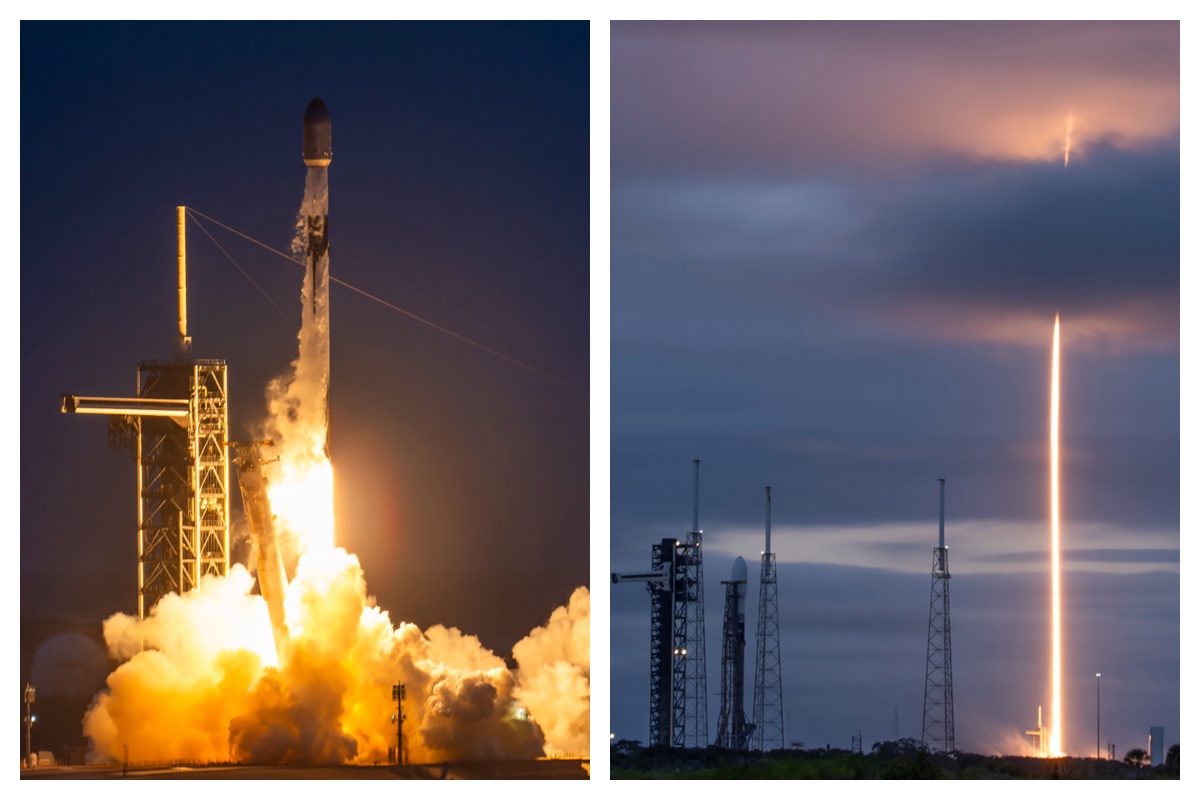
SpaceX reached an incredible milestone with its Starlink program with a launch last night, as the 3,000th satellite of the year was launched into low Earth orbit.
On Monday, SpaceX also achieved its 32nd flight with a single Falcon 9 rocket from NASA’s Kennedy Space Center.
The mission was Starlink 6-92, and it utilized the Falcon 9 B1067 for the 32nd time this year, the most-used Falcon booster. The flight delivered SpaceX’s 3000th Starlink satellite of the year, a massive achievement.
There were 29 Starlink satellites launched and deployed into LEO during this particular mission:
Falcon 9 launches 29 @Starlink satellites from Florida pic.twitter.com/utKrXjHzPN
— SpaceX (@SpaceX) December 9, 2025
SpaceX has a current goal of certifying its Falcon boosters for 40 missions apiece, according to Spaceflight Now.
The flight was the 350th orbital launch from the nearby SLC-40, and the 3,000 satellites that have been successfully launched this year continue to contribute to the company’s goal of having 12,000 satellites contributing to global internet coverage.
There are over five million users of Starlink, the latest data shows.
Following the launch and stage separation, the Falcon 9 booster completed its mission with a perfect landing on the ‘Just Read the Instructions’ droneship.
The mission was the 575th overall Falcon 9 launch, highlighting SpaceX’s operational tempo, which continues to be accelerated. The company averages two missions per week, and underscores CEO Elon Musk’s vision of a multi-planetary future, where reliable connectivity is crucial for remote work, education, and emergency response.
As Starlink expands and works toward that elusive and crucial 12,000 satellite goal, missions like 6-92 pave the way for innovations in telecommunications and enable more internet access to people across the globe.
With regulatory approvals in over 100 countries and millions of current subscribers, SpaceX continues to democratize space, proving that reusability is not just feasible, but it’s also revolutionary.

Tesla updates Cybertruck owners about key Powershare feature

Tesla’s northernmost Supercharger in North America opens


