News
EXCLUSIVE: Neuralink dragged into humane testing lawsuit – Timeline of Events

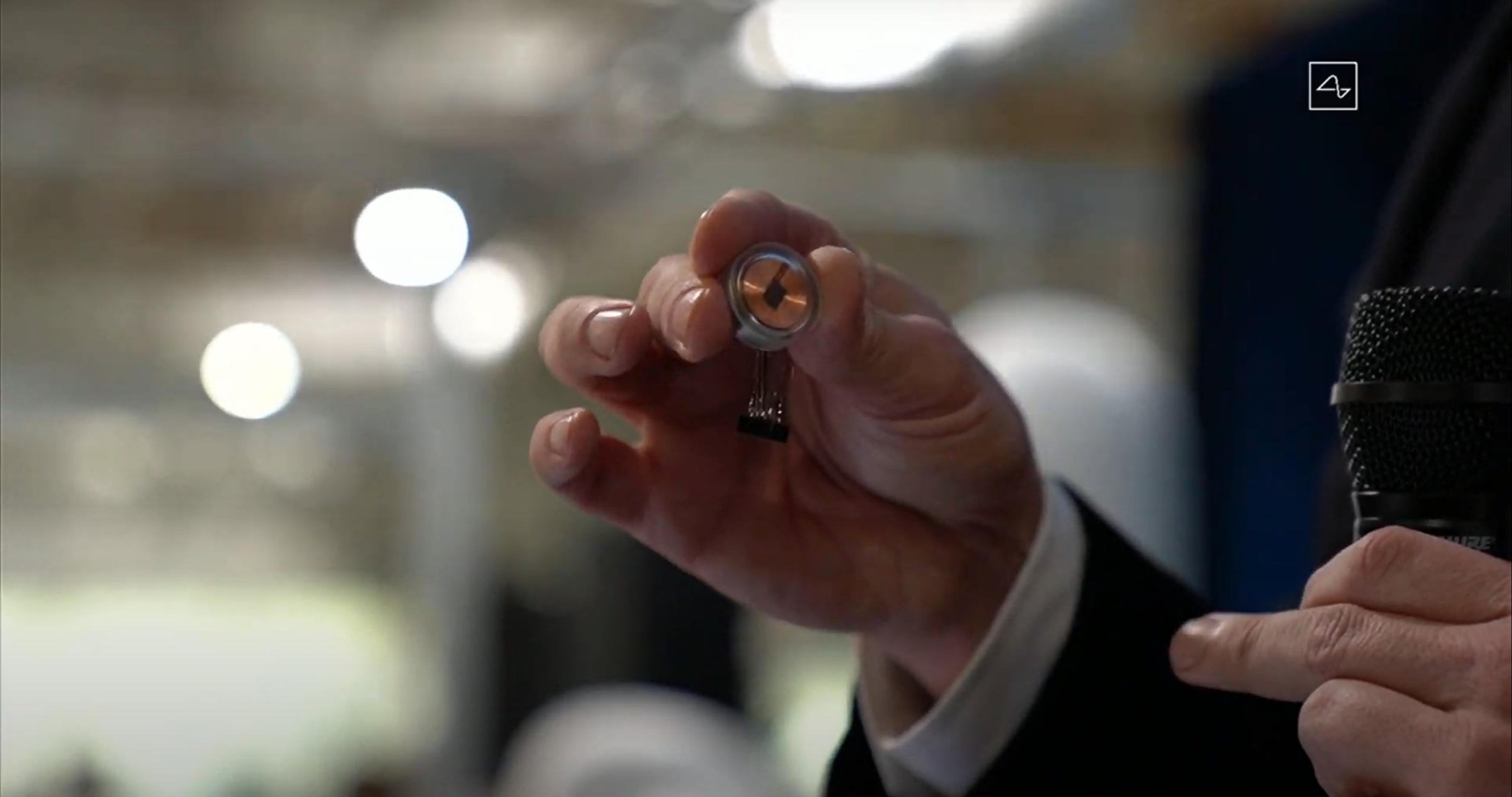
Neuralink has been dragged into a lawsuit by the Physicians Committee for Responsible Medicine against the University of California at Davis. The lawsuit, which is amended from its initial filing date of May 2021, seeks to have UC Davis release images and video of inhumanely-treated test subjects, including monkeys, who died after participating in some trials of Neuralink-sponsored research for the development of neural interface implant devices. We have put together an exclusive timeline of events based on interviews and an examination of over 700 pages of documents that UC Davis was required to turn over to the PCRM.
The Physicians Committee for Responsible Medicine (PCRM) is a nonprofit organization with more than 17,000 doctor members. It filed a formal complaint with the United States Department of Agriculture today, claiming UC Davis and Neuralink staff violated the federal Animal Welfare Act related to experiments performed on 23 monkeys. Neuralink paid more than $1.4 million to UC Davis to carry out the experiments.
The PCRM said in a press release that Neuralink and the University “failed to provide dying monkeys with adequate veterinary care, used an unapproved substance known as “Bioglue” that killed monkeys by destroying portions of their brains, and failed to provide for the psychological well-being of monkeys assigned to the experiment.”
In an exclusive interview with Teslarati earlier today, Jeremy Beckham, MPA, MPH, PCRM’s Research Advocacy Coordinator, said that the lawsuit really intends to open up “basic facts about what Neuralink testing did to the animals.” Beckham said monkeys had their brains mutilated in the experiments. Veterinary records, which were shared with Teslarati by the PCRM, show that UC Davis and Neuralink staff performed invasive and deadly experiments on monkeys to assess the effectiveness of the Neuralink device. The letter sent from the PCRM to the USDA earlier today gives several graphic descriptions of how the test animals were treated.
RELATED:
Neuralink details humane animal treatment during Link v0.9 testing
One animal, known as “Animal 6,” was a 6-year-old macaque monkey who was killed on January 16, 2019. The letter states that, on October 10, 2018, implanted electrodes “were placed using an investigational robot,” then, “attached to skull using titanium implant screws.” The location of the screws began to become infected, according to the letter. By January 14th, “Animal 6” had started to pick at the infected area. Staff euthanized the monkey two days later.
Timeline of Events
PCRM has been working to clarify the situation since September 2020, but a more descriptive timeline of events would clarify how Neuralink, UC Davis, and the PCRM have all combined into this issue.
- May 2017 – The University of California at Davis and Neuralink sign and agree to Non-Disclosure Agreements regarding testing.
- September 2017 – UC Davis and Neuralink officially begin their collaboration to carry out primate experiments at UC Davis facilities. The goal is to develop a brain-machine interface.
- July 2018 – “Animal 4,” an 11-year-old macaque monkey is killed in the Neuralink/UC Davis experiments, according to the complaint. The monkey was “on anti-depressants and had chronic diarrhea and poor appetite.” Additionally, the monkey was observed as “lethargic” and “depressed,” and hunched and passed bloody diarrhea. The monkey eventually died in a deadly procedure on July 20th.
- Also in July 2018 – “Animal 12,” approximately 7-years-old, undergoes a craniotomy and electrode insertion procedure. Records show the animal had “severe clinical adverse effects following the implantation, had poor stool quality, was not eating, and had an eye infection.” Records abruptly ended on July 30th.
- September 2018 – “Animal 21,” a 7-year-old female macaque undergoes an “electrode insertion survivability” procedure using “investigational robotics.” The animal was observed with adverse side effects the following day, including vomiting, gasping, retching, and had little interaction with their environment and observers. The animal was euthanized and had signs of “Bioglue,” an unapproved adhesive, covering the brain.
- December 2018 – “Animal 15,” a 7-year-old female macaque undergoes a craniotomy and recording device implantation. Following the surgery, the area became infected and bloody. The animal was euthanized on March 21, 2019. The performed necropsy shows “remnant electrode threads.”
- January 2019 – “Animal 6,” a 6-year-old macaque monkey is killed as a part of the “experimental design.” Electrodes were secured by screws drilled into the monkey’s skull, and lab staff were forced to “frequently clean” the eroding skin near the monkey’s implant site.
- March 2019 – “Animal 11” is killed at approximately 11-years-old during a terminal procedure. The monkey had an implant placed on the head or brain on December 3rd, 2018, and began experiencing symptoms like a weakened appetite and missing fingers and toes, possibly caused by self-mutilation.
- January 2020 – “Animal 5,” another macaque monkey is killed “inadvertently” by an anticonvulsant. He showed signs of significant weight loss and alopecia.
- July 2020 – Neuralink’s Elon Musk announces that the company will hold an event on August 28th, 2020, to display the progress of the V0.9 device. “Will show neurons firing in real-time on August 28th. The matrix in the matrix,” Musk said in a Tweet.
- Also in July 2020 – Neuralink receives a ‘breakthrough device’ designation from the FDA in July, and the company is working with the agency to make the technology as safe as possible.
- August 2020 – Neuralink unveils the v0.9 device, displaying healthy and functioning pigs. Musk delivers a presentation on the new device, showing the simplified product Neuralink has developed. “It’s like a FitBit in your skull with tiny wires,” Musk half-joked. “I could have it right now and you wouldn’t even know. Maybe I do!” The device is said to be installed without general anesthesia. There will be no bleeding, and no noticeable damage after the device is implanted.
- September 2020 – The PCRM files a California Public Records request, wishing for information regarding UC Davis trials of the Neuralink device. The request is eventually denied in accordance with California State Code 6255(a), which says that the Agency “shall justify withholding any record by demonstrating that the record in question is exempt under express provisions of this chapter or that on the facts of the particular case the public interest served by not disclosing the record clearly outweighs the public interest served by disclosure of the record.”
- October 2020 – “Animal 10,” an 8-year-old macaque monkey, is shipped to Neuralink’s facility in Fremont. The monkey has significant hair loss, had lesions from “unspecified traumas,” and was exhibiting self-mutilating behavior.
- November 2020 – Neuralink severs ties with UC Davis on November 11. Neuralink then moves seven of the remaining monkeys to its facility in Fremont, California. Beckham said that records show 15 of the 23 monkeys used in the research died or were euthanized at UC Davis. The final monkey’s situation is unclear, but it is possible the animal was reassigned to a different project at UC Davis, Beckham said.
- April 2021 – Neuralink releases a YouTube video of “Pager the Monkey” allegedly playing video games with a wireless neural interface. The video features a nine-year-old Macaque named Pager playing “MindPong” while utilizing a Neuralink device.
- May 2021 – PCRM sues the University of California Davis under the California Public Records Act (CPRA) for not releasing records in September 2020. Before the suit reaches a judicial decision, Counsel for the University of California agrees to release 700 pages of information.
- October 2021 – University of California’s General Counsel turns over files including animal testing records and veterinarian reports to PCRM. More than 700 pages of records are turned over.
- February 2022 – PCRM files a separate complaint with the U.S. Department of Agriculture that alleges the information the organization has already received reveals evidence of violations of Federal Animal Welfare laws.
Moving Forward
Beckham maintains that the main point of the newest filing is to have UC Davis turn over photographs and videos that reveal the inhumane treatment of the animals due to the experiments. There are monkeys convulsing, vomiting, and dying in these labs,” Beckham said. “People want to step in line for the first human trials, and they should see this before they commit to that,” he told Teslarati. Neuralink was set for human trials this year, Musk said last year.
Beckham said that these complaints can take a while to work through the legal system. “In my years of being involved with humane testing litigation, I know that these things can take some time. Maybe up to a year,” he said. “It also depends how much they want to fight back.”
Neuralink did not immediately respond to our requests for comment.
Beckham’s full letter to the USDA is available below.
2022-02-10 PCRM USDA Complaint Re UC Davis and Neuralink (No Exhibits) by Joey Klender on Scribd
I’d love to hear from you! If you have any comments, concerns, or questions, please email me at joey@teslarati.com. You can also reach me on Twitter @KlenderJoey, or if you have news tips, you can email us at tips@teslarati.com.



Elon Musk
Elon Musk just set a condition that could end Falcon 9 as we know it
Elon Musk says SpaceX will finally retire Falcon 9 once Starship flies reliably every week.

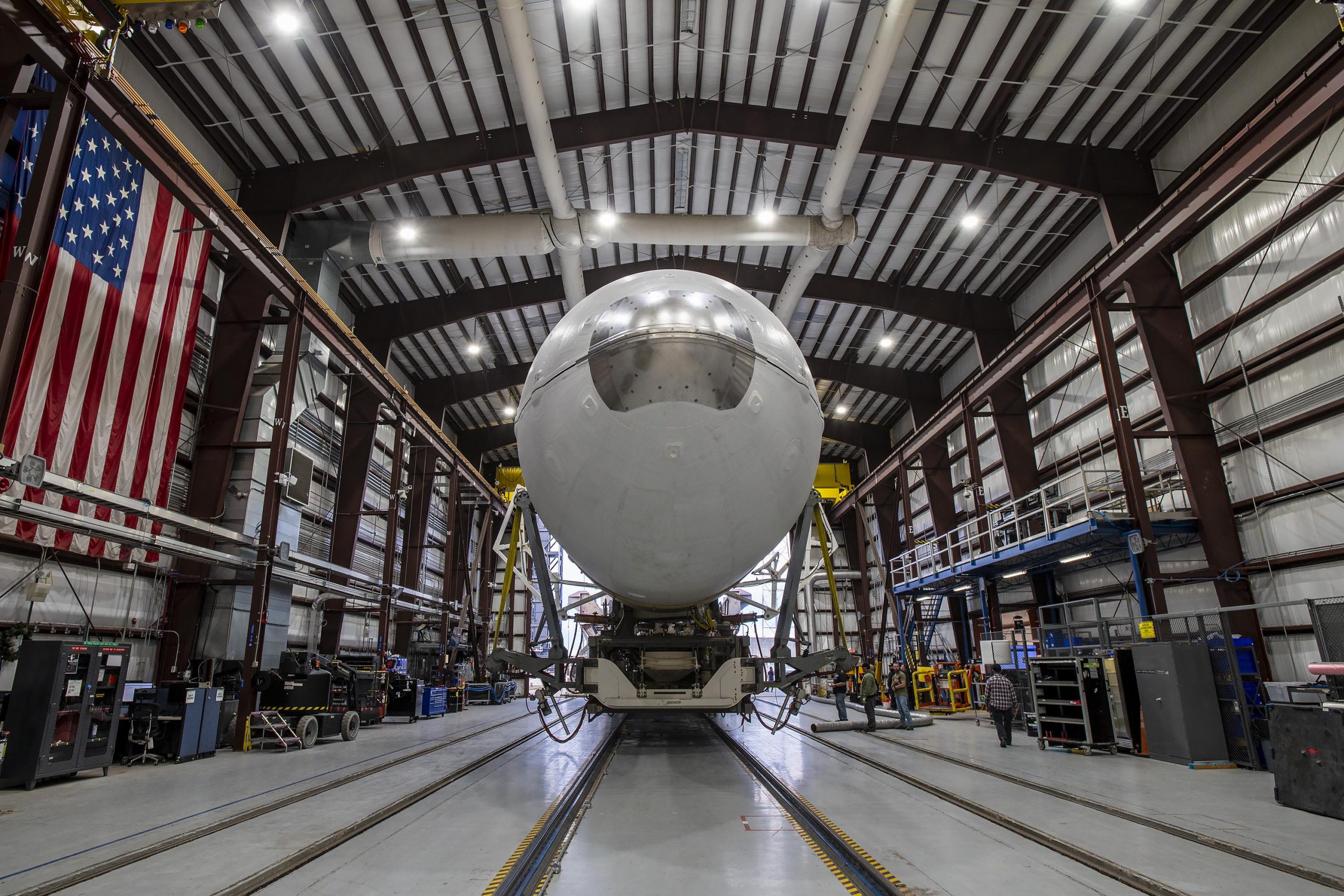
Elon Musk gave the clearest timeline yet for retiring Falcon 9, SpaceX’s workhorse rocket.
The comment came in a reply on X, where Musk wrote that “once Starship is flying reliably several times per week, it makes sense to shift super scarce SpaceX engineering and production resources to Starship to get launch rate to several times per day, which means winding down Falcon.” He was responding to physicist Casey Handmer, who noted that NASA is reportedly uneasy about SpaceX phasing out Falcon after building what Handmer called the most successful launcher ever, with the fleet nearing 1,000 total launches.
Now @SciGuySpace reports NASA is in a tizzy because after running the most successful launcher ever for more than a decade and nearing 1000 launches, @SpaceX is planning to retire Falcon in favor of Starship in a few years.
Sorry, NASA, you’ve had 15 years to burn down the… https://t.co/uCNoMwK0v9
— Casey Handmer (@CJHandmer) August 22, 2026
Falcon 9 is still SpaceX’s busiest vehicle by far. The company is on pace for roughly 140 to 145 Falcon flights this year, following 165 in 2025, president Gwynne Shotwell told Time earlier in 2026. She has already said Falcon flights would “tail off” as Starship comes online, while reports indicate that SpaceX has stopped booking new Falcon 9 launches past 2028 and halted production of some expendable Falcon hardware, according to Bloomberg.
It’s worth noting that Musk’s post is a condition, and not a countdown on when Falcon will retire. Starship has not yet flown weekly, let alone daily. Its most recent flight in July ended with a soft splashdown in the Indian Ocean, a milestone Musk pointed to earlier this month when he said the vehicle’s heat shield problem was effectively solved. SpaceX towed that ship to Christmas Island for inspection, and the next flight, Flight 14, is aimed at putting Starship into orbit for the first time. A tower catch attempt for the upper stage has been pushed back to what Musk has called “a few months” away.
SpaceX and a new Trump order that could rewrite the next decade of launches
The gap between Falcon’s role today and Starship’s promised role tomorrow matters most to NASA. Falcon and its Dragon capsule remain the only way the agency rotates astronauts to and from the International Space Station, and Starship is not certified to carry NASA crews. Musk’s post did not address how that handoff would work if Falcon winds down before a crew-rated Starship variant exists. The timing lines up with Musk’s other recent Starship comments. Two days before the Falcon post, he told a different X user that SpaceX is aiming for more than 30 Starship launches a day by 2030, or roughly 10,000 a year, a figure tied to the Trump administration’s new push for higher national launch cadence. Falcon, which took over a decade to reach its first 100 launches, was never built to approach that kind of volume.
For now, Falcon 9 keeps flying at a near-record pace while Starship works to prove it can do the job Musk has already picked out for it.

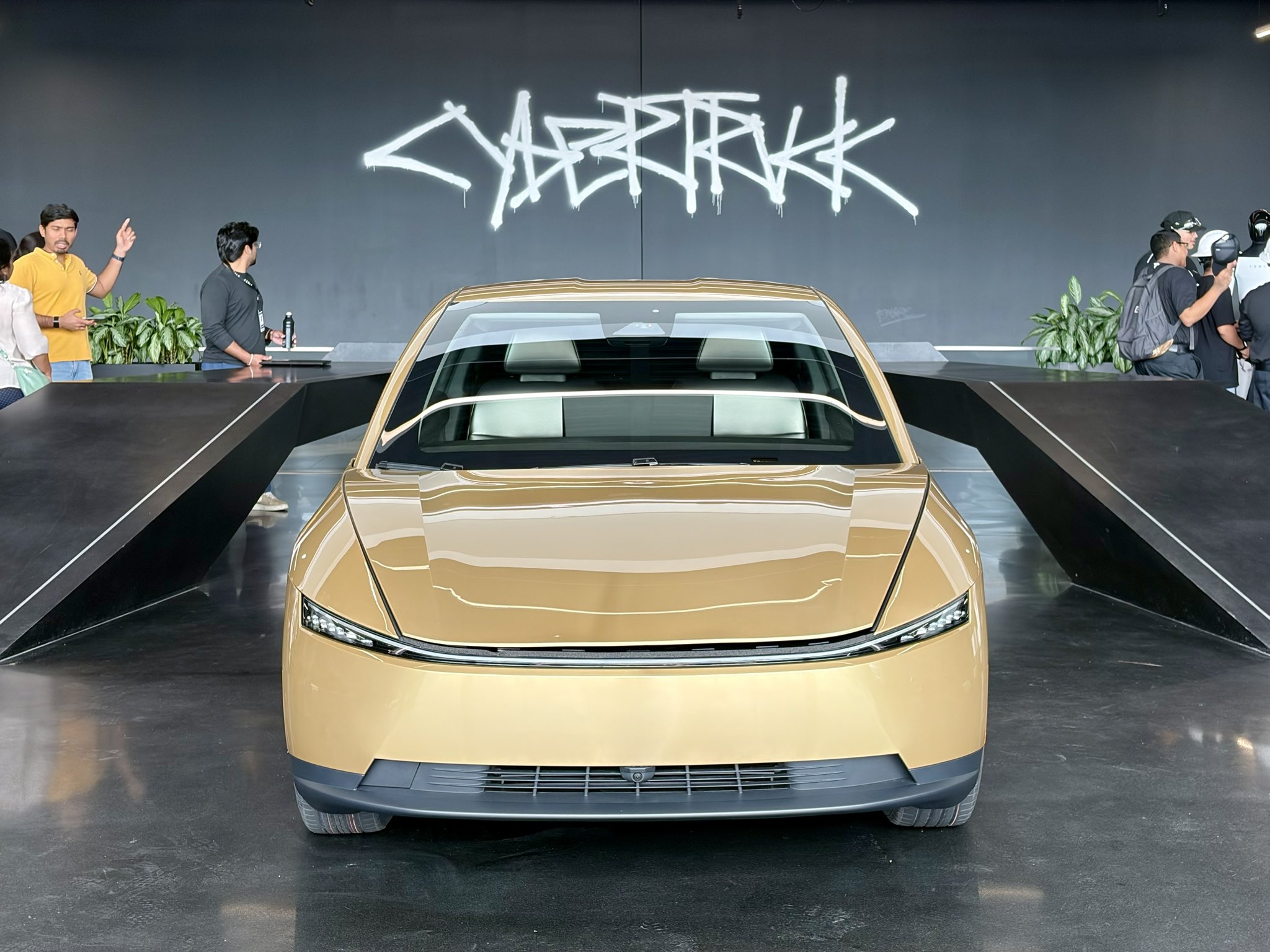
Tesla Cybercab is set to launch in Austin, Texas, on September 3, as the company has officially started sending out invitations to a dedicated event it will hold in the city where its headquarters is located.
The Cybercab is Tesla’s dedicated ride-sharing vehicle: it features just two seats and has no steering wheel or pedals. It is aimed at fully autonomous passenger transport, and will operate in the Robotaxi fleet alongside the Tesla Model Y, which has been performing driverless rides for real-world passengers for more than a year.
Thank you so much @Tesla for inviting us to the Cybercab launch in Austin! 🤠 pic.twitter.com/F1rAR8zd5O
— TESLARATI (@Teslarati) August 22, 2026
The launch of the Cybercab marks the next chapter in Tesla’s autonomy story. The company has been developing autonomous transport for years with its Full Self-Driving (Supervised) platform, which is available in any vehicle the company has built with the proper hardware and software capabilities.
Its capabilities vary by hardware and software version, but Tesla says its latest hardware version, known as AI4, can deliver full autonomy. However, future vehicles will operate with even more robust hardware packages, as Tesla will develop AI4.5 and AI5 for even more capability in its vehicles.
Following a report from The Information that surfaced earlier this week, the writing was on the wall that Tesla was set to launch Cybercab in the near term. The report stated Tesla could launch Cybercab as soon as the end of August. Tesla came close and has booked it for September 3.
The big thing with this event being scheduled is not necessarily that Tesla is launching a new vehicle, but instead that it is launching a vehicle that has no steering wheel or pedals and will operate exclusively on a self-driving program that is evidently nearing full autonomy. If the event allows vehicles to take passengers on public roads and drop them off wherever they please within the City of Austin, it will be a drastic advancement in the company’s self-driving story.
People have ridden in Cybercab previously: Tesla had the “We, Robot” event in October 2024, which allowed people to experience fully autonomous rides in a closed circuit at Warner Bros. Studios in Burbank.
🚨 Ride in a Tesla Cybercab with us
— TESLARATI (@Teslarati) May 11, 2025
Additionally, Tesla launched employee rides in Cybercab in July.
It’s a drastic step forward for Tesla, whose CEO, Elon Musk, has promised for years that the company would release a fully autonomous vehicle and platform capable of allowing drivers to relinquish any responsibility behind the wheel.

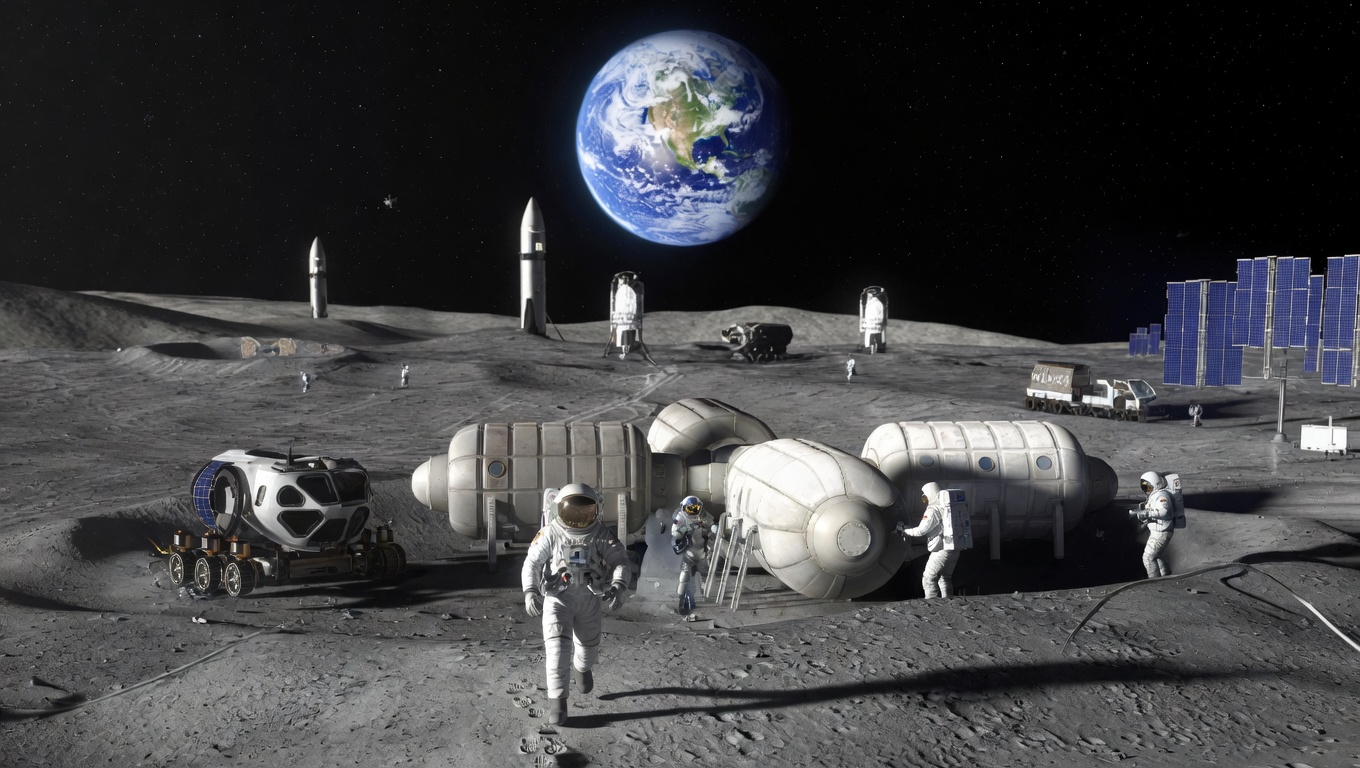
Elon Musk put a number on where he thinks SpaceX’s Starship program is headed by 2030, replying on X a day after President Trump signed a memo pushing the country toward 1,000 space launches and reentries a year.
The exchange started when Aaron Burnett, co-founder of propulsion startup Mach 33, posted that “1,000 launches/reentries is the goal,” quoting White House science adviser Michael Kratsios on the newly signed National Space Transportation Policy. Burnett noted that the FAA’s own bull-case forecast reached only 385 annual launches by 2030, while his firm’s conservative model already put SpaceX alone near 940. Musk responded, “We’re aiming to reach 30+ Starship launches/day in 2030, which is ~10k annualized. Still tiny numbers compared to airplane flights!”
We’re aiming to reach 30+ Starship launches/day in 2030, which is ~10k annualized.
Still tiny numbers compared to airplane flights!
— Elon Musk (@elonmusk) August 21, 2026
That figure is specific to Starship, the rocket SpaceX is still developing for orbital and lunar missions, not the Falcon 9 fleet that carries most of the company’s current launch volume. Starship has flown twice this year, a slower pace than the four and five flights SpaceX managed in 2024 and 2025. Getting from two flights a year to 30 a day is the scale of jump the new federal policy is meant to clear regulatory room for.
Trump’s memo, signed Thursday, directs agencies to identify new launch and reentry sites on federal land, including a new reentry site within 90 days, and to speed up the permitting and environmental reviews that have long slowed cadence growth. It also sets a goal of returning American astronauts to the moon by 2028 and placing initial lunar base elements by 2030, tying the launch buildout directly to NASA’s Artemis program.
SpaceX has already been pushing the FAA toward higher numbers on its own. The agency approved up to 44 annual Starship launches from Kennedy Space Center in February, on top of a 2024 review that raised the cap at Starbase in Texas to 25 a year. Those approvals cover a fraction of the 10,000 annual flights Musk is now describing, which shows how far current permitting still sits from the administration’s stated target.
The near-term test of all this is more modest. SpaceX cleared a full-duration, six-engine static fire on its next Starship vehicle this week, the last major hardware checkpoint before Flight 14, which is targeting no earlier than August 28 and is expected to attempt the vehicle’s first full orbital mission. Musk said last week that a tower catch of the upper stage is still probably months away, a reminder that the immediate roadmap remains far more incremental than the daily launch numbers he just posted.


Elon Musk just set a condition that could end Falcon 9 as we know it

Tesla will launch Cybercab on September 3


