Space
NASA’s next Mars rover will pave the way for humans

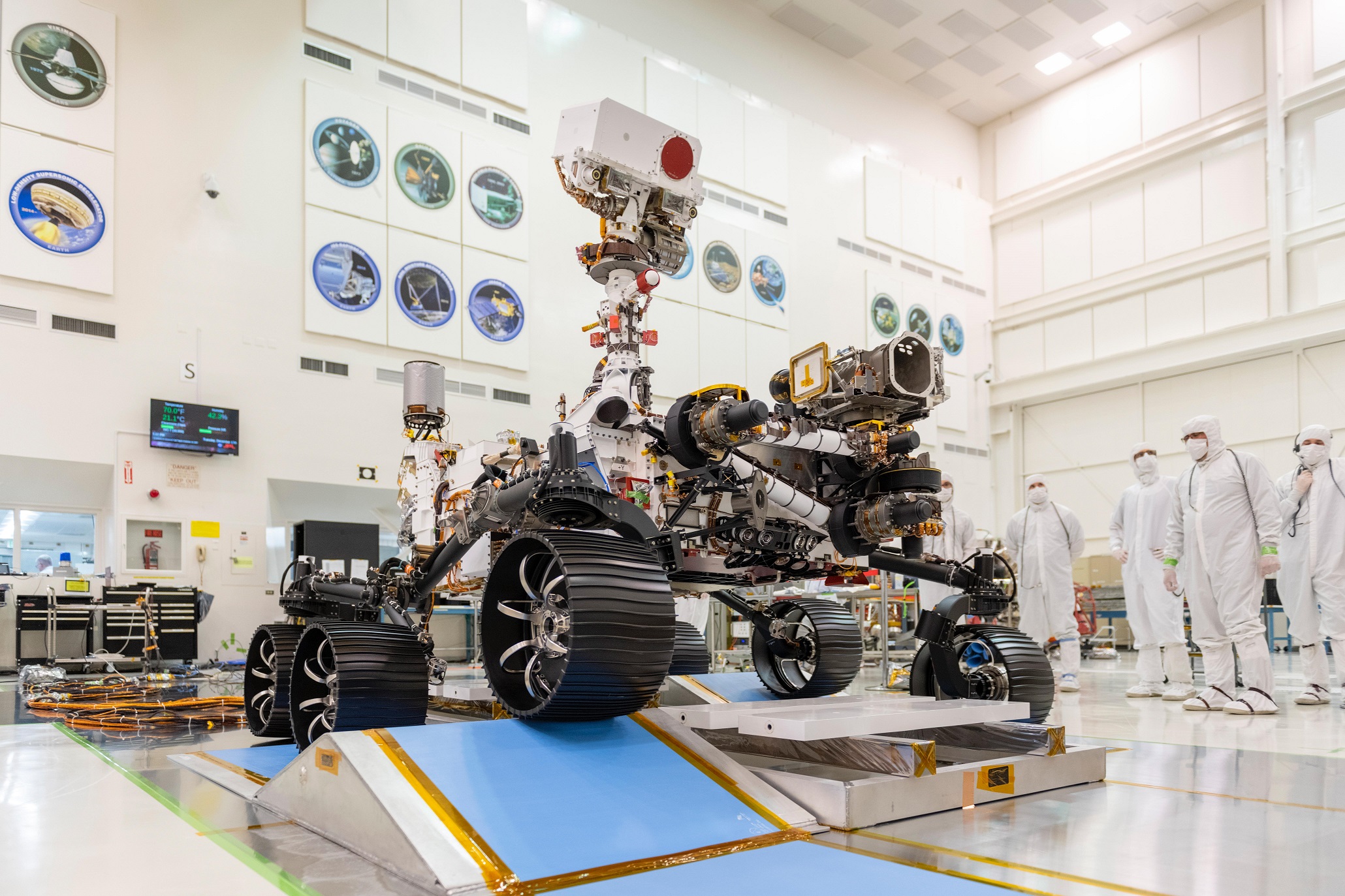
NASA’s Mars 2020 rover is scheduled to land on the red planet in February 2021, and when it does, it will touch down in Jezero Crater, the site of an ancient lake that existed 3.5 billion years ago. The next generation rover, which will get an official name soon, will build on the success of the robotic explorers who came before it by collecting the first samples of Mars for a future return to Earth.
But the new rover will also lay the groundwork for future human exploration by testing new technologies.
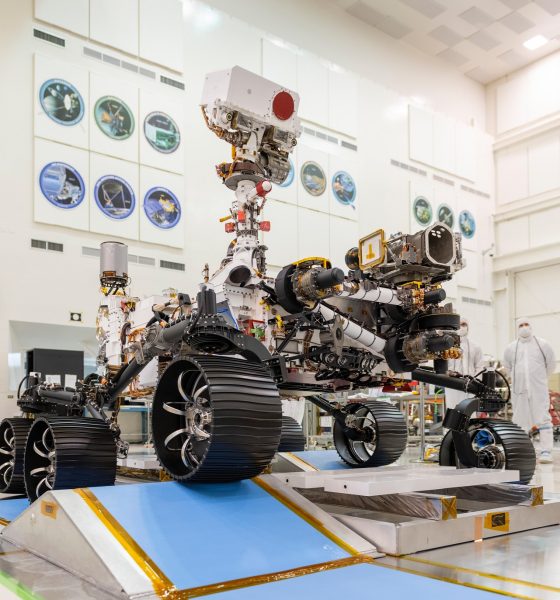
The Mars 2020 rover, which looks nearly identical to the Curiosity rover that landed in 2012, will begin its mission exploring Jezero Crater. The six-wheeled rover is equipped with a suite of instruments designed to help it look for signs of life called biosignatures.
Artist rendition depicting the early Martian environment (right) versus the Mars we see today (left). Credit: NASA’s Goddard Space Flight Center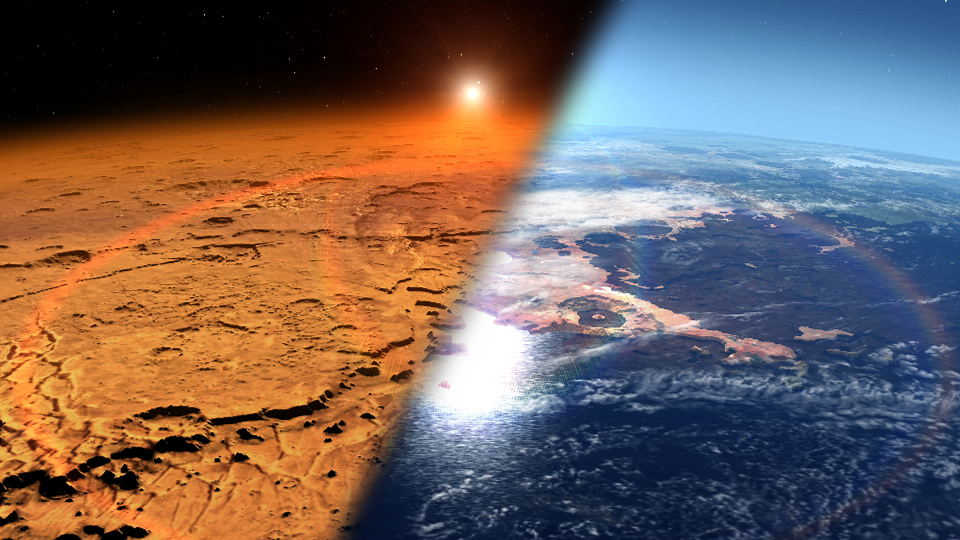
NASA believes that Mars was habitable sometime in its past. The inhospitable desert-like planet we see today was not always the case. Mars’ once ample atmosphere eroded over time, stripped away by solar particles, resulting in the thin atmosphere we see today.
But so far, we haven’t been able to detect any real signs of ancient life yet. The rover’s team thinks that its specialized suite of instruments will change that.
The twin Mars Exploration Rovers (Spirit and Opportunity) were tasked with finding evidence of water, and they were successful right out of the gate. The Mars Science Laboratory (aka Curiosity) was designed to understand habitability and if the conditions were right for life. Now, the Mars 2020 rover will take that one step further and search for actual signs of life.
Artist rendition depicting the early Martian environment (right) versus the Mars we see today (left). Credit: NASA’s Goddard Space Flight Center
The 2020 rover will do so by drilling into its surroundings and extracting samples that will be returned to Earth at a later time. Returning the samples is a challenge that NASA is already starting to tackle. The agency estimates that the earliest it can send a mission to fetch the rover’s samples would be some time around 2026 or 2027.
In the meantime, 2020 will be busy sciencing the heck out of Mars to search for microbial life as well as testing out technologies that future human missions will rely on.
Here’s how four of those instruments will work.
Terrain Relative Navigation
Landing on Mars is tricky. To date, only about half of the missions attempted have successfully touched down on the red planet. The 2020 rover will be equipped with a specialized feature to help it avoid any potential hazards in the landing zone.
Past missions, like Curiosity, needed a landing spot that was free of debris (like rocks, boulders, etc). But 2020 will be able to navigate around them. That’s because the rover is equipped with a unique lander vision system. This system take pictures during the parachute descent stage. It then compares those images to an onboard map.
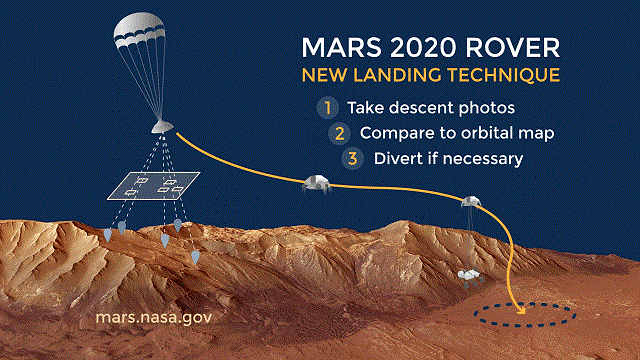
A view of how the terrain-relative navigation works. Credit: NASA/JPL_Caltech
The computer matches the map (which is created from orbital imagery), to create a guide that can identify landmarks such as craters and mountains.
The system then ranks landing sites based on safety, and can even identify a hazard. The Mars 2020 mission will be the first to test out this new system. If all goes well, it will be used on future missions, including human missions to Mars and even the moon.
MOXIE
Astronauts traveling to Mars will need oxygen to breathe and to use as rocket fuel. However, hauling it with the other cargo is expensive and not a viable solution. The Mars 2020 rover is equipped with an instrument on called the Mars Oxygen In-Situ Resource Utilization Experiment (MOXIE for short).
MOXIE will convert carbon dioxide (a gas that’s abundant on Mars) into the oxygen, which astronauts can use as needed. 2020 is equipped with a small, prototype version of the equipment needed for future human missions.
The team will study how the experiment performs and use that data to scale up the technology to use on subsequent missions. But how will it work?
MOXIE can only run for a few hours at a time, and only about once a month. (That’s because the system uses a full day’s worth of rover power each time it runs.) Humans use about 20 grams per hour of oxygen and MOXIE can only produce about half of that.
In order to support a crew of 4-6 astronauts and be able to generate propellant, future iterations of MOXIE will need to produce about 200 times that amount of oxygen.
MEDA
The Mars Environmental Dynamics Analyzer, aka MEDA, is a suite of sensors designed to study the Martian weather, as well as dust and radiation and how they change over the Martian seasons.
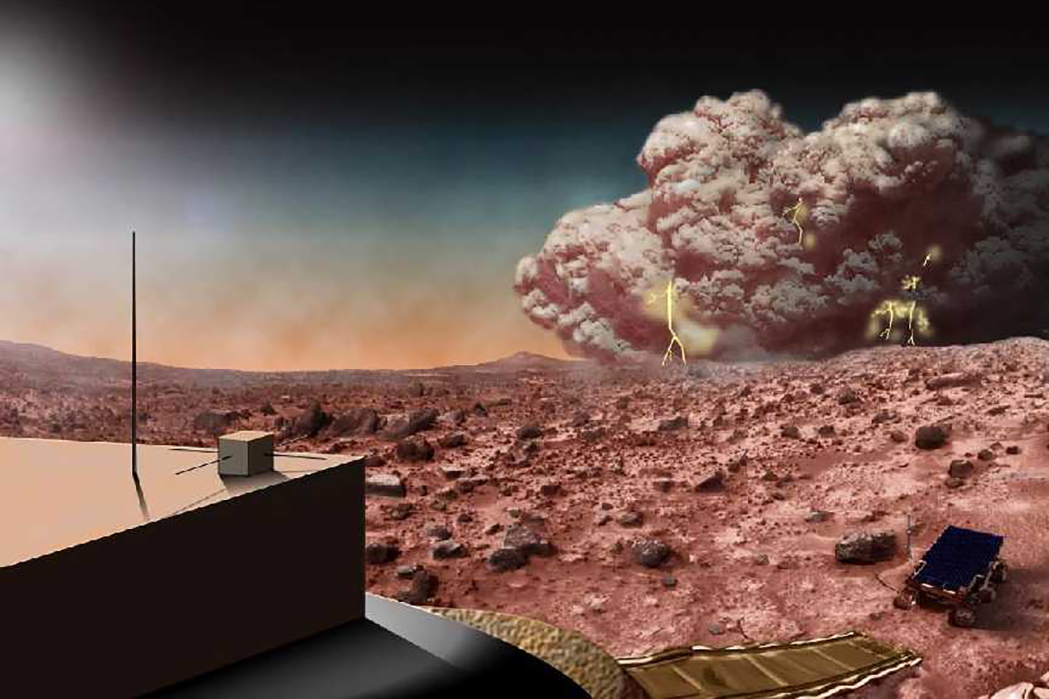
NASA is trying to better understand dust storms and other Martian weather phenomenon. Credit: NASA
Day and nighttime temperatures on Mars can fluctuate by as much as 80 or 90 degrees. MEDA will help scientists track those changes as well as measure radiation from the surface, to understand how much the sun heats the air. This solar heating causes changes in the Martian wind and can help scientists better understand the Martian water cycle.
Understanding the current weather patterns and environment could also lead to a better understanding of Mars’s history and shed light on how it transitioned from a warm, habitable planet into the dusty, cold desert we see today.
RIMFAX
The Mars 2020 rover will be equipped with a ground-penetrating radar instrument: Radar Imager for Mars’ Subsurface Experiment, or RIMFAX.
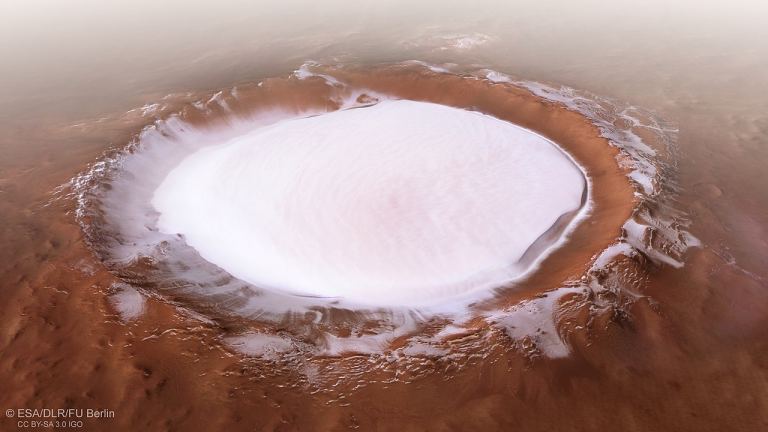
The Korolev crater on Mars as seen by Mars Express. Credit: ESA/DLR/FU Berlin
Scientists hope that RIMAX will help them study the history of Jezero Crater by peering below the surface. With the instrument’s help, scientists will be able to look at subsurface rock and ice. To date, only orbital observations have been made of the Martian polar ice, but this will increase our understanding of the planet’s inner geology.
The Mars 2020 rover is scheduled to launch in July of 2020, and will land on the Martian surface six months later. If all goes according to plan, we may finally be able to answer the question of whether or not Mars once hosted life.


Investor's Corner
SpaceX IPO is coming, CEO Elon Musk confirms
However, it appears Musk is ready for SpaceX to go public, as Ars Technica Senior Space Editor Eric Berger wrote an op-ed that indicated he thought SpaceX would go public soon. Musk replied, basically confirming it.

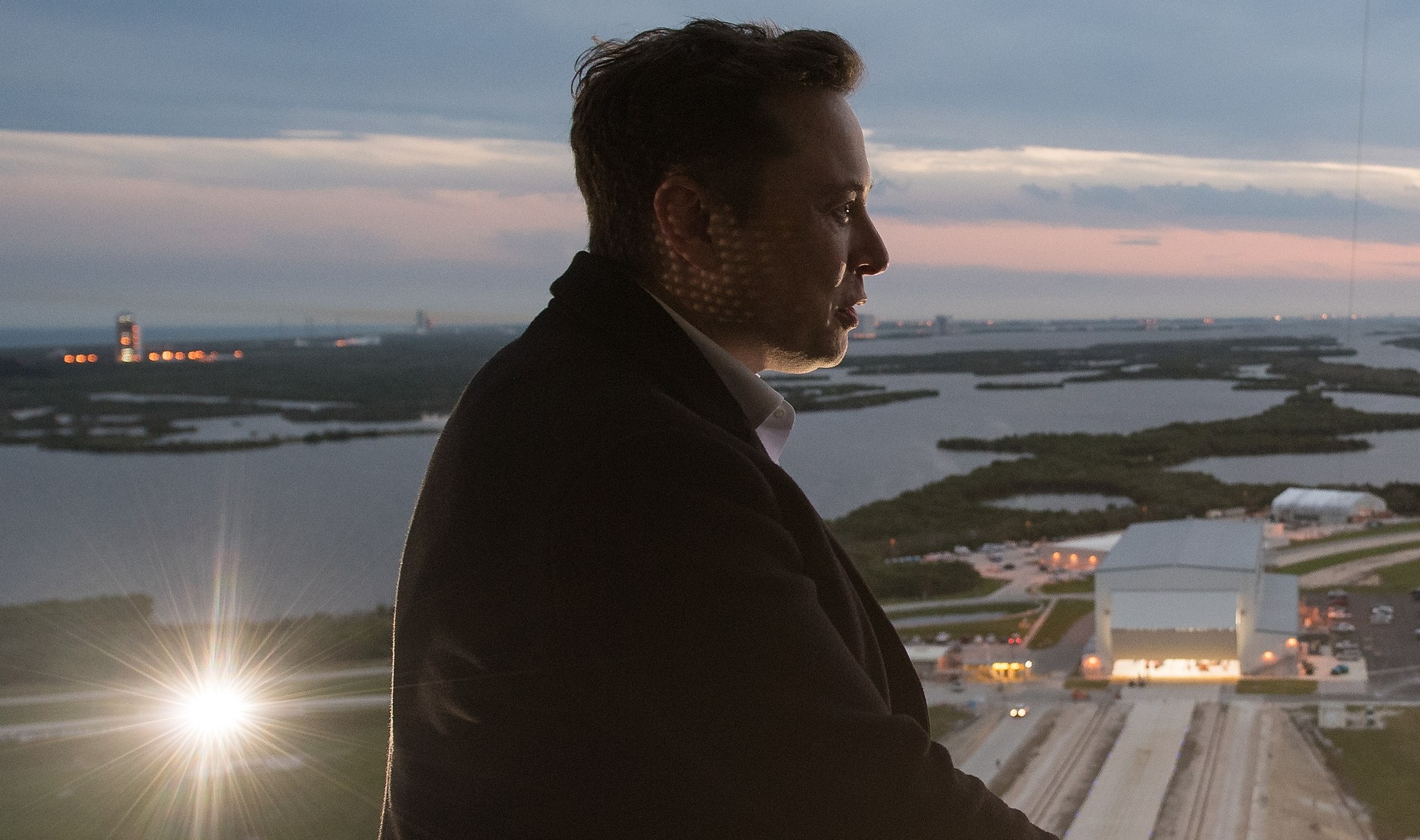
Elon Musk confirmed through a post on X that a SpaceX initial public offering (IPO) is on the way after hinting at it several times earlier this year.
It also comes one day after Bloomberg reported that SpaceX was aiming for a valuation of $1.5 trillion, adding that it wanted to raise $30 billion.
Musk has been transparent for most of the year that he wanted to try to figure out a way to get Tesla shareholders to invest in SpaceX, giving them access to the stock.
He has also recognized the issues of having a public stock, like litigation exposure, quarterly reporting pressures, and other inconveniences.
However, it appears Musk is ready for SpaceX to go public, as Ars Technica Senior Space Editor Eric Berger wrote an op-ed that indicated he thought SpaceX would go public soon.
Musk replied, basically confirming it:
As usual, Eric is accurate
— Elon Musk (@elonmusk) December 10, 2025
Berger believes the IPO would help support the need for $30 billion or more in capital needed to fund AI integration projects, such as space-based data centers and lunar satellite factories. Musk confirmed recently that SpaceX “will be doing” data centers in orbit.
AI appears to be a “key part” of SpaceX getting to Musk, Berger also wrote. When writing about whether or not Optimus is a viable project and product for the company, he says that none of that matters. Musk thinks it is, and that’s all that matters.
It seems like Musk has certainly mulled something this big for a very long time, and the idea of taking SpaceX public is not just likely; it is necessary for the company to get to Mars.
The details of when SpaceX will finally hit that public status are not known. Many of the reports that came out over the past few days indicate it would happen in 2026, so sooner rather than later.
But there are a lot of things on Musk’s plate early next year, especially with Cybercab production, the potential launch of Unsupervised Full Self-Driving, and the Roadster unveiling, all planned for Q1.
News
SpaceX reportedly mulling IPO, eyeing largest of all time: report
“I do want to try to figure out some way for Tesla shareholders to participate in SpaceX. I’ve been giving a lot of thought to how to give people access to SpaceX stock,” Musk said.
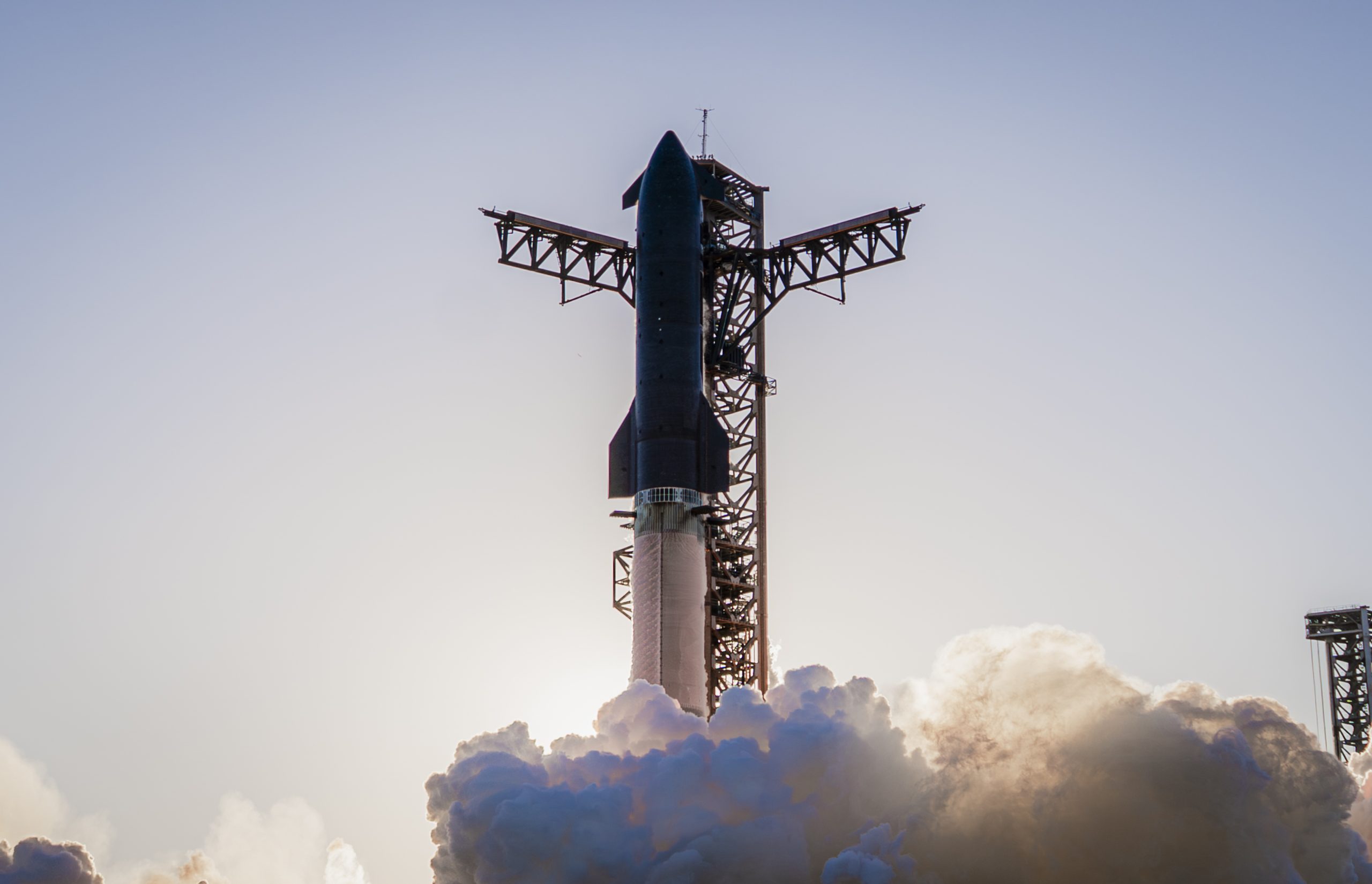
SpaceX is reportedly mulling an initial public offering, eyeing what would be the largest valuation at the time of availability of all time, a new report from Bloomberg said on Tuesday.
It is one of many reports involving one of Elon Musk’s companies and a massive market move, as this is not the first time we have seen reports of an IPO by SpaceX. Musk himself has also dispelled other reports in the past of a similar nature, including an xAI funding round.
SpaceX and Musk have yet to comment on the report. In the past, untrue reports were promptly replied to by the CEO; this has not yet gained any response, which is a good sign in terms of credibility.
However, he said just a few days ago that stories of this nature are inaccurate:
“There has been a lot of press claiming SpaceX is raising money at $800B, which is not accurate. SpaceX has been cash flow positive for many years and does periodic stock buybacks twice a year to provide liquidity for employees and investors. Valuation increments are a function of progress with Starship and Starlink and securing global direct-to-cell spectrum that greatly increases our addressable market. And one other thing that is arguably most significant by far.”
There has been a lot of press claiming @SpaceX is raising money at $800B, which is not accurate.
SpaceX has been cash flow positive for many years and does periodic stock buybacks twice a year to provide liquidity for employees and investors.
Valuation increments are a…
— Elon Musk (@elonmusk) December 6, 2025
Musk has discussed a potential IPO for SpaceX in recent months, as the November 6 shareholder meeting, as he commented on the “downsides” of having a public company, like litigation exposure, quarterly reporting pressures, and other inconveniences.
Nevertheless, Musk has also said he wants there to be a way for Tesla shareholders to get in on the action. At the meeting in early November, he said:
“I do want to try to figure out some way for Tesla shareholders to participate in SpaceX. I’ve been giving a lot of thought to how to give people access to SpaceX stock.”
Additionally, he added:
“Maybe at some point., SpaceX should become a public company despite all the downsides of being public.”
Musk has been historically reluctant to take SpaceX public, at times stating it could become a barrier to colonizing Mars. That does not mean it will not happen.
Bloomberg’s report cites multiple unidentified sources who are familiar with the matter. They indicate to the publication that SpaceX wants to go public in mid-to-late 2026, and it wants to raise $30 billion at a valuation of around $1.5 trillion.
This is not the first time SpaceX has discussed an IPO; we reported on it nine years ago. We hope it is true, as the community has spoken for a long time about having access to SpaceX stock. Legendary investor Ron Baron is one of the lucky few to be a SpaceX investor, and said it, along with Tesla, is a “lifetime investment.”
Tesla bull Ron Baron reveals $100M SpaceX investment, sees 3-5x return on TSLA
The primary driver of SpaceX’s value is Starlink, the company’s satellite internet service. Starlink contributes 60-70 percent of SpaceX’s revenue, meaning it is the primary value engine. Launch services, like Falcon 9 contracts, and the development of Starship, also play supporting roles.
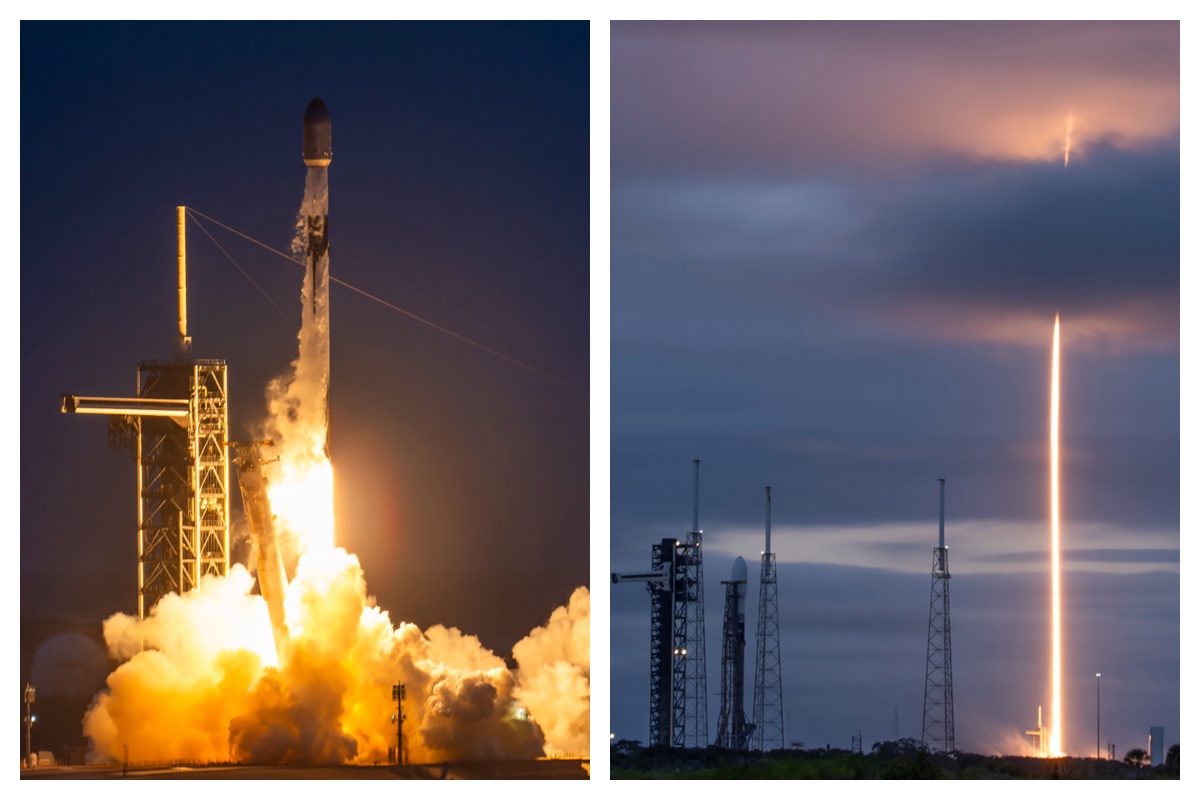
SpaceX reached an incredible milestone with its Starlink program with a launch last night, as the 3,000th satellite of the year was launched into low Earth orbit.
On Monday, SpaceX also achieved its 32nd flight with a single Falcon 9 rocket from NASA’s Kennedy Space Center.
The mission was Starlink 6-92, and it utilized the Falcon 9 B1067 for the 32nd time this year, the most-used Falcon booster. The flight delivered SpaceX’s 3000th Starlink satellite of the year, a massive achievement.
There were 29 Starlink satellites launched and deployed into LEO during this particular mission:
Falcon 9 launches 29 @Starlink satellites from Florida pic.twitter.com/utKrXjHzPN
— SpaceX (@SpaceX) December 9, 2025
SpaceX has a current goal of certifying its Falcon boosters for 40 missions apiece, according to Spaceflight Now.
The flight was the 350th orbital launch from the nearby SLC-40, and the 3,000 satellites that have been successfully launched this year continue to contribute to the company’s goal of having 12,000 satellites contributing to global internet coverage.
There are over five million users of Starlink, the latest data shows.
Following the launch and stage separation, the Falcon 9 booster completed its mission with a perfect landing on the ‘Just Read the Instructions’ droneship.
The mission was the 575th overall Falcon 9 launch, highlighting SpaceX’s operational tempo, which continues to be accelerated. The company averages two missions per week, and underscores CEO Elon Musk’s vision of a multi-planetary future, where reliable connectivity is crucial for remote work, education, and emergency response.
As Starlink expands and works toward that elusive and crucial 12,000 satellite goal, missions like 6-92 pave the way for innovations in telecommunications and enable more internet access to people across the globe.
With regulatory approvals in over 100 countries and millions of current subscribers, SpaceX continues to democratize space, proving that reusability is not just feasible, but it’s also revolutionary.

Tesla updates Cybertruck owners about key Powershare feature

Tesla’s northernmost Supercharger in North America opens


