Elon Musk
FAA kicks off review of SpaceX’s bid to fly Starship nearly every day
FAA is reviewing SpaceX’s plan for 456 Starship launches a year, up from 25 today.

The FAA said Tuesday that it will prepare an environmental impact statement on SpaceX’s proposal to run as many as 456 Starship launches and 912 landings a year from Starbase, Texas. SpaceX is currently authorized for 25 launches and 50 landings annually, which makes the request roughly 18 times the existing ceiling. The notice of intent is set to publish in the Federal Register on Wednesday.
The plan comes in two phases. Phase 1 would allow up to 100 launches and 200 landings a year, on any day and at any hour. Phase 2, which the FAA says could arrive within several years, would raise the limit to the full 456 launches, still at any hour but only on weekdays. The agency noted that 912 landings is the upper limit for the Texas facility no matter where a given mission begins, and that Starship and Super Heavy could come down at the launch site or in the Gulf and open ocean.
A draft statement will be released for public comment at a later date, and the FAA has not said when. According to the Federal Registar, written comments are due November 30 on regulations.gov under docket FAA-2026-12808, with in person scoping meetings on November 17 in Brownsville and November 19 in Port Isabel, plus a virtual session on November 18. The review will weigh air quality, wildlife, coastal resources, water, noise, and aviation, and the FAA said any increase beyond this proposal would need its own separate review.
The numbers look large next to what Starbase has actually done. Starship has flown three times from Texas this year, including Flight 14 on September 28, the first orbital flight, which deployed 26 Starlink V3 satellites. Bloomberg reported that Starbase has never launched more than five times in a calendar year. The current cap of 25 comes from an FAA approval in May 2025. In February, the agency also approved up to 44 Starship launches a year from Launch Complex 39A in Florida, so Phase 1 in Texas alone would more than double that allowance.
Musk has said Starship could eventually fly more than once per hour within less than a decade, per Bloomberg. The nearer term target is Flight 15. Musk said on October 10 that it is hopefully four to six weeks away and will try to catch the ship with the tower, as Teslarati covered. That flight still runs under the existing 25 launch limit, and so would every Starbase launch for as long as the new review takes.
As of mid morning Pacific time on Tuesday, SpaceX had not posted about the filing on its own account.



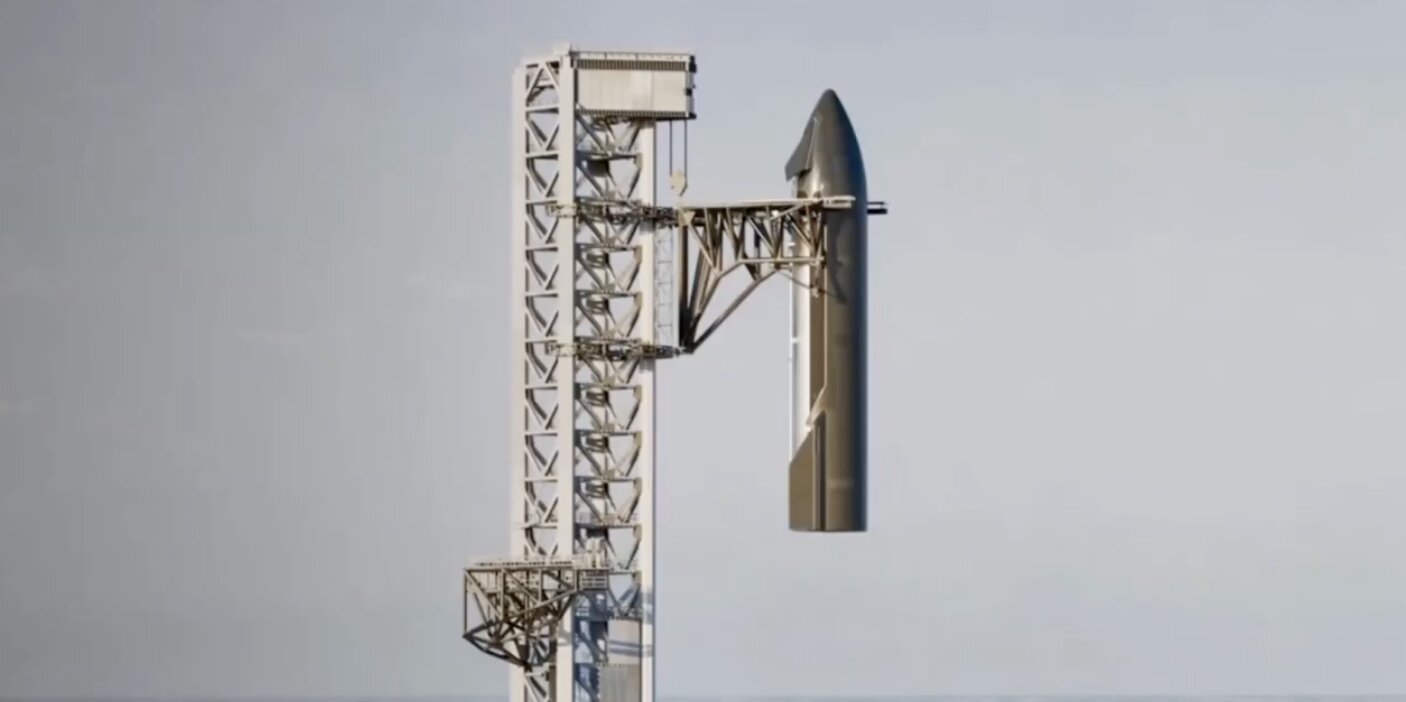
SpaceX plans to attempt what will be a defining moment in rocket reusability on Starship Flight 15.
As Elon Musk announced in a recent X post, SpaceX will attempt to catch both the Super Heavy Booster and the Starship upper stage during the upcoming orbital flight. If successful, it will mark the first time that all parts of an orbital rocket return to Earth intact, a breakthrough Musk has called essential to making life multiplanetary.
SpaceX will attempt to catch both the Super Heavy booster and Starship on the upcoming flight.
If both are successful, it will mark the first time that all parts of an orbital rocket return to Earth intact.
This is the critical breakthrough needed to make life multiplanetary.
— Elon Musk (@elonmusk) November 6, 2026
Previous flights have demonstrated the tower-catch technique with Super Heavy. SpaceX has successfully caught V1 boosters three times (on Flights 5, 7, and 8), with some even reflown. The Ship upper stage has never been caught.
Returning from orbital velocity after deploying payload makes it a significantly harder challenge due to higher energy, heat loads, and the need for precise belly-flop reentry, a flip maneuver, and a final landing burn to settle between the Mechazilla tower’s chopstick arms.
Flight 15, using Booster 22 and Ship 42 (both Block 3 vehicles), is targeted for no earlier than Friday, November 13, 2026, from Orbital Launch Pad 2 at Starbase, Texas. The 75-minute window opens at 4:45 p.m. CT, pending regulatory approval. After hot staging and separation, the booster is planned to return for a catch roughly 6 minutes and 35 seconds after liftoff.
The Ship will insert into a roughly 275 km orbit, deploy 26 advanced Starlink V3 satellites, complete about 14 orbits over more than 22 hours, and—if systems check out—perform a deorbit burn, reentry, flip, and landing burn for a tower catch at approximately T+22 hours 32 minutes.
SpaceX confirms Starship 15 launch window with massive ambitions
A simulation shown during SpaceX’s October earnings call depicted the Ship descending in a belly-flop attitude, flipping upright with a short engine burn, and being captured by the arms:
From simulation to reality
SpaceX is just ONE WEEK away from attempting its most ambitious Starship catch yet https://t.co/nHrxSX6DSz
— X Freeze (@XFreeze) November 6, 2026
Contingency splashdown zones exist in the Gulf of Mexico (booster) and Pacific (Ship) if a catch is not viable. SpaceX has stressed rigorous health checks before committing the Ship to a return-to-launch-site trajectory.
Musk has described the odds of success on this first dual-catch attempt as “more likely than not,” noting a steady stream of additional flights is already scheduled if needed. Full recovery would enable rapid inspection, refurbishment, and reflight—slashing costs and supporting the high launch cadence required for Starlink expansion, lunar missions, and eventual Mars settlement.
As Musk put it, this is “the critical breakthrough needed to make life multiplanetary.”
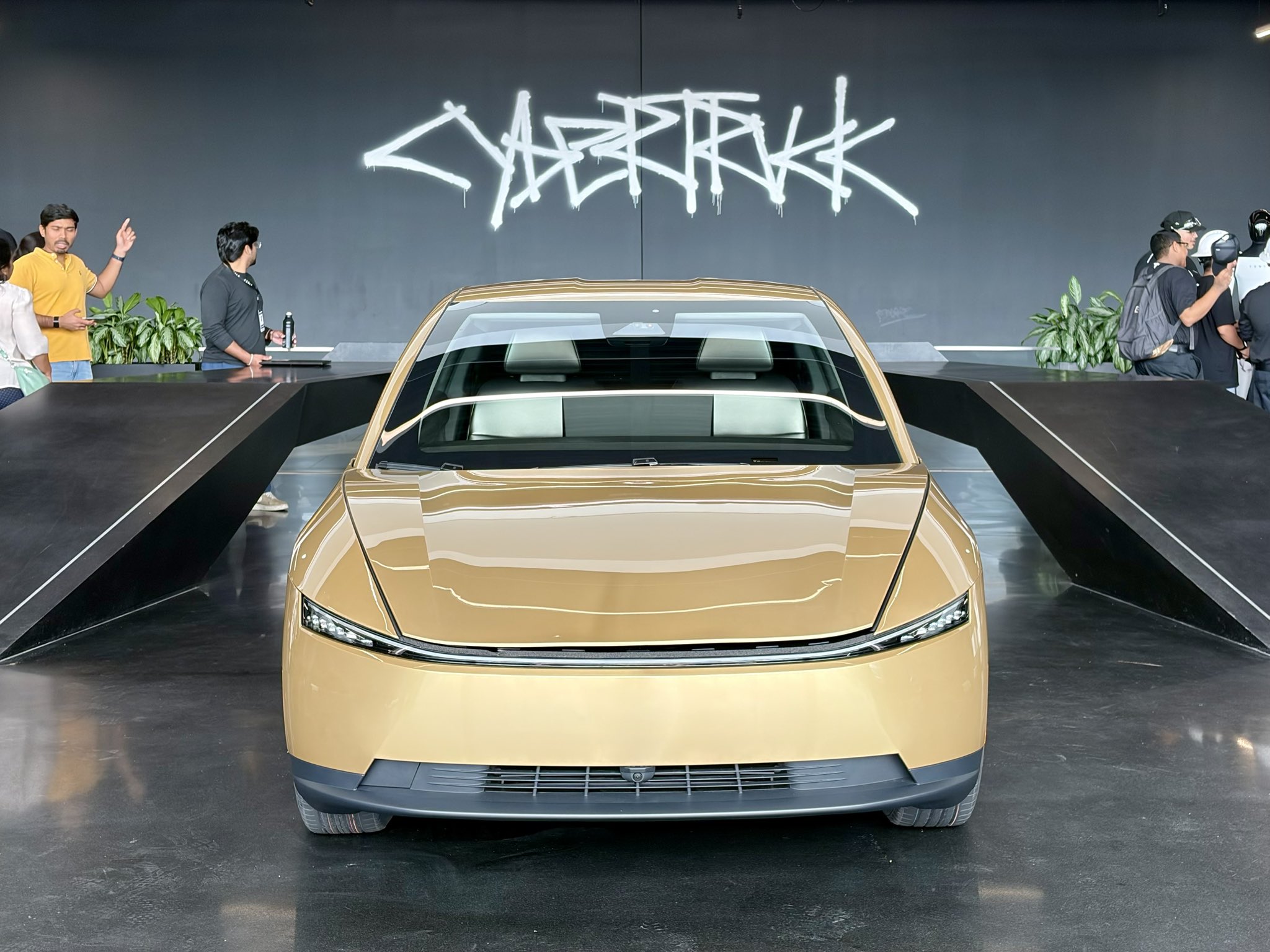
Tesla Cybercab is going to get some pretty substantial updates, including improvements to efficiency and a new color.
CEO Elon Musk said in a post on X on Saturday that Tesla would be working to refine the Cybercab even more, following the announcement during the week that the company would eliminate the Cybertruck lines within Giga Texas for more Cybercab manufacturing capacity.
“There are efficiency improvements coming that will allow for a 40kWh Cybercab pack,” Musk posted on X. “We will make this in liquid silver, so the colors are not too monotonous.”
There are efficiency improvements coming that will allow for a 40kWh Cybercab pack. We will make this in liquid silver, so the colors are not too monotonous.
The biggest thing most people fail to understand is that there are a very limited number of smart, dedicated people! They can only do so many things.
If we have to maintain a complex production line, supply chain and allocate engineering for Cybertruck, we can’t use those people or factory space and machinery for scaling Cybercab, which is the vehicle that will PROFOUNDLY transform the world of terrestrial transport!
— Elon Musk (@elonmusk) November 7, 2026
A new, more efficient model of the Cybercab will be engineered, which will only help Tesla’s profitability and margins, and it also boosts the argument for why the Cybertruck should be discontinued, at least from a business perspective.
The current Cybercab that operates in the Robotaxi platform in Austin, Texas, has a 48 kWh pack, and it sounds like Musk believes Tesla is on its way to introducing a version that has fewer cells but can manage the same workload thanks to engineering efficiencies.
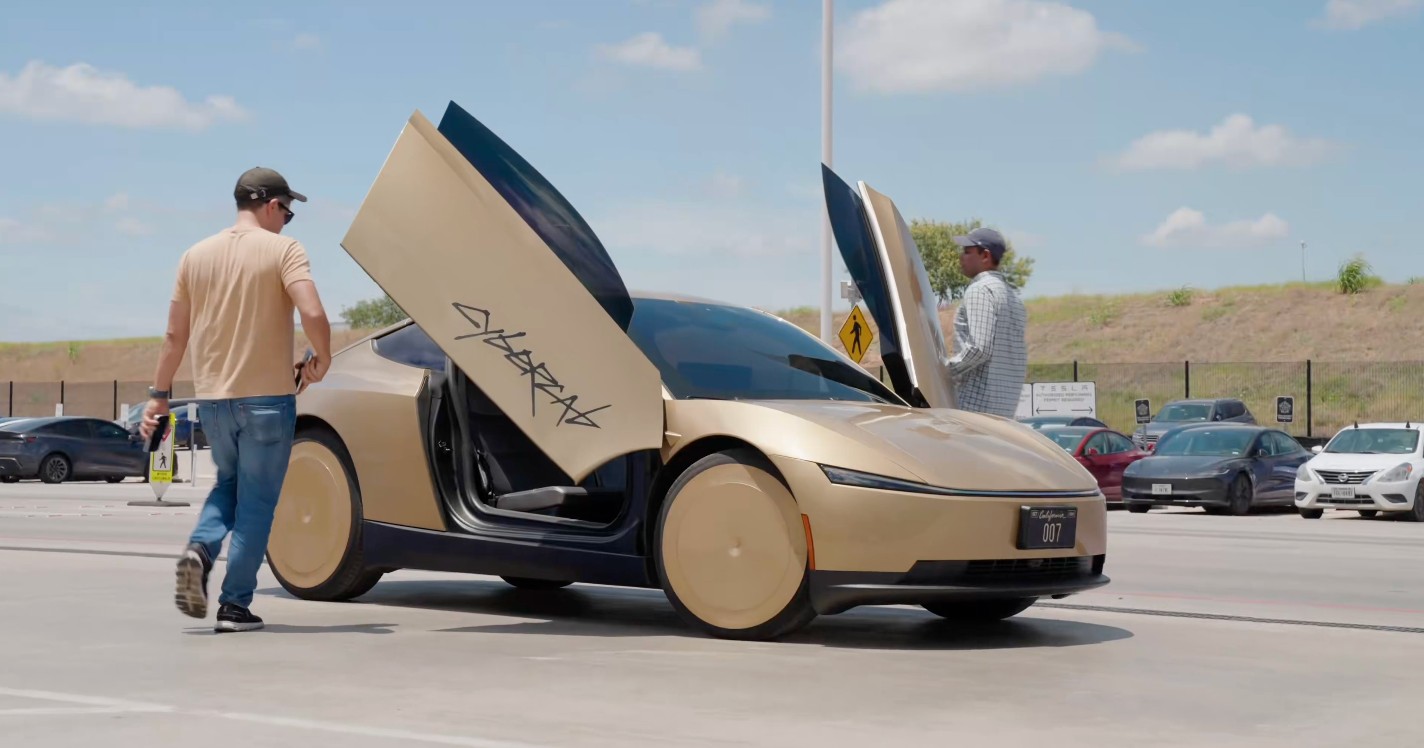
Credit: Tesla
Musk also doubled down on the decision to prioritize Cybercab production over Cybertruck, which is a decision that has been extremely polarizing within the community, and many fans have made it abundantly clear that they are not particularly pleased with the plans.
“If we have to maintain a complex production line, supply chain, and allocate engineering for Cybertruck, we can’t use those people or factory space and machinery for scaling Cybercab, which is the vehicle that will PROFOUNDLY transform the world of terrestrial transport,” Musk said.
A good look at Tesla’s new Liquid Silver Cybercab, planned with a 40 kWh battery pack following new improvements
😍 https://t.co/IUYsUcCBMs
— TESLARATI (@Teslarati) November 8, 2026
Cybercab is obviously Tesla’s path forward in an automotive sense. It seems that Tesla is less concerned about catering to the passenger vehicle market and is more prone to focus on transforming passenger transportation in a way that prioritizes autonomy. However, this requires some sacrifice on Tesla’s end, and the Cybertruck is unfortunately a victim of this.
Cybercab holds an extremely crucial part of Tesla’s future. With the company already revolutionizing passenger transportation once, this is the next phase, and Cybercab is the path forward.
Elon Musk
SpaceX’s next Starship flight set to make history on Friday the 13th
SpaceX is targeting Friday, November 13 for Starship Flight 15 and its first ship catch.
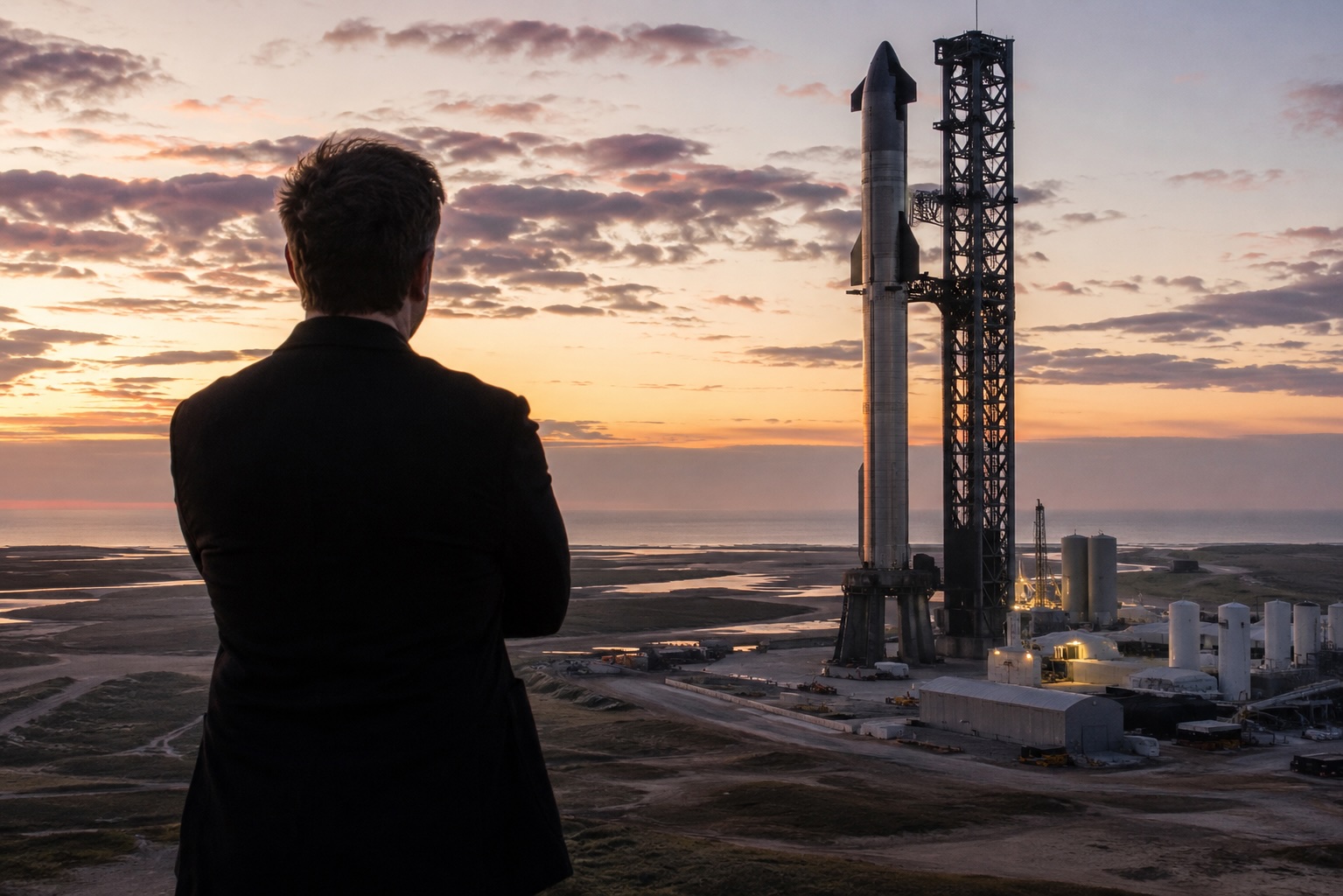
SpaceX is targeting Friday, November 13 for Starship Flight 15, the mission the company plans to use for its first attempt at catching the ship itself with the launch tower.
SpaceX Vice President of Launch Kiko Dontchev shared the date on stage at the UP.Summit on Thursday, according to Ars Technica’s Eric Berger, who was in attendance. It is the first launch target to come directly from a SpaceX executive. Until now, the public schedule had relied on FAA air traffic planning slides, which listed Flight 15 for no earlier than November 8 and later November 12. SpaceX has not posted an official mission page yet, and no launch time has been shared.
The date lands inside the window Elon Musk sketched out last month. Speaking at Giga Texas on October 10, Musk said the flight would “probably launch a little bit before Thanksgiving,” as Teslarati reported. On SpaceX’s third quarter earnings call ten days later, he confirmed that Flight 15 would try to catch both the Super Heavy booster and the ship, and put the odds of a successful ship catch at “more likely than not.” SpaceX also aired an animation of the maneuver during that webcast, showing the ship swinging vertical over Starbase before dropping into the tower’s chopsticks.
The hardware is ready. Booster 22 fired all 33 of its Raptor engines for a full duration static fire at Pad 2 on October 25. Ship 42 followed with a single engine burn simulating a deorbit maneuver on October 26 and a 60 second firing of all six engines the next day, according to NASASpaceflight. Ship 42 had already rehearsed the catch in September, when the Pad 2 arms lifted it into position and crews connected the quick disconnect arm while the vehicle hung from the tower.
The remaining hurdle is regulatory. The FAA’s Starship page does not yet list a Flight 15 license. SpaceX President Gwynne Shotwell said in October that, after “significant constructive engagement with the FAA,” she expects the license to cover a return to the launch site and a tower catch for both stages. Bringing the ship home means a reentry path that heads toward land, rather than ending over open ocean as every Starship flight so far has.
SpaceX has caught Super Heavy three times, on Flights 5, 7 and 8, but the ship comes back from orbital velocity and has never been caught. Flight 14 on September 28 was the first Starship to reach orbit, deploying 26 Starlink V3 satellites before splashing down despite an early engine shutdown that Musk blamed on engine computer software.
Musk has called a successful ship catch “the first time that there’s been full recovery of an orbital class rocket,” and he has already named the step after it: a Flight 16 where both the booster and the ship fly again. NASASpaceflight reports that Ship 43, the next vehicle in line, is set for static fire testing in December.

SpaceX will perform Starship double catch attempt with Flight 15

Tesla Cybercab is set to get some massive improvements


