News
Elon Musk says SpaceX could soon face bankruptcy – here’s why that’s unlikely

In a new leaked email, SpaceX CEO Elon Musk says that the company could go bankrupt if, by the end of 2022, it can’t achieve Starship and Starlink milestones that are by all practical appearances out of reach.
The news – first broken by SpaceExplored – comes about a week after CNBC reported that Musk was “shaking up” SpaceX’s leadership by effectively firing its vice president of propulsion due to “a lack of progress” in the development of Starship’s Raptor engine. Now, apparently after taking his first good look ‘under the hood’ in a while, Musk says that “the Raptor production crisis is much worse than it seemed a few weeks ago.” Worse, the CEO has implied that if it “can’t get enough reliable Raptors made [by the end of 2022]…[SpaceX will] face a genuine risk of bankruptcy.”
The email raises both skepticism and several major questions.
First and foremost, can there be any truth to Musk’s claim that SpaceX could go bankrupt because of an unspecified “Raptor production crisis [and disaster]?” Put simply, not really. Musk’s argument is simple enough. According to his estimations, the first-generation (V1) Starlink satellite internet constellation is “financially weak by itself,” which has led SpaceX to develop a much larger, more advanced second-generation (V2) Starlink satellite and constellation that the company’s existing “Falcon [rockets have] neither the [payload] volume nor mass to orbit” to launch. To efficiently launch the Starlink V2 constellation, then, Musk says SpaceX needs Starship to be operational.
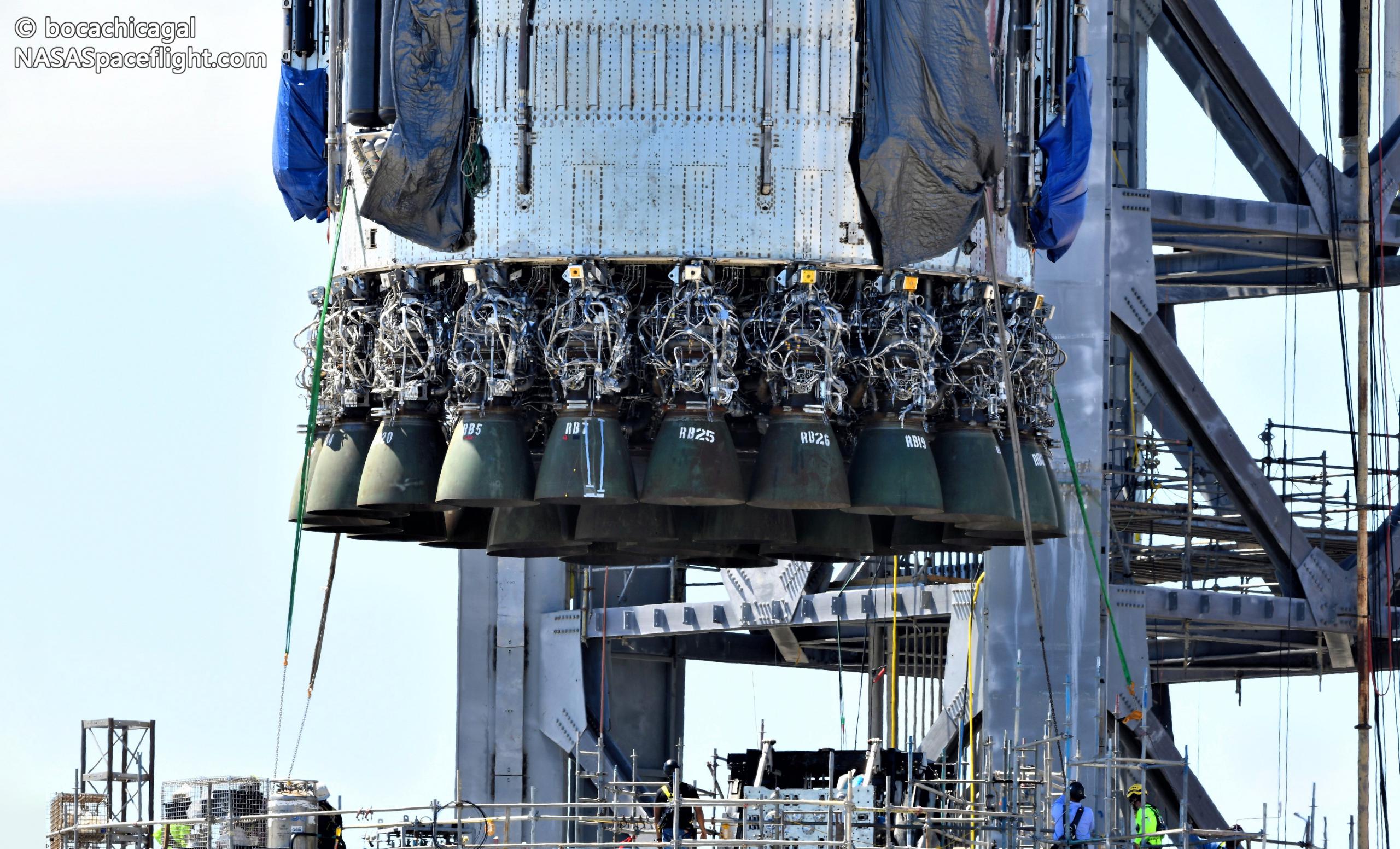
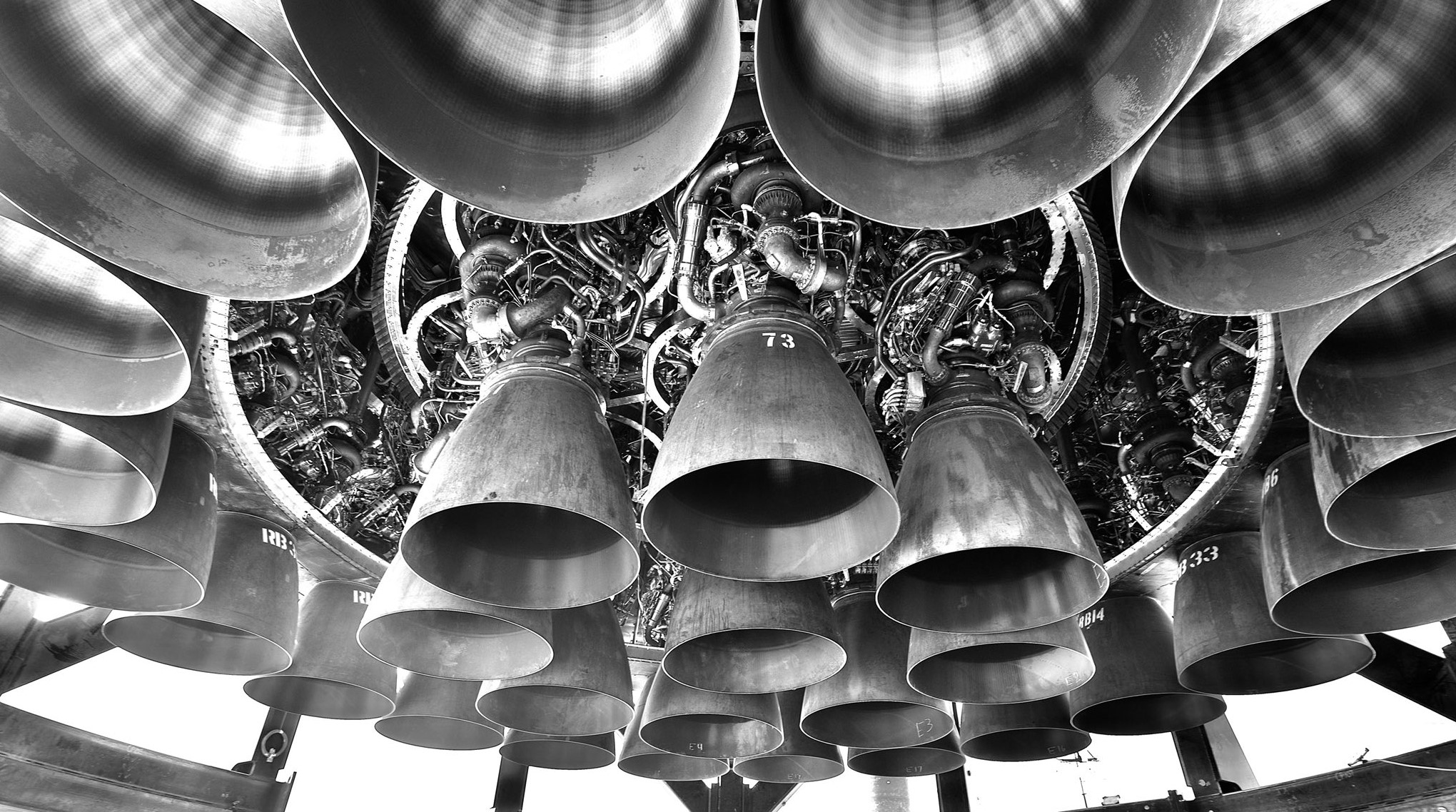
Up to that point, nothing in Musk’s email implies that a “Raptor production crisis” could pose any serious harm to SpaceX beyond annoying delays. More than two years ago, Musk believed that Raptor V1.0 already cost less than $1M to produce. As of 2021, SpaceX (again per Musk) is completing an average of one Raptor engine every two days and currently has 35 functional engines installed on Starship and Super Heavy booster prototypes in Boca Chica, Texas. Already, at a rate of one engine every 48 hours, SpaceX’s Raptor production capabilities are theoretically strong enough to fully outfit a significant Starship fleet.
Both stages of Starship are designed to be rapidly and fully reusable and absolutely need to be to efficiently and rapidly launch SpaceX’s Starlink V2 constellation. In theory, a production capacity of ~180 Raptors per year should allow SpaceX to outfit a fleet of three Super Heavies (99 engines) and 13 Starships (72 engines). Even if Super Heavy booster reuse is initially no faster than Falcon (~1 launch per month) and Starship reuse is no faster than Dragon (~3 launches per year), that fleet would be able to launch at least 36 times per years. Even if SpaceX’s former propulsion executives somehow pulled the wool over Musk’s eyes, tricking him into seeing engines that just weren’t there and hiding hundreds of millions of dollars in secret cost overruns from the company’s own accountants, an annual run rate of 100 Raptor engines at a cost of $5 million each would still be able to power a fleet of six reusable ships and two boosters capable of ~20 launches per year.
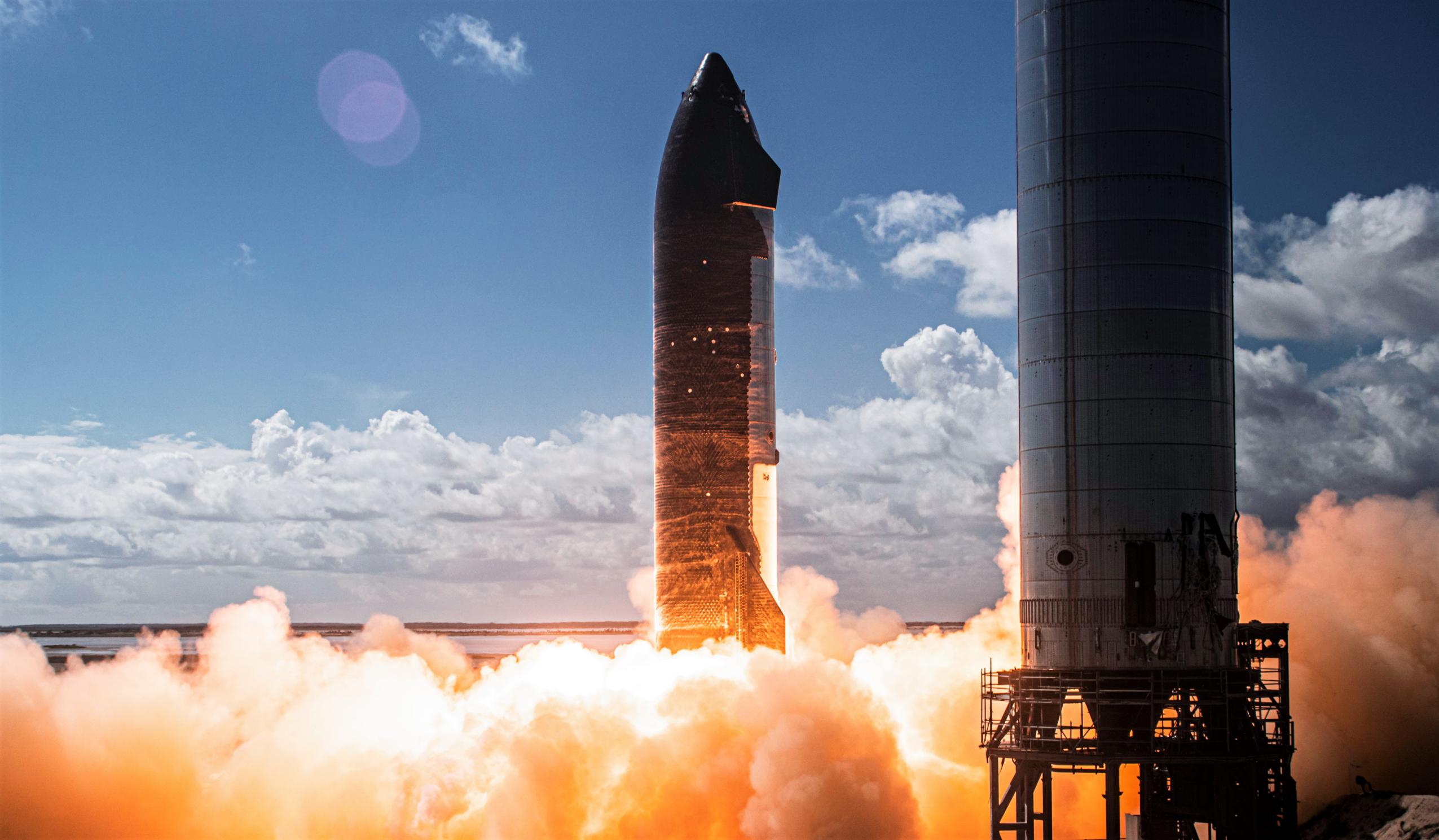
Musk says that SpaceX will only face the risk of bankruptcy if it “cannot achieve a Starship flight rate of at least once every two weeks next year” – equivalent to 26 launches annually. Again, being deceived for years would be a terrible look but nothing described above appears to have any chance of bankrupting SpaceX. However, the CEO also says that SpaceX “is spooling up” one or several factories to produce “several million” Starlink user terminals (dishes) per year in a process that “will consume massive capital [and assumes] that [Starlink V2 satellites] will be on orbit to handle the bandwidth demand.” He even goes as far as to say that those millions of terminals “will be useless otherwise.”
Once again, while what he describes is an undeniable hurdle for SpaceX, the company is making a choice to “consume massive capital” to “spool up” Starlink dish factories before the constellation capacity needed to take advantage of those dishes has been secured. SpaceX doesn’t need to make such a massive investment so quickly when it could instead split that money with Starship, ensure that Starship and Raptor and Starlink V2.0 satellites are ready or close to ready for routine launches, and then invest heavily in dish production.
For example, just this month, SpaceX raised almost $350M from investors that have a practically bottomless appetite for SpaceX investments. Combined, by the end of the year, SpaceX will have likely raised more than $2.3B in 2021 alone. Valued at more than $100 billion, the company could – as a last resort – feasibly raise double-digit billions in one fell swoop with an IPO. Put simply, the only way SpaceX could ever go bankrupt in the near term would be by consciously letting itself drown in a sea of life preservers.
This is not to say that SpaceX doesn’t have numerous massive challenges ahead of it, nor is it to say that its fundraising potential is truly limitless. Investors could eventually become disillusioned. It’s entirely possible that it will take SpaceX years longer than Musk expects to begin routine Starlink V2.0 launches with Starship. Environmental approvals alone could easily preclude more than five orbital Starship launches in 2022 and potentially prevent regular (i.e. biweekly) launches well into 2023. But the fact of the matter is that unless Elon Musk is telegraphing signs that the rest of the company’s finances are a house of cards, the odds of SpaceX actually going bankrupt anytime soon are vanishingly small. In reality, he’s likely just attempting to (for better or worse) instill some amount of fear and panic in SpaceX employees to encourage them to work more hours and take fewer days off.
Update: Musk has tweeted a brief public comment confirming that he believes bankruptcy is actually an unlikely – but not impossible – outcome for SpaceX.
If a severe global recession were to dry up capital availability / liquidity while SpaceX was losing billions on Starlink & Starship, then bankruptcy, while still unlikely, is not impossible.
GM & Chrysler went BK last recession.
“Only the paranoid survive.” – Grove— Elon Musk (@elonmusk) November 30, 2021


News
Tesla makes good on its Cybercab promise in just two weeks
Tesla Cybercab riders can now pull up a rear camera view and darken the screen.

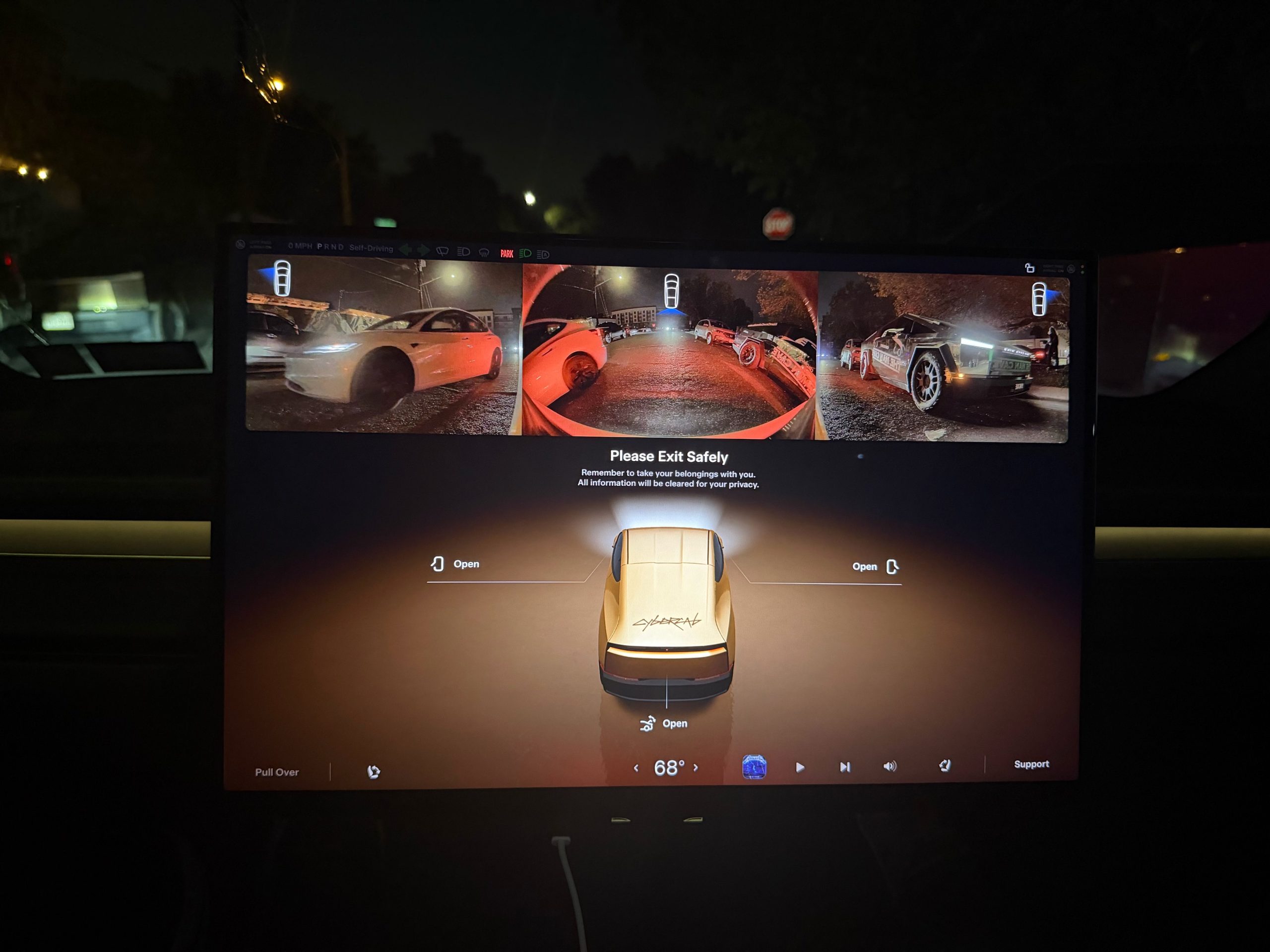
Tesla has given Cybercab passengers a way to see what is behind them, along with a way to turn the cabin screen off entirely.
Riders in Austin can now bring up a live rearview camera feed on the Cybercab’s center display in the middle of a trip. Austin rider Ethan McKanna spotted the change late Friday night, posting from a ride that “You can now open the camera to view what’s behind you in Cybercab!” His photo shows a strip of rear camera video across the top of the screen, with another Cybercab following on a bridge. Sawyer Merritt shared the image Saturday and wrote that it “sounds like” there is also a new quiet mode that darkens the entire screen for riders who want to relax, sleep, or avoid a bright display at night.
The camera view goes beyond the rear feed. Tesla UI software engineer Evan, who posts as @CarCoder, replied to McKanna with a tip: “You can also tap it to see more cameras, and swipe it up or down to hide and show.” Until now, the Cybercab only showed its rear and repeater feeds on the “Please Exit Safely” screen at the end of a ride, so passengers could check for cyclists and traffic before opening a door.
Quiet mode surfaced a day earlier. Austin rider Jackson Blatz posted a video Friday morning of the new Robotaxi interface in a Cybercab with the option. Tesla has not published release notes for either feature.
The rear camera view moved quickly from request to release. Earlier this month, Cybercab rider Dan Burkland asked Tesla to let passengers pull up the rear and repeater cameras whenever they want, “especially for peace of mind.” Evan answered “In development,” as Teslarati reported at the time. About two weeks later, riders have it.
The feature fills a gap created by the Cybercab’s design. With no steering wheel, no pedals, no mirrors and no rear window, a passenger has no natural way to glance behind the car. The eight exterior cameras that feed Tesla’s autonomy software were already on board, so the change only required software.
There is also an AI angle to how it was built. Yun-Ta Tsai, a senior staff engineer on Tesla’s AI team, quoted Merritt’s post and wrote that the “(human) camera view tuning is optimized with Grok and implements part of the algorithm by directly programming the fixed-function hardware, so I don’t even need to check the datasheet.” Tsai did not say which part of the algorithm Grok handled. Grok already plays a bigger role inside the vehicle, with Grok Bot now enabled across every Cybercab and the Model Y Robotaxi fleet after Tesla brought the agent into its cars in September.
The two features join a busy week of changes for riders in Austin, which also brought a redesigned Live Activity for iPhone and Apple Watch and live trip sharing. They also arrive as Tesla prepares the Cybercab for life outside its own fleet. On the third quarter earnings call, Lars Moravy said the company is aiming to deliver Cybercabs to customers before the end of 2026. Tesla has not said whether the camera view and quiet mode will also come to its Model Y Robotaxis.
Elon Musk
Tesla shows what Roadster drivers will see on screen before thruster activation
Tesla’s Roadster video reveals a fighter jet inspired cockpit with a 5,500 PSI thruster gauge.
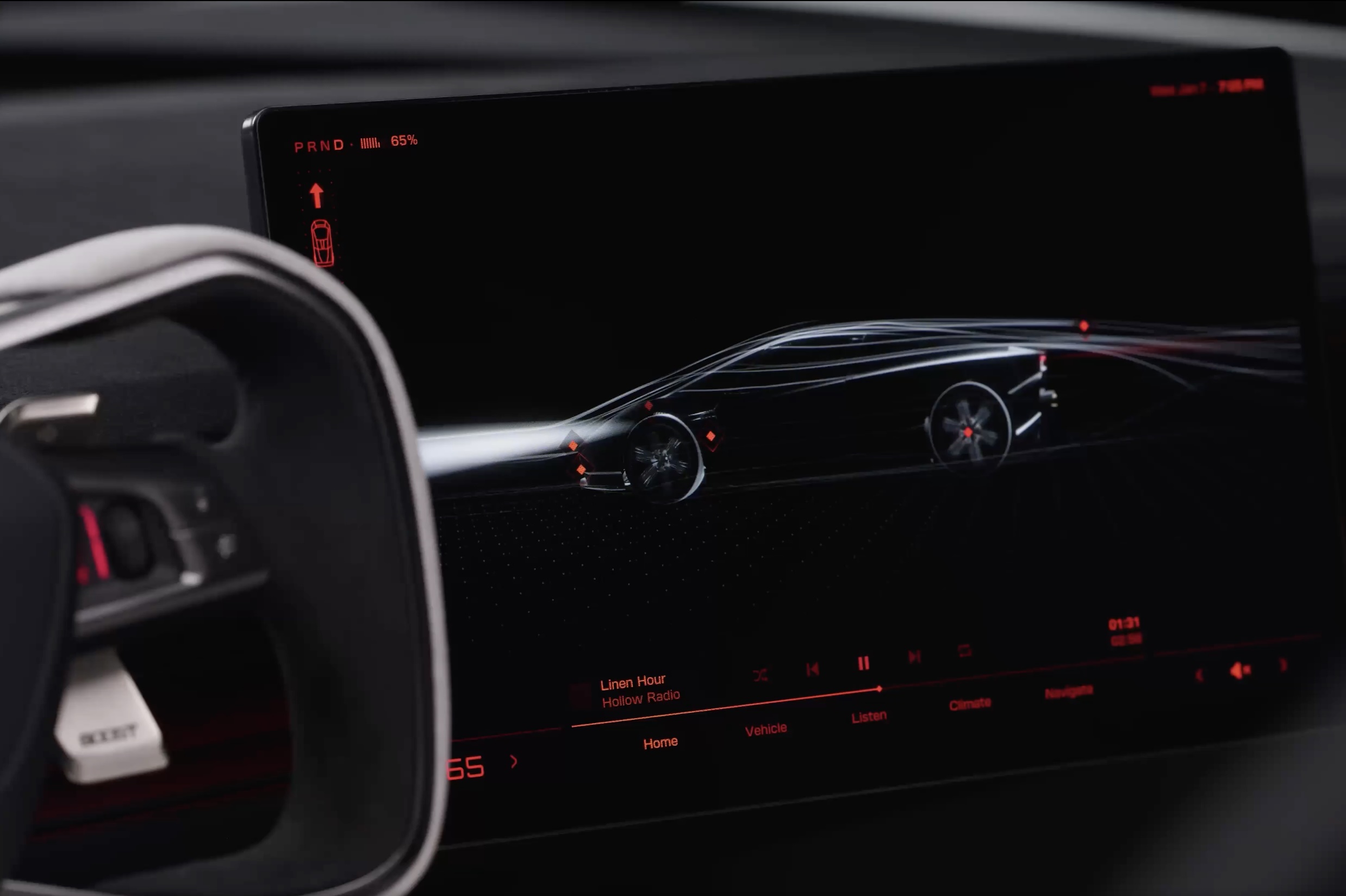
Tesla has given future owners their clearest look yet at the cockpit of its next generation Roadster. In a 34 second video posted to X on Friday afternoon, the company walked through the car’s touchscreen with a caption: “Inspired by fighter jet cockpits, Roadster’s interface was designed around the pilot.”
The clip opens on a black screen with red graphics and a 3D wireframe of the car, which sits beside the Roadster’s squared off yoke. Tapping parts of the model brings up controls for the rear wing, including low drag and high downforce positions, along with a charging page with a charge limit bar and a small music player. A row of tabs along the bottom reads Home, Vehicle, Listen, Climate and Navigate.
Most of the video is spent in Track Mode. The dashboard shows a live circuit map, a list of session lap times, brake and motor temperatures, and pressure and temperature readouts for each tire. A setup page lets the driver pick Auto, Low Drag, High Downforce or Custom aero modes, adjust aero balance and brake balance, and switch stability and traction control off. Along the bottom, a status bar reads “Thruster · 5,500 PSI” next to a “Boost Ready” indicator.
That gauge ties the software to the hardware Tesla showed off near Waco, Texas on October 15. The Thrust and Rocket versions use cold gas thrusters fed by carbon overwrapped pressure vessels, and Tesla lists 0 to 60 mph times of under 0.9 seconds and under 0.59 seconds for them, as Teslarati detailed in its breakdown of the three Roadster configurations. The base Performance car relies on a fan and ground sealing system for grip, and the aero settings on screen match the active wings and suction setup covered in our look at how the Roadster generates downforce.
The Roadster layout is a departure from the rest of Tesla’s lineup. Instead of a map centered screen, the Roadster puts the car itself at the center of the home page, and Tesla’s Roadster page lists two smaller forward displays alongside the main touchscreen. Tesla has not said whether any of the Track Mode telemetry will make its way to the Model 3 Performance or other vehicles.
The interface could still change before deliveries. Elon Musk said at the event that Roadster production will begin in 2028, and Tesla says the flagship Rocket version is not approved for public road use. Reservations are open with a $50,000 payment, while Thrust is listed as a limited release and Rocket is invite only.
Those who want to see the car in person will get their first chance this weekend. The Roadster goes on display in the lobby of the Petersen Automotive Museum in Los Angeles from October 24 to 27, according to Sawyer Merritt, the first time the public will be able to view it up close.
Elon Musk
Tesla reveals Optimus Academy, where robots teach themselves
Tesla has begun building production quality Optimus robots in Fremont and revealed its training plan.
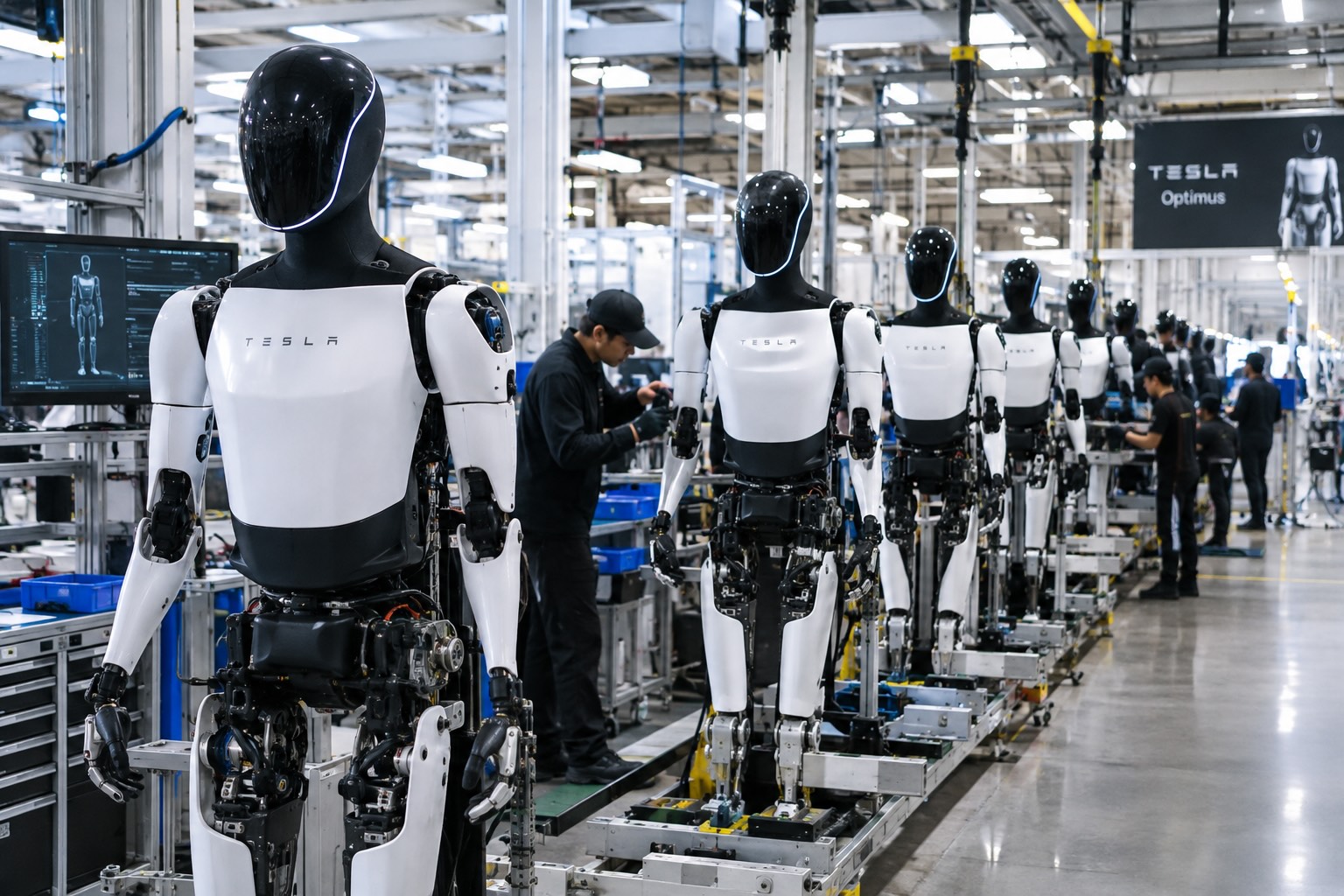
Tesla has started building Optimus on the high volume line it set up inside its Fremont factory, and the company says the robots coming off it are the first that meet the bar for a real product. “The bots coming off this line are the first production-quality bots that we have manufactured,” Tesla wrote in its third quarter shareholder letter, adding that it has “proven that the current manufacturing process for Optimus is suitable for a commercial product.”
The line sits in space that built the Model S and Model X until this spring. Tesla cleared the old vehicle line in 46 days, as Teslarati reported in July, to make room for robot production sized for one million units a year. On Wednesday’s earnings call, Elon Musk said most of the equipment for that capacity is already in Fremont, with output set to climb toward roughly 20,000 robots a week as the line ramps.
Musk described the ramp as a classic S curve. “The growth of Optimus is an S curve, but the initial curve is a shallow slope,” he said. The team is now refining the robot’s AI, electromechanical design, reliability and service life, and Musk expects that work to be finished by the end of next year, when Tesla plans to start delivering Optimus to outside companies for dangerous, repetitive and around the clock jobs.
The most interesting part of the call was how Tesla plans to teach the robots. Its cars send real driving data back to the AI team from millions of vehicles, but Optimus has no fleet like that yet. “A big difference with Optimus versus the cars is we don’t have this vast fleet of cars from which we can gather training data,” Musk said. Tesla’s answer is an Optimus Academy, where 10,000 to 20,000 robots will practice a wide range of tasks and feed what they learn into the next version of the model. Every unit off the Fremont line becomes a source of that training data.
Smarter hardware is on the way too. Tesla plans to put its AI5 chip into Optimus next year, and Musk said a new Optimus video should arrive within one or two months showing the robot completing tasks driven by AI rather than preprogrammed motions. He took aim at rival humanoid demos that only run scripted routines, saying those would not hold up in the real world.
The supply chain is lining up behind the program. In September, Tesla certified Tuopu, Joyson and Sanhua as mass production partners for Optimus components. A far larger Optimus factory is also rising at Giga Texas, where drone footage from Joe Tegtmeyer showed the steel frame nearing completion, and Musk has pegged that plant’s long term target at 10 million robots a year.
Tesla executives also said Optimus production costs are trending toward the expected manufacturing cost of Cybercab, a sign the robot is being engineered for volume from the start. The hands remain the toughest piece of the design, a point Musk also made at the X Takeover event earlier this month, as Teslarati covered at the time, and that is where much of the current engineering effort is focused.

Tesla makes good on its Cybercab promise in just two weeks

Tesla shows what Roadster drivers will see on screen before thruster activation


