Elon Musk
Musk’s massive Terafab project will get final location soon

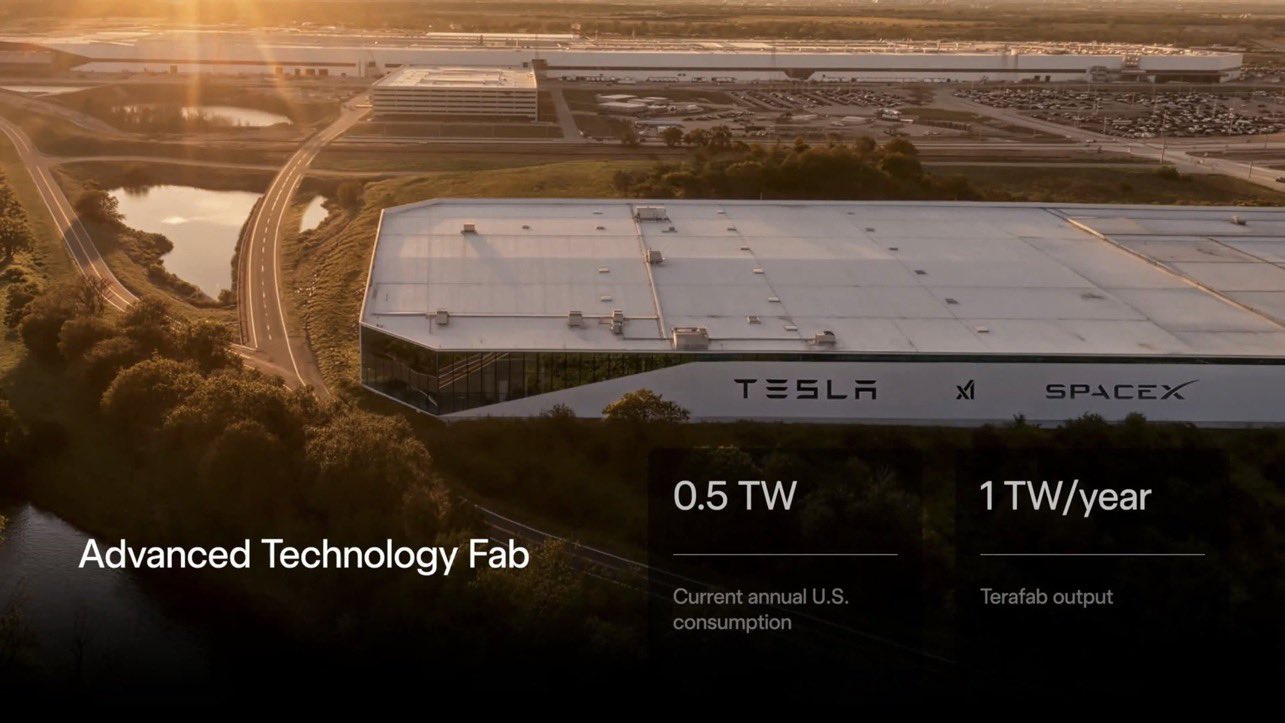
Elon Musk’s massive Terafab project, which will be the first true conglomeration between each of his major entities, is set to get its final location soon, the CEO said on Tesla’s recent earnings call.
“The Terafab, we expect to announce a location soon, and provide more details about our plans in that regard. We’ll leave that to the product, the launch announcement rather than try to squeeze it into an earnings call,” Musk said last Wednesday.
Tesla Terafab set for launch: Inside the $20B AI chip factory that will reshape the auto industry
Terafab was announced by Musk back in March and was essentially a massive, vertically integrated semiconductor manufacturing project that would provide all the chips the three companies needed for their AI initiatives without needing third-party companies.
The plant will produce over 1 terawatt of AI compute each year, and will help back up projects like Optimus, Full Self-Driving, and other AI-based projects that Musk’s companies are working on.
In April, less than a month after the project was launched, Intel announced it would join the project, contributing manufacturing expertise and consulting to Terafab as a whole. Intel is one of three chip manufacturers that produce sub-5 nanometer chips at scale. TSMC and Samsung are the other two.
However, there was no true indication of where Terafab would end up, but most believe it will likely be somewhere in Texas. Business Insider has reported that SpaceX plans to build out Terafab in Grimes County, Texas, but this is unconfirmed.
Musk confirmed recently that it would not be on Giga Texas property, as it is simply too large.
The sheer scale of TERAFAB is going to be insane.
Elon said it wouldn’t be suitable for anywhere on Giga Texas property because it’s too big:
“We couldn’t possibly fit the Terafab on the GigaTexas campus. It will be far bigger than everything else combined there.
Several… pic.twitter.com/79GbhNNuf4
— TESLARATI (@Teslarati) March 23, 2026
Terafab holds much of Musk’s grand ambitions for the future within its construct. It holds so much responsibility for the future and the biggest projects that Musk’s companies can imagine.
“I think this is a very big announcement and it deserves to have its own day in the spotlight and not be squeezed into an earnings call,” he said. “I do think Terafab is going to be an amazing initiative and a necessary one, and one without which we will be constrained in our ability to scale Optimus production, because we simply won’t have enough AI chips.”
He continued by stating that Terafab is necessary for scaling Optimus, which Musk said could be the biggest product of any kind of all time. “It’s crucial to solve that, and we’ll have to solve memory, logic, and packaging in order to scale Optimus.”


Elon Musk
SpaceX nails “Lucky 13” astronaut launch, leaning into Tesla tradition and superstition
SpaceX launched Crew-13 astronauts to the ISS Thursday, setting up a record fast Dragon docking.

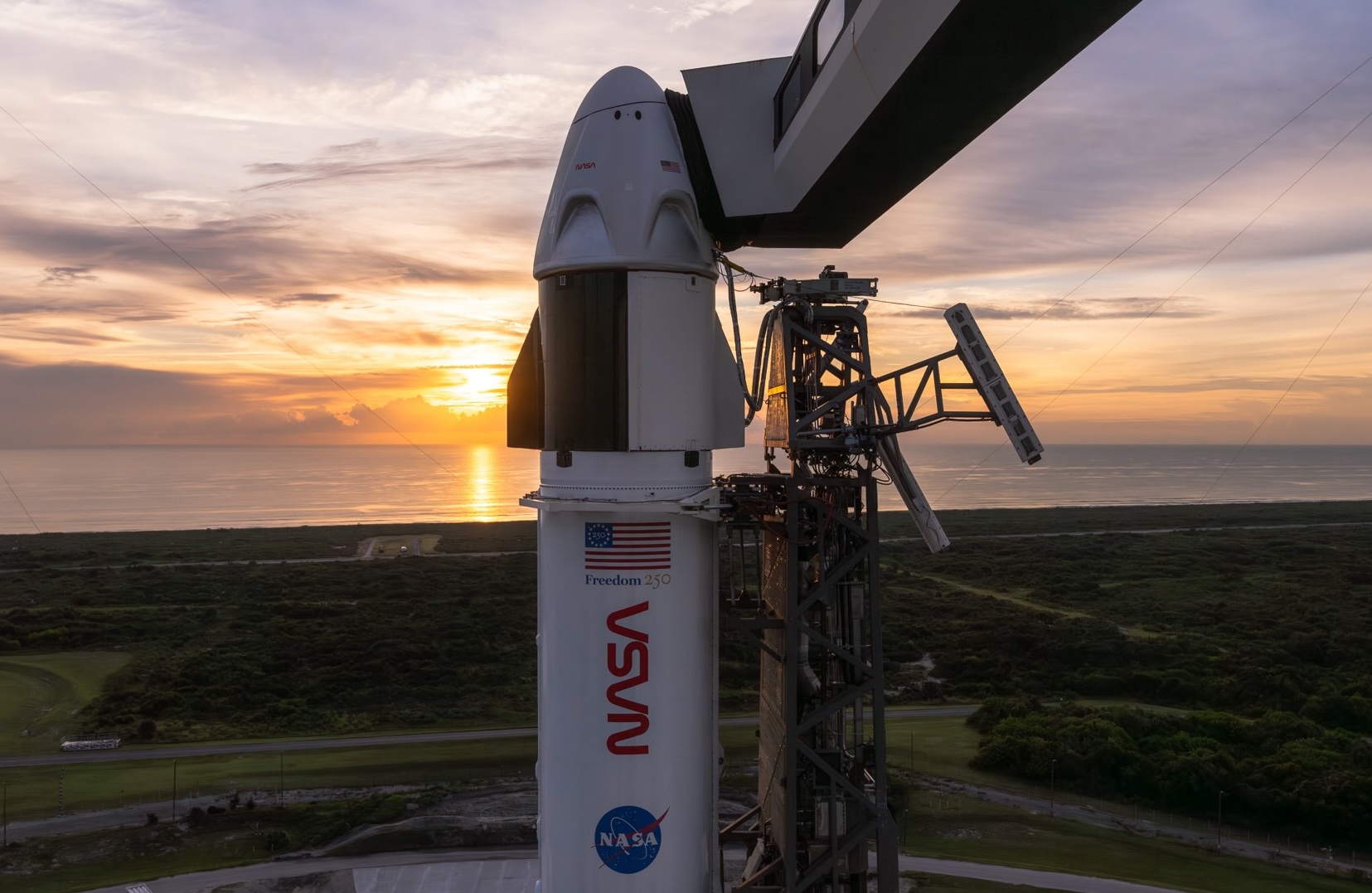
SpaceX launched NASA’s Crew-13 mission to the International Space Station on Thursday morning, getting four astronauts to orbit despite a forecast of thunderstorms and gusty winds that had threatened to push the flight to Friday.
Falcon 9 lifted off from Space Launch Complex 40 at Cape Canaveral Space Force Station at 11:10 a.m. ET carrying Dragon Grace, NASA confirmed. On board are NASA commander Jessica Watkins, NASA pilot Luke Delaney, Canadian Space Agency astronaut Joshua Kutryk and Roscosmos cosmonaut Sergey Teteryatnikov. The first stage booster, B1101, landed at Landing Zone 40 beside the pad on its third flight after previously supporting Crew-12 and a Starlink mission.
Liftoff of Crew-13! pic.twitter.com/vteT0DXMTh
— SpaceX (@SpaceX) October 1, 2026
It was the first spaceflight for Delaney, Kutryk and Teteryatnikov. Watkins, who flew on Crew-4 in 2022, became the first NASA astronaut to launch aboard a Crew Dragon twice.
Before launch, the crew rode to the pad in Teslas, a tradition on NASA’s SpaceX crew flights since 2020. This time the cars carried specialty plates reading “Lucky 13.” Watkins said the mission patch leans into the number on purpose, as a nod to Apollo 13 and the resilience of that crew.
Grace is now on a short trip to the station. Docking at the forward port of the Harmony module is scheduled for about 7 p.m. ET, roughly 7 hours and 50 minutes after liftoff, which Space.com notes would be the fastest Crew Dragon transit to the ISS yet. Most Dragon flights take around 15 to 24 hours to catch the station. Hatch opening is planned for 8:25 p.m. ET.
The launch came more than two weeks later than originally planned. An oxidizer leak was found in Grace’s propulsion system in August, and NASA and SpaceX added time for tests. That pushed back the return of Crew-12, which has been aboard the station since February and is now set to splash down off Southern California next week. Crew-13 is expected to stay about six months.
SpaceX rescue mission for stranded ISS astronauts nears end — Here’s when they’ll return home
SpaceX already holds NASA orders for crew rotations through Crew-17, while Boeing is preparing an uncrewed Starliner flight to the station as early as December.
Crew-13 was only the first of three SpaceX launches planned for Thursday, as Teslarati previewed on Wednesday. A Falcon 9 launched its Transporter-18 mission from California today, where Google will be launching its first orbital artificial intelligence (AI) test satellite. Meanwhile, Falcon Heavy is set to launch the classified NROL-97 mission for the National Reconnaissance Office from Launch Complex 39A at 11:53 p.m. ET. Its two side boosters will return to Landing Zones 1 and 2, which means Central Florida could hear up to three sonic booms in a single day. The busy stretch follows Starship’s Flight 14 on Monday, which reached orbit for the first time.
Elon Musk
The Pentagon taps Elon Musk to design the battlefield of the future
Hegseth named Elon Musk to help lead Project Meridian, a Pentagon study of future warfare.
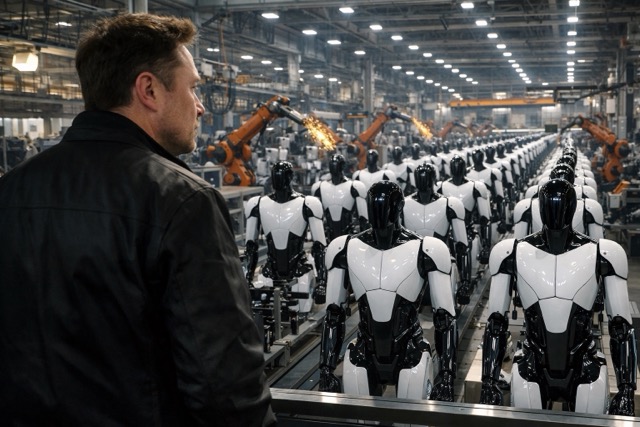
Elon Musk has a new role in the Trump administration. Defense Secretary Pete Hegseth announced on war.gov Wednesday that Musk will help lead Project Meridian, a new Pentagon study meant to identify the weapons and technologies the U.S. military will need to fight wars decades from now.
Hegseth unveiled the project during his State of the Force address at Marine Corps Base Quantico in Virginia. Musk will direct the effort alongside Anduril founder Palmer Luckey and former House Speaker Newt Gingrich, working under Pentagon Chief Technology Officer Emil Michael. All three men were in attendance, and Hegseth said their first meeting would take place directly after the speech inside a secure compartmented facility, according to The Hill.
Hegseth said the group “will be focused on discovering, developing, and fielding the weapons and systems that our children and our grandchildren will need in their lifetimes, without any creative limitations or restrictions, on any future battlefield, from under the Earth to beyond the Moon.” He added that Meridian is not meant to produce new strategy or policy documents.
SpaceX to become America’s Military data backbone for missiles, drones, and warfighters
A memo released after the announcement gives Michael until January 28, 2027, to deliver findings, a window of 120 days. It names artificial intelligence, autonomy, directed energy, robotics and biotechnology as the fields expected to change how wars are fought. The results will come as a public report with a classified annex. The memo says the study will run through a partner organization it does not name, and it does not mention Musk directly. His role comes from Hegseth’s speech and a Pentagon press release.’
Musk had not commented publicly on the appointment as of Wednesday evening. This will be Musk’s first official advisory role in the administration since he left DOGE last year.
The mandate overlaps heavily with Musk’s companies. SpaceX is one of the Pentagon’s largest contractors, with 2026 defense awards topping $8 billion, much of it tied to launches and a suspected Starshield buildout out of Vandenberg. The Pentagon’s release says Meridian will examine domains “from subterranean depths to the cislunar frontier,” which maps onto The Boring Company’s tunneling and Starship’s lunar plans. Tesla’s work on autonomy and Optimus falls within the fields the memo lists.
Meridian was one of six initiatives Hegseth announced Wednesday. Another is a new Autonomous Warfare Command, which the department wants operating as a four-star combatant command by October 1, 2027.
The news lands a day before SpaceX is scheduled to fly a classified National Reconnaissance Office payload on Falcon Heavy, one of three launches the company has planned for Thursday.
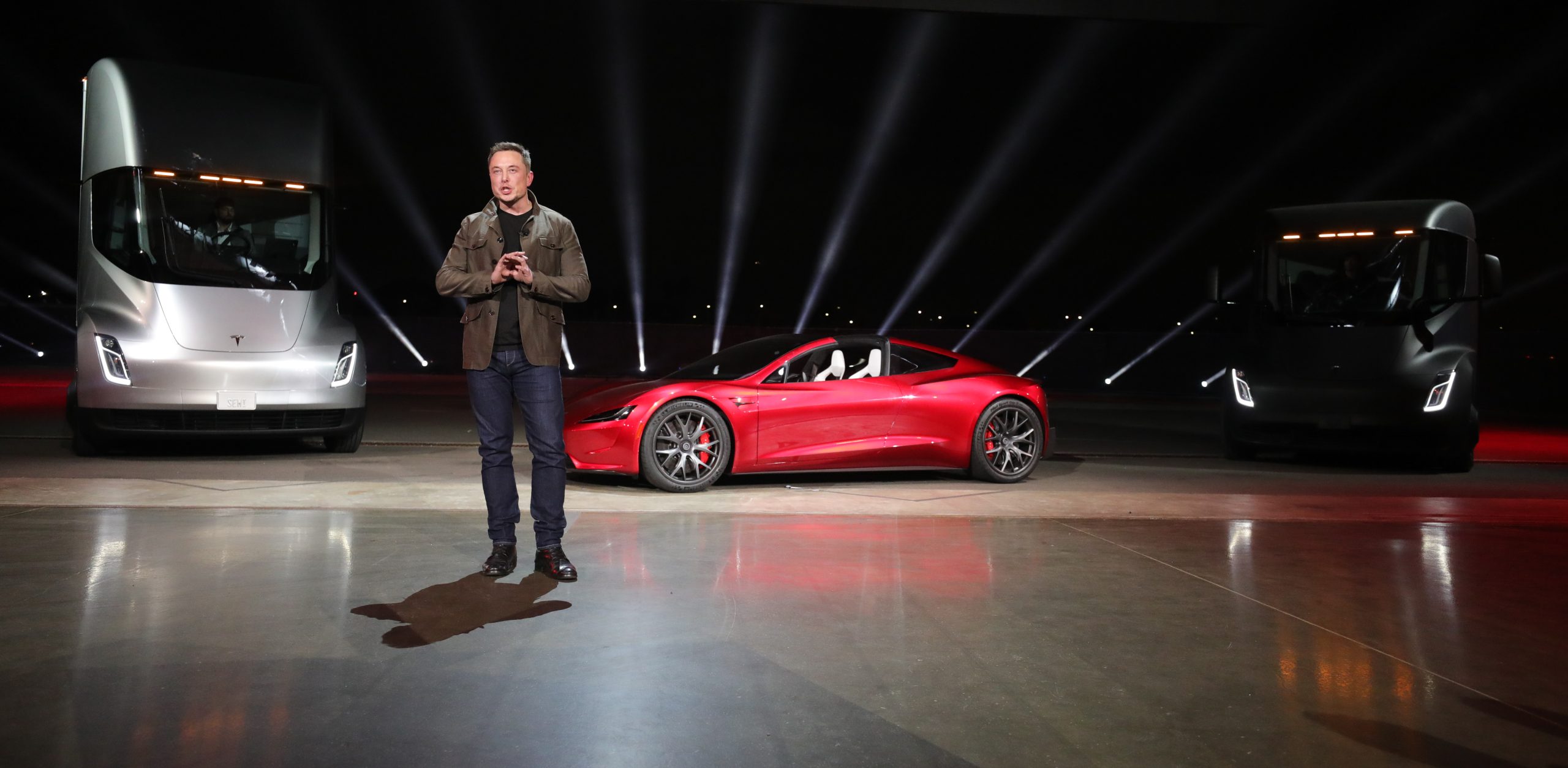
Tesla CEO Elon Musk certainly tipped off some details of the Tesla Roadster event with a broadening of information regarding the company’s decision to delay the unveiling for two weeks.
For years, people have speculated about what the Roadster will be capable of. While there have been plenty of things said about what it *could* do, we have not seen or been told by Tesla what it will actually be capable of.
However, over the past few days, Tesla’s weather updates have truly pushed the speculation into Plaid Mode, basically all but confirming the car will have some sort of aerial capability — whether that would be hovering or fully flying remains to be seen — but it definitely seems that it will be able to leave the ground intentionally.
“Because this event can only be held outdoors…”
Tesla posted on Monday that it would delay the Roadster event until October 15, and it indicated that it had to do this because the event “can only be held outdoors.”
With the potential SpaceX collaboration to develop cold-gas thrusters that will help the vehicle go airborne, doing this indoors is probably not a safe, or even plausible, possibility.
Roadster event update
We’ve been tracking the weather closely with local meteorologists, but given the severe conditions predicted & because this event can only be held outdoors, we’ve made the difficult decision to reschedule.
New date is October 15. Additional details to…
— Tesla (@Tesla) September 28, 2026
FAA Airspace Restriction
The FAA gave Tesla a Temporary Flight Restriction (TFR) for 10,000 feet above ground level, much higher than the typical 2,000-foot restrictions that are usually placed at SpaceX’s McGregor, Texas site.
Tesla Roadster event requires restricted airspace, and the FAA obliges
Some have said that this massive increase is due to Tesla’s need to restrict unauthorized drone use for spying on the event.
Elon Admits High Winds
“Due to high winds, the new Roadster demo is postponed by 2 weeks,” Musk said in a post on X yesterday.
Due to high winds, the new Roadster demo is postponed by 2 weeks https://t.co/dV3ojDh1iT
— Elon Musk (@elonmusk) September 30, 2026
A reply reading, “What’s strong wind got to do with a car demo with four grounded wheels?” was directly below Musk’s post, satirically and sarcastically probing for more details.
All signs are pointing toward an aerial demonstration for the Roadster.

SpaceX nails “Lucky 13” astronaut launch, leaning into Tesla tradition and superstition

Tesla moves forward on Wireless Charging for vehicles


