Elon Musk
Elon Musk argues lidar and radar make self driving cars more dangerous
The CEO is not just stating that using sensors like lidar is unnecessary to achieve self-driving.

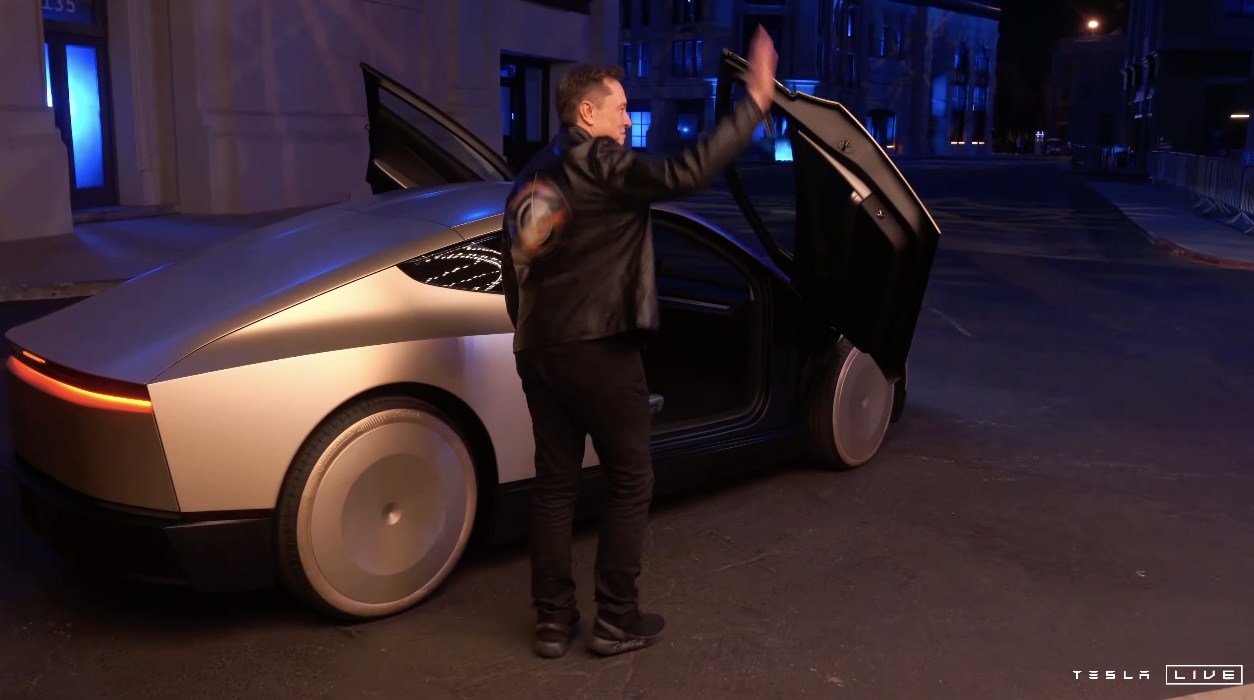
Elon Musk is taking a firmer stance in the vision vs lidar debate for autonomous driving. In his more recent comments, the CEO is not just stating that using sensors like lidar is unnecessary to achieve self-driving.
Musk is stating that using lidar actually makes self-driving cars more dangerous.
Uber CEO’s comments
During a recent interview, Uber CEO Dara Khosrowshahi shared his thoughts on the autonomy race. As per the CEO, he is still inclined to believe that Waymo’s approach, which requires outfitting cars with equipment such as lidar and radar, is necessary to achieve superhuman levels of safety for self-driving cars.
“Solid state LiDAR is $500. Why not include lidar as well in order to achieve super human safety. All of our partners are using a combination of camera, radar and LiDAR, and I personally think that’s the right solution, but I could be proven wrong,” the Uber CEO noted.
Elon Musk’s rebuttal
In response to the Uber CEO’s comments, Elon Musk stated that lidar and radar, at least based on Tesla’s experience, actually reduce safety instead of improving it. As per the Tesla CEO, there are times when sensors such as lidar and radar disagree with cameras. This creates sensor ambiguity, which, in turn, creates more risk. Musk then noted that Tesla has seen an improvement in safety once the company focused on a vision only approach.
“Lidar and radar reduce safety due to sensor contention. If lidars/radars disagree with cameras, which one wins? This sensor ambiguity causes increased, not decreased, risk. That’s why Waymos can’t drive on highways. We turned off the radars in Teslas to increase safety. Cameras ftw,’ Musk wrote.
Musk’s comments are quite notable as Tesla was able to launch a dedicated Robotaxi pilot in Austin and the Bay Area using its vision-based autonomous systems. The same is true for FSD, which is quickly becoming notably better than humans in driving.


Elon Musk
Tesla ramps Cybercab test manufacturing ahead of mass production
Tesla still has plans for volume production, which remains between four and eight weeks away, aligning with Musk’s statements that early ramps would be deliberately measured given the Cybercab’s novel architecture and full reliance on Tesla’s vision-based Full Self-Driving technology.

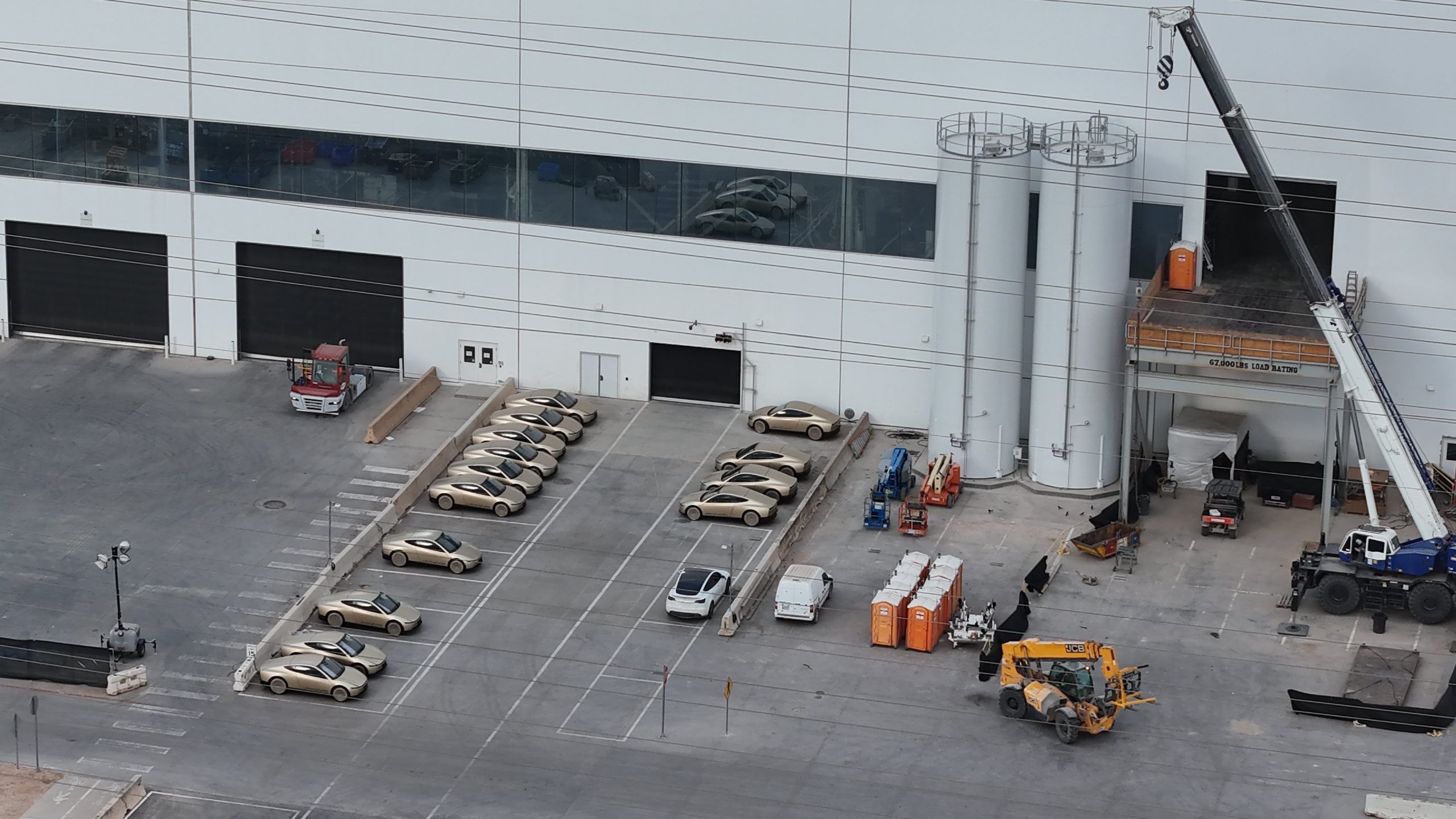
Tesla is seemingly ramping Cybercab test manufacturing ahead of mass production, which is scheduled to begin next month, the company said.
At Tesla’s Gigafactory Texas, production of the Cybercab, the company’s groundbreaking purpose-built Robotaxi vehicle, is accelerating markedly. Drone footage from Joe Tegtmeyer captured striking aerial footage today, revealing what appears to be the largest public sighting of Cyebrcabs to date.
A total of 25 units were observed by Tegtmeyer across the Gigafactory Texas property, marking a clear step-up in testing and validation activities as Tesla prepares for a broader output.
Tesla Cybercab production begins: The end of car ownership as we know it?
In the footage, 14 metallic gold Cybercabs were parked in a tight formation outside the factory exit, showcasing their sleek, autonomous-only design with no steering wheels, pedals, or traditional controls. Another 9 units sat at the crash testing facility, likely undergoing structural and safety validations, while two more appeared at the west end-of-line area for final checks.
Big day for Cybercab at Giga Texas today! Actually, yesterday to kick off March, the production line went into a higher volume & today we see 25 at three main locations, and there were several others I observed driving around too!
I think this may be the largest single grouping… pic.twitter.com/HZDMNv57lJ
— Joe Tegtmeyer 🚀 🤠🛸😎 (@JoeTegtmeyer) March 3, 2026
Tegtmeyer noted additional Cybercabs driving around the complex, hinting at active movement and real-world testing beyond static parking.
This surge follows the first production Cybercab rolling off the line in mid-February 2026, several weeks ahead of the originally anticipated April start.
That milestone, celebrated by Tesla employees and confirmed by CEO Elon Musk, kicked off low-volume builds on the dedicated “unboxed” manufacturing line, a modular process designed to slash costs, reduce factory footprint, and enable faster assembly compared to conventional methods.
Industry observers interpret the jump to dozens of visible units in early March as evidence that Tesla has transitioned into higher-volume test manufacturing.
Tesla still has plans for volume production, which remains between four and eight weeks away, aligning with Musk’s statements that early ramps would be deliberately measured given the Cybercab’s novel architecture and full reliance on Tesla’s vision-based Full Self-Driving technology.
The Cybercab, envisioned as a sub-$30,000 autonomous two-seater for robotaxi fleets, represents Tesla’s bold pivot toward scalable autonomy and robotics.
Tesla fans and enthusiasts on X praised the imagery, with many expressing excitement over the visible progress toward deployment. While challenges remain, including software maturity, regulatory hurdles, and supply chain scaling, the increased factory activity underscores Tesla’s momentum in turning the Cybercab vision into reality.
As Giga Texas continues expanding and refining the manufacturing process of the Cybercab, the coming months will prove to be a pivotal time in determining how quickly this revolutionary vehicle reaches roads in the U.S. and internationally.
Elon Musk
SpaceX to launch Starlink V2 satellites on Starship starting 2027
The update was shared by SpaceX President Gwynne Shotwell and Starlink Vice President Mike Nicolls.
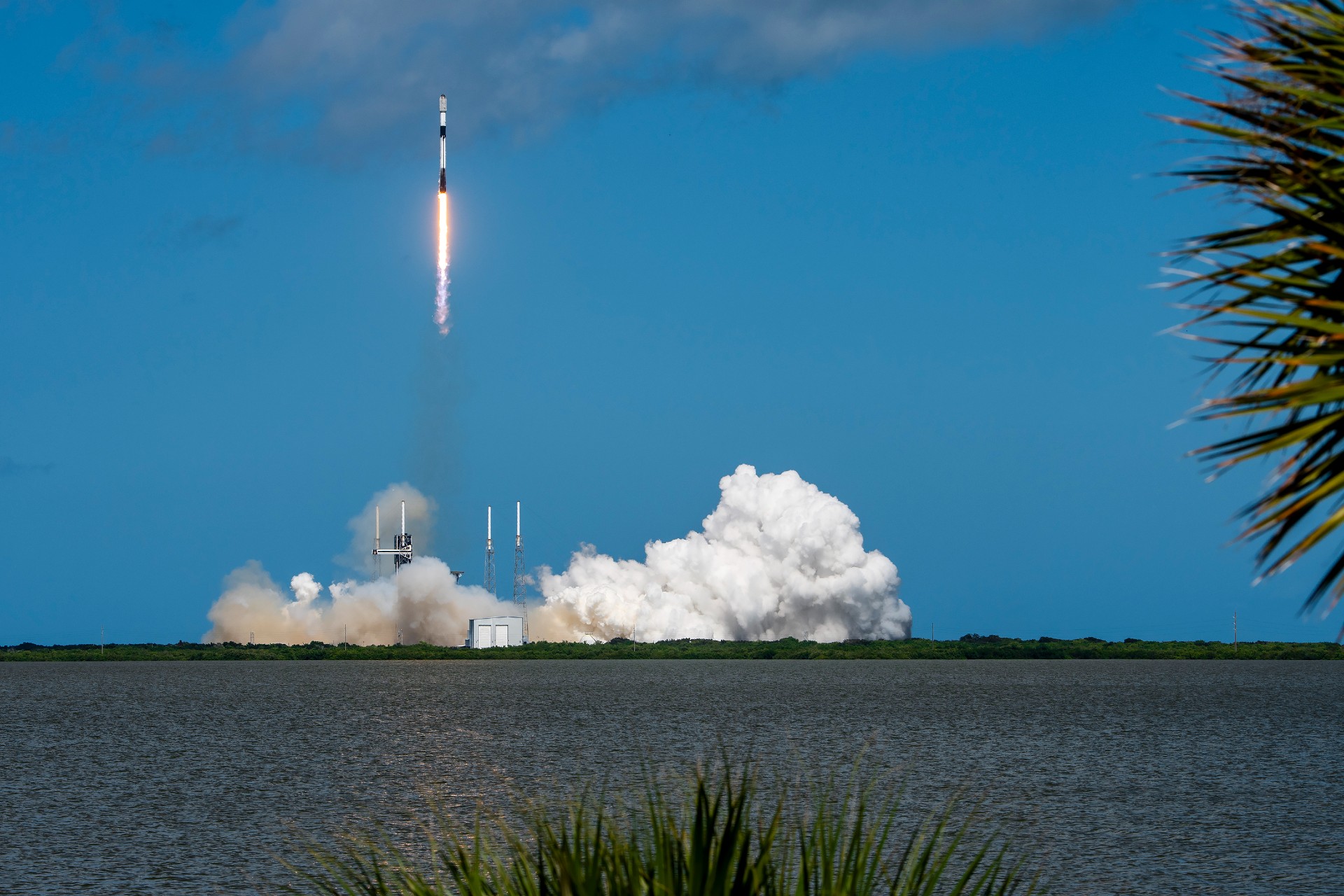
SpaceX is looking to start launching its next-generation Starlink V2 satellites in mid-2027 using Starship.
The update was shared by SpaceX President Gwynne Shotwell and Starlink Vice President Mike Nicolls during remarks at Mobile World Congress (MWC) in Barcelona, Spain.
“With Starship, we’ll be able to deploy the constellation very quickly,” Nicolls stated. “Our goal is to deploy a constellation capable of providing global and contiguous coverage within six months, and that’s roughly 1,200 satellites.”
Nicolls added that once Starship is operational, it will be capable of launching approximately 50 of the larger, more powerful Starlink satellites at a time, as noted in a Bloomberg News report.
The initial deployment of roughly 1,200 next-generation satellites is intended to establish global and contiguous coverage. After that phase, SpaceX plans to continue expanding the system to reach “truly global coverage, including the polar regions,” Nicolls said.
Currently, all Starlink satellites are launched on SpaceX’s Falcon 9 rocket. The next-generation fleet will rely on Starship, which remains in development following a series of test flights in 2025. SpaceX is targeting its next Starship test flight, featuring an upgraded version of the rocket, as soon as this month.
Starlink is currently the largest satellite network in orbit, with nearly 10,000 satellites deployed. Bloomberg Intelligence estimates the business could generate approximately $9 billion in revenue for SpaceX in 2026.
Nicolls also confirmed that SpaceX is rebranding its direct-to-cell service as Starlink Mobile.
The service currently operates with 650 satellites capable of connecting directly to smartphones and has approximately 10 million monthly active users. SpaceX expects that figure to exceed 25 million monthly active users by the end of 2026.
Elon Musk
Elon Musk’s xAI and X to pay off $17.5B debt in full: report
The update was shared initially in a report from Bloomberg News, which cited people reportedly familiar with the matter.
Elon Musk’s social platform X and artificial intelligence startup xAI are reportedly preparing to repay approximately $17.5 billion in outstanding debt in full.
The update was shared initially in a report from Bloomberg News, which cited people reportedly familiar with the matter.
Morgan Stanley, which arranged the debt financing for both companies, has reportedly informed existing lenders that X and xAI plan to pay back the full amount of the $17.5 billion debt. Bloomberg’s sources did not disclose where the capital for the repayment would be coming from.
X, formerly known as Twitter, assumed roughly $12.5 billion in debt during Musk’s acquisition of the company. xAI separately borrowed about $5 billion through bonds and loans last June. The two firms merged last year under xAI Holdings.
Bloomberg noted that portions of the debt are relatively recent and may carry early repayment penalties. xAI’s $3 billion in high-yield bonds are expected to be redeemed at 117 cents on the dollar, reflecting a premium since the debt was expected to stay outstanding for at least two years.
X has been servicing tens of millions of dollars in monthly debt payments, while xAI has reportedly been burning approximately $1 billion in cash per month as it invests heavily in data centers, chips, and AI talent. That being said, xAI also concluded a funding round in January, where it raised $20 billion of new equity.
The repayment plans come as Musk consolidates several of his businesses. SpaceX recently acquired xAI, making it a subsidiary as the company explores plans for space-based data centers. The combined entity has been valued at approximately $1.25 trillion.
Bloomberg previously reported that SpaceX is targeting a confidential IPO filing as soon as this month, potentially positioning the private space firm for a public listing later this year. Representatives for Morgan Stanley declined to comment, and X and xAI did not immediately respond to requests for comment.

Tesla influencers argue company’s polarizing Full Self-Driving transfer decision

Tesla Semi’s latest adoptee will likely encourage more of the same


